Introduction
Identity & Access Management (IAM) Tools are security platforms that control how users, devices, and applications access digital resources. They ensure that only authorized users can access systems, data, and applications while enforcing authentication, authorization, and identity governance policies.
In modern enterprise environments, IAM has become critical due to remote work, cloud adoption, API-driven architectures, and increasing cyber threats targeting identity credentials. Attackers often exploit weak passwords, stolen credentials, and misconfigured access policies to gain unauthorized entry.
IAM Tools help organizations:
- Secure user authentication and login processes
- Manage user identities across systems
- Enforce role-based access control (RBAC)
- Enable single sign-on (SSO) across applications
- Implement multi-factor authentication (MFA)
- Automate user provisioning and deprovisioning
- Maintain compliance with security regulations
Key evaluation criteria include:
- Authentication strength (MFA, passwordless, adaptive auth)
- Authorization and policy control flexibility
- Identity lifecycle management
- Integration with cloud and on-prem systems
- API and developer support
- Scalability across enterprise environments
- Security compliance readiness
- User experience and login friction
- Reporting and audit capabilities
- Automation and identity governance features
Best for: Enterprises, SaaS companies, government organizations, fintech platforms, healthcare systems, and any organization managing multiple user identities.
Not ideal for: Very small static websites or systems without user login or access control requirements.
Key Trends in Identity & Access Management (IAM) Tools
- Shift toward passwordless authentication systems
- AI-driven identity risk detection and adaptive authentication
- Zero Trust security model adoption
- Identity-first security architecture becoming standard
- Increased use of biometrics for authentication
- Cloud-native IAM replacing legacy on-prem systems
- API-first identity management for microservices
- Integration of IAM with CIAM and PAM systems
- Continuous authentication instead of one-time login
- Decentralized identity and verifiable credentials adoption
How We Selected These Tools (Methodology)
- Global market adoption and enterprise usage
- Strength of authentication and authorization features
- Identity lifecycle and governance capabilities
- Integration with cloud ecosystems and SaaS apps
- Support for modern authentication standards (SAML, OAuth, OpenID Connect)
- Security posture and compliance alignment
- Scalability across large organizations
- Developer ecosystem and API flexibility
- Ease of deployment and configuration
- Reliability and uptime in enterprise environments
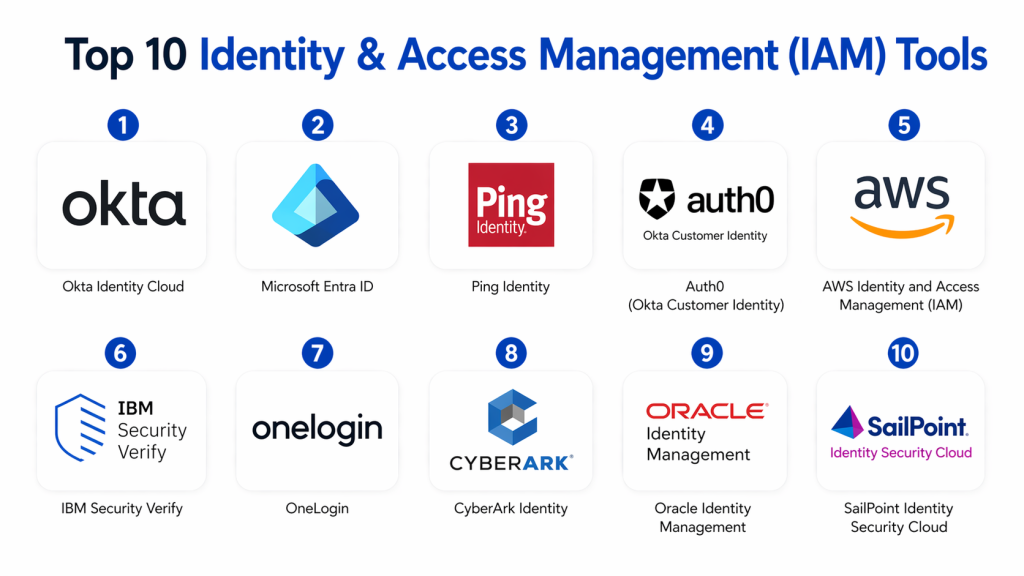
Top 10 Identity & Access Management (IAM) Tools
#1 — Okta Identity Cloud
Okta is one of the most widely used IAM platforms offering secure identity management, SSO, and adaptive authentication for enterprises and SaaS ecosystems.
Key Features
- Single Sign-On (SSO) across applications
- Multi-factor authentication (MFA)
- Adaptive authentication with risk scoring
- User lifecycle management automation
- API access management
- Identity governance capabilities
Pros
- Strong SaaS integration ecosystem
- Easy to deploy and manage
- Highly scalable for enterprises
Cons
- Can become expensive at scale
- Advanced configurations require expertise
Platforms / Deployment
- Cloud-based
Security & Compliance
- Supports SAML, OAuth, OpenID Connect
- MFA and encryption support
- Compliance varies by enterprise configuration
Integrations & Ecosystem
- Thousands of SaaS integrations
- API-based identity management
- HR and IT system integrations
Support & Community
- Strong enterprise support
- Large developer community
#2 — Microsoft Entra ID
Microsoft Entra ID is a cloud-based identity platform deeply integrated with Microsoft 365 and Azure ecosystems.
Key Features
- SSO for Microsoft and third-party apps
- Conditional access policies
- MFA and passwordless authentication
- Identity protection with risk-based policies
- Device-based access control
- Hybrid identity support
Pros
- Deep Microsoft ecosystem integration
- Strong enterprise security features
- Good hybrid identity support
Cons
- Best value within Microsoft ecosystem
- Complex for non-Microsoft environments
Platforms / Deployment
- Cloud / Hybrid
Security & Compliance
- Enterprise-grade compliance support
- Conditional access controls
- Identity risk detection
Integrations & Ecosystem
- Microsoft 365
- Azure services
- Third-party SaaS apps
Support & Community
- Enterprise Microsoft support
- Extensive documentation
#3 — Ping Identity
Ping Identity provides enterprise-grade identity solutions focused on secure authentication and identity federation.
Key Features
- SSO and federation services
- Adaptive authentication
- API security for identities
- Identity orchestration
- Directory services integration
- MFA support
Pros
- Strong enterprise identity federation
- Flexible deployment options
- High customization capability
Cons
- Complex setup process
- Requires skilled administration
Platforms / Deployment
- Cloud / Hybrid / On-prem
Security & Compliance
- SAML, OAuth, OpenID Connect support
- Strong encryption standards
Integrations & Ecosystem
- API-driven architecture
- Enterprise application integrations
- Hybrid identity systems
Support & Community
- Enterprise-level support
- Strong partner ecosystem
#4 — Auth0 (Okta Customer Identity)
Auth0 is a developer-friendly IAM platform focused on authentication and CIAM (Customer Identity and Access Management).
Key Features
- Flexible authentication flows
- Social login integration
- MFA and passwordless login
- Customizable login UI
- API authentication and authorization
- User management dashboard
Pros
- Developer-friendly implementation
- Fast integration with apps
- Highly customizable authentication flows
Cons
- Costs increase with usage
- Advanced enterprise features can be complex
Platforms / Deployment
- Cloud-based
Security & Compliance
- Standard IAM protocols supported
- MFA and encryption support
Integrations & Ecosystem
- Social identity providers
- APIs and SDKs
- SaaS application integration
Support & Community
- Strong developer community
- Enterprise support available
#5 — AWS Identity and Access Management (IAM)
AWS IAM provides secure access control for AWS resources and services.
Key Features
- Fine-grained access control
- Role-based access management
- Policy-based permissions
- Integration with AWS services
- Temporary credential management
- Multi-account access control
Pros
- Deep AWS integration
- Strong security model
- Highly granular access control
Cons
- AWS-only ecosystem
- Complex policy configuration
Platforms / Deployment
- Cloud (AWS only)
Security & Compliance
- IAM policies and roles
- Encryption support via AWS services
- Compliance depends on AWS infrastructure
Integrations & Ecosystem
- AWS ecosystem services
- Cloud automation tools
- API-based access control
Support & Community
- AWS enterprise support
- Large developer ecosystem
#6 — IBM Security Verify
IBM Security Verify offers identity governance, access management, and adaptive authentication for enterprises.
Key Features
- Identity lifecycle management
- SSO and MFA
- AI-based risk detection
- Access governance
- Directory integration
- API security
Pros
- Strong enterprise governance features
- AI-driven identity insights
- Suitable for regulated industries
Cons
- Complex implementation
- Higher enterprise cost
Platforms / Deployment
- Cloud / Hybrid
Security & Compliance
- Enterprise-grade compliance support
- MFA and encryption
Integrations & Ecosystem
- Enterprise application integration
- API-based identity workflows
Support & Community
- Enterprise IBM support
- Consulting services available
#7 — OneLogin
OneLogin provides secure IAM with SSO, MFA, and user provisioning capabilities.
Key Features
- Cloud-based SSO
- MFA authentication
- User provisioning automation
- Directory integration
- Policy-based access control
- API access management
Pros
- Easy to deploy
- Strong SSO capabilities
- Good for SMB and mid-market
Cons
- Limited advanced enterprise customization
- Smaller ecosystem than top competitors
Platforms / Deployment
- Cloud-based
Security & Compliance
- Standard IAM security features
- MFA and encryption support
Integrations & Ecosystem
- SaaS application integrations
- Directory services
- API support
Support & Community
- Good customer support
- Growing user base
#8 — CyberArk Identity
CyberArk Identity focuses on privileged access management and secure identity governance.
Key Features
- SSO and MFA
- Privileged access management integration
- Adaptive authentication
- Identity lifecycle automation
- Role-based access control
- Secure application access
Pros
- Strong security for privileged accounts
- High enterprise trust level
- Deep security integration
Cons
- Complex deployment
- Higher cost for full suite
Platforms / Deployment
- Cloud / Hybrid
Security & Compliance
- Strong privileged access security
- MFA and encryption support
Integrations & Ecosystem
- CyberArk ecosystem tools
- Enterprise security platforms
- API-based identity workflows
Support & Community
- Enterprise-grade support
- Strong security community
#9 — Oracle Identity Management
Oracle IAM provides enterprise identity governance and access control across cloud and on-prem systems.
Key Features
- Identity lifecycle management
- SSO and MFA
- Role-based access control
- Directory services integration
- Policy enforcement engine
- Access governance
Pros
- Strong enterprise governance
- Deep Oracle ecosystem integration
- Scalable identity management
Cons
- Complex configuration
- Best suited for Oracle-heavy environments
Platforms / Deployment
- Cloud / On-prem / Hybrid
Security & Compliance
- Enterprise IAM security standards
- Access control policies
Integrations & Ecosystem
- Oracle Cloud ecosystem
- Enterprise applications
Support & Community
- Enterprise Oracle support
- Professional services available
#10 — SailPoint Identity Security Cloud
SailPoint is a leading identity governance platform focused on enterprise-scale identity security.
Key Features
- Identity governance automation
- Access certification workflows
- Role-based access control
- Risk-based identity insights
- Compliance reporting
- Lifecycle management
Pros
- Strong governance capabilities
- High compliance focus
- Scalable enterprise solution
Cons
- Complex deployment
- Requires governance expertise
Platforms / Deployment
- Cloud / Hybrid
Security & Compliance
- Strong compliance reporting
- Identity governance controls
Integrations & Ecosystem
- Enterprise IT systems
- Cloud and SaaS integration
- API-based workflows
Support & Community
- Enterprise support
- Strong governance ecosystem
Comparison Table
| Tool | Best For | Platform | Deployment | Standout Feature | Public Rating |
|---|---|---|---|---|---|
| Okta | Enterprises | Web/API | Cloud | SSO ecosystem | N/A |
| Microsoft Entra ID | Microsoft users | Cloud | Cloud/Hybrid | Conditional access | N/A |
| Ping Identity | Enterprises | Web/API | Hybrid | Identity federation | N/A |
| Auth0 | Developers | Web/API | Cloud | Custom auth flows | N/A |
| AWS IAM | AWS users | AWS | Cloud | Granular policies | N/A |
| IBM Verify | Enterprises | Web/API | Cloud/Hybrid | AI identity insights | N/A |
| OneLogin | SMB | Web | Cloud | Simple SSO | N/A |
| CyberArk | Security teams | Web/API | Hybrid | Privileged access | N/A |
| Oracle IAM | Enterprise | Web/API | Hybrid | Governance control | N/A |
| SailPoint | Governance | Web/API | Cloud/Hybrid | Identity governance | N/A |
Evaluation & Scoring
| Tool | Core | Ease | Integration | Security | Performance | Support | Value | Total |
|---|---|---|---|---|---|---|---|---|
| Okta | 9 | 10 | 10 | 9 | 9 | 9 | 8 | 9.1 |
| Entra ID | 9 | 9 | 10 | 10 | 9 | 9 | 9 | 9.2 |
| Ping | 9 | 7 | 9 | 10 | 9 | 9 | 7 | 8.6 |
| Auth0 | 9 | 10 | 9 | 9 | 9 | 8 | 8 | 8.8 |
| AWS IAM | 9 | 8 | 9 | 10 | 9 | 9 | 9 | 8.9 |
| IBM Verify | 9 | 7 | 9 | 10 | 8 | 8 | 7 | 8.3 |
| OneLogin | 8 | 9 | 8 | 8 | 8 | 8 | 9 | 8.4 |
| CyberArk | 10 | 7 | 9 | 10 | 9 | 9 | 7 | 8.8 |
| Oracle IAM | 9 | 6 | 8 | 10 | 8 | 8 | 7 | 8.2 |
| SailPoint | 10 | 6 | 9 | 10 | 8 | 8 | 7 | 8.4 |
Frequently Asked Questions (FAQs)
1. What is IAM?
IAM (Identity & Access Management) is a security framework that manages digital identities and controls user access to systems, applications, and data. It ensures that only authorized users can access specific resources. IAM includes authentication, authorization, and user lifecycle management. It is essential for enterprise security and compliance. Modern IAM systems also support cloud and hybrid environments.
2. Why is IAM important?
IAM is important because it protects sensitive business data from unauthorized access and cyber threats. It reduces the risk of credential theft and insider misuse. Organizations use IAM to enforce strict access policies across users and systems. It also helps maintain compliance with regulatory standards. Without IAM, managing identities at scale becomes highly risky and inefficient.
3. What is SSO in IAM?
Single Sign-On (SSO) allows users to log in once and access multiple applications without re-entering credentials. It improves user experience and reduces password fatigue. SSO also reduces security risks caused by weak or reused passwords. IAM platforms integrate SSO across cloud and on-prem systems. It is widely used in enterprise environments.
4. What is MFA?
Multi-Factor Authentication (MFA) adds an extra layer of security beyond just a password. It requires users to verify identity using multiple methods like OTP, biometrics, or authentication apps. MFA significantly reduces the risk of account compromise. Even if a password is stolen, attackers cannot easily access the system. It is a standard security feature in modern IAM tools.
5. Is IAM cloud-based?
Yes, most modern IAM solutions are cloud-based or hybrid. Cloud IAM offers scalability, faster deployment, and easier management. Hybrid IAM supports both on-prem and cloud systems for large enterprises. Cloud-based IAM is widely preferred due to flexibility and lower infrastructure cost. However, some regulated industries still use on-prem setups.
6. Who uses IAM tools?
IAM tools are used by enterprises, SaaS companies, financial institutions, healthcare providers, and government organizations. Any organization managing multiple users or sensitive data requires IAM. It is especially important for companies with remote employees and cloud applications. Developers also use IAM for securing APIs and services. It is a core component of enterprise security architecture.
7. What is identity governance?
Identity governance manages how user access is created, modified, and removed across systems. It ensures users only have necessary permissions based on roles. It also helps in compliance reporting and audit readiness. Governance reduces security risks caused by excessive access privileges. It is a key part of enterprise IAM strategies.
8. Can IAM stop hacking?
IAM significantly reduces the risk of unauthorized access but cannot fully stop all hacking attempts. It protects against credential theft, phishing, and brute-force attacks. However, it must be combined with other security tools like firewalls and endpoint protection. IAM strengthens overall security posture but is not a standalone solution. Layered security is always recommended.
9. Is IAM expensive?
IAM cost varies depending on the number of users, features, and enterprise scale. Basic IAM features may be affordable or included in cloud platforms. Advanced features like governance and analytics increase pricing. Enterprise IAM solutions are typically subscription-based. Pricing is usually customized for large organizations.
10. What is Zero Trust in IAM?
Zero Trust is a security model where no user or device is trusted by default. Every access request is continuously verified. IAM plays a central role in enforcing Zero Trust policies. It ensures strict identity verification and least-privilege access. This approach is widely adopted in modern cybersecurity frameworks.
If you want next step, I can also:
Conclusion
Identity & Access Management (IAM) Tools are a foundational part of modern cybersecurity, enabling organizations to secure user identities, enforce access control, and maintain compliance in increasingly complex digital environments.
Different platforms serve different needs—Okta and Microsoft Entra ID lead in enterprise identity ecosystems, while Auth0 excels for developers building modern applications. Meanwhile, CyberArk and SailPoint focus heavily on privileged access and governance, and AWS IAM delivers deep cloud-native control.
Choosing the right IAM solution depends on your infrastructure, security requirements, and scalability needs. A well-designed IAM strategy improves security posture, reduces breach risk, and enables seamless user experiences across applications.
