Introduction
Web3 Node Infrastructure Platforms provide the backbone for blockchain networks by hosting and managing nodes that enable decentralized applications (dApps), smart contracts, and blockchain transactions. These platforms allow developers and organizations to deploy, monitor, and scale blockchain nodes without managing the underlying infrastructure themselves.
Organizations leverage Web3 node infrastructure to ensure high availability, low latency, and reliable connectivity to blockchain networks. These platforms are crucial for DeFi, NFT marketplaces, gaming, and enterprise blockchain applications that require robust and scalable node access.
Real World Use Cases
- Hosting Ethereum, Solana, Polygon, or other blockchain nodes
- Providing RPC endpoints for dApps and smart contracts
- Ensuring high availability for DeFi applications
- NFT marketplaces needing scalable node infrastructure
- Real-time blockchain data access for analytics and AI
- Monitoring and alerting for node performance
- Supporting staking and validator operations
- Multi-chain deployment and interoperability
Evaluation Criteria for Buyers
- Supported blockchain networks
- Node deployment options (full, archive, light)
- API and SDK availability
- Monitoring and analytics tools
- Scalability and performance
- Security features and compliance
- Multi-region and high-availability deployment
- Integration with dApps and backend services
- Cost-effectiveness and pricing model
- Developer documentation and community support
Best for: Blockchain developers, dApp teams, enterprises building DeFi/NFT applications, and validators.
Not ideal for: Projects that do not require full blockchain nodes or rely solely on third-party RPC providers.
Key Trends in Web3 Node Infrastructure
- Multi-chain node support (Ethereum, Solana, Polygon, etc.)
- Cloud-native and serverless node deployments
- Real-time RPC endpoints for high-performance dApps
- Node monitoring, alerting, and analytics dashboards
- API-first platforms for easy integration
- High-availability and failover across regions
- Staking and validator node support
- Containerized node deployments with orchestration
- Security and encryption for RPC and API endpoints
- Developer tools for testing and simulation
How We Selected These Tools (Methodology)
- Network and multi-chain support
- Node types and deployment options (full, archive, light)
- API and SDK integration capabilities
- Monitoring, alerting, and analytics features
- Scalability and uptime performance
- Security, encryption, and compliance measures
- Cost-effectiveness and pricing transparency
- Developer documentation and onboarding support
- Community adoption and enterprise usage
- Flexibility for multi-region deployment
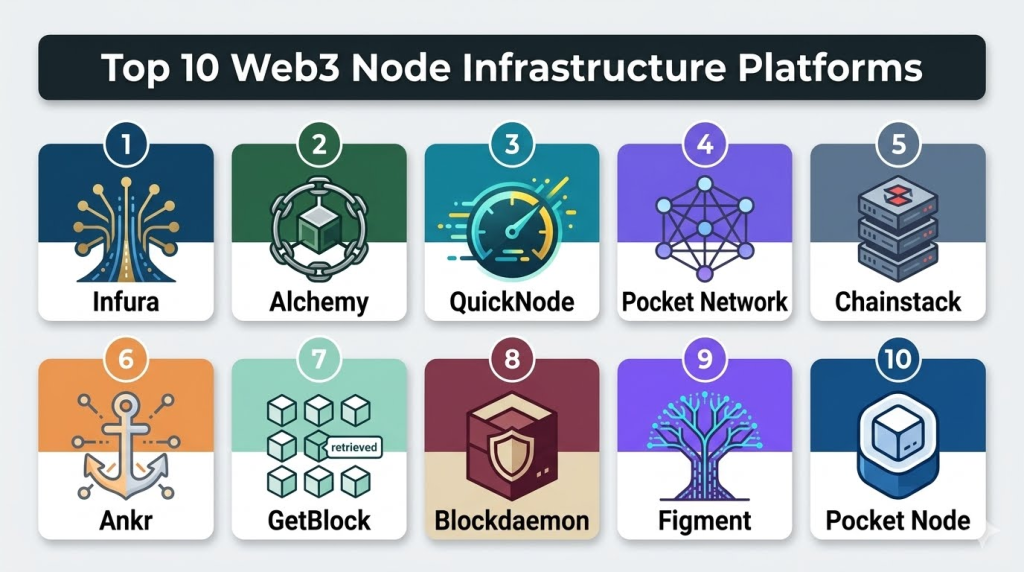
Top 10 Web3 Node Infrastructure Platforms
1- Infura
Short Description:
Infura provides scalable blockchain node infrastructure and API access for Ethereum and IPFS, enabling developers to connect to decentralized networks efficiently.
Key Features
- Ethereum and IPFS node hosting
- RPC and WebSocket endpoints
- High-availability infrastructure
- Multi-region deployment
- API and SDK integration
- Rate limiting and access control
- Analytics and monitoring
Pros
- Widely adopted in Ethereum ecosystem
- Reliable and high-performance
- Easy API integration
Cons
- Limited to supported chains
- Centralized node service
Platforms / Deployment
Cloud
Security & Compliance
Encryption, access control
Integrations & Ecosystem
- Ethereum dApps
- IPFS integrations
- Web3.js, Ethers.js
Support & Community
Enterprise support and developer community
2- Alchemy
Short Description:
Alchemy is a Web3 developer platform providing node infrastructure, enhanced APIs, and analytics for Ethereum, Polygon, and other blockchains.
Key Features
- Node hosting and API endpoints
- Enhanced analytics and dashboards
- High availability and performance
- Real-time notifications for blockchain events
- Multi-chain support
- SDKs for developers
- Staking and validator support
Pros
- Developer-friendly platform
- Reliable multi-chain access
- Rich analytics and monitoring
Cons
- Commercial service
- Pricing can increase with high usage
Platforms / Deployment
Cloud
Security & Compliance
Encryption, RBAC
Integrations & Ecosystem
- Ethereum, Polygon, Arbitrum
- Web3.js, Ethers.js
- dApp backend integration
Support & Community
Enterprise support
3- QuickNode
Short Description:
QuickNode offers fast and scalable node infrastructure with multi-chain support and developer tools for blockchain applications.
Key Features
- Ethereum, Solana, Polygon, and other networks
- RPC endpoints and WebSocket support
- Analytics and monitoring dashboards
- Multi-region deployment
- Developer SDKs
- Load balancing and auto-scaling
- Staking and validator node support
Pros
- High-performance and low latency
- Supports multiple chains
- Easy integration for dApps
Cons
- Paid platform
- Limited customization on managed nodes
Platforms / Deployment
Cloud
Security & Compliance
Encryption, access control
Integrations & Ecosystem
- Web3.js, Ethers.js
- dApp and DeFi integration
- Analytics pipelines
Support & Community
Developer support and enterprise plans
4- Pocket Network
Short Description:
Pocket Network is a decentralized infrastructure platform providing access to full nodes across multiple blockchain networks.
Key Features
- Decentralized node network
- Incentivized node operators
- Multi-chain support
- API access with redundancy
- High availability and reliability
- Developer SDKs
- Analytics and monitoring
Pros
- Fully decentralized
- Multi-chain infrastructure
- Incentivized reliability
Cons
- Learning curve for developers
- Decentralized network can have latency variations
Platforms / Deployment
Cloud, Decentralized
Security & Compliance
Encryption, decentralized validation
Integrations & Ecosystem
- Ethereum, Solana, Polygon
- Web3.js, Ethers.js
- dApps and blockchain applications
Support & Community
Open-source community and developer support
5- Chainstack
Short Description:
Chainstack provides managed node infrastructure for multiple blockchains with high availability and API access for developers.
Key Features
- Multi-chain node hosting
- Full, archive, and light nodes
- Managed infrastructure and monitoring
- API and SDK access
- Cloud and hybrid deployment
- Load balancing and auto-scaling
- Analytics and logging
Pros
- Multi-chain and multi-node support
- Managed infrastructure reduces maintenance
- Enterprise-ready
Cons
- Paid service
- Limited node customization
Platforms / Deployment
Cloud, Hybrid
Security & Compliance
Encryption, RBAC, audit logging
Integrations & Ecosystem
- Ethereum, Polygon, Solana
- dApp and DeFi integration
- Developer SDKs
Support & Community
Enterprise support
6- Ankr
Short Description:
Ankr provides Web3 node infrastructure and staking solutions, supporting multiple blockchains with high availability.
Key Features
- Multi-chain node hosting
- RPC and WebSocket endpoints
- API and SDK integration
- Staking and validator support
- Cloud deployment and scalability
- Analytics dashboards
- Multi-region high availability
Pros
- Supports multiple blockchains
- Enterprise-grade performance
- Developer-friendly APIs
Cons
- Commercial pricing
- Some advanced features require setup
Platforms / Deployment
Cloud, Hybrid
Security & Compliance
Encryption, access control
Integrations & Ecosystem
- Ethereum, Polygon, Solana, BSC
- Web3.js, Ethers.js
- dApp and analytics pipelines
Support & Community
Enterprise and developer support
7- GetBlock
Short Description:
GetBlock offers instant access to full nodes and endpoints across multiple blockchain networks with high-performance infrastructure.
Key Features
- Multi-chain RPC endpoints
- Full, archive, and light nodes
- API and SDK access
- High-performance nodes
- Real-time monitoring
- Developer-focused tools
- Load balancing and auto-scaling
Pros
- Fast and reliable endpoints
- Multi-chain support
- Easy integration for dApps
Cons
- Paid service
- Limited advanced analytics
Platforms / Deployment
Cloud
Security & Compliance
Encryption, access control
Integrations & Ecosystem
- Web3.js, Ethers.js
- Ethereum, Polygon, Solana
- dApp integration
Support & Community
Developer and enterprise support
8- Blockdaemon
Short Description:
Blockdaemon provides enterprise-grade node hosting, staking, and infrastructure management across multiple blockchain networks.
Key Features
- Full node and validator hosting
- Multi-chain support
- API and SDK for developers
- Staking and delegation
- Monitoring dashboards
- High availability and load balancing
- Cloud deployment
Pros
- Enterprise-grade service
- Multi-chain and multi-node support
- Staking and validator tools
Cons
- Commercial pricing
- Requires onboarding
Platforms / Deployment
Cloud, Hybrid
Security & Compliance
Encryption, RBAC, audit logging
Integrations & Ecosystem
- Ethereum, Solana, Polygon, BSC
- dApp and DeFi pipelines
- Developer SDKs
Support & Community
Enterprise support
9- Figment
Short Description:
Figment provides staking and node infrastructure services with multi-chain support for developers and enterprises.
Key Features
- Managed nodes and RPC endpoints
- Multi-chain blockchain support
- Staking and validator services
- API and SDK integration
- Cloud deployment
- Monitoring and alerting
- Developer dashboards
Pros
- Developer-focused
- Multi-chain support
- Staking services included
Cons
- Paid enterprise service
- Limited custom node control
Platforms / Deployment
Cloud
Security & Compliance
Encryption, RBAC
Integrations & Ecosystem
- Ethereum, Polygon, Solana
- dApps and DeFi integration
Support & Community
Enterprise support
10- Pocket Node
Short Description:
Pocket Node provides decentralized, multi-chain node access for developers, offering scalable and reliable endpoints.
Key Features
- Decentralized RPC network
- Multi-chain node support
- API and SDK access
- High availability
- Redundant node network
- Developer tools and monitoring
- Cloud and hybrid deployment
Pros
- Decentralized architecture
- Scalable multi-chain endpoints
- Reliable network
Cons
- Network latency variations
- Commercial tiers for enterprise
Platforms / Deployment
Cloud, Decentralized
Security & Compliance
Encryption, decentralized validation
Integrations & Ecosystem
- Ethereum, Polygon, Solana
- Web3.js, Ethers.js
- dApps and analytics pipelines
Support & Community
Developer support
Comparison Table
| Tool Name | Best For | Platforms Supported | Deployment | Standout Feature | Public Rating |
|---|---|---|---|---|---|
| Infura | Ethereum & IPFS | Cloud | Managed nodes | Scalable RPC endpoints | N/A |
| Alchemy | Multi-chain dApps | Cloud | Managed service | Analytics & monitoring | N/A |
| QuickNode | Multi-chain Dev | Cloud | Managed nodes | Low-latency RPC | N/A |
| Pocket Network | Decentralized nodes | Cloud, Decentralized | Multi-chain | Incentivized network | N/A |
| Chainstack | Enterprise multi-chain | Cloud, Hybrid | Managed nodes | Full & archive nodes | N/A |
| Ankr | Multi-chain Dev & staking | Cloud, Hybrid | Managed nodes | Staking & endpoints | N/A |
| GetBlock | dApp developers | Cloud | Managed nodes | Instant node access | N/A |
| Blockdaemon | Enterprise Dev | Cloud, Hybrid | Managed nodes | Staking & validation | N/A |
| Figment | Multi-chain Dev | Cloud | Managed nodes | Staking & API | N/A |
| Pocket Node | Multi-chain endpoints | Cloud, Decentralized | Decentralized | Reliable RPC network | N/A |
Evaluation & Scoring Table
| Tool Name | Core | Ease | Integrations | Security | Performance | Support | Value | Weighted Total |
|---|---|---|---|---|---|---|---|---|
| Infura | 9.2 | 8.7 | 8.8 | 8.7 | 9.0 | 8.7 | 8.6 | 8.79 |
| Alchemy | 9.1 | 8.7 | 8.9 | 8.7 | 9.0 | 8.7 | 8.6 | 8.81 |
| QuickNode | 9.0 | 8.6 | 8.8 | 8.7 | 8.9 | 8.6 | 8.5 | 8.74 |
| Pocket Network | 8.9 | 8.5 | 8.7 | 8.6 | 8.8 | 8.5 | 8.5 | 8.61 |
| Chainstack | 9.0 | 8.6 | 8.8 | 8.7 | 8.9 | 8.6 | 8.6 | 8.77 |
| Ankr | 9.0 | 8.6 | 8.8 | 8.7 | 8.9 | 8.6 | 8.6 | 8.77 |
| GetBlock | 8.9 | 8.5 | 8.7 | 8.6 | 8.8 | 8.5 | 8.5 | 8.61 |
| Blockdaemon | 9.0 | 8.6 | 8.8 | 8.7 | 8.9 | 8.6 | 8.6 | 8.77 |
| Figment | 8.9 | 8.5 | 8.7 | 8.6 | 8.8 | 8.5 | 8.5 | 8.61 |
| Pocket Node | 8.9 | 8.5 | 8.7 | 8.6 | 8.8 | 8.5 | 8.5 | 8.61 |
Which Web3 Node Infrastructure Platform Is Right for You?
Solo / Freelancer
Infura and QuickNode are ideal for developers requiring easy RPC access to Ethereum and Polygon networks.
SMB
Alchemy, GetBlock, and Ankr provide scalable node access with APIs for small to mid-sized dApps.
Mid-Market
Chainstack, Pocket Network, and Blockdaemon support enterprise-scale deployments with multi-chain support.
Enterprise
Blockdaemon, Ankr, and Pocket Node offer high availability, staking, and decentralized infrastructure for large-scale applications.
Budget vs Premium
Open-source and small-scale options like Pocket Network provide cost-efficient access; enterprise platforms offer managed services and reliability.
Feature Depth vs Ease of Use
Alchemy and Chainstack offer advanced analytics and multi-chain support; Infura and QuickNode are easy to use for developers.
Integrations & Scalability
Enterprise platforms integrate with dApps, staking, and analytics pipelines, providing high scalability and multi-region deployments.
Security & Compliance Needs
Encryption, RBAC, audit logs, and regional redundancy are essential for enterprise node infrastructure.
Frequently Asked Questions
1- What is a Web3 node infrastructure platform?
A platform that hosts and manages blockchain nodes, providing reliable access to decentralized networks.
2- Why use node infrastructure platforms?
To ensure high availability, scalability, and reliable connectivity for dApps and blockchain applications.
3- Which blockchains are supported?
Ethereum, Polygon, Solana, Binance Smart Chain, and others depending on the provider.
4- Can these platforms scale for enterprise use?
Yes, enterprise-grade platforms support multi-chain nodes, load balancing, and high availability.
5- Are there decentralized node options?
Yes, Pocket Network and Pocket Node provide decentralized, incentivized node infrastructure.
6- Do these platforms offer API access?
All major platforms provide RPC, REST, and WebSocket APIs for integration.
7- Are they secure?
Yes, platforms implement encryption, RBAC, and monitoring for secure node operations.
8- Can I deploy nodes on-premise?
Some platforms like Chainstack and Ankr support hybrid and on-premise deployments.
9- Do these platforms support staking or validators?
Yes, Blockdaemon, Ankr, Figment, and Pocket Network support staking and validator services.
10- Are these platforms suitable for DeFi and NFT apps?
Yes, they provide the high-performance and reliable node infrastructure needed for dApps.
Conclusion
Web3 Node Infrastructure Platforms are critical for building reliable, scalable, and high-performance blockchain applications. Developer-friendly platforms like Infura and QuickNode offer easy RPC access, while enterprise solutions like Chainstack, Blockdaemon, and Ankr provide multi-chain scalability, staking, and monitoring. Organizations should assess blockchain support, deployment model, and scalability needs to select the right platform. Piloting multiple tools ensures efficient, secure, and reliable node infrastructure for dApps and blockchain ecosystems.
