Introduction
Crypto Custody Platforms are solutions that securely store, manage, and safeguard digital assets on behalf of individuals or institutions. They provide advanced security measures, compliance controls, and insurance options to protect cryptocurrencies and digital assets from theft, loss, or unauthorized access.
As crypto adoption grows in enterprises, hedge funds, and exchanges, custody platforms are critical for secure asset management, regulatory compliance, and operational efficiency.
Real-world use cases include
- Institutional crypto storage for hedge funds and investment firms
- Secure custody for exchanges and trading platforms
- Treasury management for enterprises holding digital assets
- Staking, lending, and DeFi participation with custodial support
- Multi-signature and cold storage solutions for risk mitigation
What buyers should evaluate
- Security protocols (cold storage, multi-signature, HSMs)
- Regulatory compliance and insurance coverage
- Multi-asset and multi-chain support
- User access controls and authentication methods
- Integration with exchanges and trading platforms
- Ease of asset transfers and withdrawals
- Backup and recovery procedures
- Audit and reporting capabilities
- Customer support and service levels
- Cost and fee structure
Best for: Institutional investors, crypto exchanges, hedge funds, enterprise treasuries, and high-net-worth individuals
Not ideal for: Casual crypto users or small-scale personal asset holders
Key Trends in Crypto Custody Platforms
- Multi-chain and multi-asset support
- Cold storage and hardware security modules (HSMs)
- Multi-signature wallets and role-based access
- Integration with exchanges and DeFi platforms
- Regulatory compliance and insurance coverage
- Custody solutions for staking and yield generation
- Cloud-native and hybrid deployment options
- Real-time monitoring and auditing dashboards
- API support for automation and reporting
- Enterprise-focused SLA and customer support
How We Selected These Tools
- Security and asset protection measures
- Multi-chain and multi-asset support
- Integration with trading, staking, and DeFi platforms
- Compliance with regulatory standards
- Insurance and risk mitigation features
- Ease of use and administrative controls
- Scalability for institutional clients
- Auditability and reporting capabilities
- Vendor reputation and enterprise adoption
- Support and service quality
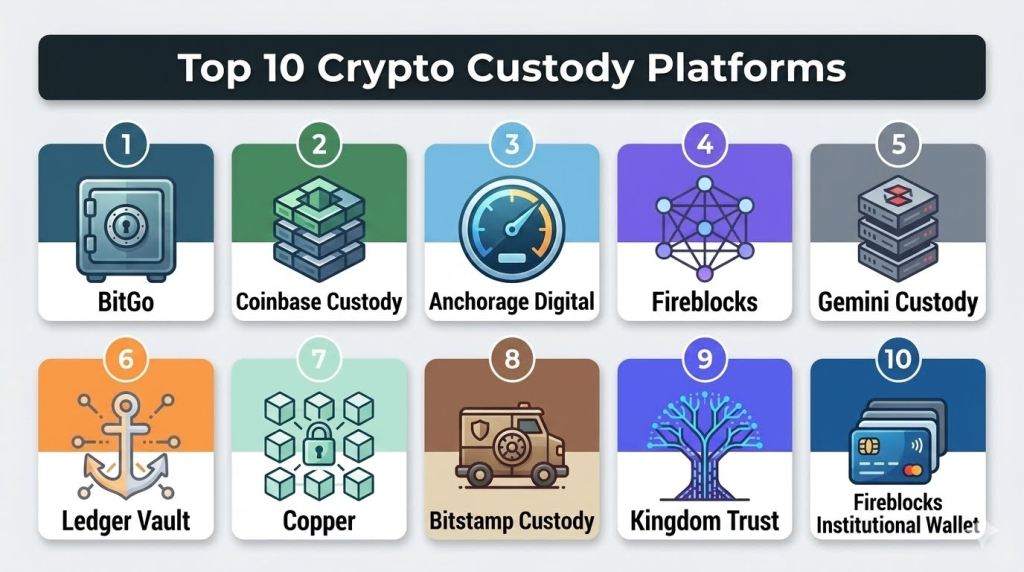
Top 10 Crypto Custody Platforms
1- BitGo
Short description: BitGo is an institutional-grade crypto custody platform providing secure storage, multi-signature wallets, and compliance services.
Key Features
- Multi-signature wallets
- Cold storage and hot wallet management
- Insurance coverage for assets
- Multi-chain support
- Enterprise-grade compliance and reporting
- API and SDK integration
- Stake management for select assets
Pros
- Trusted by institutional clients
- Strong security protocols
- Multi-chain and asset support
Cons
- Fees can be higher for smaller assets
- Limited DeFi integration
Platforms / Deployment
- Cloud / Hybrid
Security & Compliance
- Multi-signature, HSMs, encryption
- SOC 2, Not publicly stated
Integrations & Ecosystem
- Exchanges, trading platforms
- API integration for asset management
- Compliance dashboards
Support & Community
Enterprise support and global customer service
2- Coinbase Custody
Short description: Coinbase Custody is a regulated custody service for institutional investors offering secure storage and compliance features.
Key Features
- Cold storage for digital assets
- Multi-chain support
- Insurance and regulatory compliance
- Enterprise-grade reporting and auditing
- API integration for asset management
- Multi-user access controls
- Staking services for supported assets
Pros
- Highly regulated and compliant
- Trusted brand
- Supports staking and DeFi integration
Cons
- Custodial fees
- Limited to supported assets
Platforms / Deployment
- Cloud
Security & Compliance
- Cold storage, encryption, MFA
- SOC 2, PCI DSS, Not publicly stated
Integrations & Ecosystem
- Coinbase Exchange
- API for institutional clients
- Compliance reporting
Support & Community
Enterprise-grade customer support
3- Anchorage Digital
Short description: Anchorage Digital is an institutional crypto custody platform offering insured, secure, and compliant storage solutions.
Key Features
- Multi-signature wallets
- Cold and warm storage solutions
- Insurance coverage
- Regulatory compliance (FINRA, SEC)
- Staking and DeFi integration
- API support
- Multi-chain asset management
Pros
- Strong security and regulatory compliance
- Supports staking and DeFi
- Enterprise-focused
Cons
- Higher onboarding requirements
- Custodial fees
Platforms / Deployment
- Cloud / Hybrid
Security & Compliance
- HSMs, multi-signature, encryption
- SOC 2, Not publicly stated
Integrations & Ecosystem
- Exchanges and DeFi platforms
- API for integration and reporting
- Asset management tools
Support & Community
Enterprise support
4- Fireblocks
Short description: Fireblocks provides secure infrastructure for crypto custody, transfers, and DeFi access with enterprise-grade security.
Key Features
- Multi-party computation (MPC) wallets
- Cold and hot storage
- Asset transfer network
- Multi-chain support
- API integration for asset management
- Insurance coverage
- Staking and lending services
Pros
- High-security MPC technology
- Enterprise-ready
- Supports multi-chain assets
Cons
- Complexity for smaller users
- Enterprise pricing
Platforms / Deployment
- Cloud / Hybrid
Security & Compliance
- MPC, HSMs, encryption
- SOC 2, Not publicly stated
Integrations & Ecosystem
- Exchanges, DeFi platforms
- API and SDK integration
- Asset reporting dashboards
Support & Community
Enterprise-grade support
5- Gemini Custody
Short description: Gemini Custody is a regulated digital asset custody platform with insurance coverage and multi-chain support.
Key Features
- Cold storage and insured hot wallets
- Multi-chain token support
- Regulatory compliance
- Staking and DeFi integration
- Multi-user management and role-based access
- API and SDK for automation
- Audit and reporting tools
Pros
- Regulated and insured
- Multi-chain support
- Trusted brand for institutional clients
Cons
- Custodial fees
- Limited token support compared to others
Platforms / Deployment
- Cloud
Security & Compliance
- Encryption, cold storage, MFA
- SOC 2, Not publicly stated
Integrations & Ecosystem
- Exchanges and DeFi platforms
- API for reporting and automation
- Audit tools
Support & Community
Enterprise support
6- Ledger Vault
Short description: Ledger Vault is a hardware-backed custody platform for institutional crypto storage and management.
Key Features
- Hardware security modules (HSM)
- Multi-signature governance
- Multi-chain asset support
- API integration
- Staking and DeFi access
- Cold and hot storage management
- Compliance and reporting tools
Pros
- Hardware-backed security
- Multi-chain and asset support
- Enterprise-grade features
Cons
- Requires Ledger hardware
- Setup complexity
Platforms / Deployment
- Cloud / On-prem / Hybrid
Security & Compliance
- HSM, multi-signature, encryption
- SOC 2, Not publicly stated
Integrations & Ecosystem
- Exchanges, API integration
- DeFi and staking platforms
- Reporting and monitoring
Support & Community
Enterprise support
7- Copper
Short description: Copper is an institutional-grade crypto custody platform with MPC wallets and integrated trading features.
Key Features
- Multi-party computation wallets
- Cold storage solutions
- Multi-chain token support
- API and SDK integration
- Insurance coverage
- DeFi staking access
- Compliance dashboards
Pros
- Secure MPC technology
- Enterprise-focused
- Supports multi-chain assets
Cons
- Enterprise pricing
- Setup complexity
Platforms / Deployment
- Cloud / Hybrid
Security & Compliance
- MPC, encryption, HSMs
- SOC 2, Not publicly stated
Integrations & Ecosystem
- Exchanges, DeFi platforms
- API integration
- Asset reporting
Support & Community
Enterprise support
8- Bitstamp Custody
Short description: Bitstamp Custody offers secure institutional crypto storage with insurance and compliance features.
Key Features
- Cold storage with insurance coverage
- Multi-chain token support
- API for asset management
- Regulatory compliance
- Staking and DeFi integration
- Multi-user management
- Audit reporting
Pros
- Trusted institutional platform
- Insurance coverage
- Multi-chain support
Cons
- Limited staking options
- Enterprise-focused pricing
Platforms / Deployment
- Cloud
Security & Compliance
- Cold storage, encryption
- SOC 2, Not publicly stated
Integrations & Ecosystem
- Exchanges, DeFi protocols
- API integration
- Compliance dashboards
Support & Community
Enterprise support
9- Kingdom Trust
Short description: Kingdom Trust is a regulated digital asset custodian for institutional and high-net-worth clients.
Key Features
- Cold storage and insured hot wallets
- Multi-chain asset support
- Regulatory compliance
- Audit and reporting tools
- Multi-user and role-based access
- API and SDK integration
- Integration with trading platforms
Pros
- Regulated and insured
- Enterprise-focused
- Multi-chain support
Cons
- Fees for custody services
- Limited DeFi integration
Platforms / Deployment
- Cloud / On-prem / Hybrid
Security & Compliance
- Encryption, MFA, cold storage
- SOC 2, Not publicly stated
Integrations & Ecosystem
- Exchanges, APIs
- Asset management and reporting
- Trading integration
Support & Community
Enterprise support
10- Fireblocks Institutional Wallet
Short description: Fireblocks Institutional Wallet provides secure crypto custody and transfer services with multi-chain and MPC support.
Key Features
- Multi-party computation wallets
- Cold and hot storage
- Multi-chain token support
- API integration for trading and DeFi
- Insurance coverage
- Audit and reporting tools
- Staking capabilities
Pros
- High-security MPC technology
- Enterprise-grade features
- Multi-chain support
Cons
- Enterprise pricing
- Setup complexity
Platforms / Deployment
- Cloud / Hybrid
Security & Compliance
- MPC, HSMs, encryption
- SOC 2, Not publicly stated
Integrations & Ecosystem
- Exchanges, DeFi platforms
- APIs for asset management
- Compliance reporting
Support & Community
Enterprise support
Comparison Table
| Tool | Best For | Platform(s) | Deployment | Standout Feature | Public Rating |
|---|---|---|---|---|---|
| BitGo | Institutional storage | Cloud / Hybrid | Multi-signature wallets | N/A | |
| Coinbase Custody | Institutional investors | Cloud | Cold storage & compliance | N/A | |
| Anchorage Digital | Enterprise & DeFi | Cloud / Hybrid | Regulatory compliance | N/A | |
| Fireblocks | Enterprise & DeFi | Cloud / Hybrid | MPC wallets | N/A | |
| Gemini Custody | Institutional investors | Cloud | Insurance & compliance | N/A | |
| Ledger Vault | Enterprise security | Cloud / On-prem / Hybrid | Hardware-backed | N/A | |
| Copper | Enterprise & DeFi | Cloud / Hybrid | MPC wallets | N/A | |
| Bitstamp Custody | Institutional crypto | Cloud | Cold storage & insured | N/A | |
| Kingdom Trust | Institutional & HNW | Cloud / On-prem / Hybrid | Regulatory compliance | N/A | |
| Fireblocks Institutional Wallet | Enterprise & DeFi | Cloud / Hybrid | MPC multi-chain | N/A |
Evaluation & Scoring of Crypto Custody Platforms
| Tool | Core (25%) | Ease (15%) | Integrations (15%) | Security (10%) | Performance (10%) | Support (10%) | Value (15%) | Weighted Total |
|---|---|---|---|---|---|---|---|---|
| BitGo | 9 | 8 | 8 | 9 | 8 | 8 | 8 | 8.4 |
| Coinbase Custody | 8 | 8 | 8 | 9 | 8 | 8 | 8 | 8.1 |
| Anchorage Digital | 9 | 7 | 8 | 9 | 8 | 8 | 8 | 8.3 |
| Fireblocks | 9 | 7 | 8 | 9 | 8 | 8 | 8 | 8.3 |
| Gemini Custody | 8 | 7 | 8 | 9 | 8 | 8 | 8 | 8.0 |
| Ledger Vault | 9 | 7 | 8 | 9 | 8 | 8 | 8 | 8.3 |
| Copper | 8 | 7 | 8 | 9 | 8 | 8 | 8 | 8.0 |
| Bitstamp Custody | 8 | 7 | 8 | 8 | 8 | 7 | 8 | 7.8 |
| Kingdom Trust | 8 | 7 | 8 | 8 | 8 | 7 | 8 | 7.8 |
| Fireblocks Institutional Wallet | 9 | 7 | 8 | 9 | 8 | 8 | 8 | 8.3 |
Which Crypto Custody Platform Is Right for You?
Solo / Freelancer
- Coinbase Custody, BitGo
Non-custodial or regulated solutions for small-scale assets
SMB
- Anchorage Digital, Fireblocks Institutional Wallet
Secure enterprise-grade features for mid-scale asset management
Mid-Market
- Gemini Custody, Copper, Ledger Vault
Multi-chain and multi-user support for institutional clients
Enterprise
- Fireblocks, Ledger Vault, Kingdom Trust
High-security MPC and hardware-backed custody for large-scale crypto assets
Budget vs Premium
- Budget: BitGo, Coinbase Custody
- Premium: Fireblocks, Ledger Vault, Anchorage Digital
Feature Depth vs Ease of Use
- Ease: Coinbase Custody, BitGo
- Depth: Fireblocks, Ledger Vault, Anchorage Digital
Integrations & Scalability
- Best: Fireblocks, Ledger Vault, Anchorage Digital
Security & Compliance Needs
- Enterprise-ready: Fireblocks, Ledger Vault, Kingdom Trust
Frequently Asked Questions
1- What is a crypto custody platform?
A platform that securely stores and manages digital assets for individuals or institutions.
2- Are crypto custody platforms regulated?
Many institutional platforms are regulated and provide insurance coverage.
3- Can I store multiple cryptocurrencies?
Yes, most platforms support multi-chain and multi-asset management.
4- Are hardware wallets more secure than software wallets?
Hardware wallets like Ledger Vault provide offline, hardware-backed security.
5- Can I use custody platforms for DeFi and staking?
Yes, platforms like Fireblocks and Anchorage Digital support staking and DeFi integration.
6- Do these platforms provide insurance coverage?
Many institutional platforms offer insurance for stored digital assets.
7- Are these platforms suitable for enterprises?
Yes, they are designed for institutional asset management and multi-user workflows.
8- Can crypto custody platforms integrate with exchanges?
Yes, APIs allow integration for asset transfers and trading.
9- How is access control managed?
Via multi-signature wallets, role-based access, and MFA authentication.
10- How should I choose the right platform?
Consider asset scale, multi-chain support, security protocols, compliance, and enterprise needs.
Conclusion
Crypto Custody Platforms are essential for secure management of digital assets, institutional-grade storage, and compliance adherence. They protect assets from theft, loss, and unauthorized access while enabling integration with DeFi and staking.
Selecting the right platform depends on scale, security, and asset types. A practical approach is to shortlist providers, pilot multi-chain asset management, and validate security and compliance before large-scale deployment.
