Introduction
Pathology Laboratory Information Systems (LIS) are specialized healthcare platforms designed to manage laboratory workflows, including sample tracking, test processing, reporting, and billing. In simple terms, LIS acts as the digital backbone of pathology labs, ensuring that samples, results, and patient data move efficiently and accurately across systems.
With increasing diagnostic volumes, regulatory pressure, and the need for faster turnaround times, LIS platforms have become essential for modern laboratories. The shift toward automation, AI-assisted diagnostics, and cloud-based deployments is transforming how labs operate, making LIS a strategic investment rather than just an operational tool.
Real-world use cases:
- Managing specimen collection, tracking, and processing
- Automating test workflows and result reporting
- Integrating with hospital systems (EHR, RIS, billing)
- Supporting compliance and audit requirements
- Enabling remote pathology and digital workflows
What buyers should evaluate:
- Workflow automation and sample tracking accuracy
- Integration with EHR, RIS, and diagnostic devices
- Reporting capabilities and turnaround time optimization
- Security and compliance readiness
- Scalability for growing lab volumes
- User interface and training requirements
- Customization and specialty support
- Vendor reliability and support quality
Best for: Diagnostic labs, hospitals, pathology centers, and healthcare networks handling moderate to high volumes of lab testing.
Not ideal for: Small clinics with minimal testing needs or organizations that rely entirely on outsourced lab services.
Key Trends in Pathology Laboratory Information Systems (LIS)
- AI-driven diagnostics support improving pathology accuracy
- Digital pathology integration enabling remote analysis
- Cloud-based LIS adoption for scalability and collaboration
- Automation of lab workflows reducing manual errors
- Interoperability standards (HL7, FHIR) improving data exchange
- Cybersecurity enhancements due to sensitive patient data
- Mobile access for lab professionals improving productivity
- Real-time analytics dashboards for lab performance monitoring
- Integration with laboratory instruments for seamless workflows
- Subscription-based pricing models becoming more common
How We Pathology Laboratory Information Systems (LIS) (Methodology)
- Evaluated global adoption and market presence
- Assessed core LIS functionality including tracking, reporting, and billing
- Reviewed performance in high-volume lab environments
- Considered security and compliance capabilities
- Analyzed integration capabilities with EHR and lab devices
- Measured ease of use and onboarding complexity
- Included tools suitable for enterprise and mid-market labs
- Considered vendor support and ecosystem strength
- Prioritized future-ready features like AI and automation
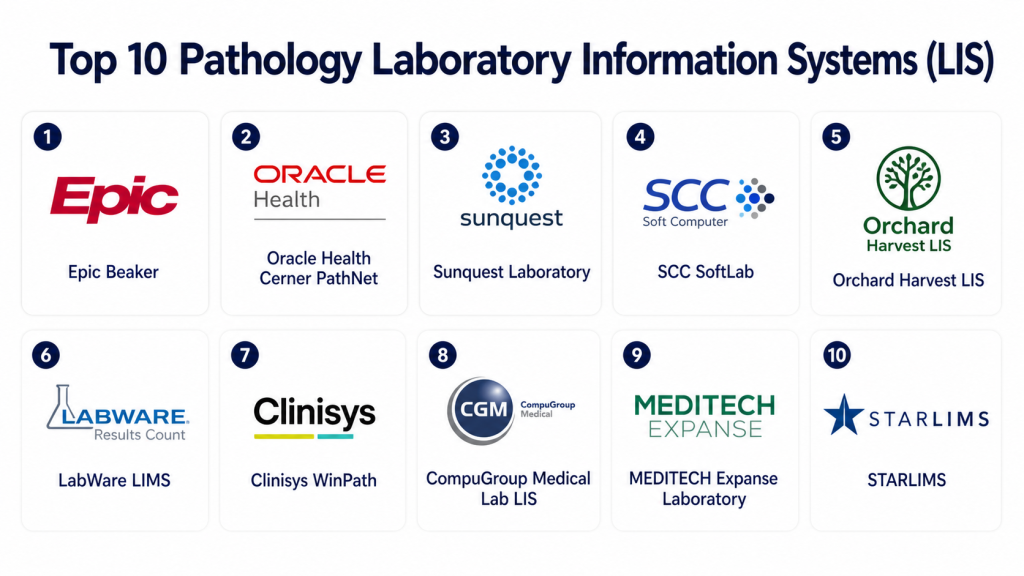
Top 10 Pathology Laboratory Information Systems (LIS)
#1 — Epic Beaker
Short description :
Epic Beaker is a comprehensive LIS solution integrated within the Epic healthcare ecosystem. It supports both anatomic and clinical pathology workflows. The platform enables efficient specimen tracking and reporting. It integrates deeply with Epic EHR for seamless data flow. Beaker is designed for large healthcare organizations. It offers scalability and automation features. It is widely adopted in enterprise hospitals.
Key Features
- Integrated pathology workflows
- Specimen tracking and management
- Reporting and analytics tools
- Automation capabilities
- EHR integration
- Billing and compliance support
Pros
- Strong integration with Epic ecosystem
- Highly scalable
Cons
- Complex implementation
- High cost
Platforms / Deployment
Web / Windows
Cloud / Hybrid
Security & Compliance
SSO, MFA, RBAC, audit logs, HIPAA support
Integrations & Ecosystem
Deep integration with Epic ecosystem and healthcare tools.
- EHR systems
- Billing platforms
- Lab instruments
- HL7/FHIR interfaces
Support & Community
Enterprise-level support with extensive documentation.
#2 — Cerner PathNet (Oracle Health)
Short description :
Cerner PathNet is a robust LIS platform designed for hospitals and large laboratories. It provides end-to-end pathology workflow management. The system supports specimen tracking, reporting, and billing. It integrates with Cerner Millennium EHR. PathNet emphasizes interoperability and scalability. It is suitable for high-volume labs. It is widely used in enterprise healthcare environments.
Key Features
- Comprehensive workflow management
- Specimen tracking
- Reporting tools
- Billing integration
- Interoperability support
- Analytics dashboards
Pros
- Strong enterprise capabilities
- Reliable performance
Cons
- Complex interface
- Customization challenges
Platforms / Deployment
Web / Windows
Cloud / Hybrid
Security & Compliance
SSO, MFA, encryption, audit logs
Integrations & Ecosystem
Works within Oracle Health ecosystem.
- EHR systems
- Lab instruments
- HL7 interfaces
- Analytics tools
Support & Community
Enterprise support with structured onboarding.
#3 — Sunquest LIS
Short description :
Sunquest LIS is a well-established laboratory information system used by hospitals and reference labs. It offers robust workflow automation and reporting capabilities. The platform supports complex lab operations. It integrates with various healthcare systems. Sunquest LIS is designed for scalability and efficiency. It is suitable for large labs. It is known for reliability.
Key Features
- Workflow automation
- Specimen tracking
- Reporting tools
- Integration capabilities
- Analytics dashboards
- Compliance support
Pros
- Mature and reliable system
- Strong feature set
Cons
- Interface may feel outdated
- Implementation complexity
Platforms / Deployment
Web / Windows
Cloud / On-premise
Security & Compliance
Not publicly stated
Integrations & Ecosystem
Supports integration with multiple systems.
- EHR
- Lab instruments
- Billing systems
- APIs
Support & Community
Established vendor support.
#4 — SCC Soft Computer LIS
Short description :
SCC Soft Computer LIS provides advanced laboratory management capabilities. It supports clinical and anatomic pathology workflows. The platform offers automation and reporting tools. It integrates with healthcare systems and lab instruments. SCC LIS is designed for mid-to-large labs. It emphasizes efficiency and compliance. It is widely used in specialized labs.
Key Features
- Workflow automation
- Specimen tracking
- Reporting tools
- Integration support
- Analytics dashboards
- Compliance features
Pros
- Strong customization options
- Comprehensive features
Cons
- Complex setup
- Learning curve
Platforms / Deployment
Web / Windows
Cloud / Hybrid
Security & Compliance
Not publicly stated
Integrations & Ecosystem
Supports integration with healthcare systems.
- EHR
- Lab devices
- Billing systems
- APIs
Support & Community
Vendor support with onboarding assistance.
#5 — Orchard Harvest LIS
Short description :
Orchard Harvest LIS is designed for small to mid-sized laboratories. It offers user-friendly workflow management and reporting tools. The platform focuses on efficiency and ease of use. It integrates with lab instruments and billing systems. Orchard Harvest LIS is suitable for independent labs. It provides flexibility and customization. It is cost-effective.
Key Features
- Workflow management
- Specimen tracking
- Reporting tools
- Billing integration
- Customization options
- Instrument integration
Pros
- Easy to use
- Affordable
Cons
- Limited enterprise features
- Smaller ecosystem
Platforms / Deployment
Web / Windows
Cloud / On-premise
Security & Compliance
Not publicly stated
Integrations & Ecosystem
Supports common lab integrations.
- Lab instruments
- Billing systems
- EHR
- APIs
Support & Community
Moderate support with onboarding resources.
#6 — LabWare LIMS
Short description :
LabWare LIMS is a versatile laboratory information system used across industries including healthcare. It offers advanced workflow management and customization. The platform supports complex lab operations. It integrates with multiple systems. LabWare is suitable for large labs. It emphasizes flexibility and scalability. It is widely adopted globally.
Key Features
- Workflow automation
- Customization capabilities
- Reporting tools
- Integration support
- Analytics dashboards
- Compliance features
Pros
- Highly customizable
- Scalable
Cons
- Complex implementation
- Requires training
Platforms / Deployment
Web / Windows / Linux
Cloud / On-premise
Security & Compliance
Not publicly stated
Integrations & Ecosystem
Supports extensive integrations.
- Lab instruments
- EHR systems
- APIs
- Data platforms
Support & Community
Strong global support network.
#7 — Clinisys WinPath
Short description :
Clinisys WinPath is a widely used LIS platform in clinical laboratories. It offers workflow automation and reporting tools. The platform supports high-volume lab operations. It integrates with healthcare systems and lab devices. WinPath is suitable for mid-to-large labs. It emphasizes efficiency and compliance. It is reliable and scalable.
Key Features
- Workflow automation
- Specimen tracking
- Reporting tools
- Integration capabilities
- Analytics dashboards
- Compliance support
Pros
- Reliable performance
- Strong feature set
Cons
- Interface could be improved
- Customization limitations
Platforms / Deployment
Web / Windows
Cloud / Hybrid
Security & Compliance
Not publicly stated
Integrations & Ecosystem
Supports integration with healthcare systems.
- EHR
- Lab instruments
- Billing systems
- APIs
Support & Community
Vendor support with training resources.
#8 — CompuGroup Medical Lab LIS
Short description :
CompuGroup Medical Lab LIS is designed for clinical laboratories and hospitals. It offers workflow management, reporting, and billing tools. The platform integrates with healthcare systems and lab devices. It supports efficient lab operations. It is suitable for mid-sized labs. It emphasizes usability and reliability. It is widely used in Europe.
Key Features
- Workflow management
- Specimen tracking
- Reporting tools
- Billing integration
- Integration support
- Analytics dashboards
Pros
- User-friendly interface
- Reliable performance
Cons
- Limited advanced features
- Smaller ecosystem
Platforms / Deployment
Web / Windows
Cloud / Hybrid
Security & Compliance
Not publicly stated
Integrations & Ecosystem
Supports integration with healthcare tools.
- EHR
- Lab instruments
- Billing systems
- APIs
Support & Community
Moderate vendor support.
#9 — MEDITECH LIS
Short description :
MEDITECH LIS is part of the MEDITECH healthcare platform. It supports pathology workflows, reporting, and billing. The system integrates with MEDITECH EHR. It is designed for hospitals and healthcare networks. It offers scalability and efficiency. It emphasizes integration and usability. It is widely used in mid-market hospitals.
Key Features
- Workflow management
- Reporting tools
- Billing integration
- EHR integration
- Analytics dashboards
- Compliance support
Pros
- Strong integration with MEDITECH ecosystem
- Scalable
Cons
- Limited flexibility outside ecosystem
- Interface limitations
Platforms / Deployment
Web / Windows
Cloud / Hybrid
Security & Compliance
Not publicly stated
Integrations & Ecosystem
Works within MEDITECH ecosystem.
- EHR systems
- Lab devices
- Billing systems
- APIs
Support & Community
Enterprise support with documentation.
#10 — SoftLab LIS
Short description :
SoftLab LIS is a laboratory information system designed for hospitals and labs. It offers workflow management, reporting, and billing tools. The platform integrates with healthcare systems and lab instruments. It supports efficient lab operations. It is suitable for mid-to-large labs. It emphasizes reliability and performance. It is a mature solution.
Key Features
- Workflow automation
- Specimen tracking
- Reporting tools
- Billing integration
- Integration support
- Analytics dashboards
Pros
- Reliable platform
- Strong integration capabilities
Cons
- Interface may feel dated
- Limited flexibility
Platforms / Deployment
Web / Windows
Cloud / Hybrid
Security & Compliance
Not publicly stated
Integrations & Ecosystem
Supports integration with healthcare systems.
- EHR
- Lab instruments
- Billing systems
- APIs
Support & Community
Vendor support with onboarding assistance.
Comparison Table
| Tool Name | Best For | Platform(s) Supported | Deployment | Standout Feature | Public Rating |
|---|---|---|---|---|---|
| Epic Beaker | Enterprise hospitals | Web/Windows | Hybrid | Deep EHR integration | N/A |
| Cerner PathNet | Large healthcare | Web/Windows | Hybrid | Interoperability | N/A |
| Sunquest LIS | Large labs | Web/Windows | Hybrid | Mature workflow tools | N/A |
| SCC Soft Computer | Specialized labs | Web/Windows | Hybrid | Customization | N/A |
| Orchard Harvest | SMB labs | Web/Windows | Cloud | Ease of use | N/A |
| LabWare LIMS | Large labs | Web/Windows/Linux | Hybrid | Flexibility | N/A |
| Clinisys WinPath | Mid-large labs | Web/Windows | Hybrid | Scalability | N/A |
| CompuGroup LIS | Mid-market | Web/Windows | Hybrid | Usability | N/A |
| MEDITECH LIS | Hospitals | Web/Windows | Hybrid | EHR integration | N/A |
| SoftLab LIS | Mid-large labs | Web/Windows | Hybrid | Reliability | N/A |
Evaluation & Scoring of Pathology Laboratory Information Systems (LIS)
| Tool Name | Core | Ease | Integrations | Security | Performance | Support | Value | Weighted Total |
|---|---|---|---|---|---|---|---|---|
| Epic Beaker | 9 | 7 | 9 | 9 | 9 | 9 | 7 | 8.6 |
| Cerner PathNet | 9 | 7 | 9 | 8 | 9 | 9 | 7 | 8.5 |
| Sunquest LIS | 8 | 6 | 8 | 7 | 8 | 8 | 7 | 7.6 |
| SCC LIS | 8 | 6 | 8 | 7 | 8 | 7 | 7 | 7.5 |
| Orchard Harvest | 7 | 8 | 6 | 6 | 7 | 6 | 8 | 7.1 |
| LabWare LIMS | 9 | 6 | 9 | 7 | 8 | 8 | 6 | 7.8 |
| Clinisys WinPath | 8 | 7 | 7 | 7 | 8 | 7 | 7 | 7.5 |
| CompuGroup LIS | 7 | 8 | 6 | 6 | 7 | 6 | 7 | 6.9 |
| MEDITECH LIS | 8 | 7 | 8 | 7 | 8 | 8 | 7 | 7.7 |
| SoftLab LIS | 8 | 7 | 7 | 7 | 8 | 7 | 7 | 7.5 |
Interpretation:
These scores are comparative and help highlight strengths across tools. Enterprise platforms typically score higher in integrations and performance, while SMB-focused tools excel in ease of use and value. Buyers should prioritize criteria aligned with their operational needs rather than relying solely on total scores.
Which Pathology Laboratory Information Systems (LIS) Is Right for You?
Solo / Freelancer
Small labs should consider Orchard Harvest or Nova-style tools for simplicity and affordability.
SMB
Mid-sized labs benefit from MedInformatix or Orchard Harvest for usability and cost balance.
Mid-Market
Organizations should consider Clinisys WinPath or MEDITECH LIS for balanced features.
Enterprise
Large hospitals should choose Epic Beaker, Cerner PathNet, or LabWare LIMS.
Budget vs Premium
Budget tools offer simplicity; premium tools provide advanced integrations and automation.
Feature Depth vs Ease of Use
Enterprise tools offer depth but require training; SMB tools are easier but less powerful.
Integrations & Scalability
Choose tools with strong EHR and device integrations for growth.
Security & Compliance Needs
Prioritize systems with strong access control and compliance readiness.
Frequently Asked Questions (FAQs)
1. What is a Laboratory Information System (LIS)?
An LIS is software that manages lab workflows, including sample tracking and reporting. It helps automate processes. It improves accuracy. It integrates with healthcare systems. It ensures compliance. It supports efficient operations.
2. How is LIS different from LIMS?
LIS is focused on healthcare labs, while LIMS is broader and used in various industries. LIS emphasizes patient data. LIMS focuses on research and testing. Both manage workflows. They serve different purposes. Integration may exist.
3. What does LIS cost?
Pricing varies based on features and deployment. Enterprise tools are costly. SMB tools are affordable. Subscription models are common. Custom pricing is typical. Costs include implementation and support.
4. How long does implementation take?
Implementation can take weeks to months. Enterprise systems take longer. Smaller systems are faster. Integration complexity matters. Training is required. Planning helps reduce delays.
5. What security features should LIS have?
LIS should include encryption and access controls. MFA and audit logs are important. Compliance is critical. Data protection is essential. Monitoring helps detect threats. Regular updates improve security.
6. Can LIS integrate with EHR systems?
Yes, LIS integrates with EHR systems using standards like HL7. Integration ensures data flow. It improves efficiency. It reduces errors. It enhances patient care. It is essential for modern labs.
7. What are common mistakes when choosing LIS?
Choosing based only on price is risky. Ignoring integration needs causes issues. Not considering scalability limits growth. Poor training reduces adoption. Security should not be overlooked. Evaluate long-term needs.
8. Is cloud LIS better than on-premise?
Cloud LIS offers flexibility and scalability. On-premise provides control. Choice depends on needs. Cloud reduces infrastructure costs. On-premise suits strict compliance. Hybrid models are common.
9. Can LIS support AI features?
Yes, modern LIS platforms support AI integration. AI improves diagnostics. It speeds workflows. It enhances accuracy. It provides insights. Adoption is increasing.
10. How do you switch LIS systems?
Switching requires planning and migration. Integration must be updated. Training is needed. Downtime should be minimized. Vendor support is important. Testing ensures smooth transition.
Conclusion
Pathology Laboratory Information Systems have become essential infrastructure for modern diagnostic labs, enabling efficient sample tracking, reporting, and compliance management. With advancements in AI, automation, and cloud deployment, LIS platforms are evolving into intelligent systems that improve both operational efficiency and diagnostic accuracy. Enterprise tools like Epic Beaker and Cerner PathNet offer deep integrations and scalability, while solutions like Orchard Harvest and Clinisys provide flexibility and usability for smaller labs.
Choosing the right LIS depends on your lab’s size, complexity, and integration needs. Instead of focusing on a single “best” option, shortlist 2–3 systems that align with your workflows, test them through pilot implementations, and validate performance, integration, and security before making a final decision.
