Introduction
Open Data Portals are centralized platforms that allow governments, organizations, and enterprises to publish, manage, and share datasets publicly or internally. These portals make information easily discoverable and reusable, fostering transparency, collaboration, and data-driven decision-making across industries.
Open Data Portals are essential for organizations aiming to leverage analytics, AI, and machine learning. They simplify access to large volumes of structured and unstructured data while ensuring governance, interoperability, and compliance across multiple platforms.
Real-world use cases include:
- Governments publishing census, health, or transport datasets for public use.
- Enterprises consolidating operational data for predictive analytics.
- Researchers accessing datasets for AI and machine learning model training.
- NGOs tracking environmental, social, or economic indicators to guide policy interventions.
- Smart city initiatives integrating IoT and city-wide data for operational insights.
Evaluation criteria for buyers:
- Dataset cataloging and search capabilities
- API access and data export formats
- Metadata and data quality management
- Security and compliance controls
- Scalability and performance
- User access management and roles
- Integration with analytics or visualization tools
- Support and community resources
- Ease of deployment and maintenance
- Pricing and value for intended use
Best for: Public sector agencies, enterprises with data-driven initiatives, research institutions, and developers seeking structured datasets.
Not ideal for: Small teams with limited data needs, organizations not requiring structured datasets, or those preferring manual sharing methods.
Key Trends in Open Data Portals
- AI-driven data discovery and automated tagging for faster insights.
- Automated metadata generation and quality checks for consistency.
- Cloud-native and hybrid deployment options for secure storage.
- API-first designs for seamless integrations with analytics and BI tools.
- Adoption of FAIR principles (Findable, Accessible, Interoperable, Reusable).
- Enhanced role-based access control and security compliance (GDPR, SOC 2).
- Support for real-time and streaming data ingestion.
- Open-source solutions gaining traction for flexible customization.
- Integrated visualization modules for instant insights.
- Community-driven datasets and collaborative editing features.
How We Selected These Tools (Methodology)
- Market adoption and mindshare across public and private sectors.
- Feature completeness including cataloging, APIs, and integrations.
- Reliability and performance indicators such as uptime and scalability.
- Security posture and compliance signals.
- Integration with analytics, BI, and visualization tools.
- Customer fit across government, enterprise, SMB, and developer segments.
- Ease of deployment, cloud/self-hosted flexibility, and maintenance.
- Support, documentation, and community strength.
- Cost-effectiveness relative to capabilities.
- Active development and regular feature updates.
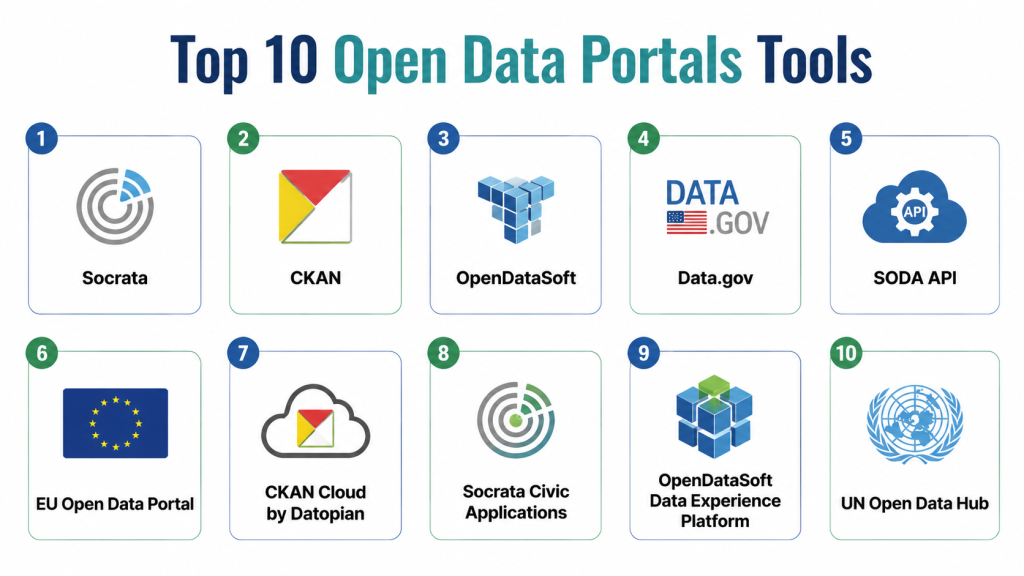
Top 10 Open Data Portals Tools
1- Socrata
Short description: A widely used open data portal for government and civic organizations, enabling public access to datasets and analytics.
Key Features
- Centralized dataset catalog with search and filtering
- RESTful API access for developers
- Data visualization dashboards and charts
- Role-based access and governance controls
- Integration with BI and analytics platforms
- Automated data quality and metadata checks
Pros
- Strong adoption among government agencies
- Easy-to-use dashboards for non-technical users
Cons
- Pricing may be high for smaller organizations
- Limited customization outside standard templates
Platforms / Deployment
- Web, Cloud
Security & Compliance
- SSO/SAML, encryption, audit logs
- SOC 2, ISO 27001, GDPR
Integrations & Ecosystem
Integrates with Tableau, Power BI, ArcGIS, and custom analytics pipelines.
- APIs for programmatic access
- ETL tool support
- Export to CSV, JSON, Excel
- Plugin support for visualization modules
Support & Community
- Full documentation and onboarding support
- Dedicated customer success teams
- Active online forums and community resources
2- CKAN
Short description: An open-source portal widely adopted for government, research, and enterprise datasets.
Key Features
- Comprehensive data catalog and search engine
- API-first design for automation and analytics
- Data versioning and metadata management
- Multi-language support
- Plugin architecture for customization
Pros
- Highly flexible and extensible
- Open-source, reducing licensing costs
Cons
- Requires technical expertise to deploy and maintain
- UI can be less polished compared to commercial offerings
Platforms / Deployment
- Web, Linux, Cloud/Self-hosted
Security & Compliance
- Not publicly stated
Integrations & Ecosystem
- Supports CKAN extensions, integration with GIS, BI tools, and custom applications
- REST APIs and Python client libraries
- Compatible with visualization plugins
- Connectors for data pipelines
Support & Community
- Large open-source community
- Extensive documentation
- Community-driven support channels
3- OpenDataSoft
Short description: Enterprise-focused portal for publishing, sharing, and visualizing datasets.
Key Features
- Rich interactive dashboards
- API-first access for programmatic retrieval
- Advanced data cataloging and search
- Automated data quality checks
- Multi-format data export and streaming support
Pros
- Enterprise-ready with strong support
- User-friendly interface for non-technical users
Cons
- Pricing can be high for smaller organizations
- Limited on-premise deployment options
Platforms / Deployment
- Web, Cloud
Security & Compliance
- SSO/SAML, encryption
- GDPR compliance
Integrations & Ecosystem
- Connects to Tableau, Power BI, Excel, and analytics workflows
- APIs for integration with enterprise apps
- Connectors for ETL pipelines
Support & Community
- Customer success teams
- Documentation and tutorials
- Varies / Not publicly stated
4- Data.gov
Short description: The U.S. government’s flagship open data portal for datasets across health, energy, and transportation.
Key Features
- Centralized catalog with search filters
- API access for developers and researchers
- Integration with visualization tools
- Metadata management and dataset versioning
- Data download in multiple formats
Pros
- Extensive, authoritative datasets
- Free to use for all stakeholders
Cons
- Limited customization for enterprise workflows
- UI can be overwhelming for casual users
Platforms / Deployment
- Web, Cloud
Security & Compliance
- Not publicly stated
Integrations & Ecosystem
- APIs compatible with Python, R, JavaScript
- GIS and BI tool integration
- Supports bulk dataset downloads
Support & Community
- Public documentation
- Community forums for dataset discussions
- Varies / Not publicly stated
5- SODA API
Short description: API-focused portal that complements Socrata portals for programmatic access.
Key Features
- RESTful API for datasets
- Real-time data querying
- JSON and CSV export
- Query filtering and pagination
- Developer SDKs
Pros
- Streamlined access for developers
- Real-time integration with apps and analytics
Cons
- Primarily API-based; less UI functionality
- Requires technical knowledge for advanced queries
Platforms / Deployment
- Web / Cloud
Security & Compliance
- SSO/SAML, encryption
- SOC 2, GDPR
Integrations & Ecosystem
- Integrates with analytics pipelines, custom apps, ETL workflows
- Python and JavaScript SDKs
- Supports streaming and bulk APIs
Support & Community
- Documentation and developer guides
- Customer support via Socrata team
- Active community forums
6- EU Open Data Portal
Short description: Centralized portal for EU-wide datasets supporting transparency, policy-making, and research.
Key Features
- Multi-lingual cataloging
- API access and bulk download options
- Metadata management and versioning
- Dataset classification by themes
- Integration with EU projects and apps
Pros
- Authoritative EU datasets
- Comprehensive classification and filtering
Cons
- Focused on EU data; less relevant globally
- Limited customization for private enterprise use
Platforms / Deployment
- Web, Cloud
Security & Compliance
- Not publicly stated
Integrations & Ecosystem
- APIs for developers
- GIS and visualization tool integration
- Supports export in CSV, JSON, XML
Support & Community
- Public documentation and tutorials
- Community support via forums
7- CKAN Cloud by Datopian
Short description: Managed CKAN service with cloud deployment, support, and enterprise features.
Key Features
- Fully managed CKAN instance
- API access and developer SDKs
- Data visualization modules
- Multi-tenant support
- Automated updates and maintenance
Pros
- Reduces technical overhead
- Enterprise-ready with support
Cons
- Less flexibility than self-hosted CKAN
- Costlier than open-source deployment
Platforms / Deployment
- Web, Cloud
Security & Compliance
- Not publicly stated
Integrations & Ecosystem
- REST APIs
- Connects to BI and analytics platforms
- Python and JavaScript SDKs
Support & Community
- Managed support from Datopian
- Documentation and guides
- Community forums
8- Socrata Civic Applications
Short description: Pre-built apps and templates for government open data consumption and engagement.
Key Features
- Interactive dashboards
- Data visualization templates
- Pre-integrated with SODA APIs
- Custom reporting and export
- Collaboration features
Pros
- Fast deployment for public-facing apps
- No coding required for dashboards
Cons
- Limited to Socrata ecosystem
- Less flexible for custom datasets outside portal
Platforms / Deployment
- Web, Cloud
Security & Compliance
- SSO/SAML, encryption
- GDPR compliance
Integrations & Ecosystem
- Connects to Socrata portals and SODA APIs
- Compatible with analytics workflows
Support & Community
- Documentation and tutorials
- Dedicated support teams
- Varies / Not publicly stated
9- OpenDataSoft Data Experience Platform
Short description: Platform for enterprises to publish, manage, and visualize datasets with interactive experiences.
Key Features
- Dashboards and visualizations
- API-first access
- Data quality monitoring
- Multi-format export
- Collaboration tools
Pros
- Enterprise-grade features
- Easy onboarding and data publishing
Cons
- Premium pricing
- Limited open-source flexibility
Platforms / Deployment
- Web, Cloud
Security & Compliance
- Not publicly stated
Integrations & Ecosystem
- Connects to BI tools, Tableau, Power BI
- APIs for custom integrations
- Supports CSV, JSON, streaming pipelines
Support & Community
- Customer success teams
- Documentation and tutorials
- Varies / Not publicly stated
10- UN Open Data Hub
Short description: UN-managed portal offering global datasets for research, sustainability, and policy.
Key Features
- Centralized catalog of international datasets
- APIs and bulk download
- Metadata and classification
- Visualization and reporting tools
- Multi-lingual support
Pros
- Trusted, authoritative data source
- Supports research and global initiatives
Cons
- Limited customization for enterprise workflows
- Mainly focused on public use
Platforms / Deployment
- Web, Cloud
Security & Compliance
- Not publicly stated
Integrations & Ecosystem
- APIs for programmatic access
- Compatible with data analytics platforms
- Supports CSV, JSON, XML export
Support & Community
- Documentation and guidelines
- Community support via UN channels
- Varies / Not publicly stated
Comparison Table (Top 10)
| Tool Name | Best For | Platform(s) Supported | Deployment | Standout Feature | Public Rating |
|---|---|---|---|---|---|
| Socrata | Government | Web | Cloud | Civic dashboards | N/A |
| CKAN | Open-source | Web | Cloud/Self-hosted | Extensible plugins | N/A |
| OpenDataSoft | Enterprises | Web | Cloud | Interactive dashboards | N/A |
| Data.gov | Public datasets | Web | Cloud | Large authoritative catalog | N/A |
| SODA API | Developers | Web | Cloud | API-first access | N/A |
| EU Open Data Portal | EU agencies | Web | Cloud | EU-wide datasets | N/A |
| CKAN Cloud | Enterprises | Web | Cloud | Managed CKAN | N/A |
| Socrata Civic Apps | Governments | Web | Cloud | Pre-built apps | N/A |
| OpenDataSoft DX | Enterprises | Web | Cloud | Data experiences | N/A |
| UN Open Data Hub | Researchers | Web | Cloud | Global datasets | N/A |
Top 3 Enterprise: OpenDataSoft, OpenDataSoft DX, CKAN Cloud
Top 3 SMB: CKAN, Socrata, SODA API
Top 3 Developers: SODA API, CKAN, CKAN Cloud
Evaluation & Scoring of Open Data Portals
| Tool Name | Core (25%) | Ease (15%) | Integrations (15%) | Security (10%) | Performance (10%) | Support (10%) | Value (15%) | Weighted Total (0–10) |
|---|---|---|---|---|---|---|---|---|
| Socrata | 9 | 8 | 8 | 8 | 9 | 8 | 7 | 8.4 |
| CKAN | 8 | 6 | 7 | 7 | 8 | 7 | 9 | 7.5 |
| OpenDataSoft | 9 | 9 | 8 | 8 | 9 | 9 | 7 | 8.5 |
| Data.gov | 8 | 7 | 7 | 7 | 8 | 7 | 10 | 7.6 |
| SODA API | 8 | 7 | 9 | 8 | 8 | 7 | 8 | 7.9 |
| EU Open Data Portal | 8 | 7 | 7 | 7 | 8 | 7 | 8 | 7.6 |
| CKAN Cloud | 9 | 8 | 8 | 8 | 9 | 8 | 7 | 8.4 |
| Socrata Civic Apps | 8 | 9 | 7 | 8 | 8 | 8 | 7 | 8.0 |
| OpenDataSoft DX | 9 | 9 | 8 | 8 | 9 | 9 | 7 | 8.5 |
| UN Open Data Hub | 8 | 7 | 7 | 7 | 8 | 7 | 8 | 7.6 |
Scores reflect comparative performance across features, usability, integrations, security, reliability, support, and value.
Which Open Data Portals Tool Is Right for You?
Solo / Freelancer
Use lightweight, open-source CKAN or SODA API for direct access to datasets with minimal cost.
SMB
Socrata or CKAN Cloud offers easy deployment and user-friendly dashboards.
Mid-Market
OpenDataSoft or Socrata Civic Apps provide enterprise-grade features at moderate cost.
Enterprise
OpenDataSoft DX, CKAN Cloud, or OpenDataSoft enterprise editions offer full analytics, security, and governance.
Budget vs Premium
CKAN is ideal for budget-conscious teams; premium solutions provide better dashboards, support, and SLAs.
Feature Depth vs Ease of Use
CKAN allows deep customization; Socrata and OpenDataSoft prioritize usability.
Integrations & Scalability
Enterprise portals integrate with BI tools and scale for large datasets.
Security & Compliance Needs
Choose platforms with SOC 2, GDPR, or ISO 27001 for regulated data; open-source may require additional implementation.
Frequently Asked Questions (FAQs)
1- What is an Open Data Portal?
A centralized platform that allows organizations to publish, manage, and share datasets publicly or internally.
2- How do I access datasets?
Most portals provide APIs, bulk downloads, and dashboard queries.
3- Can I integrate an Open Data Portal with analytics tools?
Yes, most platforms support BI tools and APIs for Python, R, or JavaScript.
4- Are open data portals secure?
Enterprise-grade portals include encryption, SSO, audit logs, and compliance features.
5- What deployment options exist?
Portals can be cloud-hosted, self-hosted, or hybrid depending on organizational needs.
6- Are there free options?
Yes, CKAN and government portals like Data.gov provide free access.
7- How do I maintain data quality?
Portals include metadata management, validation, versioning, and automated quality checks.
8- Can I use the data commercially?
Licensing varies; most public datasets allow reuse, but always check the portal’s terms.
9- How long does deployment take?
Cloud portals are fast; self-hosted or customized portals may take weeks to implement.
10- What are common mistakes when choosing a portal?
Ignoring scalability, integrations, compliance, and user access management can reduce adoption and security.
Conclusion
Open Data Portals enable transparency, collaboration, and data-driven decision-making for governments, enterprises, and research institutions. Choosing the right portal depends on organizational size, compliance requirements, dataset scale, and integration needs. Small teams may benefit from CKAN or SODA API, while enterprises may prefer OpenDataSoft DX or Socrata for dashboards and governance. Next steps: shortlist 2–3 tools that match your needs, run a pilot, and validate integrations, usability, and security.
