Introduction
Long-Term Care Management Systems are specialized software platforms designed to help nursing homes, assisted living facilities, rehabilitation centers, and senior care providers manage daily operations, resident care, compliance, staffing, and financial workflows. These systems replace fragmented tools and manual processes with a unified platform that improves visibility, efficiency, and care coordination across teams.
The importance of these systems has grown significantly as long-term care organizations face increasing regulatory requirements, staffing shortages, and higher expectations for care quality and reporting. Modern platforms now include mobile documentation, automation, analytics, and integration with healthcare systems, enabling providers to deliver better outcomes while maintaining operational control.
Real-world use cases:
- Managing resident records, care plans, and clinical documentation
- Scheduling caregivers and tracking staff availability
- Handling billing, insurance claims, and financial workflows
- Monitoring compliance, audits, and regulatory requirements
- Improving communication between staff, residents, and families
Evaluation Criteria for Buyers
- Clinical documentation and care planning depth
- Workforce scheduling and staff management
- Billing, claims, and financial operations
- Compliance tracking and reporting
- Mobile usability for caregivers
- Integration with EHR and healthcare systems
- Security controls and identity management
- Ease of use and onboarding
- Reporting and analytics capabilities
- Scalability across multiple facilities
Best for: Nursing homes, assisted living facilities, long-term care providers, rehabilitation centers, and multi-location senior care organizations.
Not ideal for: Small care homes with minimal operational complexity or organizations already fully supported by hospital-based systems.
Key Trends in Long-Term Care Management Systems
- Mobile-first documentation for caregivers and clinical staff
- AI-assisted care planning and risk identification
- Increased focus on regulatory compliance and audit readiness
- Integration with EHRs and healthcare data systems
- Cloud-based deployment becoming standard
- Workforce optimization and staffing automation
- Family engagement and communication tools
- Real-time dashboards and operational analytics
- Stronger access control and identity management features
- Support for value-based care and outcome tracking
How We Selected Long-Term Care Management Systems
- Market adoption across long-term care providers
- Feature completeness across clinical, operational, and billing workflows
- Ease of use for caregivers and administrative staff
- Integration capabilities with healthcare and financial systems
- Security posture and compliance readiness
- Support for different facility sizes and care models
- Reporting and analytics strength
- Scalability for multi-location organizations
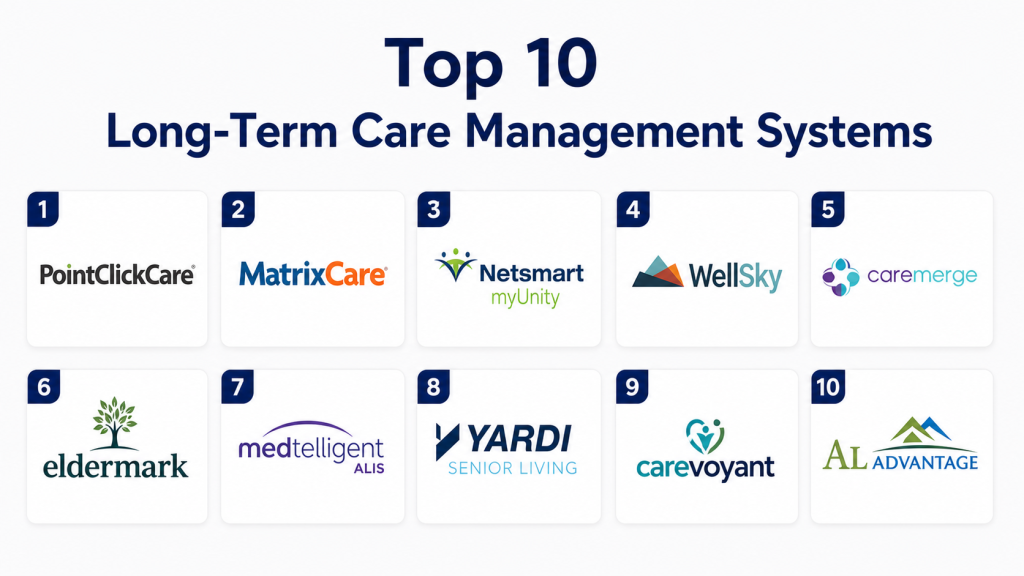
Top 10 Long-Term Care Management Systems
#1 — MatrixCare
Short description: MatrixCare is a widely used platform for long-term care, post-acute care, and senior living providers. It offers a comprehensive suite of tools for managing clinical documentation, care planning, billing, and compliance. The platform is designed for organizations that operate multiple facilities and need structured workflows. It helps improve visibility into resident care and operational performance. MatrixCare is particularly useful for providers that want a connected ecosystem across care settings.
Key Features
- Clinical documentation and care planning
- Medication management workflows
- Billing and revenue cycle support
- Staff scheduling and coordination
- Compliance tracking and reporting
- Analytics dashboards
Pros
- Strong ecosystem across long-term care settings
- Scalable for multi-location providers
- Comprehensive clinical and operational tools
Cons
- Implementation can be complex
- Requires training for staff adoption
- Pricing varies by organization size
Platforms / Deployment
Web / Mobile
Cloud
Security & Compliance
Healthcare-grade security expected. Specific certifications not publicly stated.
Integrations & Ecosystem
MatrixCare integrates with clinical, billing, and operational systems to support connected care workflows.
- EHR integrations
- Billing systems
- Reporting tools
- Care coordination platforms
Support & Community
Vendor-led onboarding, training, and enterprise support available.
#2 — PointClickCare
Short description: PointClickCare is one of the most widely adopted long-term care platforms, serving skilled nursing, senior living, and post-acute providers. It provides tools for clinical documentation, billing, compliance, and analytics. The platform is designed to streamline workflows and improve coordination between care teams. It is especially valuable for organizations requiring strong interoperability and reporting capabilities.
Key Features
- Resident care and documentation management
- Medication and clinical workflows
- Billing and financial tools
- Compliance and reporting
- Analytics dashboards
- Integration with healthcare networks
Pros
- Widely trusted platform
- Strong analytics and reporting
- Good interoperability capabilities
Cons
- Can be complex for smaller facilities
- Implementation time varies
- Pricing not publicly stated
Platforms / Deployment
Web
Cloud
Security & Compliance
Healthcare compliance expected. Specific details not publicly stated.
Integrations & Ecosystem
Supports integration with healthcare systems, billing, and analytics tools.
- EHR systems
- Financial tools
- Reporting platforms
- Partner ecosystems
Support & Community
Strong onboarding and support resources available.
#3 — Netsmart myUnity
Short description: Netsmart myUnity is a healthcare platform supporting long-term care, behavioral health, and community-based providers. It connects clinical, operational, and financial workflows in a unified system. The platform is suitable for organizations requiring interoperability across multiple care environments. It helps streamline documentation, reporting, and care coordination.
Key Features
- Clinical documentation
- Care coordination tools
- Billing workflows
- Reporting and analytics
- Multi-care setting support
Pros
- Broad healthcare ecosystem
- Strong interoperability
- Suitable for large organizations
Cons
- Complex implementation
- Requires configuration
- Pricing varies
Platforms / Deployment
Web
Cloud / Hybrid
Security & Compliance
Not publicly stated
Integrations & Ecosystem
Supports integration with healthcare and financial systems.
- EHR integrations
- Reporting tools
- Billing systems
- Data exchange workflows
Support & Community
Enterprise-level support available.
#4 — WellSky Long-Term Care
Short description: WellSky provides long-term care solutions focused on clinical documentation, compliance, and operational workflows. It helps facilities improve care coordination and reporting while maintaining regulatory compliance. The platform is suitable for organizations that need structured processes and strong administrative control.
Key Features
- Care planning and documentation
- Staff scheduling
- Billing workflows
- Compliance tracking
- Reporting dashboards
Pros
- Strong operational control
- Reliable reporting capabilities
- Suitable for structured environments
Cons
- Requires onboarding time
- Not ideal for very small teams
- Pricing not publicly stated
Platforms / Deployment
Web
Cloud
Security & Compliance
Not publicly stated
Integrations & Ecosystem
Supports operational and clinical integrations.
- Billing tools
- Reporting systems
- Care workflows
Support & Community
Vendor support and onboarding resources available.
#5 — Caremerge
Short description: Caremerge is designed for assisted living and senior living communities, focusing on communication, engagement, and care coordination. It helps staff manage daily tasks, improve resident experience, and streamline workflows. The platform is ideal for organizations prioritizing communication and collaboration.
Key Features
- Resident engagement tools
- Care coordination workflows
- Communication features
- Scheduling support
- Reporting dashboards
Pros
- Strong communication features
- Easy-to-use interface
- Good for assisted living environments
Cons
- Limited clinical depth
- Not ideal for complex care environments
- Pricing varies
Platforms / Deployment
Web / Mobile
Cloud
Security & Compliance
Not publicly stated
Integrations & Ecosystem
Supports integrations with care and communication systems.
- Communication tools
- Reporting platforms
- Care coordination systems
Support & Community
Basic onboarding and support available.
#6 — AL Advantage
Short description: AL Advantage is built for assisted living providers needing resident care management, scheduling, and compliance tools. It helps streamline operations and improve care visibility.
Key Features
- Resident care tracking
- Scheduling workflows
- Reporting tools
- Compliance support
Pros
- Easy to adopt
- Good for assisted living
- Practical workflows
Cons
- Limited enterprise features
- Integration options may vary
Platforms / Deployment
Web
Cloud
Security & Compliance
Not publicly stated
Integrations & Ecosystem
Supports basic operational integrations.
- Reporting tools
- Billing workflows
Support & Community
Vendor support available.
#7 — Eldermark
Short description: Eldermark provides software for senior living and long-term care providers, focusing on care management, billing, and reporting. It is suitable for facilities needing a balanced operational platform.
Key Features
- Care management
- Billing workflows
- Reporting dashboards
- Staff coordination
Pros
- Balanced feature set
- Suitable for mid-sized providers
- Easy to use
Cons
- Limited advanced analytics
- Integration details vary
Platforms / Deployment
Web
Cloud
Security & Compliance
Not publicly stated
Integrations & Ecosystem
Supports care and financial workflows.
- Billing tools
- Reporting systems
Support & Community
Support and onboarding available.
#8 — Medtelligent ALIS
Short description: Medtelligent ALIS is a modern platform for assisted living and senior care providers. It focuses on operations, compliance, and resident management with a clean interface.
Key Features
- Resident management
- Scheduling tools
- Compliance tracking
- Reporting dashboards
Pros
- Modern interface
- Easy to use
- Good for assisted living
Cons
- Limited enterprise depth
- Integration scope varies
Platforms / Deployment
Web
Cloud
Security & Compliance
Not publicly stated
Integrations & Ecosystem
Supports operational workflows.
- Reporting tools
- Care management systems
Support & Community
Vendor support available.
#9 — Yardi Senior Living
Short description: Yardi Senior Living combines property management and care management for senior living providers. It is useful for organizations managing both operations and real estate aspects.
Key Features
- Resident and property management
- Financial and billing tools
- Care coordination
- Reporting dashboards
Pros
- Combines property and care management
- Strong financial tools
- Suitable for large organizations
Cons
- May be complex for small providers
- Requires setup time
Platforms / Deployment
Web
Cloud
Security & Compliance
Not publicly stated
Integrations & Ecosystem
Supports financial and operational integrations.
- Accounting tools
- Reporting systems
Support & Community
Enterprise support available.
#10 — CareVoyant
Short description: CareVoyant supports home care, home health, and long-term care providers with scheduling, documentation, billing, and reporting tools. It is suitable for agencies needing a flexible platform.
Key Features
- Scheduling and documentation
- Billing workflows
- Reporting dashboards
- Care coordination
Pros
- Flexible platform
- Suitable for multiple care models
- Easy to scale
Cons
- Advanced features may require setup
- Integration details vary
Platforms / Deployment
Web
Cloud
Security & Compliance
Not publicly stated
Integrations & Ecosystem
Supports care and financial workflows.
- Billing systems
- Reporting tools
Support & Community
Vendor support available.
Comparison Table Top 10
| Tool Name | Best For | Platform(s) Supported | Deployment | Standout Feature | Public Rating |
|---|---|---|---|---|---|
| MatrixCare | Multi-facility providers | Web/Mobile | Cloud | Post-acute ecosystem | N/A |
| PointClickCare | Enterprise providers | Web | Cloud | Interoperability | N/A |
| Netsmart myUnity | Large organizations | Web | Cloud/Hybrid | Healthcare ecosystem | N/A |
| WellSky | Structured facilities | Web | Cloud | Compliance workflows | N/A |
| Caremerge | Assisted living | Web/Mobile | Cloud | Resident engagement | N/A |
| AL Advantage | Small facilities | Web | Cloud | Simplicity | N/A |
| Eldermark | Mid-sized providers | Web | Cloud | Balanced features | N/A |
| Medtelligent ALIS | Assisted living | Web | Cloud | Modern interface | N/A |
| Yardi Senior Living | Large organizations | Web | Cloud | Property + care | N/A |
| CareVoyant | Flexible providers | Web | Cloud | Multi-care support | N/A |
Evaluation & Scoring of Long-Term Care Management Systems
| Tool Name | Core (25%) | Ease (15%) | Integrations (15%) | Security (10%) | Performance (10%) | Support (10%) | Value (15%) | Weighted Total |
|---|---|---|---|---|---|---|---|---|
| MatrixCare | 9 | 8 | 8 | 8 | 8 | 8 | 8 | 8.4 |
| PointClickCare | 9 | 7 | 9 | 8 | 8 | 8 | 7 | 8.3 |
| Netsmart myUnity | 9 | 7 | 9 | 8 | 8 | 8 | 7 | 8.3 |
| WellSky | 8 | 7 | 8 | 8 | 8 | 8 | 7 | 7.9 |
| Caremerge | 7 | 8 | 7 | 7 | 7 | 7 | 8 | 7.4 |
| AL Advantage | 7 | 8 | 6 | 7 | 7 | 7 | 8 | 7.3 |
| Eldermark | 7 | 8 | 7 | 7 | 7 | 7 | 8 | 7.4 |
| Medtelligent ALIS | 7 | 9 | 6 | 7 | 7 | 7 | 8 | 7.5 |
| Yardi Senior Living | 8 | 7 | 8 | 7 | 8 | 7 | 7 | 7.6 |
| CareVoyant | 8 | 8 | 7 | 7 | 7 | 7 | 8 | 7.7 |
These scores are comparative and help buyers shortlist tools based on strengths. Higher scores typically indicate better feature depth and scalability, while lower scores may still represent good options for smaller or simpler use cases.
Which Long-Term Care Management System Is Right for You?
Solo / Small Facility
If you are running a small care home, assisted living unit, or independent facility, your priority should be simplicity and ease of use. You likely don’t need a heavy enterprise system with complex workflows. Focus on tools that offer basic scheduling, resident records, documentation, and simple billing without requiring long onboarding.
Platforms like AL Advantage, Medtelligent ALIS, or Caremerge can be more suitable because they are easier to adopt and don’t overwhelm staff. The key is choosing a system that reduces manual work without adding operational complexity. Cost and quick implementation should also be major decision factors.
SMB
Small to mid-sized organizations need a balanced system that supports scheduling, caregiver coordination, billing, compliance tracking, and reporting. At this stage, workflows become more structured, and manual tools are no longer sufficient.
Tools like CareVoyant, Eldermark, and Caremerge provide a strong balance between usability and functionality. These platforms help improve daily operations without requiring enterprise-level resources. SMBs should prioritize mobile usability, billing accuracy, and staff adoption to ensure smooth day-to-day management.
Mid-Market
Mid-sized organizations operating across multiple facilities or offering different care services should focus on scalability, integrations, and workflow standardization. At this level, reporting, compliance, and multi-location coordination become critical.
MatrixCare, WellSky, and Netsmart myUnity are strong options for mid-market providers. These platforms offer deeper functionality for clinical documentation, billing workflows, and operational analytics. Buyers should evaluate how well the system supports multiple facilities, user roles, and centralized reporting.
Enterprise
Large organizations and multi-location care providers require advanced systems with strong interoperability, analytics, and security controls. Enterprise buyers should prioritize platforms that support large volumes of data, multiple departments, and strict compliance requirements.
PointClickCare, MatrixCare, and Netsmart myUnity are well-suited for enterprise environments. These systems provide deep integration capabilities, advanced reporting, and structured workflows. Enterprise buyers should also evaluate identity management, audit logs, and integration with healthcare systems before making a decision.
Budget vs Premium
Budget-focused tools are suitable for organizations with simple workflows and limited resources. These platforms cover essential needs like scheduling, documentation, and billing but may lack advanced analytics or integrations.
Premium platforms are better for organizations with complex operations, multiple facilities, or strict compliance requirements. They offer deeper features, better reporting, and stronger scalability. The right choice depends on operational complexity rather than just budget.
Feature Depth vs Ease of Use
Highly feature-rich platforms can provide advanced capabilities, but they may also require training and longer onboarding time. Simpler tools are easier to use but may not support complex workflows.
The best approach is to find a balance between functionality and usability. Caregivers and staff should be able to use the system easily without slowing down daily operations. Testing real workflows during demos is essential before making a final choice
Integrations & Scalability
As organizations grow, integration becomes critical. A good system should connect with payroll, billing systems, EHRs, reporting tools, and other healthcare platforms. Without proper integration, teams may face duplicate work and data inconsistencies.
Scalability is equally important. The system should support multiple facilities, large staff teams, and increasing resident volume. Choosing a scalable platform early can prevent costly migrations later.
Security & Compliance Needs
Security is a key requirement in long-term care environments. Systems should provide access control, audit logs, encryption, and role-based permissions to protect sensitive data.
Organizations should also ensure the platform supports healthcare compliance requirements. Features like identity management, user access tracking, and data protection are essential for maintaining trust and meeting regulatory standards.
Frequently Asked Questions FAQs
1. What is a Long-Term Care Management System?
It is a software platform that helps manage resident care, staffing, billing, and compliance in long-term care facilities. It replaces manual processes with digital workflows and improves coordination between staff. These systems also provide reporting tools to track performance and care quality. They are essential for modern healthcare operations.
2. How much does it cost?
Pricing varies depending on facility size, number of users, and features required. Some vendors offer subscription-based pricing, while others provide custom quotes. Additional costs may include onboarding, training, and integrations. It is best to request a detailed quote before making a decision.
3. What features are most important?
Key features include scheduling, care planning, billing, compliance tracking, and reporting. Mobile access is also critical for caregivers working in the field. Integration with other systems improves efficiency. The right features depend on the organization’s needs.
4. Is cloud deployment better?
Cloud-based systems are easier to access and maintain, especially for distributed teams. They reduce the need for IT infrastructure and allow real-time updates. Most modern platforms are cloud-first. However, some organizations may prefer hybrid setups.
5. Can it integrate with EHR systems?
Many platforms support integration with EHR and healthcare systems. This allows better data sharing and coordination across care teams. Integration reduces manual data entry and errors. Buyers should confirm compatibility before purchase.
6. Is it suitable for small facilities?
Yes, but small facilities should choose simpler platforms that are easy to use. Complex enterprise systems may not be necessary. The focus should be on usability and essential features. Cost and onboarding time are also important considerations.
7. How long does implementation take?
Implementation time varies depending on the size and complexity of the organization. Small facilities may take a few weeks, while large organizations may take months. Data migration and staff training also affect timelines. Proper planning can speed up the process.
8. What are common mistakes?
Common mistakes include choosing based only on features instead of workflow fit. Ignoring integration needs and security requirements can also cause issues. Poor user adoption is another challenge. Testing the system before full rollout is important.
9. Are AI features useful?
AI can help with scheduling, care planning, and predictive insights. It improves efficiency and reduces manual work. However, it should not replace core functionality. Organizations should evaluate AI features carefully before relying on them.
10. Which is best overall?
There is no single best system for all organizations. The right choice depends on size, budget, and operational needs. Some platforms are better for small facilities, while others are designed for large enterprises. Testing multiple options is recommended.
Conclusion
Long-Term Care Management Systems are essential for modern care providers looking to improve operational efficiency, maintain compliance, and deliver high-quality resident care. As the industry becomes more complex, these platforms help organizations manage documentation, staffing, billing, and reporting in a structured and scalable way. Choosing the right system depends on the organization’s size, care model, and long-term growth strategy.
Instead of selecting a tool based only on features, organizations should evaluate real-world workflows, staff usability, integration needs, and compliance requirements. Running demos and testing scenarios such as scheduling, documentation, and billing can provide better insights into how the system performs in daily operations.
