Introduction
Fraud Prevention for E-commerce encompasses tools and platforms that detect, prevent, and mitigate fraudulent transactions in online stores. These solutions help retailers safeguard revenue, protect customer data, and maintain trust by identifying suspicious activities, verifying user identities, and monitoring transactions in real time.
In the rise of digital commerce, mobile shopping, and global payment methods has increased exposure to fraudulent transactions, including payment fraud, account takeover, coupon abuse, and chargebacks. Efficient fraud prevention not only reduces losses but also ensures a seamless shopping experience for legitimate customers.
Use cases include:
- Detecting and blocking suspicious orders before fulfillment
- Preventing payment fraud with AI-driven transaction analysis
- Protecting customer accounts against credential stuffing and account takeover
- Reducing chargebacks and associated fees
- Automating risk scoring for transactions across multiple sales channels
Key evaluation criteria for buyers include:
- Real-time fraud detection and alerts
- AI/ML-driven risk scoring
- Integration with payment gateways and e-commerce platforms
- User behavior analytics and device fingerprinting
- Chargeback management and reporting
- Multi-channel coverage (web, mobile, marketplaces)
- Ease of deployment and management
- Regulatory compliance (PCI DSS, GDPR)
- Customizable fraud rules and automation
- Pricing models and scalability
Best for: E-commerce retailers, online marketplaces, payment processors, and enterprise merchants handling large transaction volumes.
Not ideal for: Small-scale sellers with minimal transaction volume or those using marketplaces that handle fraud prevention internally.
Key Trends in Fraud Prevention for E-commerce
- AI-powered transaction risk scoring and pattern recognition
- Real-time automated fraud alerts and blocking
- Device fingerprinting and behavioral analytics for account security
- Multi-channel coverage including web, mobile, and marketplaces
- Integration with payment gateways and order management systems
- Automated chargeback and dispute management
- Machine learning models that adapt to evolving fraud tactics
- Cloud-native platforms for scalability and fast deployment
- API-first solutions for custom e-commerce integration
- Enhanced compliance with global regulations like PCI DSS and GDPR
How We Selected These Tools (Methodology)
- Evaluated market adoption and reputation among e-commerce retailers
- Assessed feature completeness: detection, prevention, reporting, and automation
- Reviewed reliability and performance signals from customer feedback
- Verified security posture: encryption, SSO, MFA, audit logs
- Analyzed integration capabilities with payment processors, POS, and e-commerce platforms
- Considered customer fit across SMB, mid-market, and enterprise segments
- Reviewed scalability and cloud deployment options
- Evaluated ease of use and operational efficiency
- Considered pricing and total value for businesses
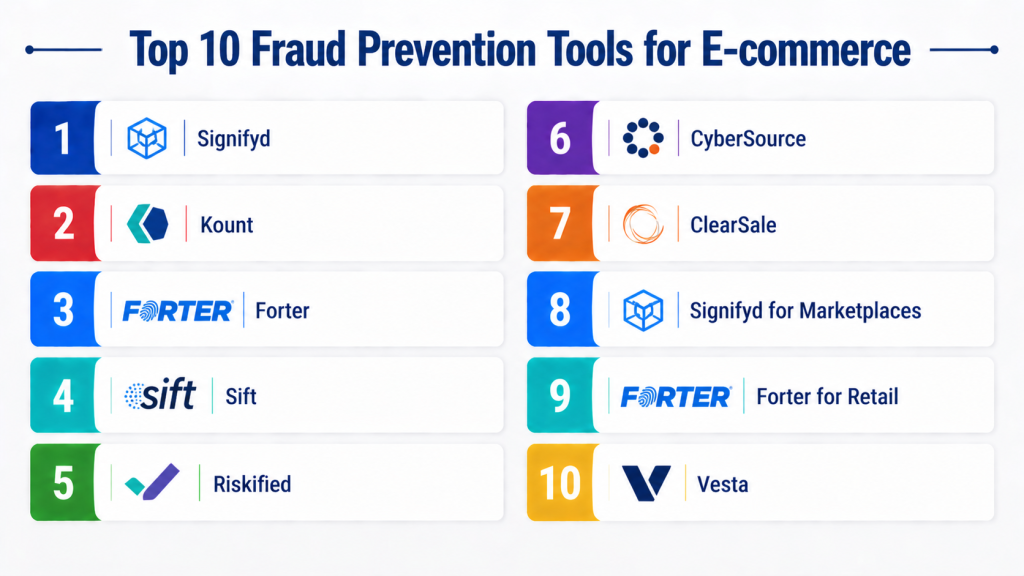
Top 10 Fraud Prevention Tools for E-commerce
#1 — Signifyd
Short description: Signifyd provides an end-to-end fraud protection platform that automatically reviews orders, prevents fraudulent transactions, and guarantees chargebacks for approved orders, suitable for enterprise e-commerce merchants.
Key Features
- 100% financial guarantee against fraud
- AI-driven order risk scoring
- Automated decisioning and workflow
- Global e-commerce coverage
- Real-time transaction monitoring
- Multi-channel fraud protection
Pros
- Strong financial protection
- High automation reduces manual reviews
Cons
- Cost may be high for small retailers
- Advanced configuration may require expertise
Platforms / Deployment
- Web / Cloud
Security & Compliance
- PCI DSS compliant
- SSL encryption
- Not publicly stated SOC 2
Integrations & Ecosystem
- Payment gateways
- E-commerce platforms (Shopify, Magento, BigCommerce)
- APIs for custom integration
- CRM and ERP integration
Support & Community
24/7 support; knowledge base; enterprise onboarding resources.
#2 — Kount
Short description: Kount is an AI-driven fraud prevention platform that identifies suspicious orders, prevents chargebacks, and uses device and behavioral analytics for e-commerce businesses.
Key Features
- AI-based risk scoring
- Device fingerprinting and behavioral analytics
- Real-time transaction monitoring
- Automated decision-making
- Chargeback management
- Global coverage
Pros
- Excellent AI detection
- Reduces chargebacks and fraud losses
Cons
- Implementation can be complex
- Premium pricing for enterprise features
Platforms / Deployment
- Web / Cloud
Security & Compliance
- PCI DSS compliant
- SSL encryption
- MFA and role-based access
Integrations & Ecosystem
- Payment processors
- E-commerce platforms
- ERP and CRM systems
- API for custom integrations
Support & Community
Dedicated account support; documentation and community forums.
#3 — Forter
Short description: Forter offers a real-time fraud prevention platform with machine learning models that approve legitimate orders instantly while blocking fraudulent ones, ideal for high-volume online retailers.
Key Features
- Real-time fraud detection and automatic decisioning
- Behavioral analytics
- Chargeback protection
- Machine learning risk scoring
- Global transaction coverage
- Seamless customer experience
Pros
- Instant order approvals reduce friction
- High accuracy with AI models
Cons
- Cost may be high for SMBs
- Integration requires technical resources
Platforms / Deployment
- Web / Cloud
Security & Compliance
- PCI DSS compliant
- SSL encryption
- Not publicly stated ISO/SOC
Integrations & Ecosystem
- E-commerce platforms
- Payment gateways
- CRM and ERP integration
- API-based custom workflows
Support & Community
24/7 support; online documentation and best practices guides.
#4 — Sift
Short description: Sift provides a digital trust and safety platform using machine learning to prevent payment fraud, account takeover, and content abuse across e-commerce platforms.
Key Features
- AI-powered fraud scoring
- Account takeover protection
- Real-time order monitoring
- Chargeback and dispute management
- Device and behavioral analytics
- API-first approach for custom integration
Pros
- Comprehensive fraud coverage
- Scalable for global operations
Cons
- Complex setup for smaller retailers
- Premium pricing
Platforms / Deployment
- Web / Cloud
Security & Compliance
- PCI DSS compliant
- SSL encryption
Integrations & Ecosystem
- Payment gateways
- E-commerce platforms
- CRM and marketing platforms
- APIs for developer integration
Support & Community
Enterprise support; developer documentation and knowledge base.
#5 — Riskified
Short description: Riskified offers AI-based e-commerce fraud prevention and chargeback protection to approve legitimate orders while minimizing fraud, targeting mid-market to enterprise retailers.
Key Features
- Real-time AI fraud scoring
- Chargeback guarantee
- Behavioral analytics
- Multi-channel order monitoring
- Customizable fraud rules
Pros
- Protects revenue with chargeback guarantee
- Reduces manual reviews
Cons
- Higher cost for small merchants
- Requires technical setup
Platforms / Deployment
- Web / Cloud
Security & Compliance
- PCI DSS compliant
- SSL encryption
Integrations & Ecosystem
- Payment processors
- E-commerce platforms
- CRM and ERP systems
- API access
Support & Community
Email and chat support; documentation and training materials.
#6 — CyberSource
Short description: CyberSource provides payment management and fraud prevention tools for global e-commerce merchants, offering machine learning-based fraud detection and payment analytics.
Key Features
- Real-time transaction monitoring
- AI-based fraud scoring
- Risk management dashboards
- Multi-currency support
- Device fingerprinting
- Chargeback management
Pros
- Strong enterprise capabilities
- Integrated with global payment network
Cons
- Complexity for smaller merchants
- Premium pricing
Platforms / Deployment
- Web / Cloud
Security & Compliance
- PCI DSS compliant
- SSL encryption
- Fraud monitoring
Integrations & Ecosystem
- Payment gateways
- E-commerce platforms
- ERP and CRM integrations
Support & Community
24/7 enterprise support; documentation and training.
#7 — ClearSale
Short description: ClearSale offers fraud prevention solutions for e-commerce, combining AI with human review to ensure accurate detection of suspicious transactions.
Key Features
- AI and manual review hybrid
- Order scoring and monitoring
- Chargeback guarantee
- Multi-channel coverage
- Real-time alerts
Pros
- High accuracy
- Global coverage
Cons
- Manual review may add delay
- Enterprise-focused pricing
Platforms / Deployment
- Web / Cloud
Security & Compliance
- PCI DSS compliant
- SSL encryption
Integrations & Ecosystem
- Payment processors
- E-commerce platforms
- API integration for custom workflows
Support & Community
Email and chat support; documentation.
#8 — Signifyd for Marketplaces
Short description: Signifyd for marketplaces extends fraud protection to multi-vendor platforms, ensuring buyer and seller transactions are protected.
Key Features
- Marketplace transaction monitoring
- AI-based order risk scoring
- Chargeback protection
- Vendor-specific rules
- Real-time reporting
Pros
- Tailored for marketplaces
- Reduces fraud exposure for vendors
Cons
- Setup may be complex for smaller platforms
- Pricing geared toward large marketplaces
Platforms / Deployment
- Web / Cloud
Security & Compliance
- PCI DSS compliant
- SSL encryption
Integrations & Ecosystem
- Marketplace platforms
- Payment gateways
- API for vendor integration
Support & Community
Enterprise support and documentation.
#9 — Forter for Retail
Short description: Forter’s retail-specific platform protects high-volume online retail transactions with AI decisioning and real-time approval to enhance customer experience.
Key Features
- AI-based fraud scoring
- Instant order approval
- Behavioral analytics
- Multi-channel retail coverage
- Chargeback management
Pros
- Minimal friction for legitimate customers
- Scales for global retailers
Cons
- Enterprise pricing
- Technical integration required
Platforms / Deployment
- Web / Cloud
Security & Compliance
- PCI DSS compliant
- SSL encryption
Integrations & Ecosystem
- Payment processors
- E-commerce platforms
- APIs for custom integration
Support & Community
Documentation, 24/7 support.
#10 — Vesta
Short description: Vesta provides fraud prevention and payment guarantee solutions for e-commerce merchants, focusing on real-time fraud detection and chargeback management.
Key Features
- Real-time fraud scoring
- Machine learning analytics
- Chargeback guarantee
- Global transaction support
- Reporting dashboards
Pros
- High fraud detection accuracy
- Reduces chargeback risk
Cons
- Best suited for enterprise
- May require technical integration
Platforms / Deployment
- Web / Cloud
Security & Compliance
- PCI DSS compliant
- SSL encryption
Integrations & Ecosystem
- Payment gateways
- E-commerce platforms
- API for developer integration
Support & Community
Enterprise support; documentation available.
Comparison Table
| Tool Name | Best For | Platform(s) Supported | Deployment | Standout Feature | Public Rating |
|---|---|---|---|---|---|
| Signifyd | Enterprise e-commerce | Web | Cloud | Chargeback guarantee | N/A |
| Kount | AI-based detection | Web | Cloud | Device & behavioral analytics | N/A |
| Forter | High-volume retail | Web | Cloud | Real-time approvals | N/A |
| Sift | Multi-channel e-commerce | Web | Cloud | Account takeover protection | N/A |
| Riskified | Mid-market/enterprise | Web | Cloud | AI + chargeback guarantee | N/A |
| CyberSource | Global merchants | Web | Cloud | Payment & fraud management | N/A |
| ClearSale | Global e-commerce | Web | Cloud | AI + human review | N/A |
| Signifyd for Marketplaces | Marketplaces | Web | Cloud | Vendor-specific protection | N/A |
| Forter for Retail | Retail enterprises | Web | Cloud | Instant order approval | N/A |
| Vesta | Enterprise | Web | Cloud | Fraud + payment guarantee | N/A |
Evaluation & Scoring of Fraud Prevention Tools
| Tool Name | Core (25%) | Ease (15%) | Integrations (15%) | Security (10%) | Performance (10%) | Support (10%) | Value (15%) | Weighted Total (0–10) |
|---|---|---|---|---|---|---|---|---|
| Signifyd | 9 | 8 | 8 | 9 | 9 | 8 | 7 | 8.3 |
| Kount | 9 | 7 | 8 | 8 | 9 | 8 | 7 | 8.2 |
| Forter | 9 | 7 | 8 | 8 | 9 | 8 | 7 | 8.2 |
| Sift | 8 | 8 | 8 | 8 | 8 | 7 | 7 | 7.9 |
| Riskified | 9 | 7 | 8 | 8 | 9 | 7 | 7 | 8.1 |
| CyberSource | 8 | 7 | 7 | 8 | 8 | 7 | 7 | 7.7 |
| ClearSale | 8 | 7 | 7 | 8 | 8 | 7 | 7 | 7.7 |
| Signifyd for Marketplaces | 8 | 7 | 8 | 8 | 8 | 7 | 7 | 7.8 |
| Forter for Retail | 9 | 7 | 8 | 8 | 9 | 8 | 7 | 8.2 |
| Vesta | 8 | 7 | 7 | 8 | 8 | 7 | 7 | 7.7 |
Scores are relative and highlight overall suitability for e-commerce fraud prevention, balancing AI detection, integrations, performance, and support.
Which Fraud Prevention Tool Is Right for You?
Solo / Freelancer
Sift or ClearSale can protect small online stores with minimal setup and cost while providing essential fraud detection.
SMB
Kount or Signifyd provides scalable AI-based fraud scoring for mid-market merchants with manageable integration.
Mid-Market
Riskified or Forter are ideal for growing e-commerce stores needing real-time approvals and chargeback protection.
Enterprise
Signifyd for Marketplaces, CyberSource, and Forter for Retail provide enterprise-grade fraud prevention, multi-channel coverage, and global support.
Budget vs Premium
For cost-conscious retailers, Sift or ClearSale is a good start. Enterprise tools like Signifyd, Forter, and Riskified offer premium features with higher pricing.
Feature Depth vs Ease of Use
Forter and Kount deliver feature depth with AI decisioning, whereas Sift and ClearSale prioritize ease of use.
Integrations & Scalability
Tools like Signifyd and Forter provide APIs and multi-platform integration for enterprise scalability.
Security & Compliance Needs
All tools use PCI DSS compliant encryption; verify audit trail and access control capabilities for enterprise deployments.
Frequently Asked Questions (FAQs)
1. How do these tools detect fraud?
They use AI, machine learning, and rule-based systems to analyze transactions in real time, identifying suspicious behavior and risky patterns.
2. Can I integrate fraud prevention with my payment gateway?
Yes. Most tools integrate with major payment gateways, e-commerce platforms, and marketplaces via plugins or APIs.
3. Do these tools prevent chargebacks?
Many provide chargeback guarantees or management systems to minimize merchant losses.
4. Are these solutions suitable for international sales?
Yes. Tools like Signifyd, Riskified, and CyberSource provide global coverage, supporting multi-currency and multi-channel transactions.
5. How long does it take to implement these tools?
Dashboard-based solutions can be set up in days; API-focused integrations may take weeks depending on complexity.
6. Can fraud rules be customized?
Yes. Most platforms allow businesses to define custom thresholds, rules, and risk scores.
7. Do they provide analytics and reporting?
Yes. Dashboards typically include fraud detection reports, risk scoring trends, chargeback tracking, and transaction insights.
8. Are these tools suitable for marketplaces?
Yes. Signifyd for Marketplaces and similar enterprise tools manage multi-vendor fraud and protect buyer-seller transactions.
9. How do these tools handle account takeover attempts?
They use device fingerprinting, behavioral analysis, MFA, and login monitoring to detect and prevent unauthorized access.
10. What level of support is provided?
Support ranges from documentation and email support for SMBs to 24/7 dedicated account management for enterprise clients.
Conclusion
Fraud prevention is critical for maintaining revenue, protecting customers, and ensuring trust in e-commerce. Modern tools combine AI, real-time monitoring, and integration with payment systems to identify and mitigate fraudulent transactions effectively.
Different business sizes and models require different solutions. Small merchants may prioritize ease of use and cost-efficiency, while mid-market and enterprise retailers need scalable AI models, global coverage, and chargeback protection. Choosing the right tool involves evaluating operational scale, transaction volume, and integration needs.
Businesses should shortlist platforms, conduct pilot testing, and validate AI detection, workflow automation, and reporting capabilities. This approach ensures the chosen fraud prevention solution protects revenue without disrupting legitimate customer experiences.
