Introduction
Food Safety Compliance (HACCP) Software helps restaurants, food manufacturers, and catering services monitor and manage food safety processes in compliance with HACCP standards. These tools streamline safety checks, automate reporting, track hazards, and ensure regulatory adherence, reducing the risk of contamination and compliance violations.
Real-world use cases include:
- Restaurants tracking temperature logs and cleaning schedules.
- Food manufacturers managing quality checks across production lines.
- Catering services ensuring safety standards during preparation and delivery.
- Multi-location food operations monitoring compliance centrally.
- Cloud kitchens maintaining consistent safety procedures across multiple brands.
Buyers should evaluate:
- Ease of use for staff and managers.
- Integration capabilities with inventory, POS, and ERP systems.
- Real-time monitoring of critical control points.
- Automated alerts for deviations or hazards.
- Reporting and analytics for compliance audits.
- Mobile access for on-site checks.
- Scalability for multi-location operations.
- Custom workflows for SOPs and safety protocols.
- Deployment options: cloud vs on-prem.
- Support & training resources for staff adoption.
Best for: Restaurants, food manufacturers, cloud kitchens, and catering services that must maintain HACCP compliance and streamline safety monitoring.
Not ideal for: Small-scale operations with minimal food safety documentation needs or those already using manual compliance tracking that meets their requirements.
Key Trends in Food Safety Compliance (HACCP) Software
- Cloud-based monitoring for real-time, multi-location compliance.
- Mobile apps for on-site inspections and logging.
- AI-driven predictive alerts for potential hazards.
- Integration with IoT sensors for temperature, humidity, and equipment monitoring.
- Automated report generation for regulatory audits.
- Digital SOPs and workflow management for HACCP compliance.
- Barcode and QR code tracking for batch and ingredient traceability.
- Focus on user-friendly dashboards and analytics.
- Subscription and pay-as-you-grow pricing models.
- Enhanced data security and role-based access for sensitive compliance data.
How We Evaluated Food Safety Compliance (HACCP) Software
- Market adoption across restaurants, manufacturers, and catering services.
- Feature completeness including hazard tracking, monitoring, and reporting.
- Reliability and performance for real-time critical control point monitoring.
- Security posture including access control, encryption, and compliance with data standards.
- Integration ecosystem with POS, inventory, and ERP systems.
- Fit across customer segments: SMB, mid-market, and enterprise.
- User experience and ease of onboarding for staff.
- Flexibility of deployment: cloud, hybrid, or on-premise solutions.
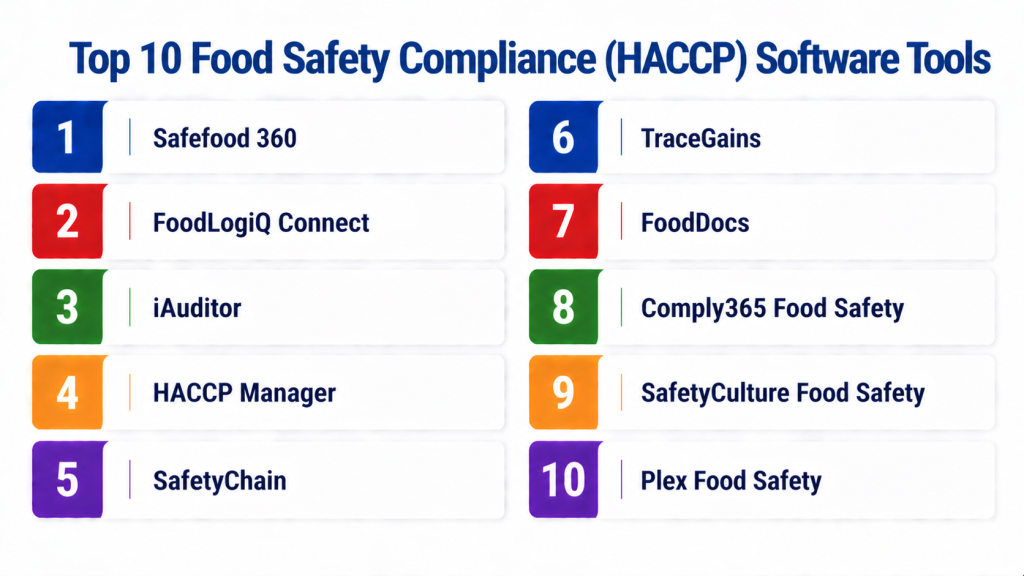
Top 10 Food Safety Compliance (HACCP) Software Tools
#1 — Safefood 360
Short description: Safefood 360 is an end-to-end food safety and quality management platform for restaurants and food manufacturers, helping streamline HACCP compliance and documentation.
Key Features
- HACCP plan management and documentation
- Real-time monitoring of critical control points
- Corrective action tracking
- Digital audit checklists
- Reporting dashboards for compliance
- Supplier and ingredient tracking
Pros
- Comprehensive HACCP coverage
- Cloud-based for multi-location operations
Cons
- Can be complex for small operations
- Requires training for full feature adoption
Platforms / Deployment
- Web / iOS / Android
- Cloud-based
Security & Compliance
- Not publicly stated
- Standard encryption and access controls
Integrations & Ecosystem
- POS and ERP integrations
- Supplier management system connections
Support & Community
- 24/7 support, onboarding guidance, knowledge base
#2 — FoodLogiQ Connect
Short description: FoodLogiQ Connect helps food businesses manage traceability, quality, and safety compliance, supporting HACCP monitoring and supplier accountability.
Key Features
- HACCP plan implementation and tracking
- Supplier and product traceability
- Digital audit and inspection management
- Automated alerts for compliance deviations
- Reporting for audits and inspections
Pros
- Strong traceability features
- Scalable for enterprise operations
Cons
- Higher cost for small businesses
- Learning curve for complex reporting
Platforms / Deployment
- Web / iOS / Android
- Cloud-based
Security & Compliance
- Not publicly stated
- Standard encryption and access control
Integrations & Ecosystem
- POS, ERP, and supplier management systems
Support & Community
- Dedicated support, knowledge base, and training
#3 — iAuditor by SafetyCulture
Short description: iAuditor provides an intuitive inspection and audit platform for restaurants and food manufacturers to manage HACCP compliance with mobile-first checklists.
Key Features
- Mobile inspection checklists
- Audit and compliance tracking
- Corrective action management
- Analytics and reporting
- Photo and document attachments
Pros
- Very user-friendly and mobile-centric
- Quick setup and adoption
Cons
- Limited HACCP-specific features compared to dedicated platforms
- Some advanced analytics require higher tiers
Platforms / Deployment
- Web / iOS / Android
- Cloud-based
Security & Compliance
- Not publicly stated
- Standard encryption
Integrations & Ecosystem
- POS and ERP connectors, API support
Support & Community
- Online knowledge base, email support, forums
#4 — HACCP Manager
Short description: HACCP Manager offers digital HACCP plan management, monitoring, and reporting for restaurants, manufacturers, and catering services.
Key Features
- Digital HACCP plans
- Real-time monitoring of critical points
- Corrective action workflows
- Audit-ready reporting
- Supplier compliance tracking
Pros
- Dedicated HACCP focus
- Suitable for multi-location businesses
Cons
- Interface can be basic
- Limited integrations outside core functionality
Platforms / Deployment
- Web / iOS / Android
- Cloud-based
Security & Compliance
- Not publicly stated
Integrations & Ecosystem
- POS and ERP systems
Support & Community
- Email support and documentation
#5 — SafetyChain
Short description: SafetyChain provides a food safety and quality management platform focused on HACCP compliance, monitoring, and traceability for large-scale operations.
Key Features
- HACCP plan creation and tracking
- Supplier and batch traceability
- Audit management
- Real-time critical control point monitoring
- Reporting dashboards
Pros
- Enterprise-ready with strong analytics
- Comprehensive compliance coverage
Cons
- May be costly for SMBs
- Requires training to leverage advanced features
Platforms / Deployment
- Web / iOS / Android
- Cloud-based
Security & Compliance
- Not publicly stated
Integrations & Ecosystem
- ERP and supplier management systems
Support & Community
- Dedicated onboarding, training, and support
#6 — TraceGains
Short description: TraceGains focuses on supplier compliance, traceability, and HACCP management, enabling food businesses to monitor product safety efficiently.
Key Features
- HACCP plan tracking
- Supplier compliance monitoring
- Digital audits and inspections
- Reporting for compliance verification
- Integration with production and inventory systems
Pros
- Strong supplier compliance features
- Scalable for enterprise
Cons
- Less intuitive for small teams
- Implementation requires onboarding
Platforms / Deployment
- Web / iOS / Android
- Cloud-based
Security & Compliance
- Not publicly stated
Integrations & Ecosystem
- ERP, POS, supplier management systems
Support & Community
- Support team, training, and documentation
#7 — FoodDocs
Short description: FoodDocs automates HACCP plan creation, monitoring, and reporting for restaurants and food producers, with an AI-powered digital compliance assistant.
Key Features
- AI-driven HACCP plan generation
- Real-time monitoring of critical points
- Corrective action workflows
- Digital checklists and inspections
- Compliance reporting dashboards
Pros
- Fast HACCP setup
- Mobile-friendly and easy to use
Cons
- Limited advanced enterprise features
- AI recommendations may require review
Platforms / Deployment
- Web / iOS / Android
- Cloud-based
Security & Compliance
- Standard encryption and access controls
Integrations & Ecosystem
- POS, inventory, and ERP connectors
Support & Community
- Online support, documentation, and chat assistance
#8 — Comply365 Food Safety
Short description: Comply365 provides digital HACCP management and compliance tools for food service and manufacturing, focusing on audits and workflow tracking.
Key Features
- HACCP plan management
- Digital inspections and audits
- Corrective action tracking
- Analytics and compliance reporting
- Mobile access for on-site checks
Pros
- User-friendly dashboards
- Real-time monitoring
Cons
- May lack advanced integration options
- Smaller support community
Platforms / Deployment
- Web / iOS / Android
- Cloud-based
Security & Compliance
- Standard access control and encryption
Integrations & Ecosystem
- POS and ERP integrations
Support & Community
- Online help, knowledge base, and support
#9 — SafetyCulture Food Safety
Short description: A specialized branch of SafetyCulture focused on food safety, providing inspections, audits, and HACCP compliance tracking.
Key Features
- Mobile inspection and audit checklists
- HACCP plan tracking
- Corrective action workflows
- Real-time reporting and dashboards
- Photo and document attachments
Pros
- Mobile-first and user-friendly
- Quick adoption
Cons
- Less comprehensive for large enterprises
- Advanced reporting limited to higher tiers
Platforms / Deployment
- Web / iOS / Android
- Cloud-based
Security & Compliance
- Standard encryption and access control
Integrations & Ecosystem
- POS and ERP systems
Support & Community
- Knowledge base, email support
#10 — Plex Food Safety
Short description: Plex offers HACCP compliance and food safety monitoring within its broader ERP suite, suitable for manufacturers and multi-location operations.
Key Features
- HACCP plan tracking
- Real-time critical control monitoring
- Audit management and reporting
- Supplier and batch traceability
- Integration with ERP and inventory systems
Pros
- Integrated with full ERP
- Scalable for large manufacturers
Cons
- May be complex for small restaurants
- Requires ERP adoption
Platforms / Deployment
- Web / iOS / Android
- Cloud-based
Security & Compliance
- Standard encryption and access controls
Integrations & Ecosystem
- ERP and POS integrations
Support & Community
- Enterprise support, documentation, and training
Comparison Table (Top 10)
| Tool Name | Best For | Platform(s) Supported | Deployment | Standout Feature | Public Rating |
|---|---|---|---|---|---|
| Safefood 360 | SMB & enterprise | Web, iOS, Android | Cloud | End-to-end HACCP compliance | N/A |
| FoodLogiQ Connect | Enterprise | Web, iOS, Android | Cloud | Supplier traceability | N/A |
| iAuditor | SMB | Web, iOS, Android | Cloud | Mobile inspection checklists | N/A |
| HACCP Manager | SMB | Web, iOS, Android | Cloud | Dedicated HACCP focus | N/A |
| SafetyChain | Enterprise | Web, iOS, Android | Cloud | Advanced reporting & analytics | N/A |
| TraceGains | Enterprise | Web, iOS, Android | Cloud | Supplier compliance tracking | N/A |
| FoodDocs | SMB | Web, iOS, Android | Cloud | AI HACCP plan creation | N/A |
| Comply365 Food Safety | SMB | Web, iOS, Android | Cloud | Digital audits & inspections | N/A |
| SafetyCulture Food Safety | SMB | Web, iOS, Android | Cloud | Mobile-first inspections | N/A |
| Plex Food Safety | Enterprise | Web, iOS, Android | Cloud | ERP integrated HACCP | N/A |
Frequently Asked Questions (FAQs)
1. What is HACCP software?
HACCP software helps monitor critical control points, track hazards, and maintain food safety compliance digitally, reducing manual errors and simplifying audits.
2. Is HACCP software suitable for small restaurants?
Yes, solutions like FoodDocs or iAuditor are lightweight, cost-effective, and easy to implement for small-scale operations.
3. Can HACCP software integrate with POS or inventory?
Most platforms offer integration with POS and inventory systems to streamline compliance monitoring alongside operational data.
4. How does HACCP software handle audits?
Digital checklists, reporting dashboards, and automated alerts make audits faster, more accurate, and compliant with regulatory standards.
5. Are mobile apps available for inspections?
Yes, most tools provide iOS and Android apps for on-site logging of temperature, cleaning, and safety checks in real time.
6. Does HACCP software support multi-location operations?
Cloud-based platforms enable centralized monitoring and consistent compliance tracking across multiple restaurants, kitchens, or production sites.
7. Can HACCP software improve food safety?
By providing real-time monitoring, automated alerts, and corrective action tracking, these tools significantly reduce the risk of food contamination.
8. How long does it take to implement?
Small operations can deploy in hours, while larger enterprises may require several days for setup, training, and integration.
9. Are reports audit-ready?
Yes, the software generates standardized reports suitable for regulatory inspections and internal audits.
10. Are there alternatives for manual tracking?
Paper logs or spreadsheets are traditional alternatives, but digital HACCP software ensures faster, accurate, and easily auditable records.
Conclusion
Food Safety Compliance (HACCP) Software is essential for modern restaurants, manufacturers, and catering services to ensure operational safety and regulatory adherence. These tools simplify audits, streamline critical control monitoring, and provide real-time visibility into food safety workflows. Choosing the right software depends on restaurant size, operation complexity, and integration needs.
For small to medium businesses, lightweight platforms like iAuditor or FoodDocs offer affordability, mobile access, and easy adoption. Enterprise operations benefit from platforms like SafetyChain, TraceGains, or Plex Food Safety, providing comprehensive HACCP coverage, supplier traceability, and advanced analytics. Decision-makers should balance cost, usability, and feature depth when selecting a solution.
Ultimately, the best HACCP software aligns with operational workflows, ensures compliance, and scales with growth. Restaurants and food manufacturers are advised to shortlist 2–3 platforms, run pilots, and validate integrations and reporting capabilities to safeguard food safety effectively.
