Introduction
Cloud Hosting Platforms provide organizations with scalable, flexible, and on-demand computing resources that can host websites, applications, databases, and other IT workloads without maintaining on-premises infrastructure. In simple terms, they replace traditional servers with virtual resources managed by a cloud provider, allowing businesses to pay only for what they use while accessing a wide range of services like storage, networking, compute, and security.
Cloud hosting is critical because organizations increasingly embrace remote work, global collaboration, AI-powered applications, and hybrid IT strategies. With evolving cybersecurity threats and the need for reliable uptime, choosing the right cloud platform is essential.
Real-world use cases include:
- Hosting high-traffic websites and e-commerce platforms
- Running large-scale data analytics and AI/ML workloads
- Supporting DevOps pipelines and automated CI/CD environments
- Disaster recovery and backup solutions
- Multi-region application deployment for global reach
Key criteria buyers should evaluate:
- Reliability and uptime guarantees
- Security features and compliance certifications
- Performance and scalability options
- Pricing models and billing flexibility
- Ecosystem integrations and APIs
- Support and community resources
- Deployment flexibility (multi-cloud, hybrid, or private cloud)
- Ease of use and management interfaces
Best for: IT managers, developers, startups, SMBs, enterprises, and organizations needing scalable hosting for applications, websites, and cloud-native workloads
Not ideal for: Organizations with extremely stable, small-scale workloads that could be managed locally at lower cost or without external cloud dependencies
Key Trends in Cloud Hosting Platforms
- AI-driven resource optimization for cost and performance efficiency
- Serverless and container-native deployment becoming standard
- Multi-cloud management tools to prevent vendor lock-in
- Emphasis on compliance with SOC 2, ISO 27001, GDPR, HIPAA
- Integrated monitoring and observability tools for real-time performance tracking
- Automation in backup, disaster recovery, and failover
- Edge computing support for low-latency applications
- Flexible pricing models including pay-per-use, reserved instances, and spot instances
- Cross-platform interoperability for hybrid and legacy systems
- Expansion of cloud-native databases, ML pipelines, and AI services
How We Selected These Tools
- Market adoption and mindshare across regions and industries
- Feature completeness covering compute, storage, networking, security, and developer tools
- Reliability and performance signals based on uptime, SLAs, and latency metrics
- Security posture signals including encryption, identity management, and compliance certifications
- Integrations and ecosystem strength, including APIs and third-party connectors
- Customer fit across segments: startups, SMBs, mid-market, and enterprise
- Support quality, documentation, and community engagement
- Innovation in AI, automation, and serverless capabilities
- Flexibility in deployment: cloud, hybrid, and multi-cloud strategies
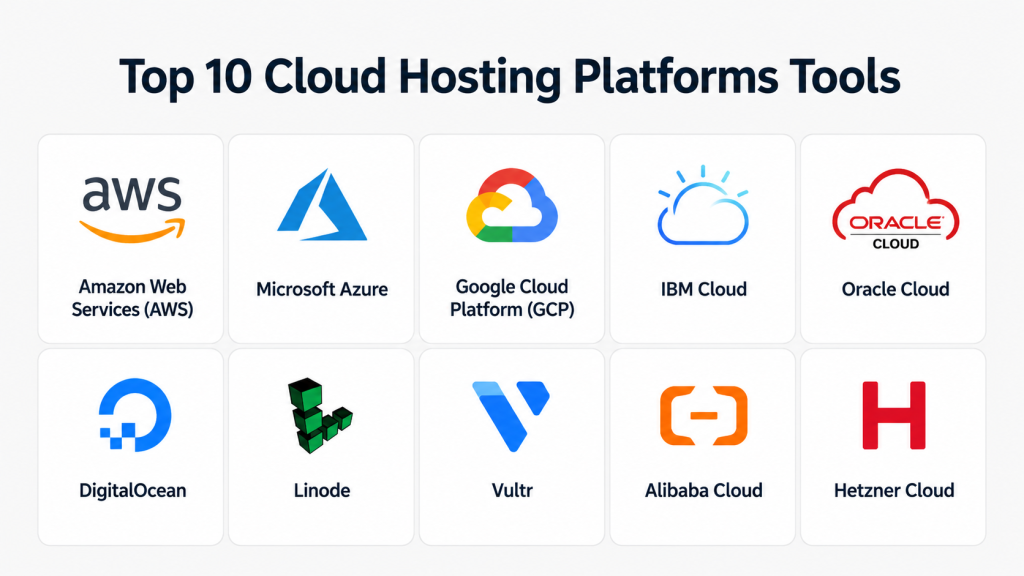
Top 10 Cloud Hosting Platforms
#1 — Amazon Web Services (AWS)
Short description: AWS provides compute, storage, AI, and networking services for enterprises, developers, and startups
Key Features
- Broad service range across compute, storage, AI/ML, and databases
- Auto-scaling and load balancing
- Serverless computing with AWS Lambda
- Multi-region availability zones
- Advanced security and compliance
- Monitoring with CloudWatch
Pros
- Highly scalable and flexible
- Strong global presence and reliability
Cons
- Complex pricing structure
- Steep learning curve
Platforms / Deployment
- Web / Windows / macOS / Linux
- Cloud
Security & Compliance
- SSO/SAML, MFA, encryption, audit logs, RBAC
- SOC 2, ISO 27001, GDPR, HIPAA
Integrations & Ecosystem
AWS integrates with a wide array of tools, DevOps pipelines, and APIs
- Kubernetes and container orchestration
- CI/CD toolchains
- Data analytics platforms
Support & Community
Comprehensive documentation, enterprise support, and active community forums
#2 — Microsoft Azure
Short description: Azure provides cloud computing, AI, and hybrid solutions ideal for enterprises and Microsoft-centric teams
Key Features
- PaaS and IaaS offerings
- Hybrid cloud with Azure Arc
- Advanced AI and ML services
- Integrated DevOps tooling
- Enterprise security and compliance
Pros
- Strong hybrid support
- Seamless integration with Microsoft products
Cons
- Complex service catalog
- Can be costly for smaller deployments
Platforms / Deployment
- Web / Windows / Linux
- Cloud / Hybrid
Security & Compliance
- MFA, RBAC, encryption, audit logs
- SOC 2, ISO 27001, GDPR, HIPAA
Integrations & Ecosystem
Integrates across Microsoft suite, DevOps workflows, and third-party apps
- Visual Studio and GitHub
- Power BI and analytics tools
- Containers and Kubernetes
Support & Community
Robust support options and active technical community
#3 — Google Cloud Platform (GCP)
Short description: GCP provides scalable compute, data analytics, and AI services for cloud-native applications
Key Features
- Compute Engine and App Engine
- BigQuery for analytics
- AI and ML APIs
- Kubernetes Engine
- Global low-latency network
Pros
- Excellent analytics capabilities
- Strong performance
Cons
- Smaller ecosystem compared to AWS
- Learning curve for complex services
Platforms / Deployment
- Web / Linux / Windows
- Cloud
Security & Compliance
- Encryption at rest and in transit, IAM, audit logging
- SOC 2, ISO 27001, GDPR
Integrations & Ecosystem
GCP integrates with analytics tools, DevOps workflows, and AI services
- TensorFlow and ML pipelines
- Kubernetes and Docker
- CI/CD platforms
Support & Community
Good documentation, forums, and enterprise support
#4 — IBM Cloud
Short description: IBM Cloud provides hybrid and AI-driven cloud services for enterprises and regulated workloads
Key Features
- Cloud-native containers with OpenShift
- AI services with Watson
- Enterprise security
- Hybrid management tools
- Global data centers
Pros
- Strong hybrid capabilities
- Advanced AI integration
Cons
- Smaller developer ecosystem
- Pricing complexity
Platforms / Deployment
- Web / Linux / Windows
- Cloud / Hybrid
Security & Compliance
- MFA, RBAC, encryption, audit logs
- SOC 2, ISO 27001, HIPAA
Integrations & Ecosystem
- OpenShift and Kubernetes
- AI and ML APIs
- CI/CD integration
Support & Community
Enterprise support, specialized documentation, active forums
#5 — Oracle Cloud
Short description: Oracle Cloud provides database hosting, analytics, and hybrid solutions for enterprises
Key Features
- Autonomous databases
- Scalable compute and storage
- Hybrid solutions
- Analytics and AI tools
- Enterprise-grade security
Pros
- Strong database capabilities
- Enterprise-grade reliability
Cons
- Limited developer community
- Complex licensing
Platforms / Deployment
- Web / Linux / Windows
- Cloud / Hybrid
Security & Compliance
- SSO, encryption, audit logs, RBAC
- SOC 2, ISO 27001, GDPR
Integrations & Ecosystem
- Enterprise ERP and analytics platforms
- CI/CD pipelines
- Kubernetes and containers
Support & Community
Documentation, enterprise support, account management
#6 — DigitalOcean
Short description: DigitalOcean provides developer-friendly cloud infrastructure for SMBs and startups
Key Features
- Easy-to-use control panel and API
- Droplets (VMs) and Kubernetes clusters
- Managed databases and storage
- Simple pricing
- Scalable infrastructure
Pros
- Affordable for startups
- Easy onboarding
Cons
- Limited enterprise features
- Smaller service portfolio
Platforms / Deployment
- Web / Linux / Windows
- Cloud
Security & Compliance
- Firewalls, SSH keys, encryption
- Not publicly stated
Integrations & Ecosystem
Supports CI/CD, monitoring, and deployment
- GitHub/GitLab
- Docker and Kubernetes
- Third-party monitoring
Support & Community
Strong community tutorials and documentation
#7 — Linode
Short description: Linode provides simple cloud hosting for developers and SMBs
Key Features
- VMs and Kubernetes
- Managed databases
- Predictable pricing
- High-performance SSD storage
- API-driven management
Pros
- Budget-friendly
- Reliable uptime
Cons
- Limited enterprise tools
- Smaller global footprint
Platforms / Deployment
- Web / Linux / Windows
- Cloud
Security & Compliance
- Encryption, firewalls, access management
- Not publicly stated
Integrations & Ecosystem
Supports DevOps workflows, monitoring, CI/CD
- GitHub integration
- Docker and Kubernetes
- Logging and monitoring
Support & Community
Documentation and community forums
#8 — Vultr
Short description: Vultr offers affordable and global cloud hosting for SMBs
Key Features
- Cloud compute and Kubernetes
- Block and object storage
- Global data centers
- Simple API
- Predictable pricing
Pros
- Low-cost
- Developer-friendly
Cons
- Limited advanced features
- Minimal enterprise support
Platforms / Deployment
- Web / Linux / Windows
- Cloud
Security & Compliance
- Firewalls, access management
- Not publicly stated
Integrations & Ecosystem
Integrates with monitoring and deployment pipelines
- Docker/Kubernetes
- CI/CD tools
- Third-party logging
Support & Community
Documentation and growing forums
#9 — Alibaba Cloud
Short description: Alibaba Cloud provides cloud services for compute, storage, AI, and security
Key Features
- Elastic compute and storage
- AI/ML services
- Multi-region deployment
- Security and compliance
- Hybrid solutions
Pros
- Strong APAC presence
- Comprehensive cloud services
Cons
- Interface less familiar outside Asia
- Limited community resources
Platforms / Deployment
- Web / Linux / Windows
- Cloud / Hybrid
Security & Compliance
- Encryption, access control, audit logging
- SOC 2, ISO 27001, GDPR
Integrations & Ecosystem
Integrates with CI/CD, monitoring, analytics
- Docker/Kubernetes
- DevOps pipelines
- AI/ML workflows
Support & Community
Enterprise support and regional forums
#10 — Hetzner Cloud
Short description: Hetzner Cloud offers cost-effective infrastructure and high-performance servers
Key Features
- Scalable compute
- Private networking and storage
- Predictable pricing
- High-performance SSD storage
- Simple API
Pros
- Very affordable
- Reliable performance
Cons
- Limited features and global reach
- Minimal enterprise support
Platforms / Deployment
- Web / Linux / Windows
- Cloud
Security & Compliance
- Encryption, firewalls
- Not publicly stated
Integrations & Ecosystem
Supports CI/CD, Docker, and monitoring tools
- Kubernetes integration
- API-driven workflows
- Third-party logging
Support & Community
Documentation and community forums
Comparison Table
| Tool Name | Best For | Platform(s) Supported | Deployment | Standout Feature | Public Rating |
|---|---|---|---|---|---|
| AWS | Enterprise, Startups | Web/Windows/macOS/Linux | Cloud | Broad service portfolio | N/A |
| Microsoft Azure | Enterprises, Microsoft users | Web/Windows/Linux | Cloud/Hybrid | Hybrid cloud integration | N/A |
| Google Cloud Platform | Developers, AI/ML | Web/Linux/Windows | Cloud | Data analytics & AI | N/A |
| IBM Cloud | Enterprises, Hybrid workloads | Web/Linux/Windows | Cloud/Hybrid | Watson AI integration | N/A |
| Oracle Cloud | Enterprises, Databases | Web/Linux/Windows | Cloud/Hybrid | Autonomous database | N/A |
| DigitalOcean | Developers, SMBs | Web/Linux/Windows | Cloud | Simple and affordable | N/A |
| Linode | Developers, SMBs | Web/Linux/Windows | Cloud | Predictable pricing | N/A |
| Vultr | SMBs, Developers | Web/Linux/Windows | Cloud | Cost-effective and global | N/A |
| Alibaba Cloud | APAC Enterprises | Web/Linux/Windows | Cloud/Hybrid | Strong APAC presence | N/A |
| Hetzner Cloud | European SMBs | Web/Linux/Windows | Cloud | Affordable & high-performance | N/A |
Evaluation & Scoring
| Tool Name | Core | Ease | Integrations | Security | Performance | Support | Value | Weighted Total |
|---|---|---|---|---|---|---|---|---|
| AWS | 10 | 8 | 9 | 9 | 10 | 9 | 8 | 9.0 |
| Microsoft Azure | 9 | 7 | 8 | 9 | 9 | 9 | 8 | 8.6 |
| GCP | 9 | 8 | 8 | 8 | 9 | 8 | 8 | 8.5 |
| IBM Cloud | 8 | 7 | 7 | 9 | 8 | 8 | 7 | 7.9 |
| Oracle Cloud | 8 | 6 | 7 | 9 | 8 | 7 | 7 | 7.6 |
| DigitalOcean | 7 | 9 | 7 | 7 | 8 | 7 | 9 | 7.9 |
| Linode | 6 | 8 | 6 | 7 | 7 | 6 | 9 | 7.1 |
| Vultr | 6 | 8 | 6 | 7 | 7 | 6 | 8 | 6.9 |
| Alibaba Cloud | 8 | 7 | 7 | 8 | 8 | 7 | 7 | 7.6 |
| Hetzner Cloud | 6 | 8 | 6 | 6 | 7 | 6 | 9 | 7.0 |
Interpretation: Scores reflect comparative strengths across features, usability, integrations, security, performance, support, and value.
Which Tool Is Right for You?
Solo / Freelancer
DigitalOcean, Linode, Vultr: low-cost, easy deployment, simple APIs
SMB
AWS, GCP, DigitalOcean: balance of features, cost, and scalability
Mid-Market
AWS, Azure, GCP: advanced performance, multi-region deployment, hybrid options
Enterprise
AWS, Azure, IBM, Oracle: full-service portfolio, global SLAs, compliance certifications
Budget vs Premium
Budget: DigitalOcean, Linode, Vultr
Premium: AWS, Azure, IBM Cloud
Feature Depth vs Ease of Use
Feature depth: AWS, Azure, GCP, IBM
Ease of use: DigitalOcean, Linode
Integrations & Scalability
AWS, Azure, GCP for wide ecosystem integrations
SMB-focused platforms scale moderately
Security & Compliance Needs
Enterprises: AWS, Azure, IBM, Oracle
SMBs/startups: DigitalOcean or Vultr with baseline security
Frequently Asked Questions
1. What pricing models are common in cloud hosting?
Cloud hosting offers pay-as-you-go, reserved instances, and spot pricing for cost flexibility
2. How difficult is onboarding?
Most platforms provide documentation and tutorials; DigitalOcean and Vultr are easiest
3. Can I switch between providers?
Yes, plan for data migration, networking changes, and API adjustments
4. How secure are these platforms?
Major providers have encryption, MFA, access control, and compliance; SMB platforms may have fewer guarantees
5. Which platform is best for AI/ML workloads?
AWS, GCP, and IBM Cloud have specialized AI and ML services
6. Are hybrid deployments supported?
Azure, IBM, and AWS provide hybrid solutions; DigitalOcean, Linode, and Vultr are primarily public cloud
7. Can I run containers?
Yes, most platforms support Docker, Kubernetes, and serverless options
8. Do these platforms offer global availability?
AWS, Azure, GCP, Alibaba Cloud, and IBM Cloud have multi-region coverage
9. What support options exist?
Enterprise plans include 24/7 support; smaller platforms offer ticket-based or community support
10. How do I optimize costs?
Use auto-scaling, spot instances, reserved instances, and monitoring tools to adjust workloads efficiently
Conclusion
Selecting the right Cloud Hosting Platform depends on workload requirements, company size, budget, and technical expertise. Developers and SMBs benefit from simplicity and cost-effective platforms like DigitalOcean, Linode, and Vultr, while enterprises require AWS, Azure, IBM, or Oracle for advanced features, compliance, and global reach. The best approach is to shortlist 2–3 platforms, validate integrations and security, and run a pilot test. Cloud hosting offers scalability, flexibility, and resilience to modern business needs. Start small, evaluate performance, and scale confidently based on real-world results
