Introduction
Air Quality Monitoring Software is designed to track, measure, and analyze pollutants in the air, providing real-time insights into environmental conditions. These platforms are essential for governments, industries, and organizations seeking to comply with environmental regulations, protect public health, and optimize operations.
With increasing urbanization and environmental awareness, air quality monitoring tools help detect pollutants such as particulate matter (PM2.5, PM10), nitrogen dioxide (NO2), carbon monoxide (CO), and ozone (O3). They provide actionable insights through dashboards, alerts, and predictive analytics.
Real-world use cases include:
- Urban authorities monitoring air pollution across cities
- Industrial facilities tracking emissions and regulatory compliance
- Environmental agencies conducting research and public reporting
- Schools and hospitals monitoring indoor air quality
- Smart city initiatives integrating sensors for real-time alerts
Evaluation criteria for buyers:
- Accuracy and reliability of sensors and data
- Real-time monitoring and alert capabilities
- Integration with dashboards, GIS, and analytics tools
- Historical data storage and trend analysis
- Cloud-based vs on-premises deployment
- Regulatory compliance features
- Mobile app support for field monitoring
- Data export and API access
- Scalability for multiple sensors and locations
- Pricing and subscription models
Best for: Environmental agencies, industrial plants, smart city authorities, schools, hospitals, and research institutions.
Not ideal for: Organizations without environmental monitoring needs or those requiring only manual data logging.
Key Trends in Air Quality Monitoring Software
- Real-time monitoring with IoT-connected sensors
- Cloud-based dashboards for remote access and reporting
- AI-driven predictive analytics for pollution forecasting
- Mobile applications for field monitoring and alerts
- Integration with GIS for geospatial mapping of air quality
- Compliance tracking for environmental regulations
- Automated alerts for threshold breaches
- Support for multiple sensor types and indoor/outdoor monitoring
- Historical data analytics for trend identification
- Community-driven open-data sharing and reporting
How We Selected These Tools (Methodology)
- Evaluated market adoption across industries and governments
- Assessed sensor accuracy and software reliability
- Analyzed ease of use and dashboard capabilities
- Reviewed integration with GIS, analytics, and alerting systems
- Considered cloud, on-premises, and hybrid deployment options
- Checked compliance features with local and international regulations
- Evaluated scalability for multi-location and enterprise use
- Reviewed documentation, tutorials, and customer support
- Compared pricing models and cost-effectiveness
- Prioritized actively updated and well-supported platforms
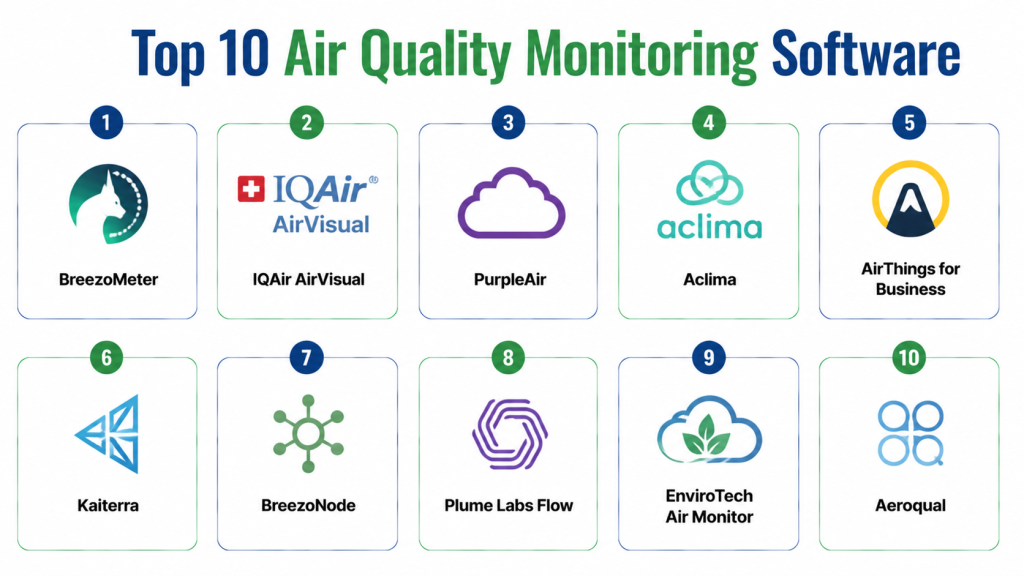
Top 10 Air Quality Monitoring Software
1- BreezoMeter
Short description: Cloud-based platform providing real-time air quality data, forecasts, and alerts for cities and industries.
Key Features
- Real-time AQI data and pollution levels
- Predictive analytics and forecasting
- API access for developers
- Mobile app and dashboard visualization
- Geospatial mapping of pollutants
- Integration with smart city systems
Pros
- High-quality real-time data
- Developer-friendly APIs
Cons
- Pricing may be high for small deployments
- Limited offline functionality
Platforms / Deployment
- Web, iOS, Android, Cloud
Security & Compliance
- Data encryption
- GDPR-compliant
Integrations & Ecosystem
- GIS systems, mobile apps, and IoT sensor integration
- REST API for custom workflows
Support & Community
- Documentation and tutorials
- Enterprise support available
2- IQAir AirVisual
Short description: Offers global air quality monitoring with real-time data, analytics, and forecasting for both indoor and outdoor environments.
Key Features
- Global AQI monitoring
- Indoor air quality tracking
- Data dashboards and mobile apps
- Forecasting and alerts
- API integration
Pros
- Global coverage
- Easy-to-use dashboards
Cons
- Subscription-based
- Limited enterprise analytics
Platforms / Deployment
- Web, iOS, Android, Cloud
Security & Compliance
- Data encryption
- Not publicly stated
Integrations & Ecosystem
- API access for mobile apps and GIS mapping
- Integration with building management systems
Support & Community
- Tutorials and user guides
- Online community support
3- PurpleAir
Short description: Sensor-driven air quality monitoring platform providing hyper-local data for communities and organizations.
Key Features
- Low-cost air sensors
- Real-time AQI dashboards
- API and data export
- Mapping and community data sharing
- Integration with GIS platforms
Pros
- Affordable and accurate sensors
- Community-driven insights
Cons
- Less formal regulatory compliance
- Limited predictive analytics
Platforms / Deployment
- Web, Cloud
Security & Compliance
- Not publicly stated
Integrations & Ecosystem
- GIS mapping, mobile dashboards, APIs for custom apps
Support & Community
- Community forums and documentation
- Limited enterprise support
4- Aclima
Short description: Environmental intelligence platform measuring air pollution at scale for cities, industries, and buildings.
Key Features
- Real-time monitoring of multiple pollutants
- IoT sensor network integration
- Detailed analytics dashboards
- API and data export
- Indoor and outdoor air quality tracking
Pros
- High-resolution data
- Strong enterprise focus
Cons
- Requires hardware investment
- Subscription costs
Platforms / Deployment
- Web, Cloud
Security & Compliance
- Data encryption
- GDPR-compliant
Integrations & Ecosystem
- GIS integration, IoT sensors, mobile apps
- REST API access
Support & Community
- Enterprise support
- Documentation and tutorials
5- AirThings for Business
Short description: Indoor air quality monitoring solution for workplaces and schools with real-time alerts and dashboards.
Key Features
- CO2, VOC, PM monitoring
- Automated alerts and notifications
- Mobile and web dashboards
- Data export and reporting
- API integration
Pros
- Easy deployment indoors
- User-friendly dashboard
Cons
- Focused on indoor environments
- Limited outdoor data
Platforms / Deployment
- Web, iOS, Android, Cloud
Security & Compliance
- GDPR-compliant
- Not publicly stated
Integrations & Ecosystem
- APIs for mobile apps and building management systems
Support & Community
- Documentation, tutorials, and support team
6- Kaiterra
Short description: Cloud platform for monitoring indoor and outdoor air quality with sensor integration and analytics.
Key Features
- Real-time air quality monitoring
- AQI calculation and forecasting
- API and data export
- Mobile dashboards
- Integration with IoT devices
Pros
- Accurate and easy-to-deploy sensors
- Analytics and alerts
Cons
- Hardware required
- Subscription costs
Platforms / Deployment
- Web, iOS, Android, Cloud
Security & Compliance
- Not publicly stated
Integrations & Ecosystem
- GIS and building systems integration
- REST API access
Support & Community
- Documentation and support channels
7- BreezoNode
Short description: IoT-driven air quality monitoring and data platform for cities and industries.
Key Features
- Real-time sensor monitoring
- Cloud analytics and visualization
- Alerts and notifications
- API access for integration
- Historical data storage
Pros
- Scalable for multiple locations
- Cloud dashboards for analytics
Cons
- Hardware setup required
- Enterprise pricing
Platforms / Deployment
- Web, Cloud
Security & Compliance
- Data encryption
- Not publicly stated
Integrations & Ecosystem
- GIS mapping, dashboards, API integration
Support & Community
- Enterprise support
- Tutorials and documentation
8- Plume Labs Flow
Short description: Personal and enterprise air quality monitoring platform with real-time insights and mobile apps.
Key Features
- Portable and fixed sensors
- Real-time AQI and pollutant tracking
- Mobile dashboard
- Alerts and notifications
- API access
Pros
- Portable solution for mobility
- Simple setup
Cons
- Limited enterprise analytics
- Less suitable for regulatory compliance
Platforms / Deployment
- Web, iOS, Android, Cloud
Security & Compliance
- Not publicly stated
Integrations & Ecosystem
- Mobile apps, GIS visualization, API integration
Support & Community
- Documentation and community support
9- EnviroTech Air Monitor
Short description: Enterprise air quality monitoring software for industrial and municipal applications.
Key Features
- Continuous pollutant monitoring
- Real-time dashboards
- Predictive analytics
- Alerts and notifications
- Data export and APIs
Pros
- Enterprise-focused with regulatory compliance
- Supports multiple sensor types
Cons
- Premium pricing
- Hardware-dependent
Platforms / Deployment
- Web, Cloud
Security & Compliance
- Not publicly stated
Integrations & Ecosystem
- IoT integration, GIS, and analytics dashboards
Support & Community
- Enterprise support and documentation
10- Aeroqual
Short description: Air quality monitoring and reporting platform for outdoor and indoor environments with sensor integration.
Key Features
- Multi-pollutant detection
- Cloud dashboards and reporting
- API and data export
- Real-time alerts
- IoT sensor support
Pros
- Accurate monitoring
- Flexible deployment
Cons
- Hardware required
- Subscription costs
Platforms / Deployment
- Web, Cloud
Security & Compliance
- Not publicly stated
Integrations & Ecosystem
- GIS integration, dashboards, mobile apps
Support & Community
- Documentation and enterprise support
Comparison Table (Top 10)
| Tool Name | Best For | Platform(s) Supported | Deployment | Standout Feature | Public Rating |
|---|---|---|---|---|---|
| BreezoMeter | Cities & industries | Web, iOS, Android | Cloud | Real-time AQI | N/A |
| IQAir AirVisual | Global monitoring | Web, iOS, Android | Cloud | Indoor & outdoor AQI | N/A |
| PurpleAir | Communities | Web, Cloud | Cloud | Low-cost sensors | N/A |
| Aclima | Cities & industries | Web, Cloud | Cloud | High-resolution data | N/A |
| AirThings for Business | Indoor monitoring | Web, iOS, Android | Cloud | Office & school AQI | N/A |
| Kaiterra | Indoor & outdoor | Web, iOS, Android | Cloud | IoT sensor integration | N/A |
| BreezoNode | Enterprise | Web, Cloud | Cloud | Scalable multi-location | N/A |
| Plume Labs Flow | Personal & enterprise | Web, iOS, Android | Cloud | Portable monitoring | N/A |
| EnviroTech Air Monitor | Industrial & municipal | Web, Cloud | Cloud | Regulatory compliance | N/A |
| Aeroqual | Indoor & outdoor | Web, Cloud | Cloud | Multi-pollutant detection | N/A |
Evaluation & Scoring of Air Quality Monitoring Software
| Tool Name | Core (25%) | Ease (15%) | Integrations (15%) | Security (10%) | Performance (10%) | Support (10%) | Value (15%) | Weighted Total (0–10) |
|---|---|---|---|---|---|---|---|---|
| BreezoMeter | 10 | 9 | 9 | 8 | 9 | 8 | 7 | 8.8 |
| IQAir AirVisual | 9 | 8 | 8 | 8 | 8 | 8 | 7 | 8.0 |
| PurpleAir | 8 | 7 | 7 | 7 | 8 | 7 | 9 | 7.6 |
| Aclima | 9 | 8 | 8 | 8 | 9 | 8 | 7 | 8.3 |
| AirThings for Business | 8 | 9 | 7 | 7 | 8 | 7 | 7 | 7.6 |
| Kaiterra | 8 | 8 | 8 | 7 | 8 | 7 | 7 | 7.6 |
| BreezoNode | 9 | 8 | 8 | 8 | 9 | 8 | 7 | 8.3 |
| Plume Labs Flow | 8 | 9 | 7 | 7 | 8 | 7 | 7 | 7.6 |
| EnviroTech Air Monitor | 9 | 8 | 8 | 8 | 9 | 8 | 7 | 8.3 |
| Aeroqual | 8 | 8 | 7 | 7 | 8 | 7 | 7 | 7.5 |
Which Air Quality Monitoring Tool Is Right for You?
Solo / Freelancer
PurpleAir, Plume Labs Flow, or AirThings for personal monitoring and community projects.
SMB
IQAir AirVisual, AirThings for Business, or Kaiterra for office and local monitoring.
Mid-Market
BreezoMeter or Aclima for city-scale environmental monitoring and analytics.
Enterprise
BreezoNode, EnviroTech Air Monitor, and Aclima for multi-location, regulatory-compliant deployments.
Budget vs Premium
PurpleAir and Plume Labs Flow for cost-effective monitoring; BreezoMeter and Aclima offer enterprise-grade analytics and dashboards.
Feature Depth vs Ease of Use
BreezoMeter and Aclima provide advanced analytics; AirThings and Plume Labs prioritize ease of setup and usability.
Integrations & Scalability
BreezoMeter, Aclima, and BreezoNode support APIs, IoT sensors, GIS integration, and scalable deployment.
Security & Compliance Needs
Select GDPR-compliant and encrypted platforms when handling sensitive environmental or industrial data.
Frequently Asked Questions (FAQs)
1- What is an air quality monitoring software?
A platform to measure and analyze pollutants in real-time and provide actionable insights through dashboards and alerts.
2- Which pollutants are commonly measured?
PM2.5, PM10, NO2, CO, O3, VOCs, and CO2.
3- Can these tools integrate with mobile apps?
Yes, most platforms provide mobile dashboards and APIs for integration.
4- Are these tools suitable for indoor and outdoor monitoring?
Some focus on indoor (AirThings), while others support both indoor and outdoor (BreezoMeter, Aclima).
5- Do these platforms provide predictive analytics?
Yes, AI and forecasting models are included in platforms like BreezoMeter and IQAir AirVisual.
6- Can small businesses use them affordably?
Platforms like PurpleAir and Plume Labs Flow provide low-cost options.
7- Is hardware required?
Most enterprise solutions require sensors; some platforms provide cloud dashboards without proprietary hardware.
8- Are these platforms compliant with regulations?
Enterprise platforms often include compliance reporting features; check individual platforms for certification.
9- How accurate are these systems?
Accuracy depends on sensor quality, calibration, and deployment environment.
10- Can these tools be integrated with GIS?
Yes, GIS integration allows spatial mapping of air quality data for visualization and analysis.
Conclusion
Air Quality Monitoring Software enables organizations to track pollutants, analyze trends, and take actionable measures to improve environmental safety. Small teams can start with PurpleAir or Plume Labs Flow, SMBs with AirThings or IQAir, while enterprises benefit from BreezoMeter, Aclima, or BreezoNode for large-scale deployments. Next steps: shortlist 2–3 platforms, run pilots, and validate accuracy, integrations, and compliance before full implementation.
