Introduction
Blockchain Wallets are digital tools that store, manage, and facilitate the transfer of cryptocurrencies and digital assets securely. They provide users with private keys, transaction signing capabilities, and secure access to decentralized networks, enabling both individual and enterprise use.
As blockchain adoption grows across finance, DeFi, NFTs, and digital assets, wallets are essential for secure asset management, transaction execution, and interoperability across multiple blockchains.
Real-world use cases include
- Personal management of cryptocurrencies
- Accessing DeFi protocols and staking platforms
- Sending and receiving digital assets across networks
- NFT storage and marketplace interaction
- Enterprise-level custody of digital assets for treasury management
What buyers should evaluate
- Security features (private key management, encryption, 2FA)
- Support for multiple blockchains and tokens
- Ease of use and user interface
- Compatibility with hardware wallets
- Transaction speed and network integration
- Backup and recovery mechanisms
- Mobile and desktop app availability
- DeFi and dApp integration
- Customer support and community trust
- Cost and licensing model
Best for: Crypto enthusiasts, DeFi users, NFT collectors, enterprise treasury teams
Not ideal for: Users with minimal blockchain activity or centralized exchange reliance
Key Trends in Blockchain Wallets
- Multi-chain and cross-chain wallet support
- Integration with DeFi and NFT marketplaces
- Hardware wallet compatibility for enhanced security
- Mobile-first and user-friendly interfaces
- Custodial vs non-custodial wallet options
- Advanced security features like biometrics and multi-signature
- Decentralized identity and KYC integration
- In-app swapping and token management
- Layer-2 solutions for faster transactions
- Open-source wallets for community transparency
How We Selected These Tools
- Security and private key management
- Multi-chain token and asset support
- Integration with DeFi, dApps, and NFT platforms
- User experience and interface usability
- Mobile and desktop compatibility
- Backup, recovery, and wallet restoration features
- Community adoption and trust
- Hardware wallet integration
- Transaction speed and network reliability
- Open-source credibility or vendor reputation
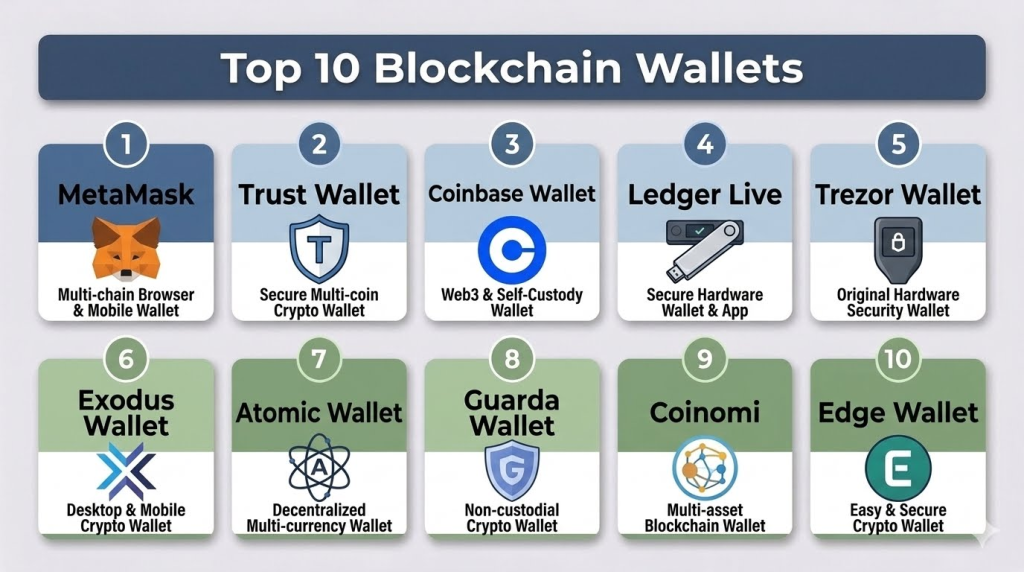
Top 10 Blockchain Wallets
1- MetaMask
Short description: MetaMask is a popular non-custodial wallet for Ethereum and EVM-compatible blockchains, providing browser and mobile access to DeFi and dApps.
Key Features
- Ethereum and EVM chain support
- Non-custodial key management
- Browser extension and mobile app
- DeFi and NFT integration
- In-app token swapping
- Secure seed phrase backup
- API and developer support
Pros
- Widely adopted and trusted
- Extensive DeFi and dApp ecosystem
- User-friendly interface
Cons
- Limited non-EVM blockchain support
- Security depends on user key management
Platforms / Deployment
- Web / iOS / Android
Security & Compliance
- Seed phrase encryption, 2FA optional
- Not publicly stated
Integrations & Ecosystem
- Ethereum dApps, Layer-2 solutions
- DeFi platforms, NFT marketplaces
- WalletConnect and APIs
Support & Community
Large global community and developer ecosystem
2- Trust Wallet
Short description: Trust Wallet is a mobile-first multi-chain wallet supporting numerous cryptocurrencies and DeFi applications.
Key Features
- Multi-chain support including Ethereum, Binance Smart Chain, and more
- In-app DEX access and staking
- NFT wallet capabilities
- Non-custodial with private key control
- Mobile app with biometric security
- In-app token swaps
- Backup and recovery with seed phrases
Pros
- Multi-chain support
- DeFi and NFT ready
- Mobile-friendly interface
Cons
- Mobile-only focus may limit desktop users
- Some advanced features require user knowledge
Platforms / Deployment
- iOS / Android
Security & Compliance
- Private key encryption, biometric security
- Not publicly stated
Integrations & Ecosystem
- DEX integrations, NFT marketplaces
- WalletConnect
- Token staking and swap platforms
Support & Community
Active developer support and community
3- Coinbase Wallet
Short description: Coinbase Wallet is a non-custodial wallet offering secure storage and DeFi access independent of the Coinbase exchange.
Key Features
- Ethereum and multi-chain token support
- DeFi integration and DApp browser
- NFT storage
- Private key and recovery phrase management
- Mobile app with secure login
- Token swaps within wallet
- Layer-2 network support
Pros
- Trusted brand association
- Easy to use for DeFi and NFT interaction
- Cross-chain support
Cons
- Mobile-focused
- Limited advanced customization
Platforms / Deployment
- iOS / Android
Security & Compliance
- Seed phrase encryption, device security
- Not publicly stated
Integrations & Ecosystem
- Ethereum-based dApps, NFT platforms
- Layer-2 solutions
- APIs and WalletConnect
Support & Community
Supported by Coinbase and active user community
4- Ledger Live
Short description: Ledger Live is the companion app for Ledger hardware wallets, enabling secure storage and management of multiple cryptocurrencies.
Key Features
- Integration with Ledger hardware wallets
- Multi-chain token support
- Transaction management and analytics
- Staking and DeFi integration
- NFT storage and management
- Secure firmware updates
- Mobile and desktop apps
Pros
- Hardware-backed security
- Supports numerous cryptocurrencies
- Enterprise-grade privacy
Cons
- Requires Ledger hardware
- Initial cost for device
Platforms / Deployment
- Windows / macOS / Linux / iOS / Android
Security & Compliance
- Private keys stored on device, encryption
- Not publicly stated
Integrations & Ecosystem
- Ledger Nano devices
- DeFi and staking platforms
- NFT marketplaces
Support & Community
Ledger support and global user base
5- Trezor Wallet
Short description: Trezor Wallet is a hardware wallet solution providing offline storage and secure transaction signing.
Key Features
- Multi-chain token support
- Hardware-secured private keys
- Desktop and mobile companion apps
- NFT support
- Transaction signing and analytics
- Recovery seed management
- Integration with dApps
Pros
- Offline, hardware-backed security
- Multi-currency support
- User-friendly companion apps
Cons
- Requires purchase of hardware
- Setup complexity for beginners
Platforms / Deployment
- Windows / macOS / Linux / iOS / Android
Security & Compliance
- Hardware key storage, encryption
- Not publicly stated
Integrations & Ecosystem
- Blockchain networks
- dApp and DeFi integration
- APIs for wallet management
Support & Community
Trezor support and active community
6- Exodus Wallet
Short description: Exodus is a desktop and mobile multi-currency wallet focused on user-friendly interfaces and integrated portfolio management.
Key Features
- Multi-chain support
- Desktop and mobile apps
- Portfolio tracking and analytics
- Built-in token swap functionality
- NFT and DeFi support
- Backup and recovery features
- API integration
Pros
- Intuitive user interface
- Multi-platform availability
- Portfolio management included
Cons
- Less hardware security
- Limited enterprise features
Platforms / Deployment
- Windows / macOS / Linux / iOS / Android
Security & Compliance
- Encrypted private keys, backup
- Not publicly stated
Integrations & Ecosystem
- Cryptocurrency exchanges
- DeFi platforms
- NFT marketplaces
Support & Community
Exodus support and online community
7- Atomic Wallet
Short description: Atomic Wallet is a multi-currency wallet enabling secure storage, staking, and atomic swaps without central custody.
Key Features
- Multi-chain support
- Built-in atomic swaps
- Staking and DeFi integration
- NFT storage
- Backup and recovery
- Desktop and mobile apps
- API for wallet management
Pros
- Atomic swap support
- Staking capabilities
- Multi-chain wallet
Cons
- Mobile/desktop focus
- Limited enterprise-grade security
Platforms / Deployment
- Windows / macOS / Linux / iOS / Android
Security & Compliance
- Encrypted private keys
- Not publicly stated
Integrations & Ecosystem
- Exchange integration
- DeFi and staking protocols
- NFT marketplaces
Support & Community
Community support and documentation
8- Guarda Wallet
Short description: Guarda Wallet is a multi-platform wallet supporting over 50 blockchains and providing web, desktop, and mobile access.
Key Features
- Multi-chain support
- Desktop, mobile, and web apps
- DeFi and NFT integration
- Staking capabilities
- Token swap and portfolio tracking
- Backup and recovery
- API for integration
Pros
- Multi-platform accessibility
- Wide token support
- DeFi-ready
Cons
- Non-custodial responsibilities
- Web wallet security depends on device
Platforms / Deployment
- Web / Windows / macOS / Linux / iOS / Android
Security & Compliance
- Private keys encrypted
- Not publicly stated
Integrations & Ecosystem
- DeFi platforms
- NFT marketplaces
- Token swap APIs
Support & Community
Guarda support and community forums
9- Coinomi
Short description: Coinomi is a multi-chain mobile wallet with built-in exchange and token management capabilities.
Key Features
- Multi-chain and token support
- Mobile-first design
- In-app exchange
- NFT and DeFi support
- Backup and recovery
- Multi-language support
- API integration
Pros
- Mobile-friendly
- Integrated exchange
- Wide blockchain support
Cons
- No desktop app
- Limited enterprise features
Platforms / Deployment
- iOS / Android
Security & Compliance
- Private key encryption
- Not publicly stated
Integrations & Ecosystem
- Exchange APIs
- DeFi platforms
- NFT marketplaces
Support & Community
Active community and wallet support
10- Edge Wallet
Short description: Edge Wallet is a mobile-first cryptocurrency wallet focusing on security, privacy, and user-friendly experience.
Key Features
- Multi-currency support
- Mobile apps with biometric login
- Private key management
- Backup and recovery
- DeFi and staking integration
- Token swap functionality
- Analytics and tracking
Pros
- Privacy-focused
- Easy-to-use mobile interface
- Multi-currency support
Cons
- Mobile-only
- Limited enterprise features
Platforms / Deployment
- iOS / Android
Security & Compliance
- Encrypted private keys, biometric authentication
- Not publicly stated
Integrations & Ecosystem
- DeFi and staking protocols
- Token swap APIs
- Analytics integration
Support & Community
Active developer community and support
Comparison Table
| Tool | Best For | Platform(s) | Deployment | Standout Feature | Public Rating |
|---|---|---|---|---|---|
| MetaMask | Ethereum & EVM | Web / iOS / Android | Non-custodial | dApp integration | N/A |
| Trust Wallet | Multi-chain mobile | iOS / Android | Non-custodial | Mobile-first & DeFi | N/A |
| Coinbase Wallet | DeFi & NFT | iOS / Android | Non-custodial | Coinbase ecosystem | N/A |
| Ledger Live | Enterprise & security | Windows / macOS / Linux / iOS / Android | Hardware-backed | Ledger hardware integration | N/A |
| Trezor Wallet | Hardware security | Windows / macOS / Linux / iOS / Android | Hardware-backed | Offline key storage | N/A |
| Exodus Wallet | Portfolio management | Windows / macOS / Linux / iOS / Android | Non-custodial | Portfolio analytics | N/A |
| Atomic Wallet | Multi-chain & staking | Windows / macOS / Linux / iOS / Android | Non-custodial | Atomic swaps | N/A |
| Guarda Wallet | Multi-platform | Web / Windows / macOS / Linux / iOS / Android | Non-custodial | Multi-platform support | N/A |
| Coinomi | Mobile multi-chain | iOS / Android | Non-custodial | Built-in exchange | N/A |
| Edge Wallet | Privacy-focused | iOS / Android | Non-custodial | Mobile privacy & security | N/A |
Evaluation & Scoring of Blockchain Wallets
| Tool | Core (25%) | Ease (15%) | Integrations (15%) | Security (10%) | Performance (10%) | Support (10%) | Value (15%) | Weighted Total |
|---|---|---|---|---|---|---|---|---|
| MetaMask | 9 | 9 | 8 | 8 | 8 | 8 | 8 | 8.4 |
| Trust Wallet | 8 | 9 | 8 | 8 | 8 | 7 | 8 | 8.1 |
| Coinbase Wallet | 8 | 8 | 8 | 8 | 8 | 7 | 8 | 8.0 |
| Ledger Live | 9 | 7 | 8 | 9 | 8 | 8 | 8 | 8.3 |
| Trezor Wallet | 9 | 7 | 8 | 9 | 8 | 8 | 8 | 8.3 |
| Exodus Wallet | 8 | 9 | 8 | 7 | 8 | 7 | 8 | 8.0 |
| Atomic Wallet | 8 | 8 | 8 | 7 | 8 | 7 | 8 | 7.9 |
| Guarda Wallet | 8 | 8 | 8 | 7 | 8 | 7 | 8 | 7.9 |
| Coinomi | 8 | 8 | 7 | 7 | 8 | 7 | 7 | 7.7 |
| Edge Wallet | 8 | 9 | 7 | 8 | 8 | 7 | 8 | 7.9 |
Which Blockchain Wallet Is Right for You?
Solo / Freelancer
- MetaMask, Trust Wallet
Easy-to-use, multi-chain wallets for personal DeFi and NFT access
SMB
- Coinbase Wallet, Exodus Wallet, Atomic Wallet
Flexible wallets with multi-chain and portfolio management
Mid-Market
- Ledger Live, Trezor Wallet
Hardware-backed wallets for enhanced security and asset management
Enterprise
- Ledger Live, Trezor Wallet, Guarda Wallet
Secure custody and multi-chain support for organizational digital assets
Budget vs Premium
- Budget: Trust Wallet, MetaMask, Exodus Wallet
- Premium: Ledger Live, Trezor Wallet
Feature Depth vs Ease of Use
- Ease: Trust Wallet, MetaMask, Exodus Wallet
- Depth: Ledger Live, Trezor Wallet
Integrations & Scalability
- Best: Ledger Live, Trezor Wallet, Coinbase Wallet
Security & Compliance Needs
- Enterprise-ready: Ledger Live, Trezor Wallet, Guarda Wallet
Frequently Asked Questions
1- What is a blockchain wallet?
It is a digital tool for storing, sending, and managing cryptocurrencies securely.
2- Are blockchain wallets custodial or non-custodial?
Wallets can be non-custodial (user controls keys) or custodial (service manages keys).
3- Can wallets support multiple blockchains?
Yes, many wallets support Ethereum, Binance Smart Chain, Solana, and more.
4- Are hardware wallets more secure?
Yes, hardware wallets like Ledger and Trezor keep private keys offline.
5- Can I use wallets for DeFi and NFTs?
Yes, wallets like MetaMask, Trust Wallet, and Coinbase Wallet integrate with DeFi and NFT platforms.
6- Are mobile wallets safe?
Mobile wallets are secure if private keys and backup phrases are managed properly.
7- Can wallets connect to dApps?
Yes, wallets like MetaMask and Trust Wallet support dApp integration via Web3 or WalletConnect.
8- How do I recover a wallet?
Recovery is done using a seed phrase or backup file.
9- Are these wallets suitable for enterprises?
Hardware-backed and multi-chain wallets like Ledger Live, Trezor, and Guarda are ideal for organizations.
10- How should I choose the right wallet?
Consider blockchain support, security needs, hardware compatibility, and DeFi/NFT usage.
Conclusion
Blockchain Wallets are essential for secure management of cryptocurrencies, NFTs, and DeFi interactions, providing user control, privacy, and interoperability across blockchains.
Selecting the right wallet depends on usage scale, blockchain support, and security requirements. A practical approach is to shortlist test key management and DeFi/NFT integration, and validate security and usability before personal or enterprise adoption.
