Introduction
Data transformation tools are platforms that clean, convert, and restructure raw data into a usable format for analytics, reporting, and AI/ML workflows. They handle tasks such as data normalization, enrichment, aggregation, and schema conversion to ensure that data from multiple sources is consistent, accurate, and analysis-ready.
In today’s environment, organizations work with multiple cloud systems, databases, APIs, and streaming platforms. Proper data transformation is crucial for making insights reliable and workflows efficient, especially when handling real-time data or feeding machine learning models.
Real-world use cases include
- Transforming raw database and API data into analytics-ready tables
- Converting heterogeneous data formats for data warehouses
- Preprocessing data for AI/ML pipelines
- Aggregating and cleaning transactional or IoT data
- Standardizing business metrics across multiple systems
What buyers should evaluate
- Scalability for large datasets
- Support for batch and real-time transformations
- Integration with data sources and destinations
- Ease of workflow creation and monitoring
- Data quality and validation features
- Deployment flexibility (cloud, on-premises, hybrid)
- Security and compliance support
- Automation and scheduling capabilities
- API and scripting support for custom logic
- Cost vs enterprise value
Best for: Data engineers, analytics teams, AI/ML teams, and enterprises handling multi-source data pipelines
Not ideal for: Small businesses with minimal data pipelines or teams needing only basic ETL scripts
Key Trends in Data Transformation Tools
- Growing adoption of AI-driven data cleaning and enrichment
- Shift to real-time and event-driven transformation pipelines
- Expansion of low-code/no-code transformation platforms
- Integration with cloud-native data warehouses
- Support for multi-cloud and hybrid environments
- Stronger focus on data quality, lineage, and observability
- Native compatibility with streaming platforms like Kafka
- Increased automation of schema evolution and mapping
- Compliance features for GDPR, HIPAA, and SOC 2
- Cost optimization for large-scale transformation workloads
How We Selected These Tools
- Market adoption and enterprise usage
- Completeness of transformation features
- Reliability and performance under large datasets
- Integration ecosystem with databases, cloud, and APIs
- Security and compliance signals
- Support for batch and real-time processing
- Flexibility in deployment (cloud/on-prem/hybrid)
- Developer and user experience
- Community support and documentation quality
- Relevance to modern AI/ML and analytics workflows
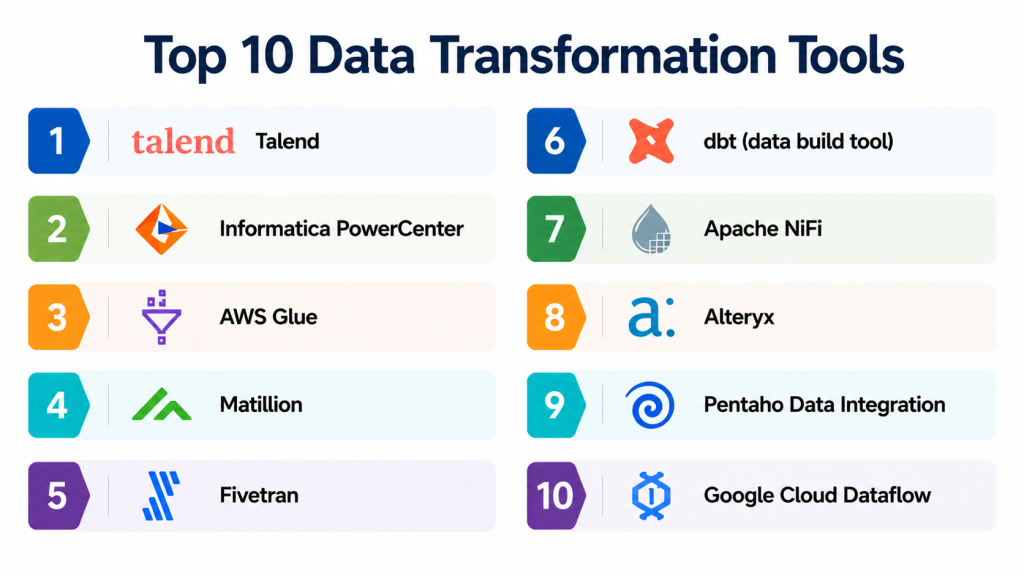
Top 10 Data Transformation Tools
1- Talend
Short description: Talend provides an enterprise-grade ETL and data transformation platform suitable for both batch and real-time data workflows. It’s designed for developers and analytics teams working with multi-source datasets.
Key Features
- Visual ETL builder and workflow orchestration
- Support for batch and real-time data pipelines
- Data quality and profiling tools
- Extensive connectors to databases, APIs, and SaaS
- API-driven data integration
- Cloud and on-prem deployment
- Data lineage tracking
Pros
- Enterprise-ready and scalable
- Large ecosystem of connectors
- Strong data governance tools
Cons
- Requires training for full feature utilization
- Licensing costs for enterprise version
Platforms / Deployment
- Cloud / Self-hosted / Hybrid
Security & Compliance
- SSO, RBAC, encryption at rest/in-transit
- SOC 2, GDPR compliance
Integrations & Ecosystem
Supports cloud, on-premises, and SaaS systems.
- AWS, Azure, GCP
- Salesforce, SAP, Oracle
- REST APIs and JDBC
- Hadoop, Snowflake, BigQuery
Support & Community
Strong enterprise support and active Talend community with training resources
2- Informatica PowerCenter
Short description: Informatica PowerCenter is a leading enterprise ETL and data transformation tool known for reliability, scalability, and broad integration capabilities.
Key Features
- Visual workflow design with drag-and-drop interface
- Robust batch and real-time transformations
- Metadata management and data lineage
- Extensive pre-built connectors
- Data quality and profiling
- Monitoring dashboards
- API integration support
Pros
- Highly scalable and enterprise-ready
- Strong data governance
- Reliable performance
Cons
- Steep learning curve
- Enterprise pricing
Platforms / Deployment
- Cloud / Self-hosted / Hybrid
Security & Compliance
- Not publicly stated
Integrations & Ecosystem
- Cloud data warehouses and databases
- SaaS systems like Salesforce
- Hadoop, Spark, Kafka
- APIs and REST services
Support & Community
Strong vendor support and global user base
3- AWS Glue
Short description: AWS Glue is a fully managed serverless ETL service designed to prepare and transform data for analytics in the AWS ecosystem.
Key Features
- Serverless ETL orchestration
- Auto schema discovery and cataloging
- Integration with AWS services
- Python and Spark-based transformations
- Event-driven workflows
- Job scheduling and monitoring
- Data lineage and logging
Pros
- Fully managed and scalable
- Deep AWS integration
- Cost-effective for cloud workloads
Cons
- Limited outside AWS ecosystem
- Advanced transformations require Spark knowledge
Platforms / Deployment
- Cloud (AWS)
Security & Compliance
- AWS enterprise-grade security and compliance
Integrations & Ecosystem
- S3, Redshift, Athena, RDS
- Lambda and EventBridge
- APIs for custom connectors
Support & Community
AWS enterprise support and extensive documentation
4- Matillion
Short description: Matillion provides cloud-native ETL and transformation capabilities for data warehouses like Snowflake, Redshift, and BigQuery.
Key Features
- Visual, no-code/low-code interface
- Cloud data warehouse integration
- Scheduling and orchestration
- Real-time and batch transformations
- Pre-built connectors
- Data quality validation
- Monitoring dashboards
Pros
- Easy for analysts to use
- Cloud-optimized performance
- Fast deployment
Cons
- Limited on-prem support
- Cost scales with data volume
Platforms / Deployment
- Cloud (AWS, Azure, GCP)
Security & Compliance
- SSO, encryption at rest/in-transit
- Not publicly stated for compliance
Integrations & Ecosystem
- Snowflake, Redshift, BigQuery
- SaaS connectors
- APIs for custom integration
Support & Community
Strong vendor support with active community forums
5- Fivetran
Short description: Fivetran is a fully managed ETL/ELT solution focusing on automated data pipelines and transformation for analytics and reporting.
Key Features
- Automatic schema mapping
- Pre-built connectors to SaaS, databases, and cloud platforms
- Real-time incremental sync
- Monitoring dashboards
- ELT approach for modern data warehouses
- API support
- Minimal maintenance
Pros
- Hands-off, fully managed
- Quick setup and reliable syncing
- Incremental updates reduce costs
Cons
- Limited transformation flexibility
- Enterprise cost can be high
Platforms / Deployment
- Cloud
Security & Compliance
- SOC 2, GDPR
- Encryption at rest/in-transit
Integrations & Ecosystem
- Snowflake, Redshift, BigQuery
- APIs, SaaS systems
- Cloud storage systems
Support & Community
Managed support and active online resources
6- dbt (data build tool)
Short description: dbt is a developer-centric transformation tool designed for analytics engineers to build data models directly in the warehouse using SQL.
Key Features
- SQL-based transformation pipelines
- Version control and testing
- Modular workflow design
- Documentation generation
- Scheduling and orchestration integration
- Data quality checks
- Git integration
Pros
- Modern analytics engineering workflow
- Versioned transformations
- Strong community adoption
Cons
- SQL knowledge required
- Minimal UI, CLI-focused
Platforms / Deployment
- Cloud / Self-hosted
Security & Compliance
- Not publicly stated
Integrations & Ecosystem
- Snowflake, Redshift, BigQuery
- Airflow, Prefect, Dagster
- Git and CI/CD pipelines
Support & Community
Active open-source community with enterprise support options
7- Apache NiFi
Short description: Apache NiFi is an open-source data ingestion and transformation platform designed for real-time and batch data flow automation.
Key Features
- Drag-and-drop flow design
- Real-time streaming transformations
- Data provenance tracking
- Connectors for multiple sources
- Scheduling and prioritization
- API-driven tasks
- Fault-tolerant design
Pros
- Strong real-time support
- Flexible and open-source
- Scalable architecture
Cons
- Requires learning NiFi concepts
- UI may be complex for beginners
Platforms / Deployment
- Cloud / Self-hosted
Security & Compliance
- SSO, encryption
- Not publicly stated for compliance
Integrations & Ecosystem
- Kafka, Hadoop, databases
- REST APIs
- Cloud storage
Support & Community
Strong open-source community with vendor support options
8- Alteryx
Short description: Alteryx provides a low-code platform for data preparation, blending, and transformation focused on business analysts and data teams.
Key Features
- Drag-and-drop workflow builder
- Integration with multiple data sources
- Scheduling and automation
- Predictive analytics support
- Data quality tools
- Cloud and on-prem options
- Visual dashboards
Pros
- User-friendly for analysts
- Broad connectivity
- Strong visualization support
Cons
- Expensive for large teams
- Limited for heavy real-time pipelines
Platforms / Deployment
- Cloud / Self-hosted / Hybrid
Security & Compliance
- Not publicly stated
Integrations & Ecosystem
- Databases, SaaS, cloud storage
- APIs and automation platforms
- Tableau, Power BI
Support & Community
Enterprise support with training and active forums
9- Pentaho Data Integration
Short description: Pentaho offers ETL and data transformation tools for enterprise analytics and reporting.
Key Features
- ETL job designer
- Batch and real-time transformation
- Data profiling and cleansing
- Scheduling and orchestration
- Connectors to databases and SaaS
- Monitoring and logging
- API access
Pros
- Enterprise-ready
- Good connector ecosystem
- Flexible deployment
Cons
- Less modern UI
- Learning curve for beginners
Platforms / Deployment
- Cloud / Self-hosted / Hybrid
Security & Compliance
- Not publicly stated
Integrations & Ecosystem
- Databases, Hadoop, cloud storage
- APIs and custom connectors
Support & Community
Active enterprise support and community resources
10- Google Cloud Dataflow
Short description: Dataflow is a fully managed service for streaming and batch data transformations on the Google Cloud Platform.
Key Features
- Unified batch and streaming pipelines
- Apache Beam SDK support
- Auto-scaling and serverless execution
- Integration with GCP services
- Monitoring dashboards
- Data quality and validation
- Event-driven triggers
Pros
- Fully managed and scalable
- Strong integration with GCP
- Real-time pipeline support
Cons
- GCP lock-in
- Advanced features require Beam knowledge
Platforms / Deployment
- Cloud (GCP)
Security & Compliance
- Google enterprise-grade security standards
Integrations & Ecosystem
- BigQuery, Pub/Sub, Cloud Storage
- APIs and custom connectors
- GCP ecosystem services
Support & Community
Google enterprise support and documentation
Comparison Table
| Tool | Best For | Platform(s) | Deployment | Standout Feature | Public Rating |
|---|---|---|---|---|---|
| Talend | Enterprise ETL | Cloud/Linux | Hybrid | Visual ETL | N/A |
| Informatica PowerCenter | Enterprise analytics | Cloud/Linux | Hybrid | Metadata management | N/A |
| AWS Glue | AWS workloads | AWS | Cloud | Serverless ETL | N/A |
| Matillion | Cloud data warehouses | Cloud | Cloud | Snowflake/Redshift optimized | N/A |
| Fivetran | Managed pipelines | Cloud | Cloud | Auto schema mapping | N/A |
| dbt | Analytics engineering | Cloud/Linux | Hybrid | SQL transformations | N/A |
| Apache NiFi | Streaming pipelines | Cloud/Linux | Hybrid | Real-time data flow | N/A |
| Alteryx | Analysts & BI | Cloud/Windows | Hybrid | Low-code interface | N/A |
| Pentaho | Enterprise analytics | Cloud/Linux | Hybrid | Batch & real-time ETL | N/A |
| Google Cloud Dataflow | GCP pipelines | Cloud | Cloud | Unified streaming & batch | N/A |
Evaluation & Scoring of Data Transformation Tools
| Tool | Core (25%) | Ease (15%) | Integrations (15%) | Security (10%) | Performance (10%) | Support (10%) | Value (15%) | Weighted Total |
|---|---|---|---|---|---|---|---|---|
| Talend | 9 | 7 | 9 | 8 | 8 | 8 | 8 | 8.3 |
| Informatica | 9 | 6 | 9 | 8 | 8 | 8 | 7 | 8.1 |
| AWS Glue | 8 | 8 | 8 | 9 | 8 | 8 | 8 | 8.1 |
| Matillion | 8 | 9 | 8 | 8 | 8 | 8 | 8 | 8.2 |
| Fivetran | 7 | 9 | 7 | 8 | 8 | 8 | 8 | 7.9 |
| dbt | 8 | 8 | 8 | 7 | 8 | 7 | 8 | 7.8 |
| NiFi | 8 | 7 | 8 | 7 | 8 | 7 | 8 | 7.7 |
| Alteryx | 7 | 9 | 7 | 7 | 7 | 8 | 7 | 7.6 |
| Pentaho | 8 | 7 | 7 | 7 | 7 | 7 | 7 | 7.4 |
| Dataflow | 8 | 8 | 8 | 9 | 8 | 8 | 8 | 8.1 |
Which Data Transformation Tool Is Right for You?
Solo / Freelancer
- dbt, Fivetran
Lightweight, SQL- and managed-based pipelines
SMB
- Matillion, Talend, Alteryx
Balance of usability and integration
Mid-Market
- Talend, NiFi, AWS Glue
Scalable pipelines and hybrid deployment
Enterprise
- Informatica, AWS Glue, Google Cloud Dataflow
High reliability, governance, and multi-source integration
Budget vs Premium
- Budget: dbt, Fivetran, NiFi
- Premium: Talend, Informatica, Matillion
Feature Depth vs Ease of Use
- Ease-focused: Matillion, Alteryx
- Depth-focused: Talend, Informatica
Integrations & Scalability
- Best: Talend, AWS Glue, Informatica
Security & Compliance Needs
- Best enterprise-ready: Talend, Informatica, AWS Glue
Frequently Asked Questions
1- What is a data transformation tool?
It processes raw data into a structured format for analytics, reporting, or AI pipelines.
It ensures consistency and usability across sources.
2- Are these tools cloud-only?
Some are fully cloud-managed (AWS Glue, Fivetran) while others support hybrid or on-prem deployment.
3- Do I need coding skills?
Many tools require SQL or scripting knowledge; low-code platforms like Matillion and Alteryx reduce coding needs.
4- Can they handle real-time data?
Yes, tools like Apache NiFi, Dataflow, and Fivetran support streaming and event-driven workflows.
5- Are open-source tools reliable?
Yes, platforms like NiFi and dbt are widely used in production environments with robust community support.
6- What industries benefit the most?
Finance, healthcare, SaaS, e-commerce, and any data-driven business benefit from transformation tools.
7- Can these tools work with AI/ML pipelines?
Yes, most support data preparation for ML training, feature engineering, and analytics workflows.
8- What is the typical challenge?
Complex transformations and integrations may require skilled engineers and robust infrastructure.
9- Do these tools include monitoring?
Yes, most offer dashboards, logging, and alerting to track transformations and pipeline health.
10- How do I choose the right tool?
Evaluate integration needs, scalability, team expertise, deployment options, and pilot before selecting.
Conclusion
Data transformation tools are essential for modern organizations dealing with multi-source and cloud-native data. They improve data quality, consistency, and usability for analytics, AI, and business processes.
Choosing the right tool depends on your scale, team skillset, deployment preferences, and integration requirements. A practical approach is to shortlist pilot with your datasets, and validate scalability, integration, and performance before full adoption.
