Introduction
Workflow orchestration tools are platforms that automate, coordinate, and manage complex workflows across multiple systems, applications, and services. Instead of handling tasks manually or using isolated automation scripts, these tools ensure every step in a process runs in the correct sequence with proper dependencies, retries, and monitoring.
In modern cloud-native environments, organizations rely on distributed systems, microservices, APIs, and data pipelines. Without orchestration, these systems become difficult to manage, error-prone, and inefficient.
Why it matters now
- Businesses run on interconnected cloud applications and microservices
- Data pipelines and AI workflows require strict sequencing and reliability
- Automation is no longer optional but a core infrastructure need
- Real-time and event-driven systems demand orchestration intelligence
Real-world use cases include
- Automating ETL and data pipelines across cloud platforms
- Managing microservices-based backend workflows
- Running CI/CD pipelines in DevOps environments
- Orchestrating AI/ML training and deployment workflows
- Coordinating business processes across enterprise systems
What buyers should evaluate
- Scalability for distributed workloads
- Ease of workflow design (code vs low-code)
- Integration ecosystem strength
- Observability and debugging capabilities
- Security and compliance readiness
- Deployment flexibility (cloud, hybrid, self-hosted)
- Fault tolerance and retry mechanisms
- Performance under heavy workloads
- Event-driven architecture support
- Total cost of ownership
Best for: DevOps teams, data engineers, platform engineers, SREs, and enterprise IT teams managing complex systems
Not ideal for: Small teams needing simple task automation or lightweight scripting tools
Key Trends in Workflow Orchestration Tools
- Shift toward event-driven and real-time workflow execution
- Increased use of AI for workflow optimization and auto-healing
- Strong adoption of Kubernetes-native orchestration models
- Growth of hybrid and multi-cloud orchestration systems
- Expansion of low-code workflow builders for business users
- Deeper integration with data engineering and MLOps pipelines
- Improved observability with tracing and monitoring dashboards
- Stronger governance and compliance automation features
- Rising demand for self-healing distributed workflows
- Cost optimization for cloud execution workloads
How We Selected These Tools
- Market adoption and enterprise usage
- Feature completeness and workflow flexibility
- Reliability and fault tolerance capabilities
- Integration ecosystem depth
- Performance under scale
- Security and compliance readiness signals
- Support for modern cloud-native architecture
- Developer experience and usability
- Community strength and documentation quality
- Relevance to modern orchestration use cases
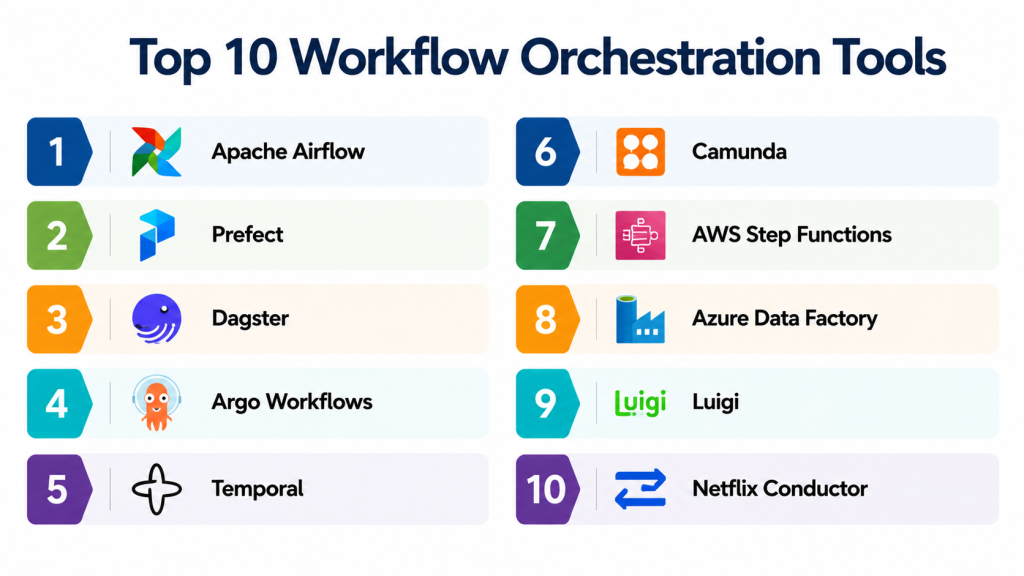
Top 10 Workflow Orchestration Tools
1- Apache Airflow
Apache Airflow is a widely used open-source orchestration platform designed for building and managing complex data pipelines using DAG-based workflows. It is especially popular in data engineering ecosystems.
Key Features
- DAG-based workflow scheduling
- Python-based pipeline definitions
- Strong dependency management
- Extensive plugin ecosystem
- Rich monitoring UI
- Retry and failure handling
- Scalable architecture
Pros
- Highly flexible and powerful
- Large community support
- Industry standard for data pipelines
Cons
- Complex setup and maintenance
- Requires engineering expertise
Platforms / Deployment
- Cloud / Self-hosted / Hybrid
Security & Compliance
- Not publicly stated
Integrations & Ecosystem
- AWS, GCP, Azure
- Spark, Hadoop
- Snowflake, BigQuery
- Kubernetes
- Custom APIs
Support & Community
Large open-source community with strong documentation and enterprise adoption.
2- Prefect
Prefect is a modern workflow orchestration tool focused on developer experience and dynamic data workflows.
Key Features
- Python-native workflows
- Real-time monitoring
- Dynamic task execution
- Event-driven orchestration
- Cloud-managed option
- Retry automation
- API-first design
Pros
- Easy to use
- Modern architecture
- Strong developer experience
Cons
- Smaller ecosystem than Airflow
- Some features require paid plans
Platforms / Deployment
- Cloud / Self-hosted / Hybrid
Security & Compliance
- Not publicly stated
Integrations & Ecosystem
- AWS, GCP, Azure
- Snowflake, dbt
- Kubernetes
- API integrations
Support & Community
Active and growing developer community
3- Dagster
Dagster is a data-aware orchestration tool designed for modern data pipelines and observability.
Key Features
- Asset-based workflow modeling
- Strong data observability
- Pipeline type system
- Scheduling and automation
- Data quality checks
- Modular architecture
- Debugging tools
Pros
- Excellent observability
- Strong data engineering focus
- Modern design
Cons
- Learning curve
- Smaller ecosystem
Platforms / Deployment
- Cloud / Self-hosted
Security & Compliance
- Not publicly stated
Integrations & Ecosystem
- dbt, Snowflake
- Kubernetes
- Cloud platforms
- Data warehouses
Support & Community
Growing open-source and enterprise support
4- Argo Workflows
Argo Workflows is a Kubernetes-native orchestration engine for containerized workflows.
Key Features
- Kubernetes-native execution
- Container-based tasks
- Parallel workflow execution
- YAML workflow definitions
- Scalable architecture
- GitOps integration
- Event-based triggers
Pros
- Excellent Kubernetes support
- Highly scalable
- Cloud-native design
Cons
- Requires Kubernetes knowledge
- Complex setup
Platforms / Deployment
- Self-hosted / Cloud (Kubernetes-based)
Security & Compliance
- Not publicly stated
Integrations & Ecosystem
- Kubernetes ecosystem
- Docker containers
- CI/CD systems
- Cloud-native tools
Support & Community
Strong Kubernetes community adoption
5- Temporal
Temporal is a durable execution platform designed for microservices and distributed workflows.
Key Features
- Durable workflow execution
- Fault tolerance and retries
- Multi-language SDKs
- Event-driven architecture
- State persistence
- Microservice orchestration
- Long-running workflows
Pros
- Extremely reliable
- Great for microservices
- Strong fault tolerance
Cons
- Developer-heavy
- Not beginner-friendly
Platforms / Deployment
- Cloud / Self-hosted
Security & Compliance
- Not publicly stated
Integrations & Ecosystem
- Microservices systems
- APIs and event buses
- Kubernetes
- Cloud infrastructure
Support & Community
Strong developer-focused ecosystem
6- Camunda
Camunda is an enterprise workflow and BPM platform based on BPMN standards.
Key Features
- BPMN workflow modeling
- Decision automation (DMN)
- Process automation engine
- Low-code workflow builder
- API-first design
- Human + system workflows
- Monitoring dashboards
Pros
- Strong enterprise adoption
- Excellent process modeling
- Business + IT collaboration
Cons
- Complex for beginners
- Enterprise licensing costs
Platforms / Deployment
- Cloud / Self-hosted / Hybrid
Security & Compliance
- Not publicly stated
Integrations & Ecosystem
- ERP and CRM systems
- APIs and microservices
- Enterprise platforms
- Cloud services
Support & Community
Strong enterprise support ecosystem
7- AWS Step Functions
AWS Step Functions is a serverless orchestration service for AWS-native workflows.
Key Features
- Visual workflow builder
- Serverless execution
- AWS service integration
- Automatic retries
- Parallel execution
- Event-driven workflows
- State machine design
Pros
- Fully managed service
- Strong AWS integration
- Scalable architecture
Cons
- AWS lock-in
- Limited outside AWS ecosystem
Platforms / Deployment
- Cloud (AWS only)
Security & Compliance
- AWS enterprise security standards
Integrations & Ecosystem
- Lambda, S3, DynamoDB
- EventBridge
- CloudWatch
- API Gateway
Support & Community
Strong AWS documentation and enterprise support
8- Azure Data Factory
Azure Data Factory is a cloud-based data integration and orchestration service.
Key Features
- Visual pipeline builder
- ETL/ELT workflows
- Data movement tools
- Scheduling triggers
- Monitoring dashboards
- Hybrid data support
- Integration runtime
Pros
- Strong enterprise data integration
- Easy Azure ecosystem usage
- Scalable cloud service
Cons
- Best for Azure ecosystem
- Less flexible outside Microsoft stack
Platforms / Deployment
- Cloud (Azure)
Security & Compliance
- Azure enterprise security framework
Integrations & Ecosystem
- Azure services
- SQL Server
- Power BI
- SaaS connectors
Support & Community
Strong enterprise Microsoft support
9- Luigi
Luigi is a lightweight Python-based workflow orchestration tool for batch processing.
Key Features
- Python-based workflows
- Dependency management
- Batch pipeline scheduling
- Simple architecture
- Visualization tools
- Task tracking
- Lightweight execution
Pros
- Simple and lightweight
- Easy Python integration
- Good for batch jobs
Cons
- Limited modern features
- Smaller community
Platforms / Deployment
- Self-hosted
Security & Compliance
- Not publicly stated
Integrations & Ecosystem
- Python pipelines
- ETL systems
- Custom APIs
Support & Community
Small but active open-source base
10- Netflix Conductor
Netflix Conductor is an open-source orchestration engine for microservices workflows.
Key Features
- Microservices orchestration
- JSON-based workflows
- Scalable execution engine
- Event-driven design
- API-first system
- Task queue management
- Fault tolerance
Pros
- Strong microservices support
- Highly scalable
- Flexible workflow design
Cons
- Requires engineering effort
- Complex setup
Platforms / Deployment
- Self-hosted / Cloud
Security & Compliance
- Not publicly stated
Integrations & Ecosystem
- Microservices systems
- Message queues
- APIs
- Cloud infrastructure
Support & Community
Open-source community with enterprise usage
Comparison Table
| Tool | Best For | Platform(s) | Deployment | Standout Feature | Public Rating |
|---|---|---|---|---|---|
| Airflow | Data pipelines | Cloud/Linux | Hybrid | DAG workflows | N/A |
| Prefect | Modern workflows | Cloud/Linux | Hybrid | Python-native design | N/A |
| Dagster | Data observability | Cloud/Linux | Hybrid | Asset-based model | N/A |
| Argo | Kubernetes workflows | Kubernetes | Self-hosted | Container orchestration | N/A |
| Temporal | Microservices | Cloud/Linux | Hybrid | Durable execution | N/A |
| Camunda | BPM workflows | Cloud/Linux | Hybrid | BPMN modeling | N/A |
| AWS Step Functions | AWS automation | AWS | Cloud | Serverless orchestration | N/A |
| Azure Data Factory | Data integration | Azure | Cloud | Visual ETL pipelines | N/A |
| Luigi | Batch workflows | Python/Linux | Self-hosted | Lightweight design | N/A |
| Conductor | Microservices | Cloud/Linux | Hybrid | JSON workflows | N/A |
Evaluation & Scoring of Workflow Orchestration Tools
| Tool | Core (25%) | Ease (15%) | Integrations (15%) | Security (10%) | Performance (10%) | Support (10%) | Value (15%) | Total |
|---|---|---|---|---|---|---|---|---|
| Airflow | 9 | 6 | 9 | 7 | 8 | 8 | 9 | 8.2 |
| Prefect | 8 | 9 | 8 | 7 | 8 | 8 | 8 | 8.1 |
| Dagster | 8 | 7 | 8 | 8 | 8 | 7 | 8 | 7.9 |
| Argo | 9 | 6 | 8 | 8 | 9 | 7 | 8 | 8.0 |
| Temporal | 9 | 6 | 8 | 8 | 9 | 8 | 8 | 8.2 |
| Camunda | 8 | 7 | 8 | 8 | 8 | 8 | 7 | 7.9 |
| AWS Step Functions | 8 | 8 | 9 | 9 | 9 | 8 | 8 | 8.4 |
| Azure Data Factory | 8 | 8 | 9 | 9 | 8 | 8 | 8 | 8.3 |
| Luigi | 6 | 8 | 6 | 6 | 7 | 6 | 9 | 6.9 |
| Conductor | 8 | 6 | 7 | 7 | 8 | 7 | 8 | 7.6 |
Score interpretation:
- 8.5+ = enterprise leader
- 8.0–8.4 = strong production tools
- 7.0–7.9 = solid niche tools
- Below 7.0 = lightweight tools
Which Workflow Orchestration Tools Tool Is Right for You?
Solo / Freelancer
- Prefect, Luigi
SMB
- Prefect, Dagster, Camunda
Mid-Market
- Airflow, Argo, Temporal
Enterprise
- Camunda, AWS Step Functions, Azure Data Factory
Budget vs Premium
- Budget: Luigi, Airflow
- Premium: Camunda, AWS, Azure
Feature Depth vs Ease of Use
- Easy: Prefect, Azure Data Factory
- Deep: Airflow, Temporal, Argo
Integrations & Scalability
- Strong: Airflow, AWS Step Functions, Azure Data Factory
Security & Compliance Needs
- Best enterprise-ready: AWS, Azure, Camunda
Frequently Asked Questions
1. What are workflow orchestration tools?
They manage and automate multi-step workflows across systems.
They ensure tasks run in correct order with dependencies handled automatically.
2. How is orchestration different from automation?
Automation handles single tasks, while orchestration manages entire workflows.
It coordinates multiple systems together.
3. Do these tools require coding?
Most powerful tools require coding knowledge.
Some offer low-code or visual interfaces.
4. Are workflow tools cloud-based?
Many are cloud-native, but self-hosted and hybrid options also exist.
It depends on the platform.
5. Can they support real-time workflows?
Yes, modern tools support event-driven and real-time execution.
Temporal and Argo are strong examples.
6. Are open-source tools reliable?
Yes, many enterprise systems rely on open-source orchestration tools.
Reliability depends on proper deployment.
7. What industries use these tools?
Fintech, healthcare, SaaS, e-commerce, telecom, and data engineering.
Any complex system benefits.
8. Do they support AI workflows?
Yes, they are widely used in AI and ML pipelines.
They help manage training and deployment workflows.
9. What is the biggest challenge?
Setup complexity and operational management.
Requires skilled engineers.
10. How do I choose the right tool?
Evaluate integrations, scalability, ease of use, and deployment needs.
Always run a pilot before final selection.
Conclusion
Workflow orchestration tools are essential for managing modern distributed systems. They provide structure, reliability, and automation across complex workflows involving data, applications, and microservices.
Each tool has its strengths—some are best for data pipelines, others for microservices, and some for enterprise business processes. The right choice depends on your infrastructure, team skillset, and scalability requirements.
A practical approach is to shortlist test real workflows, and validate integration, performance, and operational complexity before making a final decision.
