Introduction
Telecom OSS (Operations Support Systems) and BSS (Business Support Systems) are critical software platforms that manage the operational and business functions of telecommunications providers. OSS focuses on network management, service provisioning, and fault monitoring, while BSS handles customer-facing functions such as billing, customer relationship management, and order management.
In modern telecommunications, these systems are essential for improving service quality, accelerating service deployment, and enhancing customer experience. Telecom providers rely on OSS/BSS platforms to manage complex networks, streamline workflows, and ensure accurate billing.
Real-world use cases include:
- Network performance monitoring and fault detection
- Service activation, provisioning, and order management
- Customer billing, invoicing, and revenue management
- Customer relationship and support management
- Analytics and reporting for operational efficiency
Evaluation criteria for buyers:
- Network and service management capabilities
- Customer management and billing features
- Integration with existing IT and network infrastructure
- Scalability for large telecom networks
- Support for multi-service, multi-region operations
- Cloud, on-premises, or hybrid deployment options
- Workflow automation and orchestration
- Regulatory compliance and security features
- Vendor support and community resources
Best for: Telecom operators, ISPs, mobile network operators, and managed service providers requiring integrated OSS/BSS solutions
Not ideal for: Small-scale service providers with minimal network operations or simple billing requirements
Key Trends in Telecom OSS/BSS Systems
- Cloud-native and hybrid deployments for faster scalability
- AI and analytics for predictive network maintenance and customer insights
- Integration with 5G networks and IoT services
- Automated service provisioning and order management
- Real-time billing and revenue assurance capabilities
- Workflow orchestration for end-to-end service delivery
- Customer experience management with AI-driven insights
- Support for multi-vendor network environments
- API-driven integrations for faster onboarding of services
- Enhanced security and regulatory compliance monitoring
How We Selected These Tools
- Market adoption and presence among telecom operators
- Completeness of OSS and BSS functionalities
- Reliability, performance, and scalability across networks
- Integration capabilities with IT and network infrastructure
- Security and compliance adherence
- Vendor support, training resources, and user community
- AI-driven automation and analytics features
- Workflow orchestration and real-time service management
- Multi-service and multi-region support
- Cost-effectiveness and licensing flexibility
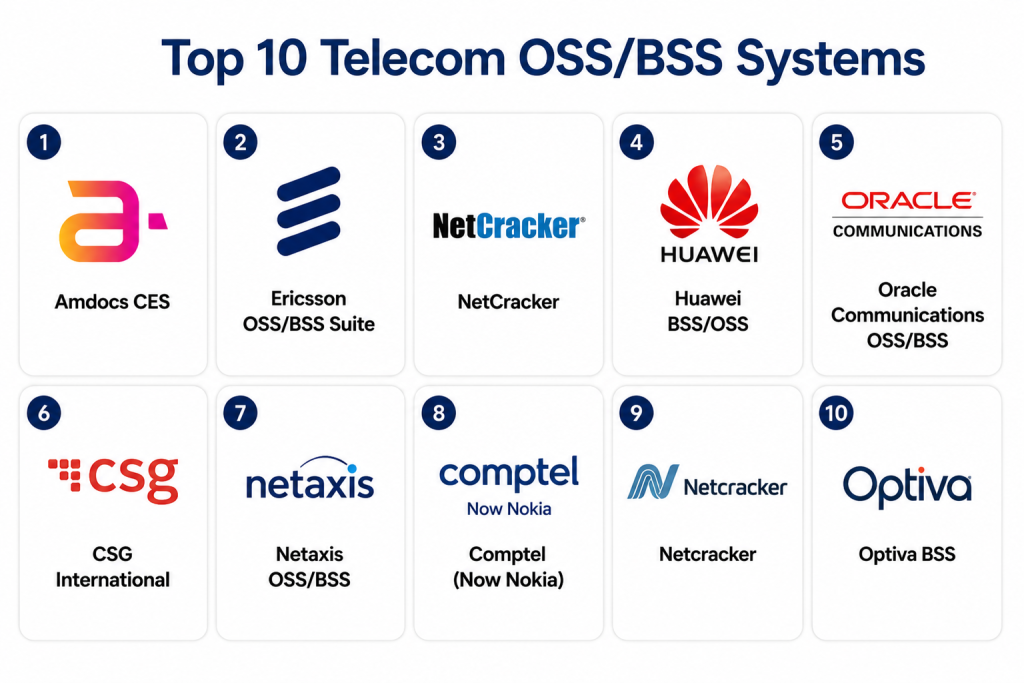
Top 10 Telecom OSS/BSS Systems
1- Amdocs CES
Short description: Comprehensive OSS/BSS suite for service provisioning, customer management, and billing
Key Features
- Service order management
- Billing and revenue management
- Network inventory and provisioning
- Customer care and CRM
- Workflow automation
- Real-time analytics and reporting
- Multi-region and multi-service support
Pros
- Strong enterprise-grade capabilities
- Proven reliability for large telecom operators
- Integrated workflow and billing management
Cons
- Complex implementation
- High licensing cost
- Steeper learning curve for new teams
Platforms / Deployment
- Web, cloud, hybrid
Security & Compliance
- RBAC, audit logs, encryption
- GDPR, SOC 2, Not publicly stated
Integrations & Ecosystem
Connects with network equipment, CRM, ERP, and analytics tools
- SAP, Salesforce
- Network inventory systems
- Custom APIs
Support & Community
Vendor support, training, documentation, user forums
2- Ericsson OSS/BSS Suite
Short description: Telecom operations and business platform for network management, customer billing, and service provisioning
Key Features
- Network performance monitoring
- Service order orchestration
- Revenue management and billing
- Customer relationship management
- Fault and performance management
- Analytics and reporting dashboards
- Multi-vendor network support
Pros
- Scalable for global telecom operators
- End-to-end network and business support
- Strong vendor support and professional services
Cons
- Premium pricing
- Complex deployment
- Requires experienced implementation teams
Platforms / Deployment
- Web, cloud, hybrid
Security & Compliance
- Audit logs, RBAC, encryption
- SOC 2, GDPR, Not publicly stated
Integrations & Ecosystem
Integrates with network equipment, billing, CRM, and analytics
- OSS and BSS modules
- Network monitoring tools
- APIs for custom integrations
Support & Community
Enterprise support, training, documentation, online forums
3- NetCracker
Short description: End-to-end OSS/BSS platform supporting service delivery, billing, and customer experience
Key Features
- Service provisioning and orchestration
- Revenue management and billing
- Customer care and CRM
- Analytics and dashboards
- Multi-vendor network support
- Workflow automation
- Real-time service monitoring
Pros
- Comprehensive OSS/BSS coverage
- Scalable for large service providers
- Automation and orchestration capabilities
Cons
- Complex setup
- Premium licensing cost
- Training required for administrators
Platforms / Deployment
- Cloud, hybrid, web
Security & Compliance
- Audit logs, RBAC, encryption
- GDPR, SOC 2, Not publicly stated
Integrations & Ecosystem
Integrates with ERP, CRM, network management, analytics tools
- Salesforce, SAP
- Network monitoring systems
- APIs
Support & Community
Vendor support, documentation, professional training
4- Huawei BSS/OSS
Short description: Telecom suite for service management, billing, and network operations in large-scale deployments
Key Features
- Service provisioning
- Billing and revenue management
- Fault and performance monitoring
- Customer care and CRM
- Analytics and reporting
- Workflow automation
- Multi-service and multi-region support
Pros
- Strong network integration capabilities
- Scalable for global telecom operators
- Integrated analytics and automation
Cons
- Implementation complexity
- Licensing cost
- Vendor dependency for support
Platforms / Deployment
- Cloud, hybrid, web
Security & Compliance
- RBAC, audit logs, encryption
- GDPR, SOC 2
Integrations & Ecosystem
Integrates with network, ERP, CRM, analytics
- Network management systems
- Billing and CRM tools
- Custom API integrations
Support & Community
Vendor support, training, documentation
5- Oracle Communications OSS/BSS
Short description: Platform for managing telecom operations, service delivery, and customer experience
Key Features
- Network inventory and service provisioning
- Billing and revenue management
- Customer relationship management
- Analytics and reporting
- Workflow automation
- Multi-vendor support
- Regulatory compliance reporting
Pros
- Comprehensive coverage of OSS and BSS
- Analytics-driven insights
- Scalable for large telecom networks
Cons
- Premium cost
- Implementation complexity
- Requires trained staff
Platforms / Deployment
- Web, cloud, hybrid
Security & Compliance
- Audit logs, RBAC, encryption
- GDPR, SOC 2
Integrations & Ecosystem
ERP, CRM, network management, analytics
- Salesforce, SAP
- APIs for custom integrations
Support & Community
Vendor support, documentation, training programs
6- CSG International
Short description: Telecom billing and operations platform for service delivery and revenue management
Key Features
- Billing and revenue management
- Service activation and order management
- Customer relationship management
- Analytics and dashboards
- Workflow automation
- Multi-service and multi-region support
- Regulatory compliance reporting
Pros
- Strong billing and revenue management
- Scalable for mid-market and enterprise operators
- Integrated workflow automation
Cons
- Licensing cost
- Implementation complexity
- Limited advanced analytics
Platforms / Deployment
- Web, cloud, hybrid
Security & Compliance
- RBAC, audit logs, encryption
- GDPR, SOC 2
Integrations & Ecosystem
ERP, CRM, network management, analytics
- Salesforce, SAP
- Custom APIs
Support & Community
Vendor support, documentation, forums
7- Netaxis OSS/BSS
Short description: Telecom operations and business platform for end-to-end network management
Key Features
- Service provisioning and orchestration
- Network inventory management
- Billing and revenue management
- Customer care and CRM
- Analytics and reporting
- Multi-vendor support
- Workflow automation
Pros
- Strong automation and orchestration
- Integrated network and business support
- Scalable for growing operators
Cons
- Implementation complexity
- Premium pricing
- Training required for admins
Platforms / Deployment
- Cloud, hybrid, web
Security & Compliance
- RBAC, audit logs, encryption
- GDPR, SOC 2
Integrations & Ecosystem
ERP, CRM, network management tools
- APIs
- Custom integrations
Support & Community
Vendor support, documentation, training
8- Comptel (Now Nokia)
Short description: Telecom OSS/BSS platform for service orchestration, fulfillment, and revenue management
Key Features
- Service order management
- Network provisioning
- Billing and revenue management
- Customer care and CRM
- Analytics and dashboards
- Workflow automation
- Multi-vendor support
Pros
- Integrated service orchestration
- Scalable for large operators
- Automation of workflows
Cons
- Premium licensing
- Complex setup
- Requires trained staff
Platforms / Deployment
- Cloud, hybrid, web
Security & Compliance
- RBAC, audit logs, encryption
- GDPR, SOC 2
Integrations & Ecosystem
ERP, CRM, network management, analytics
- Salesforce, SAP
- APIs
Support & Community
Vendor support, documentation, training
9- Netcracker
Short description: End-to-end OSS/BSS suite for telecom operators with service orchestration and analytics
Key Features
- Service provisioning and orchestration
- Billing and revenue management
- Customer care and CRM
- Network inventory management
- Analytics dashboards
- Workflow automation
- Multi-region support
Pros
- Enterprise-scale solution
- Strong analytics and automation
- Multi-service support
Cons
- High licensing cost
- Implementation requires consulting
- Complexity for smaller teams
Platforms / Deployment
- Cloud, hybrid, web
Security & Compliance
- RBAC, audit logs, encryption
- GDPR, SOC 2
Integrations & Ecosystem
ERP, CRM, network management, analytics
- APIs for custom workflows
Support & Community
Vendor support, documentation, training
10- Optiva BSS
Short description: Cloud-native BSS platform for billing, customer experience, and revenue management
Key Features
- Real-time billing and revenue management
- Customer care and CRM
- Subscription and order management
- Analytics and reporting
- Workflow automation
- Multi-service and multi-region support
- API-driven integrations
Pros
- Cloud-native scalability
- Real-time billing and analytics
- Supports multi-service operations
Cons
- Premium cost
- Requires trained administrators
- Limited on-prem support
Platforms / Deployment
- Cloud, hybrid, web
Security & Compliance
- RBAC, audit logs, encryption
- GDPR, SOC 2
Integrations & Ecosystem
ERP, CRM, network management, analytics
- Salesforce, SAP
- Custom APIs
Support & Community
Vendor support, documentation, training
Comparison Table (Top 10)
| Tool Name | Best For | Platform(s) Supported | Deployment | Standout Feature | Public Rating |
|---|---|---|---|---|---|
| Amdocs CES | Large telecom operators | Web, cloud, hybrid | Hybrid | Service provisioning + billing | N/A |
| Ericsson OSS/BSS | Global operators | Web, cloud, hybrid | Hybrid | End-to-end network + business support | N/A |
| NetCracker | Enterprise operators | Web, cloud, hybrid | Hybrid | Multi-service orchestration | N/A |
| Huawei BSS/OSS | Telecom operators | Cloud, hybrid | Hybrid | Integrated network operations | N/A |
| Oracle Communications OSS/BSS | Large operators | Web, cloud, hybrid | Hybrid | Analytics + service delivery | N/A |
| CSG International | Mid-market operators | Web, cloud, hybrid | Hybrid | Billing and revenue management | N/A |
| Netaxis OSS/BSS | Growing operators | Cloud, hybrid, web | Hybrid | Service orchestration automation | N/A |
| Comptel (Nokia) | Large operators | Cloud, hybrid, web | Hybrid | Service fulfillment and orchestration | N/A |
| Netcracker | Enterprise operators | Cloud, hybrid, web | Hybrid | End-to-end OSS/BSS coverage | N/A |
| Optiva BSS | Cloud-native operators | Cloud, hybrid, web | Cloud | Real-time billing and CRM | N/A |
Evaluation & Scoring of Telecom OSS/BSS Systems
| Tool Name | Core (25%) | Ease (15%) | Integrations (15%) | Security (10%) | Performance (10%) | Support (10%) | Value (15%) | Weighted Total |
|---|---|---|---|---|---|---|---|---|
| Amdocs CES | 9 | 7 | 8 | 8 | 9 | 8 | 7 | 8.2 |
| Ericsson OSS/BSS | 9 | 7 | 8 | 8 | 9 | 8 | 7 | 8.2 |
| NetCracker | 9 | 7 | 8 | 8 | 9 | 8 | 7 | 8.2 |
| Huawei BSS/OSS | 8 | 7 | 7 | 8 | 8 | 7 | 7 | 7.6 |
| Oracle Communications OSS/BSS | 8 | 7 | 7 | 8 | 8 | 7 | 7 | 7.6 |
| CSG International | 8 | 7 | 7 | 8 | 8 | 7 | 7 | 7.6 |
| Netaxis OSS/BSS | 8 | 7 | 7 | 8 | 8 | 7 | 7 | 7.6 |
| Comptel (Nokia) | 8 | 7 | 7 | 8 | 8 | 7 | 7 | 7.6 |
| Netcracker | 9 | 7 | 8 | 8 | 9 | 8 | 7 | 8.2 |
| Optiva BSS | 8 | 7 | 7 | 8 | 8 | 7 | 7 | 7.6 |
Which Telecom OSS/BSS System Is Right for You?
Solo / Freelancer
Small network operators may use Optiva BSS or CSG International for cloud-based billing and service management
SMB
CSG International, Optiva BSS, and Netaxis OSS/BSS provide mid-market operators workflow automation and multi-service management
Mid-Market
NetCracker, Oracle Communications OSS/BSS, and Huawei BSS/OSS offer full-service orchestration and analytics
Enterprise
Amdocs CES, Ericsson OSS/BSS, and NetCracker deliver end-to-end network, service, and customer management for global operators
Budget vs Premium
Cloud-based or SMB-targeted platforms reduce licensing costs; enterprise suites provide full-service automation, analytics, and multi-region support
Feature Depth vs Ease of Use
Enterprises require comprehensive platforms (Amdocs, Ericsson); SMBs prioritize usability and straightforward billing and service management (Optiva, CSG)
Integrations & Scalability
Cloud-native OSS/BSS platforms scale across services and regions and integrate with ERP, CRM, and DFIR tools
Security & Compliance Needs
Enterprise-grade platforms offer audit logs, encryption, RBAC, and regulatory compliance for multi-jurisdiction operations
Frequently Asked Questions (FAQs)
1- What is an OSS/BSS system?
A software suite that manages telecom operations, network services, and business processes including billing, customer management, and service delivery
2- Can OSS/BSS systems support multi-vendor networks?
Yes, most enterprise OSS/BSS platforms support integration with multiple network vendors
3- Are cloud deployments secure?
Yes, platforms provide encryption, RBAC, and audit logs to secure operations and customer data
4- Do OSS/BSS systems integrate with CRM and ERP?
Yes, integration with CRM and ERP enables end-to-end customer and billing management
5- Are these systems suitable for small operators?
Yes, cloud-native or SMB-targeted solutions like Optiva BSS or CSG International can handle smaller networks efficiently
6- How do OSS/BSS systems improve customer experience?
They streamline service provisioning, billing, and support, ensuring faster service delivery and accurate billing
7- Do these platforms support analytics?
Yes, enterprise platforms include dashboards, KPIs, and analytics for network performance, revenue, and customer insights
8- How scalable are OSS/BSS platforms?
Cloud-native and enterprise-grade solutions scale across regions, multiple services, and large customer bases
9- Can these platforms automate workflows?
Yes, workflow automation for provisioning, billing, approvals, and alerts is standard in modern OSS/BSS suites
10- What is the cost range?
Pricing varies by deployment and scale; SMB-targeted platforms are more affordable, enterprise solutions require premium licensing
Conclusion
Telecom OSS/BSS Systems are critical for managing network operations, customer services, and revenue processes. SMBs can use lightweight, cloud-native platforms for efficient billing and service management, while enterprises require end-to-end orchestration, analytics, and multi-region support. platforms suitable for your scale, run pilot deployments, and validate integrations and compliance
