Introduction
Security Data Lakes are centralized repositories that store, manage, and analyze vast amounts of structured and unstructured security-related data from multiple sources. They allow organizations to consolidate logs, events, alerts, and threat intelligence in one place, enabling comprehensive visibility into potential security risks.
In modern IT environments, where data volume and complexity continue to grow, security teams require data lakes to accelerate incident detection, threat hunting, and compliance reporting. By storing raw and enriched security data in a single repository, these platforms empower analysts to correlate events, detect anomalies, and perform in-depth forensic investigations.
Real-world use cases include:
- Consolidating logs from endpoints, network devices, and cloud services
- Accelerating threat detection and incident investigation
- Enhancing threat intelligence correlation across systems
- Supporting regulatory compliance reporting (PCI, HIPAA, GDPR)
- Enabling AI/ML-based analytics for predictive security
What buyers should evaluate:
- Scalability for storing high-volume security data
- Integration with SIEM, EDR, network, and cloud monitoring tools
- Data enrichment and normalization capabilities
- Support for real-time and batch ingestion
- Analytics and AI-assisted detection capabilities
- Security, access control, and compliance support
- Customization and query capabilities for analysts
- Ease of deployment and cloud/on-prem flexibility
- Vendor support and community strength
- Cost structure and licensing flexibility
Best for: Security Operations Centers (SOC), cybersecurity teams, compliance teams, enterprises with multi-source security data
Not ideal for: Small teams with limited security data or low incident frequency, where traditional SIEM or logging tools may suffice
Key Trends in Security Data Lakes
- Integration with SIEM, SOAR, and threat intelligence platforms
- AI/ML-assisted analytics for anomaly detection and predictive alerts
- Cloud-native and hybrid deployment for distributed environments
- Support for streaming and batch ingestion of logs and events
- Automated enrichment and normalization of security data
- Interactive dashboards and visualization for threat analysis
- Scalable storage for high-volume enterprise data
- Collaboration features for distributed security teams
- Compliance-focused features for audit and reporting
- Subscription-based and consumption-based pricing models
How We Selected These Tools (Methodology)
- Evaluated market adoption and enterprise usage
- Assessed scalability, ingestion, and analytics capabilities
- Reviewed integration breadth with monitoring, SIEM, and cloud platforms
- Considered AI/ML and advanced threat analytics support
- Verified security, access control, and compliance capabilities
- Evaluated collaboration and workflow features
- Assessed usability, documentation, and onboarding support
- Checked vendor support, training, and community engagement
- Compared deployment flexibility (cloud, on-prem, hybrid)
- Balanced feature depth with operational ease and cost-effectiveness
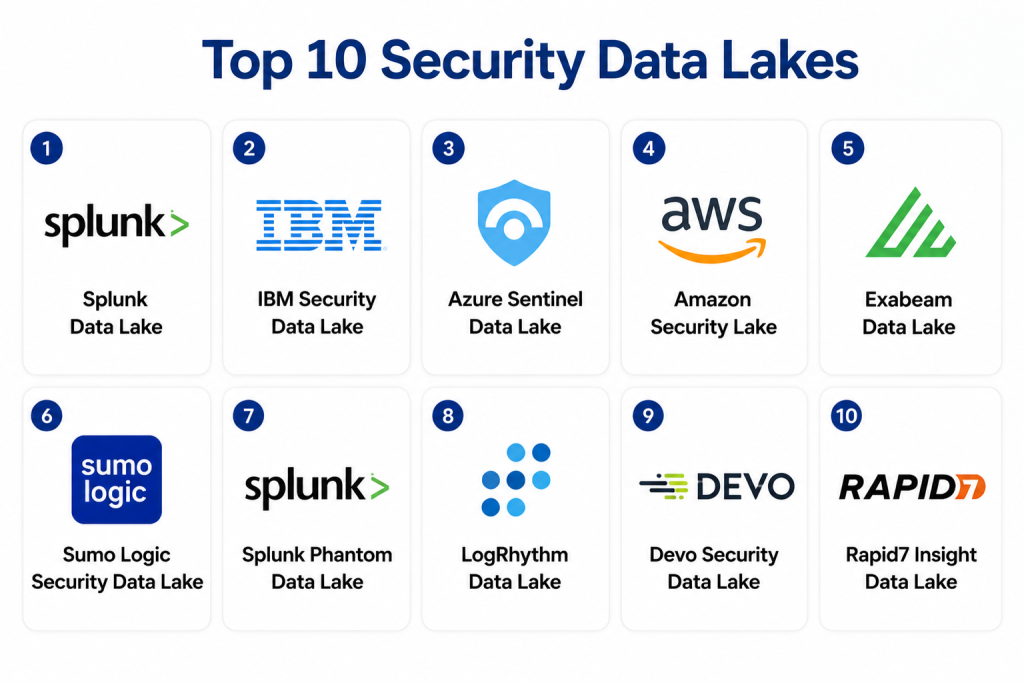
Top 10 Security Data Lakes
1- Splunk Data Lake
Short description: Splunk Data Lake provides a unified repository for security and IT operations data with advanced analytics and visualization capabilities
Key Features
- Centralized log storage and indexing
- Real-time data ingestion and streaming
- AI/ML-powered anomaly detection
- Custom dashboards and reporting
- Integration with SIEM and threat intelligence
Pros
- Scalable for large enterprises
- Strong analytics and visualization
Cons
- Premium pricing
- Initial deployment complexity
Platforms / Deployment
- Windows, Linux, macOS
- Cloud / Hybrid
Security & Compliance
- SSO/SAML, MFA, encryption, audit logs
- SOC 2, ISO 27001, GDPR
Integrations & Ecosystem
- SIEM integration: Splunk Enterprise Security
- Cloud platforms: AWS, Azure, GCP
- EDR and threat intelligence feeds
Support & Community
- 24/7 support, knowledge base, active community
2- IBM Security Data Lake
Short description: IBM Security Data Lake consolidates security logs and events from multiple sources with AI-driven threat analytics
Key Features
- Unified data ingestion from endpoints, network, and cloud
- Automated normalization and enrichment
- Real-time threat analytics
- Customizable dashboards
- Integration with IBM QRadar SIEM
Pros
- Strong enterprise security analytics
- AI-assisted root cause detection
Cons
- Requires IBM ecosystem investment
- Higher complexity for smaller teams
Platforms / Deployment
- Windows, Linux
- Cloud / On-prem
Security & Compliance
- SSO/SAML, MFA, encryption
- SOC 2, ISO 27001
Integrations & Ecosystem
- QRadar SIEM, IBM cloud services
- API support for ingestion and queries
Support & Community
- Enterprise support, documentation
3- Azure Sentinel Data Lake
Short description: Microsoft Azure Sentinel Data Lake integrates security logs into a centralized cloud repository for analysis and incident investigation
Key Features
- Native integration with Azure resources
- Real-time event streaming
- AI-assisted threat detection
- Queryable data lake for investigations
- Dashboard and visualization support
Pros
- Seamless cloud integration
- Scalable for large data volumes
Cons
- Limited on-premise capabilities
- Dependent on Microsoft ecosystem
Platforms / Deployment
- Windows, Web
- Cloud
Security & Compliance
- SSO/SAML, MFA, encryption
- SOC 2, ISO 27001
Integrations & Ecosystem
- Azure Monitor, Office 365, AWS
- SIEM integration and API access
Support & Community
- Microsoft enterprise support, community forums
4- Amazon Security Lake
Short description: AWS Security Lake collects security events across AWS accounts and services into a centralized repository for threat analysis
Key Features
- Centralized log aggregation
- Automated normalization and enrichment
- Integration with AWS GuardDuty and Security Hub
- Queryable storage with analytics
- Supports real-time monitoring and alerts
Pros
- Fully cloud-native and scalable
- Tight integration with AWS services
Cons
- AWS-only focus may limit multi-cloud deployments
- Requires expertise in AWS ecosystem
Platforms / Deployment
- Cloud
- Cloud
Security & Compliance
- SSO/SAML, encryption
- SOC 2, ISO 27001
Integrations & Ecosystem
- AWS GuardDuty, Security Hub, CloudTrail
- SIEM and threat intelligence connectors
Support & Community
- AWS enterprise support, documentation
5- Exabeam Data Lake
Short description: Exabeam centralizes security event data for advanced threat detection and user behavior analytics
Key Features
- UEBA integration for anomaly detection
- Centralized log aggregation
- AI-assisted root cause analysis
- Dashboard visualization for SOC teams
- Automated incident enrichment
Pros
- Strong AI/UEBA integration
- Effective for complex SOC operations
Cons
- Premium pricing
- Requires analyst training
Platforms / Deployment
- Windows, Linux, macOS
- Cloud / Hybrid
Security & Compliance
- SSO/SAML, MFA
- SOC 2
Integrations & Ecosystem
- SIEM, EDR, cloud monitoring
- API access for analytics and reporting
Support & Community
- Enterprise support, knowledge base
6- Sumo Logic Security Data Lake
Short description: Sumo Logic provides a cloud-native security data lake with machine learning-based analytics and dashboards
Key Features
- Real-time log ingestion and indexing
- ML-assisted anomaly detection
- Threat intelligence enrichment
- Custom dashboards
- Cloud-native scalability
Pros
- Fully managed cloud platform
- Strong ML analytics
Cons
- Limited on-prem data support
- Dependent on cloud connectivity
Platforms / Deployment
- Web, Windows, Linux
- Cloud
Security & Compliance
- SSO/SAML, MFA
- SOC 2
Integrations & Ecosystem
- Cloud platforms, SIEM connectors
- API for data queries
Support & Community
- Documentation, enterprise support
7- Splunk Phantom Data Lake
Short description: Phantom Security Data Lake integrates automated security orchestration with centralized data storage
Key Features
- Incident and event aggregation
- Automated response workflows
- AI-driven threat analytics
- Integration with SIEM and monitoring tools
- Dashboards for threat visualization
Pros
- Combines SOAR and data lake capabilities
- Automated enrichment and response
Cons
- Higher complexity
- Requires SOC analyst expertise
Platforms / Deployment
- Windows, Linux
- Cloud / Hybrid
Security & Compliance
- SSO/SAML, MFA, encryption
- SOC 2, ISO 27001
Integrations & Ecosystem
- SIEM platforms, cloud monitoring, threat intelligence
- APIs for automation
Support & Community
- Enterprise support, documentation
8- LogRhythm Data Lake
Short description: LogRhythm provides a security-focused data lake with SIEM integration for advanced analytics and threat detection
Key Features
- Centralized security log aggregation
- Behavioral analytics and anomaly detection
- Integration with SIEM and endpoint tools
- Automated alert correlation
- Dashboards for investigation
Pros
- Strong SIEM integration
- Good visualization for SOC analysts
Cons
- On-premise deployment may require resources
- Limited AI/ML compared to newer platforms
Platforms / Deployment
- Windows, Linux
- Cloud / On-prem
Security & Compliance
- SSO/SAML, MFA
- SOC 2, ISO 27001
Integrations & Ecosystem
- SIEM, endpoint detection, cloud logs
- API for analytics
Support & Community
- Vendor support, documentation
9- Devo Security Data Lake
Short description: Devo provides a cloud-native analytics platform to centralize security events and enable advanced threat detection
Key Features
- Real-time log aggregation
- Queryable data lake
- Threat intelligence integration
- Dashboards and visualization
- ML-assisted anomaly detection
Pros
- Cloud-native scalability
- High-performance analytics
Cons
- Premium pricing
- Requires training to maximize features
Platforms / Deployment
- Web, Linux
- Cloud
Security & Compliance
- SSO/SAML, MFA
- SOC 2
Integrations & Ecosystem
- SIEM, EDR, cloud monitoring
- API access
Support & Community
- Enterprise support, documentation
10- Rapid7 Insight Data Lake
Short description: Insight Data Lake centralizes security logs with analytics and incident investigation workflows
Key Features
- Centralized log storage
- AI-assisted threat detection
- Dashboards for SOC operations
- Integration with SIEM and cloud sources
- Automated enrichment and reporting
Pros
- Unified analytics and logging
- AI-driven insights
Cons
- Premium cost for full features
- May require SOC analyst expertise
Platforms / Deployment
- Web, Windows, Linux
- Cloud
Security & Compliance
- SSO/SAML, MFA
- SOC 2, ISO 27001
Integrations & Ecosystem
- SIEM, cloud monitoring, threat feeds
- API access
Support & Community
- Vendor support, knowledge base
Comparison Table
| Tool Name | Best For | Platform(s) Supported | Deployment | Standout Feature | Public Rating |
|---|---|---|---|---|---|
| Splunk Data Lake | Enterprise IT | Windows, Linux, macOS | Cloud / Hybrid | AI analytics & dashboards | N/A |
| IBM Security Data Lake | Enterprise SIEM | Windows, Linux | Cloud / On-prem | AI-assisted root cause | N/A |
| Azure Sentinel Data Lake | Cloud security | Windows, Web | Cloud | Azure-native integration | N/A |
| Amazon Security Lake | Cloud-native | Cloud | Cloud | AWS integration | N/A |
| Exabeam Data Lake | SOC / UEBA | Windows, Linux, macOS | Cloud / Hybrid | Behavioral analytics | N/A |
| Sumo Logic | Cloud SOC | Web, Windows, Linux | Cloud | ML-powered analytics | N/A |
| Splunk Phantom | SOAR + Security | Windows, Linux | Cloud / Hybrid | Automation + data lake | N/A |
| LogRhythm | Enterprise SOC | Windows, Linux | Cloud / On-prem | SIEM integration | N/A |
| Devo | Cloud-native | Web, Linux | Cloud | High-performance analytics | N/A |
| Rapid7 Insight | Enterprise SOC | Web, Windows, Linux | Cloud | Unified analytics & logs | N/A |
Evaluation & Scoring
| Tool Name | Core (25%) | Ease (15%) | Integrations (15%) | Security (10%) | Performance (10%) | Support (10%) | Value (15%) | Weighted Total |
|---|---|---|---|---|---|---|---|---|
| Splunk | 9 | 7 | 9 | 9 | 9 | 8 | 6 | 8.2 |
| IBM | 9 | 6 | 8 | 9 | 8 | 8 | 6 | 7.9 |
| Azure Sentinel | 8 | 8 | 7 | 8 | 8 | 7 | 7 | 7.7 |
| AWS Security Lake | 8 | 7 | 7 | 8 | 8 | 7 | 7 | 7.6 |
| Exabeam | 9 | 7 | 8 | 8 | 8 | 7 | 6 | 7.9 |
| Sumo Logic | 8 | 7 | 7 | 8 | 8 | 7 | 7 | 7.5 |
| Phantom | 8 | 6 | 7 | 8 | 7 | 7 | 6 | 7.2 |
| LogRhythm | 7 | 7 | 7 | 8 | 7 | 7 | 6 | 7.1 |
| Devo | 8 | 7 | 7 | 8 | 8 | 7 | 6 | 7.4 |
| Rapid7 | 8 | 7 | 7 | 8 | 8 | 7 | 6 | 7.4 |
Which Security Data Lake Tool Is Right for You?
Solo / Freelancer
Cloud-native tools like Sumo Logic or Devo offer cost-effective solutions for small security teams
SMB
Azure Sentinel, Rapid7 Insight, and Exabeam are scalable and manageable for mid-sized teams
Mid-Market
Splunk Data Lake, Phantom, and Exabeam provide AI-assisted analytics and incident correlation
Enterprise
IBM Security Data Lake, Splunk, and LogRhythm are ideal for multi-source, multi-cloud enterprise deployments
Budget vs Premium
Open-source/lightweight tools like Devo or Sumo Logic are cost-friendly; Splunk, IBM, and Phantom are premium solutions with advanced analytics
Feature Depth vs Ease of Use
Enterprise solutions provide deep analytics but require trained staff; cloud-native options are easier to deploy quickly
Integrations & Scalability
Splunk, IBM, and Exabeam integrate across SIEM, cloud, and endpoint systems, suitable for large-scale security operations
Security & Compliance Needs
Enterprise-grade platforms provide audit logs, encryption, and compliance reporting for regulated industries
Frequently Asked Questions (FAQs)
1- What is a Security Data Lake?
It is a centralized repository that stores security logs, alerts, and events for analytics, threat detection, and incident investigation
2- Are these platforms cloud-native?
Many are cloud-native, while others support hybrid or on-prem deployments for flexibility
3- Can small security teams use these data lakes?
Yes, cloud-native and lightweight platforms like Devo and Sumo Logic are suitable for small teams
4- Do these platforms include AI/ML?
Leading platforms such as Splunk, Exabeam, and IBM Security use AI/ML for anomaly detection and threat hunting
5- How long does deployment take?
Cloud deployments can be ready in days, while on-premise setups may take weeks depending on integrations
6- Can these platforms integrate with SIEM?
Yes, most security data lakes provide direct integrations with SIEM, EDR, and threat intelligence feeds
7- Do they support compliance reporting?
Yes, dashboards and automated reports support regulatory compliance such as SOC 2, ISO 27001, and GDPR
8- Are dashboards customizable?
Yes, analysts can build queries, visualizations, and dashboards tailored to security workflows
9- Can these platforms scale?
Yes, most platforms are designed to handle terabytes of logs and high-volume event data
10- How do I switch platforms?
Migration requires exporting historical logs, reconfiguring data pipelines, and integrating existing monitoring sources
Conclusion
Security Data Lakes consolidate and analyze security data across systems to detect threats, improve SOC efficiency, and support compliance. Choose based on team size, deployment environment, integrations, and budget. pilot them in your environment, validate analytics and integrations, and then scale adoption for enterprise security operation
