Introduction
Renewable Asset Management Software is a specialized platform designed to monitor, manage, and optimize renewable energy assets including solar farms, wind farms, hydro plants, and energy storage systems. These platforms provide real-time performance monitoring, predictive maintenance, analytics, and reporting to maximize energy production and asset lifecycle value.
Real-world use cases include:
- Utility-scale solar farms tracking performance across hundreds of panels
- Wind farm operators monitoring turbines for efficiency and maintenance needs
- Hydro plant operators managing generation schedules and asset health
- Energy companies integrating storage solutions for grid stability
- Portfolio managers assessing ROI and performance of multiple renewable sites
Evaluation criteria for buyers:
- Real-time monitoring and dashboards
- Predictive maintenance and fault alerts
- Integration with SCADA, ERP, and monitoring hardware
- Analytics and KPI reporting
- Asset lifecycle management
- Cloud, hybrid, or on-premises deployment options
- Security and role-based access controls
- Mobile and web access for field teams
- Scalability for multiple asset types and sites
- Customer support and training resources
Best for: Renewable energy operators, utility companies, asset managers, and maintenance teams managing multi-site portfolios
Not ideal for: Small-scale or single-site renewable installations where simpler monitoring or spreadsheet tracking is sufficient
Key Trends in Renewable Asset Management Software
- AI-powered predictive maintenance for early fault detection
- Real-time integration with SCADA systems and IoT-enabled assets
- Cloud-first deployments replacing legacy on-premises solutions
- Mobile dashboards and field access for technicians
- Advanced analytics for portfolio-level performance and ROI
- Automated alerts for underperformance, downtime, or environmental conditions
- Integration with ERP, CMMS, and energy management platforms
- Multi-asset and multi-site monitoring for diversified portfolios
- Remote firmware updates and asset control
- Regulatory reporting for compliance and sustainability tracking
How We Selected These Tools (Methodology)
- Evaluated global adoption and market recognition in renewable energy
- Assessed feature completeness including monitoring, analytics, maintenance, and reporting
- Reviewed performance and reliability metrics
- Verified security, role-based access, and compliance support
- Analyzed integrations with SCADA, ERP, and IoT systems
- Considered scalability from single-site to enterprise portfolios
- Factored mobile and web accessibility for operations teams
- Checked predictive maintenance and AI-enabled functionalities
- Evaluated user experience and ease of onboarding
- Assessed vendor support and community engagement
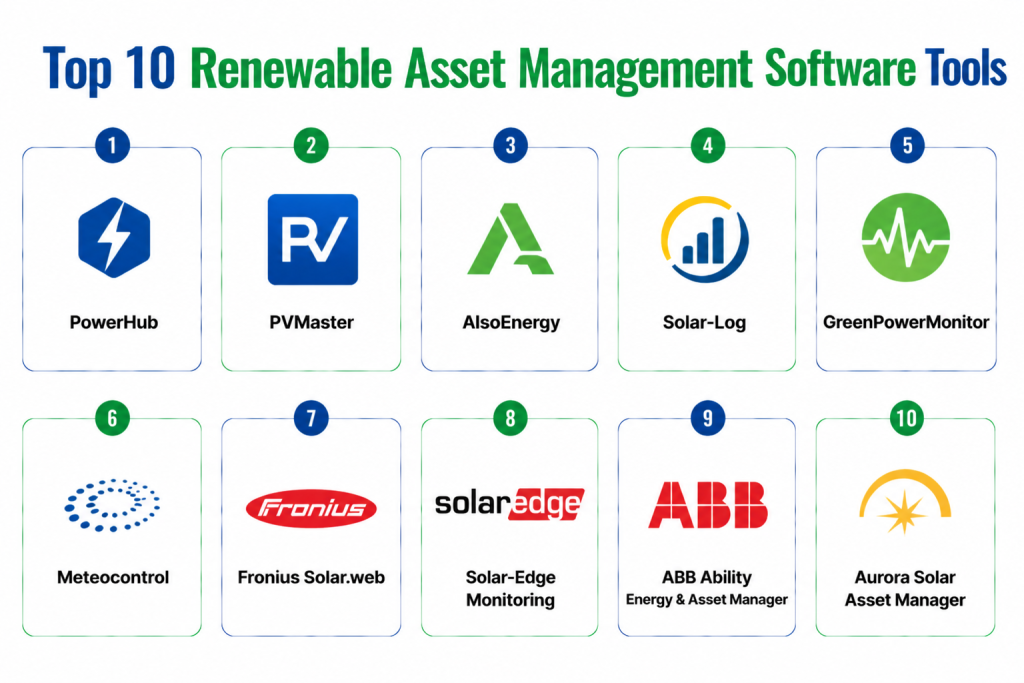
Top 10 Renewable Asset Management Software Tools
1- PowerHub
Short description: Cloud-based platform for monitoring, reporting, and managing renewable energy portfolios including solar and wind assets
Key Features
- Real-time asset monitoring
- Predictive maintenance alerts
- KPI dashboards and analytics
- Multi-site portfolio management
- SCADA and ERP integration
- Mobile access for field teams
- API support for custom workflows
Pros
- Scales to large portfolios
- Strong reporting and analytics
- Cloud-native deployment
Cons
- Higher cost for smaller sites
- Advanced features require training
- Complex integration setup
Platforms / Deployment
Web / Cloud
Security & Compliance
Not publicly stated
Integrations & Ecosystem
Connects with SCADA, ERP, and IoT sensors
- SCADA systems
- ERP platforms
- IoT devices
- API modules
Support & Community
Varies / Not publicly stated
2- PVMaster
Short description: Monitoring and management software for renewable assets, emphasizing small-to-mid scale deployments
Key Features
- Real-time performance dashboards
- Alert notifications for equipment faults
- Analytics and energy yield reporting
- Mobile app for on-site monitoring
- Integration with inverters and meters
- Predictive maintenance capabilities
- API integration
Pros
- Affordable for small-to-mid portfolios
- Mobile-friendly and easy to deploy
- Quick setup and onboarding
Cons
- Limited advanced AI
- Smaller integration ecosystem
- Fewer enterprise-level features
Platforms / Deployment
Web / Cloud / iOS / Android
Security & Compliance
Not publicly stated
Integrations & Ecosystem
Supports inverters, meters, and reporting tools
- PV inverters
- Energy meters
- API modules
Support & Community
Varies / Not publicly stated
3- AlsoEnergy
Short description: Enterprise-grade platform for renewable asset monitoring, performance optimization, and portfolio management
Key Features
- Real-time monitoring for multiple renewable assets
- Multi-site portfolio management
- Fault detection and alerts
- Analytics and ROI reporting
- SCADA and ERP integration
- Cloud dashboards and mobile access
- API support
Pros
- Enterprise-grade features
- Comprehensive portfolio management
- Reliable cloud platform
Cons
- Higher cost for small operators
- Advanced features may require training
- Custom integrations may need consulting
Platforms / Deployment
Web / Cloud
Security & Compliance
Not publicly stated
Integrations & Ecosystem
SCADA, ERP, and asset management systems
- SCADA platforms
- ERP connectors
- API modules
Support & Community
Varies / Not publicly stated
4- Solar-Log
Short description: Monitoring solution for PV systems and renewable assets, focusing on performance optimization and alerts
Key Features
- Real-time monitoring and visualization
- Fault detection and notifications
- Energy yield analysis
- Integration with inverters and meters
- Mobile app for field technicians
- Predictive maintenance
- API access
Pros
- Broad device compatibility
- Advanced analytics for performance
- Mobile access for technicians
Cons
- Complex UI for beginners
- Limited support in some regions
- Some modules require additional licensing
Platforms / Deployment
Web / Cloud / Hybrid
Security & Compliance
Not publicly stated
Integrations & Ecosystem
Integrates with inverters, SCADA, and reporting tools
- PV inverters
- SCADA systems
- API modules
Support & Community
Varies / Not publicly stated
5- GreenPowerMonitor
Short description: Multi-site monitoring and management platform for renewable energy assets, with dashboards and alerts
Key Features
- Real-time monitoring of renewable assets
- Fault alerts and predictive maintenance
- Portfolio and multi-site management
- Energy analytics and reporting
- Mobile app access
- Cloud dashboards
- API for integration
Pros
- Scales across multiple sites
- User-friendly dashboards
- Reliable alerting system
Cons
- Advanced analytics may require training
- Limited integrations
- Smaller ecosystem
Platforms / Deployment
Web / Cloud
Security & Compliance
Not publicly stated
Integrations & Ecosystem
Supports SCADA, ERP, and inverter connectivity
- SCADA systems
- ERP connectors
- API modules
Support & Community
Varies / Not publicly stated
6- Meteocontrol
Short description: Global renewable asset monitoring platform providing remote monitoring, alerts, and analytics
Key Features
- Remote asset monitoring
- Performance dashboards
- Automated alerts for underperformance
- Energy analytics and ROI assessment
- Multi-site management
- Mobile app support
- SCADA integration
Pros
- Strong global presence
- Reliable alerting system
- Portfolio management
Cons
- Learning curve for advanced features
- Cost may be high for small operators
- Some integrations are region-specific
Platforms / Deployment
Web / Cloud / iOS / Android
Security & Compliance
Not publicly stated
Integrations & Ecosystem
SCADA, ERP, and IoT connectivity
- SCADA systems
- ERP platforms
- IoT devices
Support & Community
Varies / Not publicly stated
7- Fronius Solar.web
Short description: Monitoring software optimized for Fronius PV inverters and renewable assets
Key Features
- Real-time monitoring
- Performance alerts
- Energy analytics
- Dashboard visualization
- Multi-site support
- Mobile app access
- Reporting tools
Pros
- Optimized for Fronius hardware
- Mobile-friendly
- Easy-to-read dashboards
Cons
- Limited to Fronius systems
- Less flexible for mixed-vendor portfolios
- Advanced analytics limited
Platforms / Deployment
Web / Cloud / iOS / Android
Security & Compliance
Not publicly stated
Integrations & Ecosystem
Works with Fronius inverters and analytics tools
- Fronius inverters
- Dashboard exports
- API modules
Support & Community
Varies / Not publicly stated
8- Solar-Edge Monitoring
Short description: Platform specifically for SolarEdge inverters with detailed analytics and monitoring
Key Features
- Real-time inverter monitoring
- Performance and energy analytics
- Fault alerts
- Web and mobile dashboards
- Reporting tools
- Multi-site support
- API for integrations
Pros
- Optimized for SolarEdge hardware
- Detailed performance analytics
- Mobile and web access
Cons
- Limited to SolarEdge devices
- Less suitable for multi-vendor systems
- Advanced setup required
Platforms / Deployment
Web / Cloud / iOS / Android
Security & Compliance
Not publicly stated
Integrations & Ecosystem
Supports SolarEdge inverters and energy management systems
- SolarEdge inverters
- Reporting dashboards
- API modules
Support & Community
Varies / Not publicly stated
9- ABB Ability Energy & Asset Manager
Short description: Enterprise monitoring solution for solar, wind, and storage assets with analytics and multi-site support
Key Features
- Real-time asset monitoring
- Predictive maintenance alerts
- Multi-site portfolio management
- Advanced analytics dashboards
- SCADA and ERP integration
- Mobile access
- API for custom integrations
Pros
- Enterprise-grade features
- Predictive maintenance
- Portfolio-wide monitoring
Cons
- High implementation complexity
- Costly for smaller operators
- Learning curve for staff
Platforms / Deployment
Web / Cloud / Hybrid
Security & Compliance
Not publicly stated
Integrations & Ecosystem
SCADA, ERP, and inverter integration
- SCADA systems
- ERP connectors
- Inverter models
- API modules
Support & Community
Varies / Not publicly stated
10- Aurora Solar Asset Manager
Short description: Platform for managing and optimizing solar and wind assets with remote monitoring and predictive analytics
Key Features
- Real-time asset monitoring
- Predictive maintenance alerts
- Multi-site management
- Energy analytics dashboards
- Mobile and web access
- Reporting and KPI tracking
- API integrations
Pros
- Cloud-native
- Predictive analytics
- Portfolio-level monitoring
Cons
- Smaller support network
- Limited multi-vendor features
- Some advanced features require training
Platforms / Deployment
Web / Cloud / iOS / Android
Security & Compliance
Not publicly stated
Integrations & Ecosystem
Integrates with SCADA, ERP, and inverter devices
- SCADA systems
- ERP platforms
- Inverter models
- API modules
Support & Community
Varies / Not publicly stated
Comparison Table
| Tool Name | Best For | Platform(s) Supported | Deployment | Standout Feature | Public Rating |
|---|---|---|---|---|---|
| PowerHub | Large renewable portfolios | Web | Cloud | Portfolio management | N/A |
| PVMaster | Small-to-mid assets | Web / Cloud / iOS / Android | Cloud | Easy deployment | N/A |
| AlsoEnergy | Enterprise operators | Web / Cloud | Cloud | Multi-site management | N/A |
| Solar-Log | PV and small wind systems | Web / Cloud / Hybrid | Cloud / Hybrid | Fault detection | N/A |
| GreenPowerMonitor | Multi-site operators | Web / Cloud | Cloud | Energy analytics | N/A |
| Meteocontrol | Global renewable operators | Web / Cloud / iOS / Android | Cloud | Remote monitoring | N/A |
| Fronius Solar.web | Fronius assets | Web / Cloud / iOS / Android | Cloud | Inverter optimization | N/A |
| Solar-Edge Monitoring | SolarEdge systems | Web / Cloud / iOS / Android | Cloud | Optimized for SolarEdge | N/A |
| ABB Ability | Enterprise multi-asset | Web / Cloud / Hybrid | Hybrid | Predictive maintenance | N/A |
| Aurora Solar Asset Manager | Solar & wind portfolios | Web / Cloud / iOS / Android | Cloud | Portfolio analytics | N/A |
Evaluation & Scoring
| Tool Name | Core (25%) | Ease (15%) | Integrations (15%) | Security (10%) | Performance (10%) | Support (10%) | Value (15%) | Weighted Total |
|---|---|---|---|---|---|---|---|---|
| PowerHub | 9 | 7 | 8 | 8 | 9 | 8 | 7 | 8.3 |
| PVMaster | 7 | 8 | 6 | 7 | 7 | 7 | 8 | 7.4 |
| AlsoEnergy | 9 | 6 | 8 | 7 | 8 | 7 | 7 | 7.8 |
| Solar-Log | 8 | 7 | 7 | 7 | 8 | 7 | 8 | 7.6 |
| GreenPowerMonitor | 8 | 7 | 7 | 7 | 8 | 7 | 7 | 7.5 |
| Meteocontrol | 8 | 7 | 7 | 7 | 8 | 7 | 7 | 7.5 |
| Fronius Solar.web | 7 | 8 | 6 | 7 | 7 | 7 | 8 | 7.4 |
| Solar-Edge Monitoring | 7 | 8 | 6 | 7 | 7 | 7 | 8 | 7.4 |
| ABB Ability | 9 | 6 | 8 | 7 | 8 | 7 | 7 | 7.8 |
| Aurora | 8 | 7 | 7 | 7 | 8 | 7 | 7 | 7.5 |
Interpretation: Scores show comparative strengths. Weighted totals help organizations choose based on portfolio size, integration needs, and asset types.
Which Tool Is Right for You
Solo / Freelancer: PVMaster or Solar-Log for small portfolios with easy deployment
SMB: GreenPowerMonitor or Meteocontrol for multi-site monitoring and analytics
Mid-Market: PowerHub or Aurora for portfolio-level monitoring and predictive alerts
Enterprise: AlsoEnergy or ABB Ability for predictive maintenance, large-scale deployments, and analytics
Budget vs Premium: Budget – PVMaster, Solar-Log | Premium – PowerHub, ABB Ability
Feature Depth vs Ease of Use: High depth – ABB Ability, PowerHub | Ease of use – PVMaster, Fronius Solar.web
Integrations & Scalability: Enterprise operators should prioritize SCADA, ERP, and inverter integration: PowerHub, ABB Ability, AlsoEnergy
Security & Compliance Needs: Focus on platforms with role-based access, encryption, and audit tracking. Certification disclosures may be limited
Frequently Asked Questions
1. What pricing models are common?
Most platforms offer subscription or SaaS pricing; enterprise deployments may include licensing fees
2. How long does implementation take?
Small sites can deploy quickly; large multi-site portfolios may require several months
3. Can these systems handle multiple asset types?
Yes, most platforms support solar, wind, hydro, and energy storage
4. Are predictive maintenance features available?
Many platforms offer AI-driven maintenance alerts and performance forecasts
5. Can these tools integrate with SCADA and ERP systems?
Yes, integration is typically via APIs or native connectors
6. Are mobile apps available?
Most top platforms provide mobile access for field teams
7. How scalable are these solutions?
Cloud-native platforms scale from small installations to enterprise multi-site portfolios
8. What support options are available?
Support ranges from documentation and email to dedicated account managers
9. Can I switch platforms later?
Yes, but migrating historical data and settings requires careful planning
10. Are dashboards customizable?
Most platforms allow KPI and performance dashboards to be customized for different teams
Conclusion
Renewable Asset Management Software helps operators maximize energy production, minimize downtime, and improve ROI across solar, wind, hydro, and storage assets. Selection depends on portfolio size, asset diversity, and integration requirements. Smaller operators may prioritize affordability and ease of use, while enterprises focus on predictive analytics, multi-site monitoring, and portfolio management. Next steps: shortlist 2–3 vendors, run a pilot on critical features, and validate integration, scalability, and security before full deployment
