Introduction
Marketplace seller tools are specialized software platforms designed to help e-commerce sellers efficiently manage product listings, inventory, pricing, orders, and customer engagement across multiple online marketplaces. These tools provide automation, analytics, and integration capabilities to optimize sales performance and reduce operational complexity.
Use cases include listing and updating products on platforms like Amazon, eBay, and Etsy; managing inventory and stock across channels; tracking orders and fulfillment; automating pricing and promotions; analyzing sales performance; and streamlining customer communication. Buyers should evaluate tools based on multi-channel integration, automation capabilities, analytics dashboards, inventory management, pricing optimization, ease of use, reporting, scalability, security, and customer support.
Best for: SMBs, online sellers, and enterprises operating across multiple marketplaces who want to streamline operations and improve sales efficiency.
Not ideal for: Businesses selling on a single platform with low order volume, or those needing fully custom ERP integration beyond marketplace functionality.
Key Trends in Marketplace Seller Tools
- AI-driven pricing optimization for competitive marketplaces
- Real-time inventory synchronization across multiple platforms
- Automated order fulfillment and tracking
- Advanced analytics for sales, revenue, and performance metrics
- Integration with e-commerce, shipping, and accounting platforms
- Multi-channel product listing and bulk upload capabilities
- Cloud-based SaaS deployments with hybrid options
- Alerts for low stock, pricing changes, or order issues
- Support for international marketplaces and multi-currency pricing
- API-first architecture for custom workflows and automation
How We Selected These Tools (Methodology)
- Market adoption and seller base
- Feature completeness including listing, inventory, and order management
- Reliability and uptime performance
- Security and payment processing compliance
- Integration capabilities with e-commerce, shipping, and accounting platforms
- Customer support quality and onboarding resources
- Pricing transparency and scalability
- Analytics and reporting capabilities
- Automation features for pricing and fulfillment
- Balance of tools suitable for SMBs and enterprises
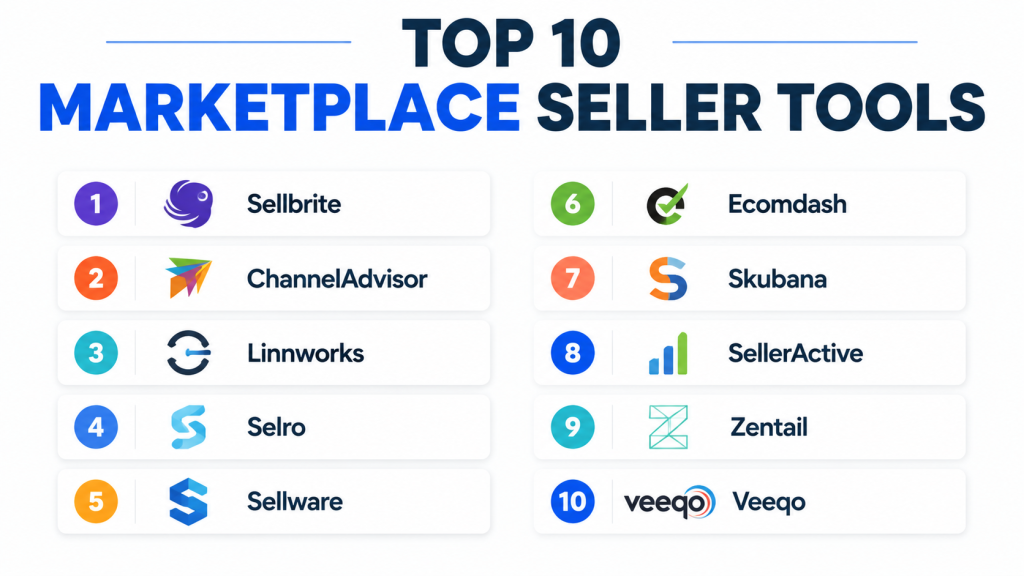
Top 10 Marketplace Seller Tools
#1 — Sellbrite
Short description: Sellbrite provides multi-channel listing, inventory, and order management for online sellers.
Key Features
- Centralized product listing across marketplaces
- Real-time inventory syncing
- Order management and fulfillment tracking
- Analytics dashboards
- Integration with Shopify, BigCommerce, Amazon, and eBay
Pros
- Simplifies multi-channel selling
- Real-time inventory updates
- Detailed reporting and analytics
Cons
- Higher pricing for large seller networks
- Limited customization of dashboards
Platforms / Deployment
- Web
- Cloud
Security & Compliance
- Payment and data encryption
- Not publicly stated
Integrations & Ecosystem
- Shopify, BigCommerce, Amazon, eBay
- API for automation
- Shipping and accounting integrations
Support & Community
- Knowledge base and email support
- Community forums
#2 — ChannelAdvisor
Short description: ChannelAdvisor is an enterprise-grade platform for managing listings, inventory, and orders across multiple marketplaces.
Key Features
- Centralized marketplace management
- Automated inventory and order updates
- Price optimization tools
- Analytics and performance tracking
- Multi-marketplace integrations
Pros
- Scalable for enterprise sellers
- Advanced reporting and analytics
- Automation reduces manual work
Cons
- Complex setup for smaller businesses
- Higher cost
Platforms / Deployment
- Web
- Cloud
Security & Compliance
- Secure data and payment processing
- Not publicly stated
Integrations & Ecosystem
- Amazon, eBay, Walmart, Shopify
- API for custom workflows
- ERP and accounting integrations
Support & Community
- Email and chat support
- Knowledge base and community forums
#3 — Linnworks
Short description: Linnworks provides automation for inventory, order, and listing management for multi-channel sellers.
Key Features
- Inventory and order automation
- Product listing across multiple marketplaces
- Pricing and promotion management
- Analytics dashboards
- Integration with e-commerce and shipping platforms
Pros
- Automation saves time
- Supports multiple marketplaces
- Scalable for growing businesses
Cons
- Learning curve for beginners
- Pricing tiers may be high for SMBs
Platforms / Deployment
- Web
- Cloud
Security & Compliance
- Data encryption and secure processing
- Not publicly stated
Integrations & Ecosystem
- Shopify, Magento, Amazon, eBay
- API for automation
- Shipping and fulfillment partners
Support & Community
- Email and knowledge base
- Community forums
#4 — Selro
Short description: Selro is an all-in-one marketplace seller tool for inventory, order, and listing management.
Key Features
- Multi-channel listing management
- Inventory and order tracking
- Shipping integration
- Analytics dashboards
- Pricing automation
Pros
- Affordable for SMBs
- Supports multiple marketplaces
- Easy to set up
Cons
- Limited enterprise features
- Reporting could be more detailed
Platforms / Deployment
- Web
- Cloud
Security & Compliance
- Payment encryption
- Not publicly stated
Integrations & Ecosystem
- Amazon, eBay, Shopify
- API for automation
- Shipping and accounting tools
Support & Community
- Email support
- Knowledge base
#5 — Sellware
Short description: Sellware provides multi-channel listing, inventory, and order automation for e-commerce sellers.
Key Features
- Product listing and updates
- Inventory synchronization
- Order management and fulfillment
- Analytics and reporting
- Integration with major marketplaces
Pros
- Multi-channel support
- Automation saves time
- Real-time reporting
Cons
- Limited customization
- Pricing may be high for SMBs
Platforms / Deployment
- Web
- Cloud
Security & Compliance
- Secure payment and data processing
- Not publicly stated
Integrations & Ecosystem
- Shopify, BigCommerce, Amazon, eBay
- API for custom workflows
- Shipping and ERP integration
Support & Community
- Email support and tutorials
- Knowledge base
#6 — Ecomdash
Short description: Ecomdash helps sellers manage inventory, orders, and listings across multiple e-commerce channels.
Key Features
- Centralized inventory management
- Order tracking and fulfillment
- Multi-channel product listing
- Pricing automation
- Analytics and reporting
Pros
- Affordable for SMBs
- Multi-channel integration
- Automated workflows
Cons
- Limited enterprise features
- Setup can be time-consuming
Platforms / Deployment
- Web
- Cloud
Security & Compliance
- Payment encryption
- Not publicly stated
Integrations & Ecosystem
- Shopify, Amazon, eBay, Etsy
- API for custom workflows
- Shipping and accounting integrations
Support & Community
- Email support
- Knowledge base
#7 — Skubana
Short description: Skubana provides unified inventory, order, and operations management for multi-channel sellers.
Key Features
- Inventory and order automation
- Product listing management
- Analytics dashboards
- Shipping and fulfillment integrations
- Pricing and promotions management
Pros
- Enterprise-ready features
- Scalable for growing sellers
- Advanced reporting
Cons
- Higher pricing for smaller sellers
- Setup requires training
Platforms / Deployment
- Web
- Cloud
Security & Compliance
- Payment encryption
- Not publicly stated
Integrations & Ecosystem
- Shopify, Amazon, eBay, Walmart
- API for automation
- ERP and accounting integrations
Support & Community
- Email and chat support
- Knowledge base
#8 — SellerActive
Short description: SellerActive automates inventory, orders, and listing management for multi-channel e-commerce sellers.
Key Features
- Inventory synchronization
- Automated order management
- Pricing and promotion automation
- Multi-channel listing
- Analytics dashboards
Pros
- Automation saves time
- Supports multiple marketplaces
- Scalable for SMBs
Cons
- Limited enterprise features
- Interface may be less intuitive
Platforms / Deployment
- Web
- Cloud
Security & Compliance
- Data encryption and secure processing
- Not publicly stated
Integrations & Ecosystem
- Shopify, Amazon, eBay
- API for automation
- Shipping integrations
Support & Community
- Email support
- Knowledge base
#9 — Zentail
Short description: Zentail provides AI-driven multi-channel listing and inventory management for e-commerce brands.
Key Features
- AI-assisted listing optimization
- Inventory and order management
- Pricing automation
- Analytics and reporting
- Multi-channel integration
Pros
- AI-powered automation
- Centralized marketplace management
- Scalable for growing brands
Cons
- Pricing may be high for SMBs
- Steeper learning curve
Platforms / Deployment
- Web
- Cloud
Security & Compliance
- Payment and data encryption
- Not publicly stated
Integrations & Ecosystem
- Amazon, Walmart, Shopify, eBay
- API for custom workflows
- ERP integration
Support & Community
- Email support
- Knowledge base
#10 — Veeqo
Short description: Veeqo helps online sellers manage inventory, shipping, and marketplace listings from one platform.
Key Features
- Multi-channel inventory management
- Order tracking and fulfillment
- Product listing automation
- Analytics dashboards
- Shipping integrations
Pros
- Centralized operations
- Supports multiple marketplaces
- Scalable for mid-market sellers
Cons
- Limited AI or automation features
- Pricing may be high for SMBs
Platforms / Deployment
- Web
- Cloud
Security & Compliance
- Payment and data encryption
- Not publicly stated
Integrations & Ecosystem
- Shopify, Amazon, eBay, Magento
- API for automation
- Shipping and ERP integrations
Support & Community
- Email support
- Knowledge base
Comparison Table
| Tool Name | Best For | Platform(s) Supported | Deployment | Standout Feature | Public Rating |
|---|---|---|---|---|---|
| Sellbrite | Multi-channel SMBs | Web | Cloud | Inventory sync | N/A |
| ChannelAdvisor | Enterprise sellers | Web | Cloud | Enterprise-grade automation | N/A |
| Linnworks | Growing brands | Web | Cloud | Automation | N/A |
| Selro | SMBs | Web | Cloud | Affordable multi-channel | N/A |
| Sellware | Multi-channel | Web | Cloud | Automation | N/A |
| Ecomdash | SMBs | Web | Cloud | Inventory & orders | N/A |
| Skubana | Mid-market & enterprise | Web | Cloud | Unified operations | N/A |
| SellerActive | SMBs | Web | Cloud | Multi-channel automation | N/A |
| Zentail | Growing brands | Web | Cloud | AI-driven listing | N/A |
| Veeqo | Multi-channel sellers | Web | Cloud | Centralized operations | N/A |
Evaluation & Scoring
| Tool Name | Core (25%) | Ease (15%) | Integrations (15%) | Security (10%) | Performance (10%) | Support (10%) | Value (15%) | Weighted Total |
|---|---|---|---|---|---|---|---|---|
| Sellbrite | 9 | 8 | 8 | 8 | 9 | 8 | 7 | 8.2 |
| ChannelAdvisor | 9 | 7 | 8 | 8 | 9 | 8 | 7 | 8.0 |
| Linnworks | 8 | 7 | 8 | 7 | 8 | 7 | 7 | 7.5 |
| Selro | 7 | 8 | 7 | 7 | 8 | 7 | 7 | 7.3 |
| Sellware | 8 | 7 | 7 | 7 | 8 | 7 | 7 | 7.4 |
| Ecomdash | 7 | 8 | 7 | 7 | 7 | 7 | 7 | 7.1 |
| Skubana | 9 | 7 | 8 | 8 | 9 | 8 | 7 | 8.0 |
| SellerActive | 7 | 8 | 7 | 7 | 7 | 7 | 7 | 7.1 |
| Zentail | 8 | 7 | 8 | 7 | 8 | 7 | 7 | 7.5 |
| Veeqo | 7 | 7 | 7 | 7 | 7 | 7 | 7 | 7.0 |
Which Marketplace Seller Tool Is Right for You?
Solo / Freelancer
- Selro, Sellbrite, Ecomdash for easy setup and affordability
SMB
- Linnworks, SellerActive, Sellware for automation and integration
Mid-Market
- Skubana, Zentail, ChannelAdvisor for multi-channel scaling and analytics
Enterprise
- ChannelAdvisor, Skubana, Zentail for enterprise-level automation and reporting
Budget vs Premium
- Selro and Ecomdash for budget-friendly options; ChannelAdvisor and Skubana for premium features
Feature Depth vs Ease of Use
- Skubana and Linnworks offer depth; Selro and SellerActive prioritize simplicity
Integrations & Scalability
- ChannelAdvisor, Skubana, Zentail support large-scale multi-channel operations
Security & Compliance Needs
- All platforms provide secure data and payment processing; enterprise-focused tools offer advanced controls
Frequently Asked Questions (FAQs)
1 — What is a marketplace seller tool?
It is software that helps sellers manage inventory, orders, pricing, and listings across multiple online marketplaces.
2 — Can these tools integrate with my e-commerce store?
Yes, most integrate with Shopify, Amazon, eBay, WooCommerce, and other platforms.
3 — Do these tools automate inventory management?
Yes, real-time inventory sync prevents overselling and ensures accuracy across channels.
4 — Are they suitable for SMBs?
Yes, many tools offer affordable tiers designed for small to mid-sized businesses.
5 — Can I track sales performance?
Yes, dashboards provide analytics on sales, revenue, order fulfillment, and performance metrics.
6 — Do they support multi-channel listings?
Yes, all top tools enable listing across multiple marketplaces from a single interface.
7 — Are these tools secure?
Yes, payment and data encryption is standard; enterprise-grade tools offer advanced security controls.
8 — Can I automate pricing and promotions?
Most platforms include features for automated price adjustments and promotion management.
9 — How long does setup take?
Setup can range from a few hours to several days, depending on the number of marketplaces and integrations.
10 — Which platform is best for beginners?
Selro, Ecomdash, and Sellbrite are ideal for beginners due to intuitive setup and affordability.
Conclusion
Marketplace seller tools streamline multi-channel operations, automate tasks, and provide insights for e-commerce sellers. Selection depends on business size, integration needs, automation requirements, and budget. Solo sellers benefit from simpler, affordable tools, while enterprises require scalable platforms with advanced analytics. Shortlist 2–3 tools, test workflows, and monitor analytics to optimize sales operations and maximize efficiency.
