Introduction
Grid Operations Software (EMS/DMS) refers to platforms designed to monitor, control, and optimize electrical grid operations. Energy Management Systems (EMS) focus on real-time monitoring and control of power generation and transmission, while Distribution Management Systems (DMS) manage the distribution network for reliability, efficiency, and outage prevention.
Utilities and grid operators use EMS/DMS platforms to improve operational efficiency, reduce outages, support renewable integration, and optimize energy delivery. Real-time visibility, predictive analytics, and automated controls ensure grid stability and compliance.
Real-world use cases include:
- Real-time monitoring of power generation and transmission networks.
- Automated control of distribution networks to reduce outages.
- Integration of renewable energy sources like wind and solar.
- Predictive analytics for equipment health and grid reliability.
- Regulatory compliance and reporting for energy distribution.
Evaluation criteria for buyers:
- Real-time SCADA and grid telemetry integration.
- Predictive analytics and outage forecasting.
- Automated grid control and fault detection.
- Renewable energy and DER integration.
- Historical data storage and trend analysis.
- Multi-site and multi-substation scalability.
- User-friendly dashboards for operators and engineers.
- Cybersecurity features and compliance with utility regulations.
- Cloud, on-premise, or hybrid deployment options.
- Pricing models for small utilities, mid-market, and large grids.
Best for: Utilities, energy operators, independent power producers, and large industrial grid managers.
Not ideal for: Small microgrids or experimental setups without complex grid management needs.
Key Trends in Grid Operations Software
- AI-driven predictive maintenance and fault detection.
- Cloud-based EMS/DMS with multi-site support.
- Integration with renewable energy sources and DERs.
- Advanced outage management and automated restoration.
- Real-time analytics for energy production and distribution.
- Enhanced cybersecurity and compliance monitoring.
- Mobile access for field operators and engineers.
- Interoperability across multi-vendor devices and SCADA systems.
- Subscription and enterprise pricing models.
- Hybrid deployment models for flexibility and data security.
How We Selected These Tools (Methodology)
- Evaluated adoption among utilities and grid operators.
- Reviewed feature completeness: EMS/DMS functionality, analytics, and automation.
- Assessed reliability and uptime for critical grid operations.
- Verified security measures and regulatory compliance.
- Examined integration with SCADA, IoT sensors, and renewable sources.
- Considered scalability for small to large grid networks.
- Evaluated AI-assisted predictive analytics and fault detection.
- Reviewed operator dashboard usability and accessibility.
- Assessed customer support, documentation, and training.
- Compared pricing and deployment flexibility.
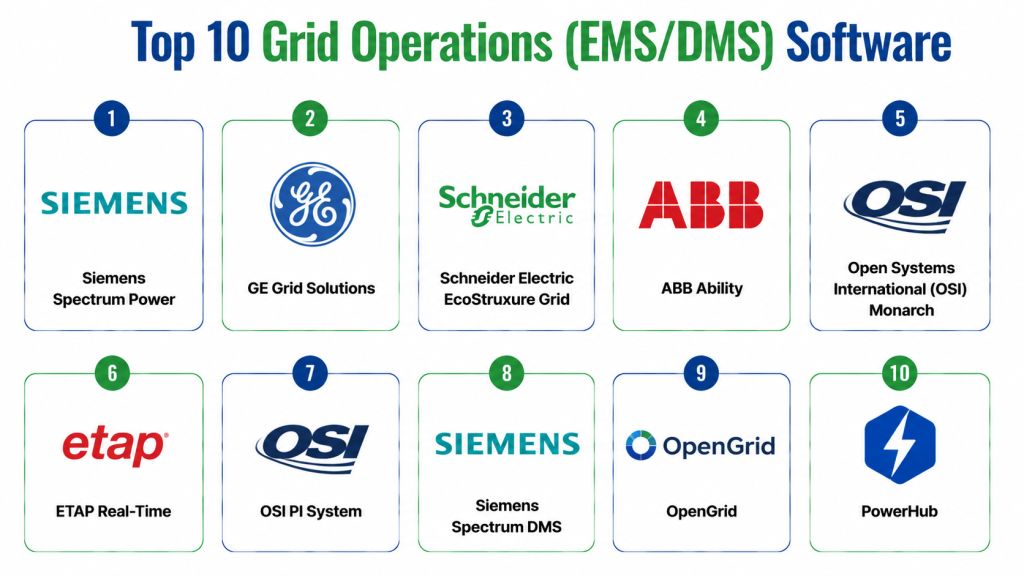
Top 10 Grid Operations (EMS/DMS) Software
1- Siemens Spectrum Power
Short description: Enterprise-grade EMS/DMS platform offering real-time grid monitoring, analytics, and control for utilities.
Key Features
- SCADA integration
- Real-time grid telemetry
- Predictive maintenance
- Automated outage management
- Renewable energy integration
- Cloud or on-premise deployment
Pros
- Enterprise scalability
- Advanced predictive analytics
Cons
- Complex setup
- Premium pricing
Platforms / Deployment
- Web / Desktop
- Cloud / On-premise
Security & Compliance
- Not publicly stated
Integrations & Ecosystem
- SCADA and IoT sensors
- Renewable energy sources
- API and data export
Support & Community
- Documentation, training, and technical support
2- GE Grid Solutions
Short description: Grid operations software providing EMS/DMS functionalities, fault detection, and energy optimization for large-scale utilities.
Key Features
- Real-time monitoring
- Fault detection and management
- Energy optimization
- DER and renewable integration
- Predictive maintenance
- Cloud and hybrid dashboards
Pros
- Enterprise-grade performance
- Advanced analytics and forecasting
Cons
- Best suited for large utilities
- Implementation complexity
Platforms / Deployment
- Web / Desktop
- Cloud / Hybrid
Security & Compliance
- Not publicly stated
Integrations & Ecosystem
- SCADA systems
- IoT sensors and DER devices
- API for analytics
Support & Community
- Documentation, training, and support portal
3- Schneider Electric EcoStruxure Grid
Short description: EMS/DMS platform providing real-time visibility, predictive maintenance, and distributed energy management.
Key Features
- Grid monitoring and control
- Predictive maintenance analytics
- Outage management and restoration
- DER integration
- Cloud dashboards
- Multi-site support
Pros
- Strong enterprise scalability
- Integration with renewable energy
Cons
- Enterprise pricing
- Setup complexity
Platforms / Deployment
- Web / Desktop
- Cloud / Hybrid
Security & Compliance
- Not publicly stated
Integrations & Ecosystem
- SCADA, IoT, DER devices
- API and analytics
- Cloud monitoring
Support & Community
- Documentation, training, and technical support
4- ABB Ability
Short description: Platform offering EMS/DMS capabilities for real-time monitoring, analytics, and fault management in power grids.
Key Features
- SCADA integration
- Real-time telemetry and dashboards
- Fault detection and outage management
- Predictive maintenance
- DER and renewable integration
- Cloud or on-premise deployment
Pros
- Comprehensive grid visibility
- Advanced analytics tools
Cons
- Enterprise-oriented
- Setup complexity
Platforms / Deployment
- Web / Desktop
- Cloud / On-premise
Security & Compliance
- Not publicly stated
Integrations & Ecosystem
- SCADA systems
- IoT sensors
- API for analytics and reporting
Support & Community
- Documentation and support portal
5- Open Systems International (OSI) Monarch
Short description: EMS/DMS platform for utility-scale operations, providing real-time grid control, analytics, and predictive insights.
Key Features
- SCADA and telemetry integration
- Predictive maintenance
- Fault detection and restoration
- Energy optimization analytics
- DER and renewable integration
- Multi-site dashboards
Pros
- Enterprise scalability
- Strong grid optimization capabilities
Cons
- Complex for small utilities
- Premium pricing
Platforms / Deployment
- Web / Desktop
- Cloud / Hybrid
Security & Compliance
- Not publicly stated
Integrations & Ecosystem
- SCADA and IoT sensors
- DER integration
- API for reporting
Support & Community
- Documentation and technical support
6- ETAP Real-Time
Short description: EMS/DMS software offering power system monitoring, outage management, and predictive analytics for grid operators.
Key Features
- Real-time grid monitoring
- Fault detection and management
- Predictive maintenance
- Energy optimization
- Multi-site dashboards
- DER integration
Pros
- Strong analytical capabilities
- Flexible deployment
Cons
- Enterprise focus
- Setup complexity
Platforms / Deployment
- Web / Desktop
- Cloud / On-premise
Security & Compliance
- Not publicly stated
Integrations & Ecosystem
- SCADA systems
- IoT and renewable sources
- API and data export
Support & Community
- Documentation and support portal
7- OSI PI System
Short description: Platform for monitoring, analyzing, and optimizing power grid operations with real-time telemetry and predictive insights.
Key Features
- SCADA integration
- Data visualization dashboards
- Predictive analytics
- Multi-site monitoring
- Fault detection and alerts
- Cloud or hybrid deployment
Pros
- Real-time insights
- Enterprise scalability
Cons
- Premium pricing
- Technical setup required
Platforms / Deployment
- Web / Desktop
- Cloud / Hybrid
Security & Compliance
- Not publicly stated
Integrations & Ecosystem
- SCADA and IoT sensors
- API and reporting tools
Support & Community
- Documentation and technical support
8- Siemens Spectrum DMS
Short description: Distribution-focused platform providing real-time monitoring, fault management, and analytics for utility operators.
Key Features
- Real-time distribution monitoring
- Outage management
- Predictive maintenance
- DER integration
- Analytics dashboards
- Multi-site support
Pros
- Strong DMS capabilities
- Remote monitoring
Cons
- Enterprise focus
- Less suitable for small distribution grids
Platforms / Deployment
- Web / Desktop
- Cloud / Hybrid
Security & Compliance
- Not publicly stated
Integrations & Ecosystem
- SCADA and DER devices
- API and analytics
Support & Community
- Documentation and support portal
9- OpenGrid
Short description: EMS/DMS platform providing grid monitoring, fault detection, and operational analytics for utilities.
Key Features
- Real-time telemetry
- Fault detection and alerts
- Predictive maintenance
- Multi-site dashboards
- Energy optimization
- DER integration
Pros
- Open and flexible
- Multi-vendor compatibility
Cons
- Requires technical expertise
- Enterprise-oriented
Platforms / Deployment
- Web / Desktop
- Cloud
Security & Compliance
- Not publicly stated
Integrations & Ecosystem
- SCADA systems
- IoT sensors and DERs
- API integration
Support & Community
- Documentation and technical support
10- PowerHub
Short description: Platform for managing wind and energy assets with real-time monitoring, predictive maintenance, and reporting.
Key Features
- Real-time asset monitoring
- Predictive maintenance alerts
- Energy production analytics
- Multi-site dashboards
- Compliance reporting
- Cloud deployment
Pros
- Supports renewable energy integration
- Advanced monitoring features
Cons
- Enterprise-oriented
- Requires setup expertise
Platforms / Deployment
- Web / Desktop
- Cloud
Security & Compliance
- Not publicly stated
Integrations & Ecosystem
- SCADA and IoT sensors
- Renewable asset integration
- API and reporting
Support & Community
- Documentation, support portal
Comparison Table (Top 10)
| Tool Name | Best For | Platform(s) Supported | Deployment | Standout Feature | Public Rating |
|---|---|---|---|---|---|
| Siemens Spectrum Power | Enterprise EMS | Web / Desktop | Cloud / On-premise | SCADA integration | N/A |
| GE Grid Solutions | Large-scale grid analytics | Web | Cloud / Hybrid | Fault detection and forecasting | N/A |
| Schneider EcoStruxure Grid | Multi-site monitoring | Web / Desktop | Cloud / Hybrid | Predictive maintenance | N/A |
| ABB Ability | Utility operations | Web / Desktop | Cloud / On-premise | Real-time grid control | N/A |
| OSI Monarch | Enterprise EMS/DMS | Web / Desktop | Cloud / Hybrid | Predictive analytics | N/A |
| ETAP Real-Time | Operational analytics | Web / Desktop | Cloud / On-premise | Outage management | N/A |
| OSI PI System | Data visualization and analytics | Web / Desktop | Cloud / Hybrid | Real-time telemetry | N/A |
| Siemens Spectrum DMS | Distribution monitoring | Web / Desktop | Cloud / Hybrid | Fault detection and restoration | N/A |
| OpenGrid | Multi-vendor monitoring | Web / Desktop | Cloud | Flexible and open platform | N/A |
| PowerHub | Renewable asset monitoring | Web / Desktop | Cloud | Multi-site energy analytics | N/A |
Evaluation & Scoring of Grid Operations Software
| Tool Name | Core | Ease | Integrations | Security | Performance | Support | Value | Weighted Total |
|---|---|---|---|---|---|---|---|---|
| Siemens Spectrum Power | 9 | 7 | 8 | 7 | 9 | 8 | 7 | 8.0 |
| GE Grid Solutions | 8 | 7 | 8 | 7 | 8 | 7 | 7 | 7.6 |
| Schneider EcoStruxure Grid | 8 | 7 | 7 | 7 | 8 | 7 | 7 | 7.4 |
| ABB Ability | 8 | 7 | 7 | 7 | 8 | 7 | 7 | 7.4 |
| OSI Monarch | 8 | 7 | 7 | 7 | 8 | 7 | 7 | 7.4 |
| ETAP Real-Time | 8 | 7 | 7 | 7 | 8 | 7 | 7 | 7.4 |
| OSI PI System | 8 | 7 | 7 | 7 | 8 | 7 | 7 | 7.4 |
| Siemens Spectrum DMS | 8 | 7 | 7 | 7 | 8 | 7 | 7 | 7.4 |
| OpenGrid | 7 | 7 | 7 | 7 | 7 | 7 | 7 | 7.0 |
| PowerHub | 8 | 7 | 7 | 7 | 8 | 7 | 7 | 7.4 |
Which Grid Operations Tool Is Right for You?
Small Operator / Solo
- OpenGrid or PowerHub for monitoring limited wind or utility assets.
SMB
- Schneider EcoStruxure or ETAP Real-Time for regional grid management.
Mid-Market
- OSI Monarch or OSI PI System for multi-site operations with predictive analytics.
Enterprise
- Siemens Spectrum Power, GE Grid Solutions, or ABB Ability for global-scale operations with advanced forecasting and DER integration.
Budget vs Premium
- Smaller operators can use OpenGrid; premium platforms offer predictive maintenance, SCADA integration, and multi-site dashboards.
Feature Depth vs Ease of Use
- GE Grid Solutions and Siemens Spectrum Power provide deep analytics; OpenGrid and PowerHub emphasize ease of use.
Integrations & Scalability
- Enterprise platforms support SCADA, IoT, DERs, and renewable integration; smaller utilities can use standalone dashboards.
Security & Compliance Needs
- Platforms with real-time monitoring, automated reporting, and DER integration are ideal for regulated and industrial operations.
Frequently Asked Questions (FAQs)
1- Can these platforms monitor multiple sites?
Yes, enterprise platforms support multi-substation and multi-site monitoring.
2- Are predictive maintenance features included?
Yes, AI and rule-based predictive analytics are common for turbine and grid equipment.
3- Can renewable energy sources be integrated?
Yes, platforms support DERs including wind, solar, and storage systems.
4- Are mobile dashboards available?
Yes, most platforms offer web and mobile access for remote monitoring.
5- How scalable are these solutions?
Platforms scale from small utilities to global energy operators.
6- Can historical data be analyzed?
Yes, all platforms support historical data trends and energy analytics.
7- Are SCADA integrations supported?
Yes, SCADA system integration is standard across EMS/DMS software.
8- Are multi-vendor turbines supported?
Some platforms are vendor-specific; others support multi-vendor equipment.
9- Is AI or ML used?
Yes, for predictive maintenance, fault detection, and energy optimization.
10- What pricing models exist?
Pricing is typically subscription-based, enterprise licenses, or usage-based.
Conclusion
Grid Operations (EMS/DMS) Software enables utilities to improve reliability, reduce outages, and optimize energy production. Small operators can start with OpenGrid or PowerHub, mid-market utilities benefit from Schneider EcoStruxure or ETAP Real-Time, and large enterprises gain maximum value from Siemens Spectrum Power, GE Grid Solutions, or ABB Ability. Next steps: shortlist 2–3 platforms, test predictive maintenance and analytics, and validate multi-site monitoring capabilities.
