Introduction
Event Ticketing Platforms are software solutions that help organizers create, manage, and sell tickets for events such as concerts, conferences, webinars, festivals, and corporate gatherings. These platforms streamline ticket sales, attendee management, and event promotion from a single dashboard.
With the rise of hybrid and digital events, ticketing platforms have evolved to include analytics, marketing tools, and secure payment processing. They are essential for maximizing attendance, improving user experience, and ensuring smooth event operations.
Common use cases:
- Selling tickets for physical and virtual events
- Managing attendee registrations and check-ins
- Running promotions and discounts
- Tracking event performance and sales
- Integrating with marketing and CRM tools
Evaluation criteria:
- Ease of setup and use
- Payment and pricing flexibility
- Marketing and promotion tools
- Reporting and analytics
- Integration capabilities
- Security and fraud prevention
- Customer support quality
- Scalability for large events
Best for: Event organizers, businesses, creators, and agencies managing events of any size.
Not ideal for: Very small private gatherings where manual ticketing or spreadsheets are sufficient.
Key Trends in Event Ticketing Platforms
- AI-based demand prediction and pricing optimization
- Mobile-first ticketing and QR-based check-ins
- Integration with CRM and marketing tools
- Hybrid event support combining physical and virtual formats
- Advanced analytics and attendee insights
- Contactless ticket validation and security features
- Automation of promotions and email campaigns
- Custom branding and white-label solutions
Methodology
- Industry adoption and popularity
- Feature completeness and flexibility
- Reliability and performance
- Security and compliance readiness
- Integration ecosystem
- Ease of use for organizers
- Scalability across event sizes
- Customer support and onboarding
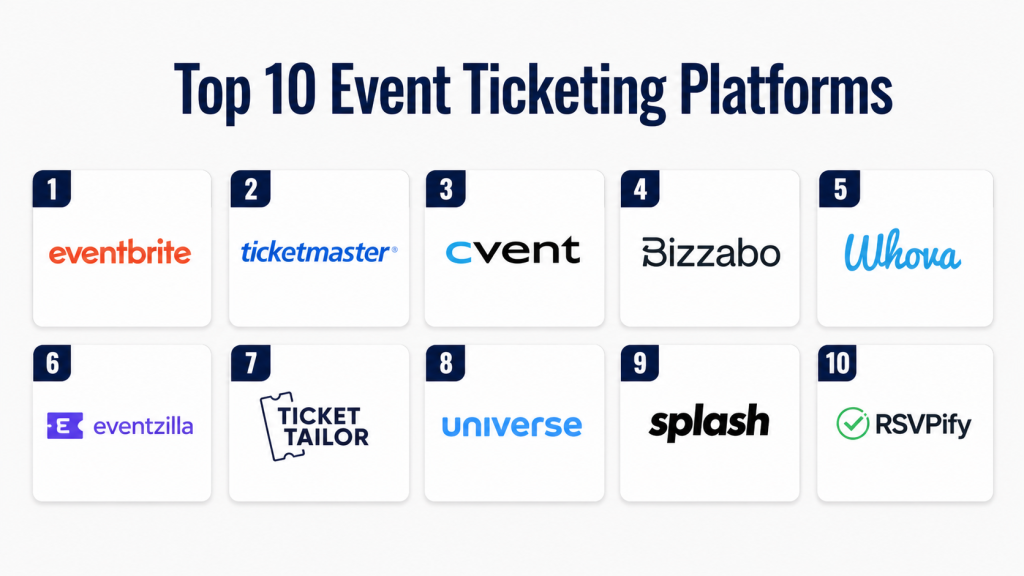
- Top 10 Event Ticketing Platforms
#1 — Eventbrite
Short description:
Eventbrite is one of the most widely used ticketing platforms for events of all sizes. It allows organizers to create events, sell tickets, and manage attendees easily. The platform supports both online and offline events. It offers strong marketing and discovery features. Eventbrite is suitable for beginners and professionals alike.
Key Features
- Event creation and ticket sales
- Built-in marketing tools
- Mobile ticketing
- Analytics dashboard
- Payment processing
Pros
- Easy to use
- Large audience reach
Cons
- Service fees can be high
- Limited customization
Platforms / Deployment
Web, iOS, Android / Cloud
Security & Compliance
Encryption, secure payments
Other: Not publicly stated
Integrations & Ecosystem
Integrates with CRM, email marketing, and analytics tools.
- Email tools
- Payment gateways
- CRM systems
Support & Community
Strong documentation and global support.
#2 — Ticketmaster
Short description:
Ticketmaster is a leading platform for large-scale events like concerts and sports. It handles high-volume ticket sales with strong infrastructure. It offers advanced distribution and marketing tools. The platform is ideal for enterprise-level events. It ensures reliable performance under heavy traffic.
Key Features
- High-volume ticketing
- Fraud prevention
- Dynamic pricing
- Global distribution
- Event analytics
Pros
- Scalable infrastructure
- Trusted brand
Cons
- Expensive for small events
- Less flexibility
Platforms / Deployment
Web / Cloud
Security & Compliance
Advanced fraud protection
Other: Not publicly stated
Integrations & Ecosystem
Supports integrations with large event ecosystems.
- Payment systems
- Venue integrations
- Marketing tools
Support & Community
Enterprise-level support.
#3 — Cvent
Short description:
Cvent is a comprehensive event management and ticketing platform designed for corporate events. It provides tools for registration, ticketing, and attendee engagement. It is ideal for conferences and business events. The platform includes strong analytics and reporting. It supports large-scale event planning.
Key Features
- Registration management
- Event marketing
- Attendee engagement
- Reporting tools
- Venue sourcing
Pros
- Enterprise-grade features
- Strong analytics
Cons
- Complex setup
- Higher pricing
Platforms / Deployment
Web / Cloud
Security & Compliance
SSO, RBAC
Other: Not publicly stated
Integrations & Ecosystem
Integrates with CRM and enterprise systems.
- CRM tools
- Marketing platforms
- Analytics tools
Support & Community
Strong enterprise support.
#4 — Brown Paper Tickets
Short description:
Brown Paper Tickets is a simple and cost-effective ticketing platform. It focuses on affordability and ease of use. It is suitable for small events and community gatherings. The platform offers basic ticketing features. It supports online and offline events.
Key Features
- Ticket sales
- Event creation
- Basic reporting
- Payment processing
Pros
- Low cost
- Easy setup
Cons
- Limited features
- Basic UI
Platforms / Deployment
Web / Cloud
Security & Compliance
Not publicly stated
Integrations & Ecosystem
Limited integrations.
- Payment tools
- Basic event tools
Support & Community
Basic support available.
#5 — Universe
Short description:
Universe is a ticketing platform focused on social and experiential events. It offers customizable event pages and marketing tools. It is suitable for creative and lifestyle events. The platform emphasizes branding and user experience. It supports online ticket sales.
Key Features
- Custom event pages
- Ticket sales
- Marketing tools
- Analytics dashboard
Pros
- Strong branding features
- User-friendly
Cons
- Limited enterprise features
- Smaller ecosystem
Platforms / Deployment
Web / Cloud
Security & Compliance
Not publicly stated
Integrations & Ecosystem
Supports integrations with marketing tools.
- Email tools
- Payment systems
Support & Community
Moderate support availability.
#6 — Eventzilla
Short description:
Eventzilla is a flexible ticketing platform for virtual and hybrid events. It supports multiple event formats. The platform offers automation and analytics tools. It is suitable for SMBs and growing businesses. It provides a good balance of features and cost.
Key Features
- Hybrid event support
- Ticket management
- Automation tools
- Analytics
Pros
- Flexible event types
- Affordable pricing
Cons
- Limited advanced features
- UI could improve
Platforms / Deployment
Web / Cloud
Security & Compliance
Not publicly stated
Integrations & Ecosystem
Integrates with payment and marketing tools.
- Payment gateways
- CRM tools
Support & Community
Responsive support team.
#7 — Ticket Tailor
Short description:
Ticket Tailor is a simple and cost-effective platform for independent event organizers. It allows full control over ticket sales and branding. It is suitable for small to mid-sized events. The platform emphasizes affordability and customization.
Key Features
- Custom ticket pages
- Payment integration
- Event analytics
- Branding options
Pros
- No per-ticket fees
- Easy to use
Cons
- Limited advanced features
- Smaller ecosystem
Platforms / Deployment
Web / Cloud
Security & Compliance
Not publicly stated
Integrations & Ecosystem
Supports integrations with payment and marketing tools.
- Payment gateways
- Email tools
Support & Community
Good customer support.
#8 — Whova
Short description:
Whova is an event management platform with strong ticketing capabilities. It focuses on attendee engagement and networking. It is ideal for conferences and corporate events. The platform offers mobile apps and interactive features.
Key Features
- Ticketing and registration
- Networking tools
- Mobile app
- Event analytics
Pros
- Strong engagement features
- Good for conferences
Cons
- Not focused solely on ticketing
- Pricing varies
Platforms / Deployment
Web, iOS, Android / Cloud
Security & Compliance
Not publicly stated
Integrations & Ecosystem
Integrates with event and CRM tools.
- CRM systems
- Event tools
Support & Community
Strong support for enterprise clients.
#9 — Splash
Short description:
Splash is a marketing-focused event platform with ticketing capabilities. It helps create branded event experiences. It is ideal for marketing teams and brand events. The platform focuses on engagement and design.
Key Features
- Event marketing tools
- Ticketing system
- Custom branding
- Analytics
Pros
- Strong branding
- Marketing-focused
Cons
- Limited ticketing depth
- Higher cost
Platforms / Deployment
Web / Cloud
Security & Compliance
Not publicly stated
Integrations & Ecosystem
Integrates with marketing and CRM platforms.
- CRM tools
- Marketing automation
Support & Community
Enterprise-level support.
#10 — Bizzabo
Short description:
Bizzabo is an enterprise event platform with advanced ticketing features. It supports large conferences and hybrid events. The platform offers strong analytics and engagement tools. It is suitable for corporate and global events.
Key Features
- Ticketing and registration
- Event analytics
- Hybrid event support
- Engagement tools
Pros
- Enterprise-ready
- Strong analytics
Cons
- Expensive
- Complex setup
Platforms / Deployment
Web / Cloud
Security & Compliance
SSO, RBAC
Other: Not publicly stated
Integrations & Ecosystem
Supports integrations with enterprise tools.
- CRM systems
- Marketing platforms
- Analytics tools
Support & Community
Strong enterprise support.
Comparison Table
| Tool | Best For | Platform | Deployment | Feature | Rating |
|---|---|---|---|---|---|
| Eventbrite | All events | Web/Mobile | Cloud | Marketing reach | N/A |
| Ticketmaster | Large events | Web | Cloud | Scalability | N/A |
| Cvent | Corporate events | Web | Cloud | Analytics | N/A |
| Brown Paper Tickets | Small events | Web | Cloud | Low cost | N/A |
| Universe | Creative events | Web | Cloud | Branding | N/A |
| Eventzilla | Hybrid events | Web | Cloud | Flexibility | N/A |
| Ticket Tailor | SMB events | Web | Cloud | Cost efficiency | N/A |
| Whova | Conferences | Web/Mobile | Cloud | Engagement | N/A |
| Splash | Marketing events | Web | Cloud | Branding | N/A |
| Bizzabo | Enterprise events | Web | Cloud | Analytics | N/A |
Evaluation & Scoring Table
| Tool | Core | Ease | Integrations | Security | Performance | Support | Value | Total |
|---|---|---|---|---|---|---|---|---|
| Zoom Events | 9 | 9 | 8 | 8 | 9 | 9 | 8 | 8.7 |
| Hopin | 9 | 7 | 8 | 7 | 9 | 8 | 7 | 8.0 |
| Airmeet | 8 | 9 | 7 | 6 | 8 | 8 | 8 | 7.9 |
| vFairs | 9 | 7 | 8 | 7 | 8 | 8 | 7 | 8.0 |
| BigMarker | 8 | 8 | 8 | 6 | 8 | 7 | 8 | 7.8 |
| ON24 | 9 | 6 | 9 | 8 | 9 | 9 | 7 | 8.3 |
| Remo | 7 | 9 | 6 | 6 | 7 | 7 | 8 | 7.4 |
| Brella | 8 | 8 | 7 | 6 | 8 | 7 | 8 | 7.7 |
| Run The World | 7 | 9 | 6 | 6 | 7 | 7 | 8 | 7.4 |
| Webex Events | 9 | 7 | 9 | 9 | 9 | 9 | 7 | 8.5 |
Which Event Ticketing Platform Is Right for You?
Solo / Freelancer
If you are an individual organizer or hosting small events, go with simple and cost-effective tools like Ticket Tailor or Brown Paper Tickets. These platforms are easy to set up, require minimal technical knowledge, and offer basic ticketing features. They help you manage events without high fees or complexity.
SMB
For small to medium businesses, platforms like Eventbrite and Eventzilla provide a strong balance of features and usability. They offer marketing tools, analytics, and flexible ticketing options. These tools are ideal if you want to grow your audience while keeping operations simple and efficient.
Mid-Market
Mid-sized organizations should consider tools like Whova or Universe. These platforms provide better engagement features, branding, and analytics. They help improve attendee experience and support hybrid event formats, making them suitable for growing businesses.
Enterprise
Large organizations and corporate event planners should choose Cvent, Bizzabo, or Ticketmaster. These platforms offer scalability, advanced analytics, and enterprise-level integrations. They are designed to handle large audiences, complex workflows, and global event operations.
Budget vs Premium
Budget tools focus on affordability and simplicity but may lack advanced features. Premium platforms offer better analytics, integrations, and customization. Choose based on your event scale and long-term goals rather than just cost.
Feature Depth vs Ease of Use
Some platforms provide advanced features but require training and setup. Others focus on simplicity and quick onboarding. If your team is non-technical, prioritize ease of use over complex functionality.
Integrations & Scalability
If you use CRM, marketing tools, or payment systems, choose a platform with strong integrations. Scalability is important if you plan to host larger events in the future.
Security & Compliance Needs
For corporate or large-scale events, prioritize platforms with secure payment processing, access control, and audit capabilities. Security becomes more critical as event size and data volume increase.
Frequently Asked Questions (FAQs)
1. What is an event ticketing platform?
An event ticketing platform is software that allows organizers to create events, sell tickets, and manage attendees. It automates the ticketing process and reduces manual work. These platforms also provide analytics and reporting features. They are used for both online and offline events. Overall, they improve efficiency and event management.
2. How much do event ticketing platforms cost?
Pricing varies depending on features and scale. Some platforms charge per ticket, while others use subscription models. Entry-level tools are affordable, but enterprise platforms can be expensive. Many platforms offer free tiers with limited features. It is important to evaluate pricing based on your event needs.
3. Are event ticketing platforms secure?
Most platforms provide secure payment processing and data encryption. Some also include fraud detection and access controls. Security features vary across providers. It is important to check compliance and data protection policies. For large events, security should be a top priority.
4. Can I use these platforms for virtual events?
Yes, many ticketing platforms support virtual and hybrid events. They provide tools for online registrations and digital access. Some platforms also include streaming and engagement features. Hybrid event support is becoming standard. This allows organizers to reach a wider audience.
5. Do I need technical skills to use them?
Most ticketing platforms are designed for non-technical users. They offer simple dashboards and guided setup processes. Some advanced features may require training. Overall, they are easy to use for beginners. Support teams are usually available to help.
6. Can I customize my event page?
Yes, most platforms allow customization of event pages. You can add branding, images, and event details. Some platforms offer full white-label solutions. Customization helps improve attendee experience. It also strengthens your brand identity.
7. What integrations do these platforms support?
Common integrations include CRM systems, email marketing tools, and payment gateways. Some platforms also offer APIs for custom workflows. Integrations help automate processes and improve efficiency. They allow better data management. Always check compatibility before choosing a tool.
8. How do I choose the right platform?
Start by identifying your event size, budget, and requirements. Compare features, ease of use, and integrations. Consider scalability if you plan to grow. Testing demos can help you understand usability. Choose a platform that aligns with your goals.
9. Can I track ticket sales and performance?
Yes, most platforms provide analytics dashboards. You can track ticket sales, revenue, and attendance. Some tools offer advanced insights and reports. Analytics help improve future events. They support better decision-making.
10. Are free ticketing platforms available?
Yes, some platforms offer free plans with limited features. These are suitable for small events or beginners. Paid plans provide advanced features and better support. Free options are a good starting point. Upgrade as your needs grow.
Conclusion
Event Ticketing Platforms have become essential tools for modern event management, offering much more than just ticket sales. From marketing automation to attendee engagement and analytics, these platforms help organizers deliver seamless event experiences while maximizing revenue. Choosing the right platform depends on your event size, audience, and operational needs.
Smaller organizers may prioritize simplicity and cost, while larger enterprises require scalability, integrations, and advanced analytics. Understanding your event goals and evaluating platforms based on usability, features, and support is critical to long-term success.
To get started, shortlist a few platforms that match your requirements and test them through demos or trial events. This hands-on approach will help you identify the best fit and ensure a smooth event execution experience.
