Introduction
Embedded Finance Platforms allow non-financial companies to integrate banking, payment, lending, insurance, and investment services directly into their products or applications. Instead of redirecting users to a separate bank or fintech, businesses can offer seamless financial services within their own digital ecosystem, enhancing customer experience and loyalty.
In today’s competitive digital economy, embedded finance is becoming essential. Consumers expect convenience, faster transactions, and integrated financial experiences without leaving their favorite apps. Businesses benefit by unlocking new revenue streams, improving engagement, and leveraging data-driven insights.
Real-world use cases include:
- E-commerce platforms offering point-of-sale financing or BNPL options
- Ride-hailing apps providing instant driver payouts and wallet services
- Marketplaces embedding escrow accounts and insurance options
- SMB platforms offering lending or credit directly in the app
- Subscription services integrating payments and automated invoicing
Key evaluation criteria for buyers:
- Breadth of financial services (payments, lending, insurance, investments)
- API reliability and developer experience
- Regulatory compliance and licenses
- Integration flexibility with existing platforms
- White-label capabilities
- Security and data protection
- Pricing and transaction fees
- Performance and uptime
- Customer support and onboarding
- Global vs local coverage
Best for: Digital businesses, marketplaces, e-commerce, fintech partners, SMB platforms, and enterprises looking to monetize financial services.
Not ideal for: Companies with low transaction volume, simple apps without financial interactions, or those unwilling to manage compliance risks.
Key Trends in Embedded Finance Platforms
- API-first architecture enabling fast integration into apps
- Expansion of Buy Now Pay Later (BNPL) services across industries
- Banking-as-a-Service (BaaS) offerings simplifying compliance and licensing
- Real-time payouts and digital wallets embedded in apps
- Cross-border and multi-currency payment support
- AI-driven credit scoring and risk assessment
- Customizable white-label solutions for branding consistency
- Enhanced security with encryption, MFA, and fraud detection
- Open banking compliance and PSD2 adoption in multiple regions
- Revenue sharing and fee-based monetization models
How We Selected These Tools (Methodology)
- Evaluated market adoption and client portfolio
- Reviewed API robustness and integration ease
- Checked regulatory compliance and licensing coverage
- Assessed platform feature completeness and service breadth
- Verified security and fraud protection measures
- Examined developer experience and documentation quality
- Considered scalability for SMBs, mid-market, and enterprises
- Analyzed revenue and pricing models
- Studied performance reliability and uptime records
- Factored in support options and community engagement
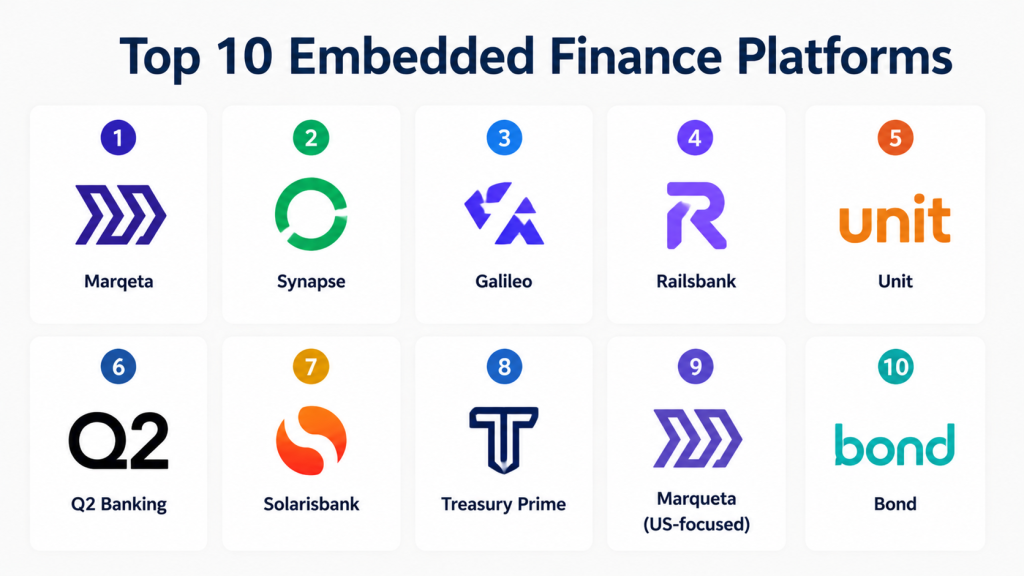
Top 10 Embedded Finance Platforms
1 — Marqeta
Short description: Modern card issuing and payment platform allowing businesses to embed debit, credit, and virtual cards for their customers.
Key Features
- Instant card issuing and tokenization
- Virtual, physical, and disposable card support
- Real-time transaction controls
- Advanced fraud detection
- APIs for payments and reporting
- Multi-currency capabilities
- Customizable card designs
Pros
- Fast and flexible API integration
- Strong developer tools
- Supports global payments
Cons
- Higher fees for smaller businesses
- Some complex features require developer expertise
- Limited banking-as-a-service coverage
Platforms / Deployment
- Web
- Cloud
Security & Compliance
- Encryption, MFA, fraud monitoring
- PCI DSS, SOC 2 Not publicly stated
Integrations & Ecosystem
Supports financial software, wallets, and payment gateways
- Shopify, Stripe, PayPal
- Banking partners for BaaS
- API for custom integrations
Support & Community
Documentation, developer forums, email support
2 — Synapse
Short description: Provides BaaS solutions to embed banking, payments, and lending into apps and marketplaces.
Key Features
- Deposit accounts, payment rails
- Lending and credit APIs
- KYC/AML compliance
- Fraud prevention tools
- Real-time account management
- White-label solutions
- Multi-currency support
Pros
- Comprehensive BaaS platform
- Rapid onboarding for fintech apps
- Strong compliance framework
Cons
- Setup may be complex for smaller teams
- Premium fees for advanced modules
- Limited offline support
Platforms / Deployment
- Web
- Cloud
Security & Compliance
- MFA, encryption, audit trails
- SOC 2, GDPR Not publicly stated
Integrations & Ecosystem
Works with fintech apps, payment providers, and accounting software
- Stripe, Plaid, payment gateways
- Banking partners via API
Support & Community
Developer documentation, live chat, email support
3 — Galileo
Short description: Embedded payments and card issuing platform enabling digital wallets, debit cards, and banking services.
Key Features
- Real-time card issuing
- Digital wallet management
- ACH and wire payments
- Fraud monitoring and risk scoring
- API-first integration
- White-label design options
- Transaction analytics
Pros
- Scalable for large user bases
- Flexible API
- Supports multi-channel financial services
Cons
- Advanced features require technical resources
- Limited international coverage
- Pricing varies by volume
Platforms / Deployment
- Web
- Cloud
Security & Compliance
- Encryption, MFA
- PCI DSS, SOC 2 Not publicly stated
Integrations & Ecosystem
Integrates with payment gateways, wallets, and accounting software
- Stripe, PayPal, Plaid
- Banking partners via API
Support & Community
Documentation, developer forums, dedicated support
4 — Railsbank
Short description: Global BaaS platform providing APIs to embed payments, cards, and lending services in apps.
Key Features
- Payment accounts and card issuing
- Lending and credit management
- Multi-currency and cross-border payments
- KYC/AML compliance
- API-driven automation
- White-label solutions
- Fraud prevention
Pros
- Wide international coverage
- Supports diverse financial services
- Flexible integration
Cons
- Setup complexity for smaller businesses
- Enterprise pricing
- Some features limited regionally
Platforms / Deployment
- Web
- Cloud
Security & Compliance
- Encryption, audit logs
- PCI DSS, SOC 2 Not publicly stated
Integrations & Ecosystem
Connects with wallets, fintech apps, and ERP systems
- Stripe, PayPal, accounting APIs
- Bank partners for BaaS
Support & Community
Developer docs, email support, live chat
5 — Unit
Short description: Embedded finance platform for marketplaces and fintech apps to provide accounts, cards, and payment solutions.
Key Features
- Virtual and physical accounts
- Card issuing and payments
- Compliance APIs (KYC, AML)
- Real-time transaction monitoring
- Fraud protection
- White-label options
- Reporting and analytics
Pros
- Strong compliance and risk management
- Flexible API for fintech developers
- Scalable across multiple sectors
Cons
- Limited banking partner network outside US
- Advanced features need developer implementation
- Subscription pricing for SMEs
Platforms / Deployment
- Web
- Cloud
Security & Compliance
- MFA, encryption
- SOC 2, GDPR Not publicly stated
Integrations & Ecosystem
Works with fintech apps, payment gateways, and accounting tools
- Stripe, Plaid, PayPal
- API access
Support & Community
Documentation, email support, developer forums
6 — Q2 Banking
Short description: Embedded finance and digital banking platform for enterprises integrating payments, accounts, and lending.
Key Features
- Core banking APIs
- Payment processing
- Lending and credit management
- Fraud monitoring
- Regulatory compliance
- White-label digital banking
- Analytics dashboard
Pros
- Enterprise-grade reliability
- Strong security and compliance
- Customizable banking services
Cons
- Less suited for small businesses
- Higher setup costs
- Requires technical resources
Platforms / Deployment
- Web
- Cloud
Security & Compliance
- Encryption, MFA
- SOC 2, PCI DSS Not publicly stated
Integrations & Ecosystem
Integrates with fintech applications, payment gateways, and ERP
- Accounting APIs, Stripe, Plaid
Support & Community
Documentation, email support, dedicated account management
7 — Solarisbank
Short description: European BaaS provider enabling digital platforms to offer accounts, cards, and payment services.
Key Features
- Digital accounts
- Card issuance and payments
- Lending services
- KYC/AML compliance
- API-first platform
- Fraud detection
- Reporting
Pros
- Strong European regulatory compliance
- Wide range of financial services
- Flexible API
Cons
- Focused on EU, limited global coverage
- Complex setup
- Premium pricing
Platforms / Deployment
- Web
- Cloud
Security & Compliance
- MFA, encryption
- GDPR, SOC 2 Not publicly stated
Integrations & Ecosystem
Integrates with apps, payment gateways, and fintech tools
- Stripe, Plaid, accounting software
Support & Community
Documentation, email, developer support
8 — Treasury Prime
Short description: API-first BaaS platform enabling embedded banking and payments for fintech and digital businesses.
Key Features
- Account creation and management
- Card issuance
- ACH, wire, and real-time payments
- KYC/AML compliance
- Fraud detection
- API integrations
- White-label solutions
Pros
- Flexible APIs
- Strong banking partner network
- Scalable for fintech apps
Cons
- Enterprise-oriented pricing
- Smaller businesses may face onboarding complexity
- International coverage limited
Platforms / Deployment
- Web
- Cloud
Security & Compliance
- MFA, encryption
- SOC 2, PCI DSS Not publicly stated
Integrations & Ecosystem
Integrates with fintech apps, accounting platforms, and payment gateways
Support & Community
Developer docs, email support
9 — Marqueta (US-focused)
Short description: Modern card and payment issuing platform allowing embedded debit, credit, and virtual cards.
Key Features
- Real-time card issuing
- Tokenization and fraud monitoring
- API-driven integration
- Multi-currency support
- Analytics dashboard
- White-label card options
Pros
- Fast integration
- Strong developer support
- Flexible card options
Cons
- Focused on US
- Pricing may be high for SMEs
- Some features need developer expertise
Platforms / Deployment
- Web
- Cloud
Security & Compliance
- MFA, encryption
- PCI DSS Not publicly stated
Integrations & Ecosystem
Works with wallets, fintech apps, and accounting APIs
Support & Community
Documentation, developer forums
10 — Bond
Short description: Embedded finance platform providing accounts, cards, and payments for digital businesses.
Key Features
- Account creation and management
- Card issuing
- Payment rails (ACH, wire, real-time)
- Compliance APIs
- Fraud prevention
- White-label support
- Analytics
Pros
- Strong API-first approach
- Scalable for fintech apps
- Flexible integration options
Cons
- Enterprise pricing
- Limited global presence
- Technical implementation required
Platforms / Deployment
- Web
- Cloud
Security & Compliance
- MFA, encryption
- SOC 2 Not publicly stated
Integrations & Ecosystem
Integrates with fintech apps, wallets, and accounting platforms
Support & Community
Documentation, email support
Comparison Table (Top 10)
| Tool Name | Best For | Platform(s) Supported | Deployment | Standout Feature | Public Rating |
|---|---|---|---|---|---|
| Marqeta | Developers, fintechs | Web | Cloud | Card issuing | N/A |
| Synapse | Fintech apps | Web | Cloud | BaaS platform | N/A |
| Galileo | Digital wallets | Web | Cloud | Real-time payments | N/A |
| Railsbank | Enterprises | Web | Cloud | Cross-border BaaS | N/A |
| Unit | Marketplaces & fintech | Web | Cloud | Lending and cards | N/A |
| Q2 Banking | Enterprises | Web | Cloud | Embedded banking | N/A |
| Solarisbank | EU fintechs | Web | Cloud | EU regulatory compliance | N/A |
| Treasury Prime | Fintechs | Web | Cloud | API-first banking | N/A |
| Marqueta | US-focused fintechs | Web | Cloud | Flexible card issuance | N/A |
| Bond | Digital businesses | Web | Cloud | Payments & accounts | N/A |
Evaluation & Scoring of Embedded Finance Platforms
| Tool Name | Core (25%) | Ease (15%) | Integrations (15%) | Security (10%) | Performance (10%) | Support (10%) | Value (15%) | Weighted Total |
|---|---|---|---|---|---|---|---|---|
| Marqeta | 9 | 8 | 8 | 9 | 9 | 8 | 8 | 8.7 |
| Synapse | 8 | 8 | 8 | 8 | 8 | 8 | 8 | 8.1 |
| Galileo | 8 | 8 | 7 | 8 | 8 | 7 | 7 | 7.8 |
| Railsbank | 8 | 7 | 7 | 8 | 8 | 7 | 7 | 7.7 |
| Unit | 8 | 7 | 7 | 8 | 8 | 7 | 7 | 7.7 |
| Q2 Banking | 9 | 7 | 7 | 9 | 9 | 8 | 7 | 8.2 |
| Solarisbank | 8 | 7 | 7 | 8 | 8 | 7 | 7 | 7.7 |
| Treasury Prime | 8 | 8 | 7 | 8 | 8 | 7 | 7 | 7.8 |
| Marqueta | 9 | 7 | 8 | 9 | 9 | 8 | 8 | 8.3 |
| Bond | 8 | 8 | 7 | 8 | 8 | 7 | 7 | 7.8 |
Comparative scoring; higher scores indicate stronger platform alignment for core features, integrations, security, support, and value
Frequently Asked Questions (FAQs)
1- What services are offered by embedded finance platforms?
They provide payments, card issuing, lending, accounts, and banking-as-a-service capabilities integrated within apps.
2- Who can use these platforms?
Digital businesses, fintech startups, marketplaces, e-commerce apps, and enterprises can embed financial services.
3- Are APIs required to integrate these platforms?
Yes, all top platforms provide API-first solutions for seamless integration with apps or marketplaces.
4- How do platforms handle compliance?
They manage KYC, AML, PCI DSS, SOC 2, and local banking regulations depending on region.
5- Can small businesses use them?
Some platforms are enterprise-focused, but others like Synapse or Unit offer SMB-friendly plans.
6- Do they support international payments?
Many support multi-currency and cross-border payments, though coverage varies by platform.
7- Are white-label solutions available?
Yes, most platforms allow branding customization to maintain a seamless user experience.
8- How secure are embedded finance platforms?
Top platforms use MFA, encryption, and fraud detection to secure transactions and user data.
9- What is the pricing model?
Typically subscription or transaction-based; some have tiered pricing for SMBs vs enterprises.
10- How fast is onboarding?
Individual apps can integrate quickly; enterprise onboarding may take several weeks depending on compliance requirements.
