Introduction
Dependency Vulnerability Scanners are specialized tools designed to detect security vulnerabilities in software dependencies, libraries, and packages that applications rely on. Modern software development relies heavily on open-source components, making applications susceptible to risks if these components contain unpatched vulnerabilities. Dependency vulnerability scanners automate the process of identifying, prioritizing, and reporting these issues, helping development teams reduce exposure to security threats.
Organizations face increasingly sophisticated cyberattacks targeting open-source and third-party libraries. Automated vulnerability detection, integrated reporting, and actionable remediation guidance are critical for secure development pipelines.
Real-world use cases include:
- Scanning application dependencies during CI/CD pipelines for security risks
- Auditing open-source components before release to production
- Ensuring compliance with industry regulations and security standards
- Prioritizing fixes for critical vulnerabilities based on severity and exploitability
- Integrating with developer tools to provide real-time alerts during coding
- Tracking historical vulnerability trends across projects for risk management
Evaluation criteria for buyers:
- Coverage of programming languages and package managers
- Accuracy and depth of vulnerability detection
- Integration with CI/CD and DevSecOps pipelines
- Remediation guidance and patch management support
- Reporting and compliance features
- Ease of use and learning curve
- Performance and scanning speed
- Cost and pricing model
- Security and compliance certifications
- Community and vendor support
Best for: Software developers, DevOps engineers, security teams, mid-to-large enterprises, SaaS companies, organizations using multiple open-source libraries
Not ideal for: Small projects with minimal dependencies, teams already using comprehensive cloud-native security platforms that include dependency scanning, or environments where manual vulnerability management is sufficient
Key Trends in Dependency Vulnerability Scanners
- Increasing integration of AI and ML for predictive vulnerability prioritization
- Shift toward real-time scanning during coding instead of periodic audits
- Greater adoption of developer-first UX for actionable alerts
- Cloud-native scanning for serverless and containerized applications
- Enhanced compliance reporting for GDPR, SOC 2, ISO, HIPAA
- Cross-platform package manager coverage including Python, JavaScript, Java, Ruby, and Go
- Automated patch and remediation suggestions integrated with CI/CD tools
- Expansion of open-source threat intelligence feeds
- Subscription-based SaaS pricing with flexible scaling
- Emphasis on scalability and API-first integration for enterprise environments
How We Selected These Tools
- Evaluated market adoption and mindshare in developer and security communities
- Assessed feature completeness including scanning depth, reporting, and remediation guidance
- Reviewed reliability and performance signals such as scan speed and false-positive rates
- Analyzed security posture including encryption, SSO, RBAC, audit logs
- Checked integrations with CI/CD, issue trackers, and cloud DevOps environments
- Considered ecosystem maturity: plugins, APIs, and community support
- Compared suitability across solo developers, SMBs, and enterprise environments
- Prioritized tools with AI-assisted vulnerability prioritization
- Verified historical updates and responsiveness to new CVEs
- Excluded tools with minimal adoption or unclear security practices
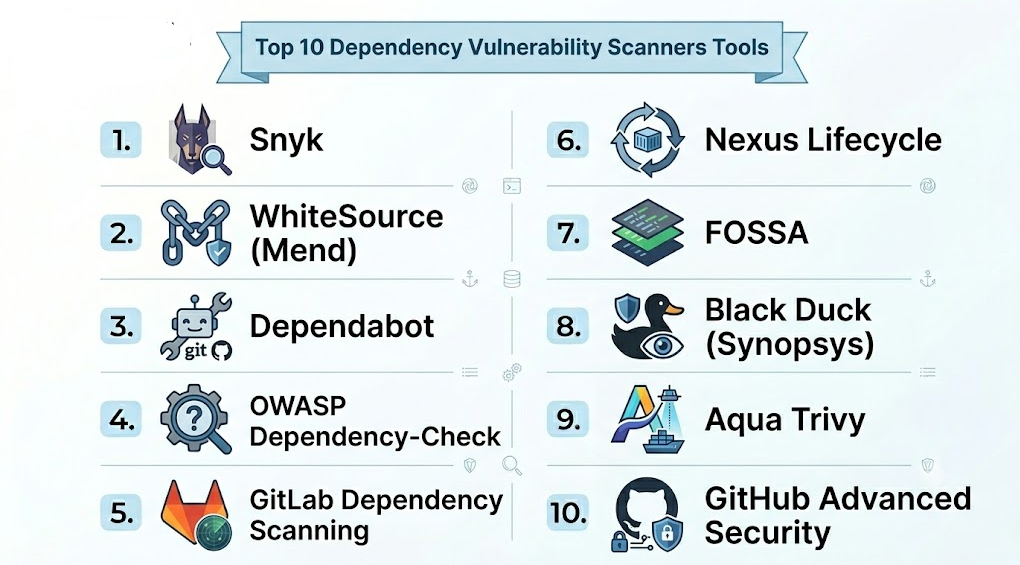
Top 10 Dependency Vulnerability Scanners Tools
1- Snyk
Short description: Snyk identifies vulnerabilities in open-source dependencies and container images, aimed at developers and security teams
Key Features
- Real-time scanning integrated with IDEs and CI/CD
- Fix pull requests for vulnerabilities automatically
- Container and infrastructure-as-code scanning
- License compliance checks for open-source components
- AI-powered prioritization for critical vulnerabilities
- Detailed reporting dashboards
Pros
- Developer-friendly and fast integration
- Strong automation for remediation
- Extensive language and package manager coverage
Cons
- Free tier has limits on projects and scan volume
- Some advanced features require enterprise subscription
Platforms / Deployment
- Web, Windows, macOS, Linux
- Cloud / Hybrid
Security & Compliance
- SSO, RBAC, encryption at rest and transit
- SOC 2, ISO 27001
Integrations & Ecosystem
Snyk integrates seamlessly into modern DevSecOps workflows
- GitHub, GitLab, Bitbucket
- Jenkins, CircleCI, GitHub Actions
- Jira, Slack, Teams
- APIs for custom workflows
Support & Community
- Comprehensive documentation and tutorials
- Enterprise support tiers available
- Active developer community
2- WhiteSource (Mend)
Short description: WhiteSource automates open-source vulnerability detection and license compliance, catering to enterprises with complex dependency landscapes
Key Features
- Continuous scanning of all project dependencies
- AI-assisted remediation prioritization
- Policy enforcement for open-source licenses
- Extensive CVE database coverage
- Real-time alerts for newly disclosed vulnerabilities
Pros
- Enterprise-grade reporting and dashboards
- Supports multiple programming languages
- Strong compliance and policy enforcement
Cons
- UI can be complex for small teams
- Setup may require professional services for large organizations
Platforms / Deployment
- Web, Windows, Linux
- Cloud / Hybrid
Security & Compliance
- SSO/SAML, RBAC, encryption
- SOC 2, ISO 27001, GDPR
Integrations & Ecosystem
- CI/CD tools: Jenkins, GitLab, Azure DevOps
- IDE plugins for VS Code, IntelliJ
- Ticketing systems like Jira
Support & Community
- Dedicated enterprise support
- Online knowledge base
- User forums
3- Dependabot
Short description: Dependabot automates dependency updates and security alerts for GitHub repositories, ideal for developers using GitHub
Key Features
- Automated pull requests for vulnerable dependencies
- Integration with GitHub security advisories
- Supports multiple programming languages
- Configurable update frequency
- Basic reporting for project security
Pros
- Free for GitHub users
- Easy setup for existing repositories
- Tight integration with GitHub Actions
Cons
- Limited reporting and analytics
- Only available within GitHub ecosystem
Platforms / Deployment
- Web
- Cloud
Security & Compliance
- GitHub security standards
- Not publicly stated for enterprise compliance
Integrations & Ecosystem
- GitHub repositories and Actions
- APIs for custom notifications
Support & Community
- GitHub support
- Active open-source community
4- OWASP Dependency-Check
Short description: Open-source scanner identifying known vulnerabilities in project dependencies, suitable for security-conscious developers
Key Features
- Comprehensive CVE database scanning
- Supports Java, .NET, JavaScript, and Python
- Generates detailed HTML, XML, and JSON reports
- CLI and CI/CD integration
- Configurable suppression rules
Pros
- Free and open-source
- Wide language support
- Integrates with build tools like Maven, Gradle
Cons
- Limited UI; primarily CLI-based
- Manual updates for database may be needed
Platforms / Deployment
- Windows, macOS, Linux
- Self-hosted / Cloud (via CI/CD)
Security & Compliance
- Not publicly stated
Integrations & Ecosystem
- Jenkins, Azure DevOps, Bamboo
- Maven, Gradle plugins
- APIs for automation
Support & Community
- Active OWASP community
- Documentation available
5- GitLab Dependency Scanning
Short description: Integrated within GitLab CI/CD, this scanner detects vulnerabilities in project dependencies automatically
Key Features
- Auto-detection in pipelines
- Reports merged into merge requests
- CVE tracking with severity scores
- Multi-language support
- License compliance monitoring
Pros
- Fully integrated into GitLab
- Real-time feedback in merge requests
- Supports DevOps pipelines end-to-end
Cons
- Limited to GitLab users
- Enterprise features may require GitLab Ultimate
Platforms / Deployment
- Web
- Cloud / Self-hosted
Security & Compliance
- SSO/SAML, audit logs
- SOC 2 (Varies / N/A)
Integrations & Ecosystem
- GitLab CI/CD
- Container scanning and security dashboards
Support & Community
- GitLab support tiers
- Community forum
6- Nexus Lifecycle
Short description: Nexus Lifecycle enforces open-source governance and vulnerability scanning across all stages of software development
Key Features
- Deep integration with CI/CD tools
- Policy enforcement for licensing and security
- Automated remediation recommendations
- AI-driven prioritization for high-risk components
- Multi-language and package support
Pros
- Enterprise governance-ready
- Extensive reporting and dashboards
- Integration with IDEs and repositories
Cons
- Higher cost for small teams
- Setup complexity can be significant
Platforms / Deployment
- Windows, Linux, macOS
- Cloud / Self-hosted
Security & Compliance
- SSO, RBAC, encryption
- SOC 2, ISO 27001
Integrations & Ecosystem
- Jenkins, Bamboo, Azure DevOps
- GitHub, GitLab, Bitbucket
- APIs for custom workflows
Support & Community
- Enterprise support packages
- Knowledge base and community forum
7- FOSSA
Short description: FOSSA automates dependency scanning with a focus on open-source license compliance and vulnerability detection
Key Features
- CI/CD integration for automated scans
- License and security compliance
- Customizable policy enforcement
- Real-time alerts for vulnerabilities
- APIs for automation
Pros
- Developer-friendly and fast
- Strong compliance focus
- Supports multiple languages
Cons
- Some advanced reporting limited to paid tiers
- Enterprise deployment can be complex
Platforms / Deployment
- Web, Linux, macOS, Windows
- Cloud / Hybrid
Security & Compliance
- SSO, RBAC
- Not publicly stated for SOC 2/ISO
Integrations & Ecosystem
- GitHub, GitLab, Bitbucket
- CI/CD tools: Jenkins, CircleCI
- APIs for custom integrations
Support & Community
- Documentation and tutorials
- Support tiers available
8- Black Duck (Synopsys)
Short description: Black Duck provides comprehensive open-source risk management and dependency scanning, targeting enterprises with extensive software portfolios
Key Features
- Extensive CVE database
- License and compliance reporting
- CI/CD and IDE integration
- Automated policy enforcement
- Risk scoring and prioritization
Pros
- Enterprise-grade analytics
- Broad language and package support
- Detailed remediation guidance
Cons
- Complex setup and configuration
- High cost for smaller teams
Platforms / Deployment
- Web, Windows, Linux
- Cloud / Self-hosted
Security & Compliance
- SSO, RBAC, encryption
- SOC 2, ISO 27001
Integrations & Ecosystem
- Jenkins, GitLab, Azure DevOps
- IDE plugins for Eclipse, IntelliJ
- API-first for automation
Support & Community
- Enterprise support
- Extensive knowledge base
9- Aqua Trivy
Short description: Trivy is a lightweight open-source scanner for container images and file systems, detecting vulnerabilities and misconfigurations
Key Features
- Scans container images and local files
- Multi-language dependency scanning
- CVE and OS package vulnerability detection
- CLI and CI/CD integration
- Fast, minimal setup
Pros
- Free and open-source
- Lightweight and fast
- Easy CI/CD integration
Cons
- Limited GUI and reporting
- Enterprise features require Aqua enterprise license
Platforms / Deployment
- Linux, macOS, Windows
- Self-hosted / Cloud
Security & Compliance
- Not publicly stated
Integrations & Ecosystem
- Docker, Kubernetes, CI/CD pipelines
- GitHub Actions, GitLab CI
Support & Community
- Open-source community
- Documentation available
10- GitHub Advanced Security
Short description: GitHub Advanced Security includes dependency scanning and secret detection, built into GitHub repositories
Key Features
- Automatic dependency alerts
- Integration with GitHub Actions
- CVE prioritization
- Security dashboards
- Secret scanning for sensitive data
Pros
- Seamless for GitHub users
- Real-time alerts in pull requests
- Minimal setup required
Cons
- Limited outside GitHub ecosystem
- Advanced features require GitHub Enterprise
Platforms / Deployment
- Web
- Cloud
Security & Compliance
- GitHub security standards
- Not publicly stated
Integrations & Ecosystem
- GitHub repositories and Actions
- Container scanning
Support & Community
- GitHub enterprise support
- Community discussions
Comparison Table
| Tool Name | Best For | Platform(s) Supported | Deployment | Standout Feature | Public Rating |
|---|---|---|---|---|---|
| Snyk | Dev teams, DevSecOps | Web, Windows, macOS, Linux | Cloud/Hybrid | Fix PRs automatically | N/A |
| WhiteSource (Mend) | Enterprise governance | Web, Windows, Linux | Cloud/Hybrid | License compliance + CVE tracking | N/A |
| Dependabot | GitHub repositories | Web | Cloud | Auto PRs for dependencies | N/A |
| OWASP Dependency-Check | Open-source projects | Windows, macOS, Linux | Self-hosted | Free, open-source CVE scanning | N/A |
| GitLab Dependency Scanning | GitLab users | Web | Cloud/Self-hosted | Merge request vulnerability alerts | N/A |
| Nexus Lifecycle | Enterprise DevSecOps | Windows, Linux, macOS | Cloud/Self-hosted | Policy enforcement + AI prioritization | N/A |
| FOSSA | License compliance focus | Web, Windows, macOS, Linux | Cloud/Hybrid | Automated policy enforcement | N/A |
| Black Duck (Synopsys) | Enterprise software portfolios | Web, Windows, Linux | Cloud/Self-hosted | Detailed remediation guidance | N/A |
| Aqua Trivy | Container scanning | Linux, macOS, Windows | Self-hosted/Cloud | Lightweight, fast scanning | N/A |
| GitHub Advanced Security | GitHub repos | Web | Cloud | Integrated GitHub scanning | N/A |
Evaluation & Scoring
| Tool Name | Core (25%) | Ease (15%) | Integrations (15%) | Security (10%) | Performance (10%) | Support (10%) | Value (15%) | Weighted Total |
|---|---|---|---|---|---|---|---|---|
| Snyk | 9 | 9 | 8 | 9 | 8 | 8 | 8 | 8.7 |
| WhiteSource (Mend) | 9 | 7 | 8 | 9 | 8 | 8 | 7 | 8.2 |
| Dependabot | 7 | 9 | 6 | 7 | 7 | 6 | 9 | 7.4 |
| OWASP Dependency-Check | 8 | 6 | 6 | 7 | 7 | 6 | 10 | 7.2 |
| GitLab Dependency Scanning | 8 | 8 | 7 | 8 | 8 | 7 | 7 | 7.8 |
| Nexus Lifecycle | 9 | 7 | 8 | 9 | 8 | 8 | 7 | 8.2 |
| FOSSA | 8 | 8 | 7 | 8 | 7 | 7 | 7 | 7.6 |
| Black Duck (Synopsys) | 9 | 7 | 8 | 9 | 8 | 8 | 6 | 8.1 |
| Aqua Trivy | 7 | 8 | 6 | 7 | 8 | 6 | 9 | 7.4 |
| GitHub Advanced Security | 8 | 8 | 7 | 8 | 7 | 7 | 7 | 7.6 |
Which Tool Is Right for You
Solo / Freelancer
Snyk or Dependabot provide fast, easy-to-integrate scanning in small projects, especially GitHub-centric workflows
SMB
FOSSA or GitLab Dependency Scanning offer scalable CI/CD integration and compliance features without enterprise overhead
Mid-Market
WhiteSource (Mend) and Nexus Lifecycle deliver stronger policy enforcement, reporting, and multi-language support
Enterprise
Black Duck (Synopsys) and Snyk Enterprise provide extensive dashboards, governance, and AI-assisted prioritization
Budget vs Premium
Budget: Dependabot, OWASP Dependency-Check, Trivy. Minimal cost, essential vulnerability scanning
Premium: Snyk Enterprise, Black Duck, Nexus Lifecycle. Advanced reporting, AI prioritization, compliance enforcement
Feature Depth vs Ease of Use
Feature Depth: WhiteSource, Black Duck, Nexus Lifecycle
Ease of Use: Snyk, Dependabot, Trivy
Integrations & Scalability
Tools like Snyk, Nexus, and WhiteSource integrate across pipelines, repositories, and cloud environments, supporting enterprise-scale workflows
Security & Compliance Needs
For organizations needing SOC 2, ISO, or enterprise audit logs, Snyk, Black Duck, and WhiteSource provide verified compliance and governance capabilities
Frequently Asked Questions (FAQs)
1- What is a dependency vulnerability scanner?
It is a tool that scans software dependencies for known security vulnerabilities, helping teams prevent exploitation in applications
2- How do these scanners integrate with CI/CD pipelines?
Most tools integrate via plugins or APIs in CI/CD systems like Jenkins, GitLab, or GitHub Actions for automated scanning during build and deployment
3- Are these scanners free?
Some, like Dependabot, OWASP Dependency-Check, and Trivy, are free or open-source. Enterprise tools like Snyk and Black Duck require subscriptions
4- How often should I scan my dependencies?
Ideally, scan continuously during development, or at least with every build to ensure newly discovered vulnerabilities are caught
5- Can they automatically fix vulnerabilities?
Tools like Snyk, Dependabot, and GitHub Advanced Security can automatically create pull requests or suggest fixes for known issues
6- Do they support multiple programming languages?
Yes, most top scanners support popular languages such as Python, JavaScript, Java, Ruby, .NET, and Go
7- How do I prioritize which vulnerabilities to fix?
Modern tools provide severity scoring, exploitability data, and AI-assisted prioritization to focus on critical risks first
8- Can these tools help with compliance?
Yes, enterprise-focused tools like WhiteSource and Black Duck provide compliance reporting for licenses, GDPR, SOC 2, and ISO
9- How scalable are these tools for large projects?
Cloud-based tools like Snyk, Nexus Lifecycle, and Black Duck are designed to handle enterprise-scale applications with thousands of dependencies
10- What is the difference between open-source and paid scanners?
Open-source scanners are typically free, lightweight, and basic. Paid scanners offer advanced reporting, compliance features, AI-assisted prioritization, and enterprise support
Conclusion
Dependency Vulnerability Scanners are essential for modern software development and security, helping teams manage risk from third-party and open-source libraries. The “best” tool depends on your workflow, project size, and compliance requirements. Solo developers can benefit from free or lightweight solutions, SMBs and mid-market teams should focus on CI/CD integration and reporting, while enterprises require advanced dashboards, AI-assisted prioritization, and governance. The next step is to run a pilot, validate integration with existing pipelines, and ensure security and compliance are fully supported.
