Introduction
Community Forum Software enables organizations to create, manage, and nurture online communities. These platforms facilitate structured discussions, knowledge sharing, and user engagement across industries. Forums act as critical hubs for customer support, user feedback, product discussions, and peer-to-peer networking. A well-built forum improves brand loyalty, increases user retention, and enhances knowledge management.
Real-world use cases include:
- Supporting customers with self-service communities
- Enabling product-focused discussions and feature requests
- Building internal employee communities for knowledge sharing
- Creating niche interest communities for networking
- Hosting technical discussions for developer ecosystems
Buyers should evaluate:
- Scalability and concurrent user support
- Ease of moderation and content management
- Integration with existing tools such as CRM, analytics, SSO
- Security and compliance features
- Customization and theming options
- AI-powered moderation and engagement capabilities
- Mobile accessibility and responsive design
- Pricing and support models
Best for: IT managers, community managers, customer success teams, marketing teams, organizations of all sizes, and industries needing active user engagement
Not ideal for: Businesses without an active user base or social engagement needs; static websites or one-way content delivery may not require a forum platform
Key Trends in Community Forum Software
- AI-driven moderation and automated content tagging
- Integration with social media platforms and collaboration tools
- Improved mobile-first design and app-based user engagement
- Enhanced analytics for community health and user activity
- Real-time notifications and personalized content feeds
- Cloud-native deployments with flexible scaling options
- Privacy-first compliance and GDPR readiness
- Multi-language support for global communities
- Hybrid deployment models for internal and external communities
- Subscription and tiered access monetization features
How We Selected These Tools
- Market adoption and active user base
- Feature completeness and innovation
- Reliability and platform performance signals
- Security posture and compliance readiness
- Integration capabilities with third-party applications
- Community engagement and user feedback mechanisms
- Scalability for SMB, mid-market, and enterprise
- Support responsiveness and onboarding resources
- Mobile experience and accessibility
- Customization and theming flexibility
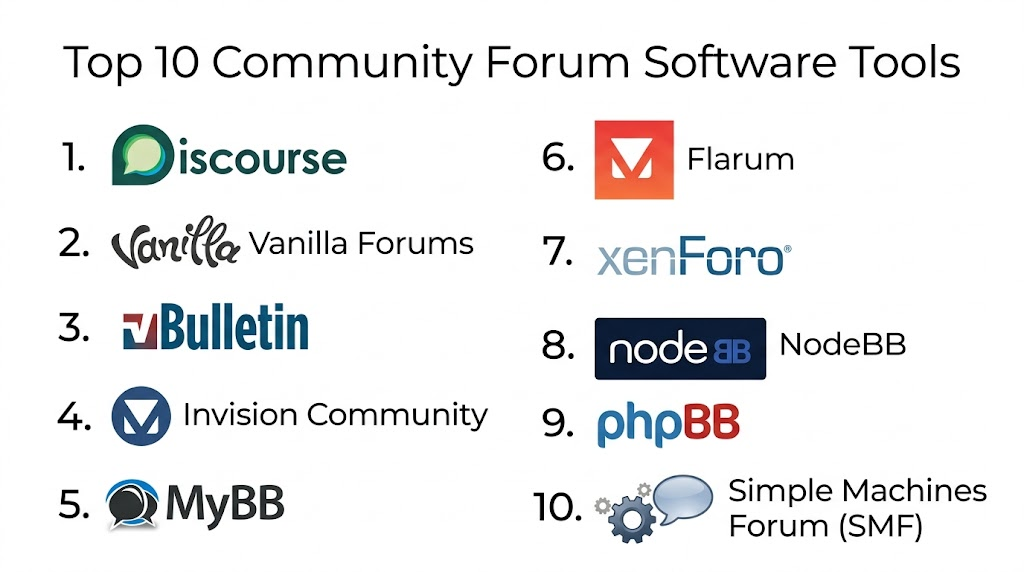
Top 10 Community Forum Software Tools
1 — Discourse
Short description: Discourse is an open-source platform designed for modern community engagement, suitable for developers, marketers, and educators
Key Features
- Threaded discussions with real-time updates
- AI-powered spam detection and moderation tools
- Mobile-responsive interface and notifications
- Single Sign-On integration support
- Trust levels and gamification for user engagement
- Plugin ecosystem for customization
- Analytics dashboard for community health
Pros
- Highly customizable and open-source
- Strong developer and user community
Cons
- Self-hosting requires technical setup
- Some advanced features require paid hosting
Platforms / Deployment
- Web / Windows / macOS / Linux / iOS / Android
- Cloud / Self-hosted / Hybrid
Security & Compliance
- SSO, MFA, encryption
- SOC 2, GDPR compliance
Integrations & Ecosystem
Discourse integrates with CRM, analytics, and productivity tools
- Slack, Zapier, GitHub, Salesforce
- REST API for custom integrations
- Plugin marketplace for extensions
Support & Community
- Strong documentation and community forums
- Paid support tiers available
2 — Vanilla Forums
Short description: Vanilla Forums provides cloud-based and open-source community solutions for businesses seeking scalable engagement platforms
Key Features
- Customizable themes and branding options
- Gamification and reputation points
- Advanced analytics and reporting
- AI moderation and spam detection
- Social media integration
- Multi-language support
- Knowledge base creation
Pros
- Easy setup and onboarding
- Cloud-based scaling and reliability
Cons
- Limited advanced customization in cloud version
- Premium pricing for enterprise features
Platforms / Deployment
- Web / iOS / Android
- Cloud / Self-hosted
Security & Compliance
- SSO, MFA, encryption
- GDPR and privacy-focused controls
Integrations & Ecosystem
Vanilla Forums supports a wide range of integrations
- Salesforce, Slack, HubSpot
- REST API and Zapier support
- Plugin marketplace for custom extensions
Support & Community
- Documentation and training resources
- Email and phone support tiers
3 — vBulletin
Short description: vBulletin is a long-established forum solution catering to enterprises and communities needing robust moderation
Key Features
- Threaded discussions and polls
- Advanced moderation and user management
- Mobile-responsive interface
- SEO-friendly content management
- Customizable templates and themes
- Analytics and reporting tools
- Paid membership support
Pros
- Proven reliability for high-traffic communities
- Strong administrative control features
Cons
- Aging interface compared to modern forums
- Steeper learning curve for customization
Platforms / Deployment
- Web / Windows / macOS / Linux
- Self-hosted / Cloud options
Security & Compliance
- SSO, MFA, encryption
- Not publicly stated for certifications
Integrations & Ecosystem
- CRM and email integrations
- Plugin ecosystem
- API support for custom workflows
Support & Community
- Paid support options
- Active user forums
4 — Invision Community
Short description: Invision Community is a versatile forum and community platform with content management and e-commerce support
Key Features
- Discussion boards and blogs
- Advanced user management and moderation
- Customizable themes and layouts
- Gamification and reputation points
- Integration with social media and email tools
- Analytics dashboards
- Monetization options for subscriptions
Pros
- Feature-rich and highly customizable
- Strong visual design options
Cons
- Can be resource-intensive
- Higher cost for enterprise editions
Platforms / Deployment
- Web / iOS / Android
- Cloud / Self-hosted
Security & Compliance
- SSO, MFA, encryption
- GDPR compliance
Integrations & Ecosystem
- Email marketing tools
- CRM integrations
- REST API support for custom apps
Support & Community
- Documentation, training webinars
- Dedicated support tiers
5 — MyBB
Short description: MyBB is a free, open-source forum platform aimed at SMBs and hobbyist communities
Key Features
- Plugin and theme support
- Threaded discussions and private messaging
- Reputation and gamification features
- Mobile-friendly design
- Moderation tools and spam prevention
- Multi-language support
- Analytics through plugins
Pros
- Free and open-source
- Lightweight and easy to host
Cons
- Limited enterprise features
- Smaller developer ecosystem
Platforms / Deployment
- Web / Windows / Linux / macOS
- Self-hosted
Security & Compliance
- Not publicly stated
Integrations & Ecosystem
- Plugin marketplace
- API support limited
- Community-created extensions
Support & Community
- Active online community
- Forums and documentation
6 — Flarum
Short description: Flarum is a modern open-source forum software with simplicity and extensibility at its core
Key Features
- Mobile-first responsive interface
- Fast and lightweight design
- Extensible plugin architecture
- Infinite scrolling discussions
- Moderation tools and tagging
- Multi-language support
- Notifications and real-time updates
Pros
- Elegant and modern UI
- Open-source flexibility
Cons
- Some features require plugins
- Smaller community than Discourse
Platforms / Deployment
- Web / iOS / Android
- Self-hosted / Cloud via third-party
Security & Compliance
- Not publicly stated
Integrations & Ecosystem
- Plugin ecosystem for extensions
- API for integrations
- Community support for extensions
Support & Community
- Community-driven support
- Documentation available
7 — XenForo
Short description: XenForo is a professional forum software for enterprises and large communities with advanced engagement tools
Key Features
- SEO-friendly discussion boards
- User reputation and badges
- Advanced moderation and anti-spam
- Mobile responsive design
- Integration with CRM and analytics
- Add-on marketplace
- Event and calendar tools
Pros
- Professional and scalable
- Strong ecosystem and support
Cons
- Paid license required
- Some advanced features need add-ons
Platforms / Deployment
- Web / iOS / Android
- Self-hosted / Cloud
Security & Compliance
- SSO, MFA
- Not publicly stated for certifications
Integrations & Ecosystem
- Add-on marketplace
- API integrations
- CRM and analytics connectors
Support & Community
- Documentation and forum support
- Paid support options
8 — NodeBB
Short description: NodeBB is a modern, Node.js-based forum platform with real-time discussions and social integration
Key Features
- Real-time notifications and chat
- Plugin and theme marketplace
- Social login and integration
- Gamification features
- Analytics and reporting tools
- Mobile-first responsive design
- Moderation and content management
Pros
- Fast and modern
- Excellent real-time experience
Cons
- Requires Node.js expertise
- Smaller community than older platforms
Platforms / Deployment
- Web / iOS / Android
- Cloud / Self-hosted
Security & Compliance
- SSO, encryption
- Not publicly stated
Integrations & Ecosystem
- Plugins for CRM, analytics, social media
- API for custom integrations
- Active developer community
Support & Community
- Documentation and forums
- Paid support available
9 — phpBB
Short description: phpBB is a classic open-source forum platform for communities seeking stable, feature-complete forums
Key Features
- Threaded discussions and private messaging
- Plugin and template support
- User permissions and moderation
- Multi-language support
- Simple theming and layout customization
- Mobile-friendly themes
- Analytics via extensions
Pros
- Free and open-source
- Mature and stable platform
Cons
- Outdated interface compared to modern forums
- Fewer built-in advanced features
Platforms / Deployment
- Web / Windows / Linux / macOS
- Self-hosted
Security & Compliance
- Not publicly stated
Integrations & Ecosystem
- Extension repository
- Limited API support
- Community-driven plugins
Support & Community
- Community forums
- Documentation available
10 — Simple Machines Forum (SMF)
Short description: SMF is a free, open-source forum software with straightforward setup and administration tools
Key Features
- Threaded discussions and polls
- User groups and permissions
- Plugin support for customization
- Themeable interface
- Mobile-friendly templates
- Spam control and moderation tools
- Simple analytics via plugins
Pros
- Easy to set up and manage
- Free and lightweight
Cons
- Limited modern features
- Smaller developer community
Platforms / Deployment
- Web / Windows / Linux / macOS
- Self-hosted
Security & Compliance
- Not publicly stated
Integrations & Ecosystem
- Plugin system for extensions
- API support limited
- Community forums for help
Support & Community
- Community-based support
- Documentation available
Comparison Table
| Tool Name | Best For | Platform(s) Supported | Deployment | Standout Feature | Public Rating |
|---|---|---|---|---|---|
| Discourse | Modern communities | Web, Windows, macOS, Linux, iOS, Android | Cloud, Self-hosted, Hybrid | AI moderation & trust levels | N/A |
| Vanilla Forums | SMB & enterprise | Web, iOS, Android | Cloud, Self-hosted | Gamification & analytics | N/A |
| vBulletin | Enterprise communities | Web, Windows, macOS, Linux | Self-hosted, Cloud | Robust moderation tools | N/A |
| Invision Community | Content-rich forums & e-commerce | Web, iOS, Android | Cloud, Self-hosted | Monetization & gamification | N/A |
| MyBB | SMBs, hobbyist forums | Web, Windows, Linux, macOS | Self-hosted | Lightweight & plugin support | N/A |
| Flarum | Modern minimalist forums | Web, iOS, Android | Self-hosted, Cloud | Lightweight & responsive | N/A |
| XenForo | Professional & enterprise | Web, iOS, Android | Self-hosted, Cloud | Add-on marketplace | N/A |
| NodeBB | Real-time communities | Web, iOS, Android | Cloud, Self-hosted | Real-time notifications | N/A |
| phpBB | Classic communities | Web, Windows, Linux, macOS | Self-hosted | Stable & open-source | N/A |
| SMF | Lightweight & free forums | Web, Windows, Linux, macOS | Self-hosted | Simple setup & management | N/A |
Evaluation & Scoring
| Tool Name | Core | Ease | Integrations | Security | Performance | Support | Value | Weighted Total |
|---|---|---|---|---|---|---|---|---|
| Discourse | 9 | 8 | 9 | 9 | 9 | 8 | 8 | 8.85 |
| Vanilla Forums | 8 | 9 | 8 | 8 | 8 | 8 | 7 | 8.05 |
| vBulletin | 8 | 7 | 7 | 8 | 8 | 7 | 7 | 7.45 |
| Invision Community | 9 | 8 | 8 | 8 | 8 | 8 | 7 | 8.05 |
| MyBB | 7 | 8 | 7 | 7 | 7 | 7 | 9 | 7.45 |
| Flarum | 8 | 8 | 7 | 7 | 8 | 7 | 8 | 7.80 |
| XenForo | 9 | 8 | 8 | 8 | 8 | 8 | 7 | 8.10 |
| NodeBB | 8 | 8 | 8 | 8 | 8 | 7 | 7 | 7.80 |
| phpBB | 7 | 7 | 7 | 7 | 7 | 7 | 8 | 7.35 |
| SMF | 6 | 8 | 6 | 7 | 7 | 6 | 9 | 7.15 |
Which Community Forum Software Tool Is Right for You?
Solo / Freelancer
Flarum or MyBB are lightweight, easy to deploy, and free or low-cost
SMB
Vanilla Forums or Discourse provide scalability, ease of use, and analytics
Mid-Market
Invision Community or NodeBB for stronger moderation, real-time features, and integrations
Enterprise
Discourse, XenForo, or vBulletin for advanced control, security, and high-volume users
Budget vs Premium
Free options: MyBB, Flarum, SMF
Premium options: Discourse, Invision Community, XenForo for advanced features
Feature Depth vs Ease of Use
Discourse & Invision Community provide deep features with moderate learning curve
MyBB & SMF are simple but limited in advanced functionality
Integrations & Scalability
NodeBB and Vanilla Forums integrate widely and scale with cloud deployment
Security & Compliance Needs
Enterprises needing compliance: Discourse, XenForo, and Invision Community with SSO, MFA, and GDPR-ready controls
Frequently Asked Questions
- What is the pricing model for community forum software?
Pricing varies by tool; some are open-source and free, while others offer subscription tiers based on user count and features - How long does it take to set up a forum?
Setup can range from a few hours for hosted solutions to several days for self-hosted installations with customizations - Can I integrate my forum with existing tools?
Most modern forums support integrations with CRM, analytics, email marketing, and productivity tools - Are these platforms mobile-friendly?
Most tools are responsive and offer mobile apps or optimized web interfaces for iOS and Android devices - How secure are these forum platforms?
Security features like SSO, MFA, encryption, and GDPR compliance are standard in enterprise-ready platforms; open-source tools may require additional configuration - Can forums handle large user communities?
Enterprise-focused platforms like Discourse, XenForo, and vBulletin can support high traffic and concurrent users - Is moderation automated?
Modern forums offer AI-powered moderation for spam and inappropriate content; manual moderation tools are also available - How customizable are these platforms?
Open-source tools like Flarum and MyBB allow extensive theming and plugins, while cloud platforms have predefined templates - Can I migrate from one forum platform to another?
Migration is supported in many tools but may require scripts, plugins, or professional services for content transfer - What are common mistakes when implementing a forum?
Common mistakes include neglecting moderation policies, underestimating user engagement efforts, poor integration planning, and ignoring mobile usability
Conclusion
Choosing the right community forum software depends on your organization’s size, engagement goals, and technical resources. Small teams may benefit from lightweight platforms like Flarum or MyBB, while enterprises should consider Discourse, XenForo, or Invision Community for scalability, integrations, and advanced moderation. Start by shortlisting 2–3 tools, evaluate their trial versions, validate integrations, and assess security controls to ensure alignment with your community strategy. The right platform will enhance engagement, improve support, and foster a thriving online community
