Introduction
Civic Engagement Platforms are software solutions designed to connect governments, organizations, and communities with citizens, enabling participation in decision-making, feedback collection, volunteering, and event engagement. These platforms help institutions foster transparency, increase public trust, and encourage active civic participation.
In 2026, civic engagement has become critical as local governments and organizations aim to engage digitally-savvy populations. Citizens expect accessible, interactive, and personalized channels for contributing to governance, community initiatives, and public services.
Real-world use cases include:
- Collecting public feedback on urban development projects.
- Facilitating volunteer coordination and community initiatives.
- Running petitions, surveys, and public consultations.
- Organizing civic events, town halls, or voting campaigns.
- Enabling policy discussions and online forums for citizen input.
Evaluation criteria for buyers:
- Platform usability and accessibility.
- Multi-channel engagement (web, mobile, social).
- Data security and compliance (GDPR, SOC 2, HIPAA where applicable).
- Integration with existing systems (CRM, ERP, municipal tools).
- Scalability for large citizen bases.
- Analytics and reporting capabilities.
- AI-driven insights and automation features.
- Customization and branding options.
- Support and community resources.
- Pricing flexibility for organizations of different sizes.
Best for: Municipal governments, non-profits, community organizations, civic tech initiatives, and enterprises seeking to foster citizen engagement.
Not ideal for: Small teams without citizen-facing responsibilities or organizations whose needs are limited to basic communication tools; simple survey platforms may suffice.
Key Trends in Civic Engagement Platforms
- Increasing adoption of AI for sentiment analysis, automated responses, and citizen insights.
- Mobile-first citizen engagement with progressive web apps and native apps.
- Integration of gamification and reward mechanisms to boost participation.
- Compliance-first designs adhering to GDPR, CCPA, and accessibility standards.
- Low-code/no-code workflows for quick event setup and campaign launches.
- Expansion of open APIs for seamless integration with municipal and enterprise systems.
- Data-driven decision making powered by analytics dashboards.
- Community-driven features like discussion forums, petitions, and polls.
- Multi-lingual and inclusive design for broader citizen reach.
- Hybrid deployment models: cloud-hosted for speed, on-premise for sensitive government data.
How We Selected These Tools (Methodology)
- Reviewed market adoption and overall mindshare in public and civic technology sectors.
- Assessed feature completeness, including feedback mechanisms, event management, and analytics.
- Evaluated reliability through performance signals, uptime records, and scalability metrics.
- Reviewed security posture: encryption, SSO, RBAC, and compliance standards.
- Considered ecosystem and integrations with CRMs, social platforms, and enterprise software.
- Verified flexibility for different organization sizes: small NGOs, mid-market councils, and large governments.
- Examined AI capabilities and automation in engagement workflows.
- Analyzed customer support availability, community presence, and documentation quality.
- Compared pricing models and value for feature sets.
- Considered adaptability to future civic technology trends.
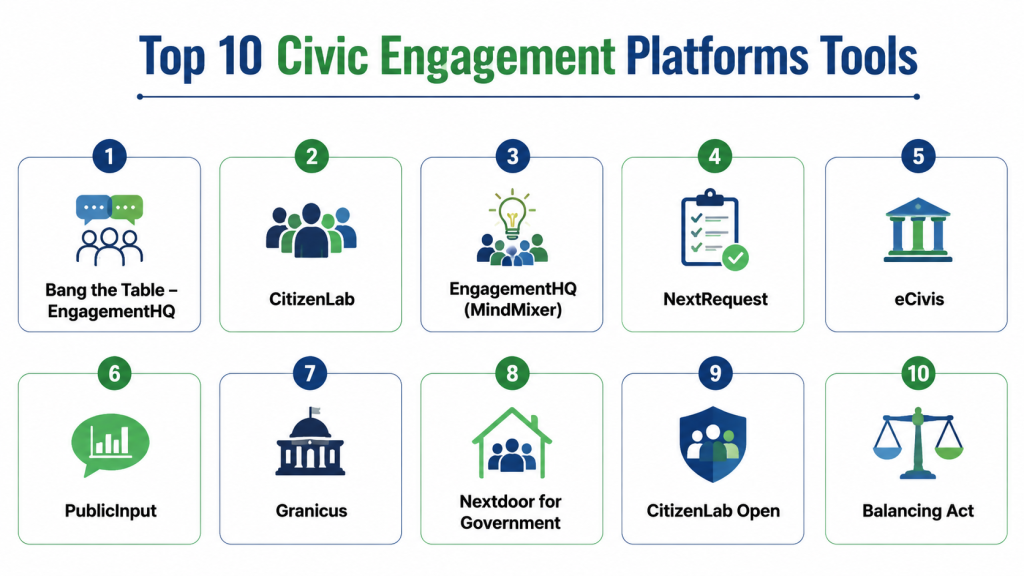
Top 10 Civic Engagement Platforms Tools
1- Bang the Table – EngagementHQ
Short description: EngagementHQ enables governments and organizations to gather feedback, run consultations, and manage participatory projects with robust reporting tools.
Key Features
- Online consultations and surveys
- Event management and volunteer coordination
- Multi-channel citizen engagement
- Analytics dashboard and reporting
- Custom branding and accessibility compliance
- Integration with CRM and GIS systems
Pros
- Highly customizable for different municipal needs
- Strong analytics and reporting
- Inclusive, accessible design
Cons
- Can be complex for small organizations
- Licensing costs may be high for smaller councils
Platforms / Deployment
- Web / iOS / Android
- Cloud
Security & Compliance
- SOC 2, ISO 27001, encryption, SSO
- GDPR compliance
Integrations & Ecosystem
EngagementHQ integrates with CRMs, GIS tools, email campaigns, and analytics platforms.
- CRM connectors (Salesforce, Microsoft Dynamics)
- GIS mapping for projects
- API access for custom integrations
- Social media channels
- Data export for reporting
Support & Community
- Offers onboarding, training, dedicated support, and knowledge base
- Active user community and forums
2- CitizenLab
Short description: CitizenLab helps cities streamline community participation through digital platforms for surveys, polls, and project discussions.
Key Features
- Citizen feedback and polling
- Idea management and prioritization
- Community analytics dashboard
- Event and volunteer coordination
- Multilingual support
- Integration with municipal systems
Pros
- User-friendly interface for citizens
- Strong focus on transparency
- Quick deployment for municipalities
Cons
- Limited advanced AI features
- Reporting customization can be restricted
Platforms / Deployment
- Web / iOS / Android
- Cloud
Security & Compliance
- Encryption, SSO, RBAC
- GDPR compliance
Integrations & Ecosystem
CitizenLab integrates with municipal CRMs, email, and data reporting tools.
- Email automation
- API for civic apps
- GIS integration
- Slack/Teams notifications
Support & Community
- Documentation, webinars, and responsive support team
- Growing civic tech community
3- EngagementHQ (MindMixer)
Short description: MindMixer facilitates public idea generation, community projects, and civic participation campaigns.
Key Features
- Idea crowdsourcing
- Surveys and polls
- Volunteer management
- Discussion boards
- Analytics for decision-making
- Custom workflows
Pros
- Encourages active citizen collaboration
- Gamified participation to boost engagement
Cons
- Limited offline functionality
- Reporting dashboards may require setup help
Platforms / Deployment
- Web / iOS / Android
- Cloud
Security & Compliance
- Encryption, audit logs, RBAC
- Not publicly stated
Integrations & Ecosystem
- CRM connectors
- Email notifications
- Custom API for municipal tools
Support & Community
- Support portal, training resources, community forums
4- NextRequest
Short description: NextRequest focuses on transparency and public records requests management, aiding citizen engagement through open government initiatives.
Key Features
- Public records request tracking
- Workflow automation
- Analytics and reporting
- Multi-department collaboration
- Secure portal for citizens
- Integration with document management systems
Pros
- Enhances government transparency
- Streamlines request workflows
Cons
- Less suited for broader community engagement
- Customization may be limited
Platforms / Deployment
- Web
- Cloud
Security & Compliance
- Encryption, RBAC, audit logs
- SOC 2 compliance
Integrations & Ecosystem
- Document management systems
- Email notifications
- Custom API for municipal systems
Support & Community
- Dedicated support, documentation, onboarding assistance
5- eCivis
Short description: eCivis specializes in grants management and citizen engagement for public sector organizations.
Key Features
- Grant application management
- Community engagement dashboards
- Volunteer and project tracking
- Workflow automation
- Reporting and analytics
- Integration with municipal databases
Pros
- Strong grant management features
- Useful for community funding projects
Cons
- Primarily grant-focused, less suited for open-ended citizen feedback
- Interface may require training
Platforms / Deployment
- Web
- Cloud
Security & Compliance
- Not publicly stated
Integrations & Ecosystem
- CRM connectors
- Reporting APIs
- Email notifications
Support & Community
- Onboarding support, webinars, documentation
6- PublicInput
Short description: PublicInput allows governments to engage citizens through interactive platforms for feedback, projects, and public planning.
Key Features
- Surveys and feedback tools
- Community discussion boards
- Project prioritization
- Analytics dashboard
- Mobile-friendly design
- API access for integrations
Pros
- Mobile-first design
- Encourages transparent citizen participation
Cons
- Customization can be limited for large projects
- Reporting tools may require assistance
Platforms / Deployment
- Web / iOS / Android
- Cloud
Security & Compliance
- Not publicly stated
Integrations & Ecosystem
- CRM systems
- GIS tools
- Email campaigns
Support & Community
- Support portal, community forums, training resources
7- Granicus
Short description: Granicus provides government software for citizen engagement, digital communications, and transparency initiatives.
Key Features
- Citizen communication platform
- Meeting management
- Feedback collection
- Email and notification tools
- Analytics and reporting
- Integration with municipal systems
Pros
- Strong communication focus
- Enterprise-level scalability
Cons
- May be complex for smaller municipalities
- Pricing can be high
Platforms / Deployment
- Web
- Cloud
Security & Compliance
- Encryption, SOC 2, SSO
- GDPR compliance
Integrations & Ecosystem
- CRM and ERP connectors
- Email platforms
- API for custom integrations
Support & Community
- Training, onboarding, documentation, and dedicated support
8- Nextdoor for Government
Short description: Nextdoor allows local governments to engage neighborhoods and communities through a trusted social network.
Key Features
- Hyperlocal community engagement
- Event and notification tools
- Surveys and polls
- Crisis communication
- Analytics dashboard
- Integration with municipal communications
Pros
- Direct reach to local neighborhoods
- Familiar social platform interface
Cons
- Limited project collaboration features
- Engagement mostly reactive
Platforms / Deployment
- Web / iOS / Android
- Cloud
Security & Compliance
- Not publicly stated
Integrations & Ecosystem
- Municipal CRM systems
- Event tools
- Analytics APIs
Support & Community
- Knowledge base, customer support, community guidelines
9- CitizenLab Open
Short description: Open-source variant of CitizenLab for municipalities wanting a self-hosted civic engagement platform.
Key Features
- Feedback collection
- Surveys and polls
- Idea management
- Discussion forums
- Analytics dashboard
- Customizable workflows
Pros
- Self-hosted for data control
- Open-source flexibility
Cons
- Requires technical expertise
- Limited official support
Platforms / Deployment
- Web
- Self-hosted / Cloud optional
Security & Compliance
- Varies / N/A
Integrations & Ecosystem
- API access for CRM and GIS tools
- Email notifications
- Event management integration
Support & Community
- Community-driven support, documentation, forums
10- Balancing Act
Short description: Balancing Act offers online consultation and decision-making tools to facilitate public participation.
Key Features
- Online consultations
- Survey tools
- Interactive project prioritization
- Analytics and reporting
- Multi-language support
- Integration capabilities
Pros
- Easy setup for consultations
- Encourages citizen deliberation
Cons
- Limited features beyond consultation
- Scaling may require premium plans
Platforms / Deployment
- Web
- Cloud
Security & Compliance
- Not publicly stated
Integrations & Ecosystem
- CRM systems
- Reporting tools
- API for municipal integrations
Support & Community
- Documentation and email support
Comparison Table (Top 10)
| Tool Name | Best For | Platform(s) Supported | Deployment | Standout Feature | Public Rating |
|---|---|---|---|---|---|
| Bang the Table – EngagementHQ | Municipal engagement | Web / iOS / Android | Cloud | Comprehensive feedback + events | N/A |
| CitizenLab | Cities and municipalities | Web / iOS / Android | Cloud | User-friendly transparency | N/A |
| EngagementHQ (MindMixer) | Idea generation & citizen input | Web / iOS / Android | Cloud | Gamified citizen participation | N/A |
| NextRequest | Public records management | Web | Cloud | Transparency for requests | N/A |
| eCivis | Grants & community programs | Web | Cloud | Grant management integration | N/A |
| PublicInput | Municipal feedback | Web / iOS / Android | Cloud | Mobile-first engagement | N/A |
| Granicus | Government communications | Web | Cloud | Enterprise communications | N/A |
| Nextdoor for Government | Neighborhood engagement | Web / iOS / Android | Cloud | Hyperlocal community reach | N/A |
| CitizenLab Open | Self-hosted municipal projects | Web | Self-hosted/Cloud | Open-source flexibility | N/A |
| Balancing Act | Public consultations | Web | Cloud | Interactive consultation | N/A |
Evaluation & Scoring of Civic Engagement Platforms
| Tool Name | Core | Ease | Integrations | Security | Performance | Support | Value | Weighted Total |
|---|---|---|---|---|---|---|---|---|
| Bang the Table – EngagementHQ | 9 | 8 | 8 | 9 | 9 | 8 | 7 | 8.5 |
| CitizenLab | 8 | 9 | 7 | 8 | 8 | 8 | 8 | 8.2 |
| EngagementHQ (MindMixer) | 8 | 8 | 7 | 7 | 8 | 8 | 7 | 7.8 |
| NextRequest | 7 | 8 | 6 | 9 | 8 | 7 | 7 | 7.7 |
| eCivis | 7 | 7 | 6 | 7 | 7 | 7 | 6 | 6.9 |
| PublicInput | 8 | 9 | 7 | 7 | 8 | 8 | 7 | 7.8 |
| Granicus | 9 | 7 | 8 | 9 | 9 | 8 | 7 | 8.4 |
| Nextdoor for Government | 7 | 9 | 6 | 7 | 7 | 7 | 8 | 7.5 |
| CitizenLab Open | 8 | 7 | 7 | 7 | 8 | 6 | 7 | 7.5 |
| Balancing Act | 7 | 8 | 6 | 7 | 7 | 7 | 7 | 7.3 |
Interpretation: Scores are comparative across the top 10 platforms. Weighted totals indicate overall suitability considering core features, ease of use, integrations, security, performance, support, and value.
Which Civic Engagement Platforms Tool Is Right for You?
Solo / Freelancer
- CitizenLab Open or Balancing Act are lightweight options for small-scale citizen projects or advisory roles.
SMB
- PublicInput or CitizenLab offer scalable engagement and analytics without overwhelming complexity.
Mid-Market
- EngagementHQ or MindMixer balance feature richness with multi-channel engagement capabilities.
Enterprise
- Granicus or Bang the Table provide enterprise-grade solutions with compliance, scalability, and integration depth.
Budget vs Premium
- Open-source or smaller cloud platforms for tight budgets; premium solutions offer analytics, AI features, and enhanced reporting.
Feature Depth vs Ease of Use
- CitizenLab and PublicInput emphasize ease of use; EngagementHQ and Granicus focus on comprehensive features and analytics depth.
Integrations & Scalability
- Enterprise municipalities should prioritize platforms with open APIs and CRM/GIS integration capabilities for scaling.
Security & Compliance Needs
- Platforms like Bang the Table, Granicus, and NextRequest offer strong compliance features for GDPR, SOC 2, and enterprise security.
Frequently Asked Questions (FAQs)
1- What are typical pricing models?
Most platforms offer subscription-based pricing with tiers based on users, projects, or features. Some open-source options require self-hosting costs.
2- How long does implementation take?
Small deployments can be ready in weeks, enterprise-level setups may take 2–3 months depending on integrations and customization.
3- Can these platforms handle multi-lingual communities?
Yes, most platforms support multiple languages for surveys, discussions, and citizen-facing interfaces.
4- Are AI features widely available?
AI is emerging in sentiment analysis, automated suggestions, and feedback insights, primarily in premium or enterprise platforms.
5- How secure is citizen data?
Leading platforms provide encryption, access controls, audit logs, and compliance with data privacy regulations.
6- Can I integrate with existing municipal CRMs?
Yes, most platforms offer APIs or pre-built connectors for popular CRM and GIS tools.
7- What common mistakes should I avoid?
Avoid choosing a platform without mobile accessibility, lacking analytics, or insufficient security. Ensure proper onboarding and training.
8- Can I switch platforms easily?
Migration tools vary; ensure exportable data and API access to facilitate transitions.
9- How scalable are these platforms?
Enterprise solutions support hundreds of thousands of users; smaller platforms may be limited to tens of thousands.
10- Are there free or open-source options?
Yes, CitizenLab Open provides a self-hosted, open-source alternative, though technical expertise is required.
Conclusion
Selecting the right Civic Engagement Platform depends on organizational size, engagement objectives, and technical needs. Solo or small teams may start with lightweight or open-source options, while mid-market and enterprise governments benefit from feature-rich, compliance-ready platforms. Evaluate based on ease of use, integrations, security, and long-term scalability. Next steps: shortlist 2–3 tools that match your goals, run pilot campaigns, and validate integrations, analytics, and citizen engagement effectiveness before full deployment.
