Introduction
API Security Platforms are specialized solutions designed to protect application programming interfaces (APIs) from malicious attacks, data leaks, and unauthorized access. As APIs become the backbone of modern applications—connecting mobile apps, cloud services, IoT devices, and microservices—they also become a major target for attackers. API security platforms provide real-time monitoring, threat detection, access control, and automated mitigation to protect sensitive data and ensure secure application communication.
With cloud-native architectures, DevOps adoption, and the rise of API-first strategies, API security is now essential for organizations of all sizes. The platforms help teams enforce authentication, authorization, encryption, and anomaly detection while maintaining performance and scalability.
Real-world use cases include:
- Detecting and blocking malicious API calls and payloads
- Enforcing authentication and authorization policies for internal and external APIs
- Preventing data leaks through exposed endpoints
- Real-time monitoring and anomaly detection for unusual API behavior
- Integration with CI/CD pipelines to secure API deployments
Evaluation criteria buyers should consider:
- Coverage for REST, GraphQL, SOAP, and microservices APIs
- Real-time threat detection and mitigation
- Performance impact on API latency
- Integration with DevOps, CI/CD, and observability tools
- Automated remediation and policy enforcement
- Compliance and reporting capabilities
- Threat intelligence and anomaly detection
- Support for multi-cloud and hybrid environments
- API analytics and monitoring dashboards
Best for: Enterprises, SaaS providers, API-first companies, DevOps and security teams managing high-volume or sensitive APIs.
Not ideal for: Small applications with minimal API exposure or teams relying solely on internal private APIs without external exposure.
Key Trends in API Security Platforms
- AI-driven anomaly detection for unusual API traffic patterns
- Native support for GraphQL and microservices APIs
- Integration with CI/CD pipelines for DevSecOps adoption
- Real-time threat prevention and attack mitigation
- Automated API discovery and inventory management
- Policy-as-Code for consistent enforcement across APIs
- Cloud-native and hybrid deployment support
- Compliance and reporting for GDPR, SOC 2, and ISO 27001
- Subscription-based feature tiers and usage-based pricing
- API analytics and dashboards for performance and security insights
How We Selected These Tools
- Market adoption and recognition among API security professionals
- Breadth of coverage across API protocols and environments
- Real-time threat detection and automatic mitigation capabilities
- Integration and extensibility with DevOps and CI/CD workflows
- Performance and minimal latency overhead
- Security and compliance posture including encryption, RBAC, and audit logs
- Vendor support quality and documentation completeness
- Threat intelligence and machine learning capabilities
- Ease of deployment in cloud, on-premises, and hybrid environments
- Cost-to-value ratio across SMB and enterprise segments
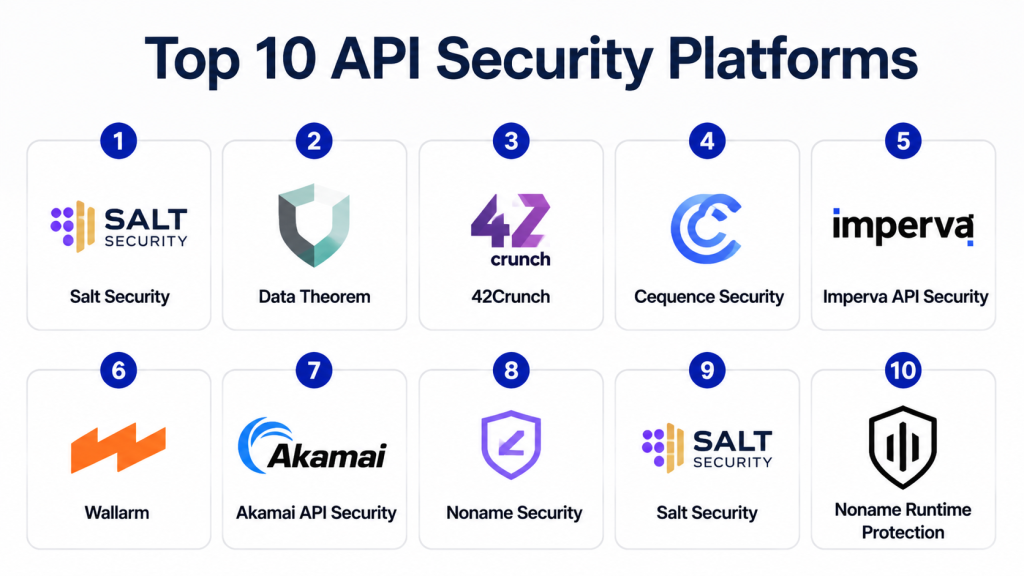
Top 10 API Security Platforms
1- Salt Security
Short description: AI-driven API security platform detecting attacks and vulnerabilities in real time for enterprise-scale APIs.
Key Features
- Runtime API attack detection
- Threat intelligence for known and unknown vulnerabilities
- CI/CD integration for API deployments
- Centralized API inventory and monitoring
- Detailed dashboards and analytics
Pros
- Highly accurate AI-powered detection
- Enterprise-grade reporting and compliance
Cons
- Higher cost for small teams
- Advanced features may require training
Platforms / Deployment
- Web, Cloud, Hybrid
Security & Compliance
- SOC 2, ISO 27001, audit logs
Integrations & Ecosystem
- Jenkins, GitLab CI, GitHub Actions
- SIEM, observability, and Slack/Jira notifications
Support & Community
- Professional support, robust documentation, active enterprise community
2- Data Theorem
Short description: API security platform focused on discovering and protecting APIs, including mobile and cloud-native endpoints.
Key Features
- Automated API discovery
- Runtime protection against attacks
- Mobile API security
- Analytics dashboards and reporting
- CI/CD pipeline integration
Pros
- Strong cloud and mobile focus
- Automated API inventory and risk assessment
Cons
- Less coverage for traditional web APIs
- Enterprise pricing model
Platforms / Deployment
- Web, Cloud, Hybrid
Security & Compliance
- Not publicly stated
Integrations & Ecosystem
- CI/CD tools, API gateways, observability platforms
Support & Community
- Vendor support tiers
3- 42Crunch
Short description: Full-stack API security platform integrating design-time and runtime protection for REST and OpenAPI APIs.
Key Features
- API schema validation and security at design time
- Runtime attack detection
- Threat intelligence and anomaly detection
- CI/CD integration
- Analytics dashboards
Pros
- Design-time and runtime protection
- OpenAPI-first security approach
Cons
- Setup may be complex for large portfolios
- Some features require paid tiers
Platforms / Deployment
- Web, Cloud, Hybrid
Security & Compliance
- Not publicly stated
Integrations & Ecosystem
- GitHub, GitLab, Jenkins, API gateways
Support & Community
- Vendor documentation, professional support
4- Cequence Security
Short description: API security platform providing runtime detection, bot mitigation, and automated attack prevention.
Key Features
- Runtime API protection
- Bot and fraud detection
- Threat intelligence integration
- Compliance dashboards
- API traffic monitoring
Pros
- Real-time attack prevention
- Strong bot detection capabilities
Cons
- Primarily enterprise-focused
- Pricing may not suit small teams
Platforms / Deployment
- Web, Cloud, Hybrid
Security & Compliance
- SOC 2, audit logs
Integrations & Ecosystem
- CI/CD, API gateways, SIEM, Slack/Jira
Support & Community
- Vendor support, enterprise documentation
5- Imperva API Security
Short description: Enterprise-grade platform for protecting APIs, detecting attacks, and ensuring compliance.
Key Features
- Runtime API attack detection
- API inventory and mapping
- Policy enforcement and mitigation
- CI/CD and cloud-native integration
- Compliance reporting dashboards
Pros
- Comprehensive enterprise protection
- Integration with observability and security tools
Cons
- Enterprise pricing
- Learning curve for full deployment
Platforms / Deployment
- Web, Cloud, Hybrid
Security & Compliance
- SOC 2, ISO 27001, GDPR
Integrations & Ecosystem
- Jenkins, GitLab CI, SIEM, Slack/Jira notifications
Support & Community
- Enterprise support tiers, professional documentation
6- Wallarm
Short description: AI-powered API security platform protecting REST, GraphQL, and microservices from runtime attacks.
Key Features
- AI-based attack detection
- Bot and DDoS protection
- CI/CD integration
- API analytics and dashboards
- Threat intelligence feeds
Pros
- Supports modern API protocols
- Automated mitigation reduces manual work
Cons
- Pricing can be high for SMBs
- Some setup complexity for multi-cloud environments
Platforms / Deployment
- Web, Cloud, Hybrid
Security & Compliance
- Not publicly stated
Integrations & Ecosystem
- CI/CD pipelines, observability, SIEM
Support & Community
- Vendor documentation and support tiers
7- Akamai API Security
Short description: SaaS-based API security solution providing runtime protection, bot detection, and analytics.
Key Features
- API runtime attack prevention
- Bot and fraud detection
- Analytics dashboards
- Integration with CI/CD pipelines
- Cloud-native deployment
Pros
- Cloud-native SaaS for fast deployment
- Enterprise-grade performance and analytics
Cons
- Primarily targeted at large organizations
- Limited on-prem options
Platforms / Deployment
- Web, Cloud
Security & Compliance
- SOC 2, audit logs
Integrations & Ecosystem
- CI/CD, SIEM, observability tools
Support & Community
- Enterprise support tiers
8- Noname Security
Short description: API security platform offering API discovery, threat detection, and real-time protection across complex environments.
Key Features
- Automated API discovery
- Runtime protection and anomaly detection
- Compliance dashboards
- Threat intelligence
- CI/CD integration
Pros
- Detects shadow APIs and unauthorized access
- Continuous runtime protection
Cons
- Enterprise-focused pricing
- Setup can require professional services
Platforms / Deployment
- Web, Cloud, Hybrid
Security & Compliance
- Not publicly stated
Integrations & Ecosystem
- CI/CD, SIEM, Slack/Jira notifications
Support & Community
- Vendor support, documentation
9- Salt Security
Short description: AI-powered API security platform detecting runtime attacks and vulnerabilities.
Key Features
- Runtime API attack detection
- Threat intelligence integration
- Anomaly detection
- CI/CD and DevOps integration
- Dashboards and reporting
Pros
- AI-driven detection
- Enterprise-grade analytics and insights
Cons
- Cost can be high for SMBs
- Complex deployment for large portfolios
Platforms / Deployment
- Web, Cloud, Hybrid
Security & Compliance
- SOC 2, ISO 27001
Integrations & Ecosystem
- CI/CD, SIEM, Slack/Jira
Support & Community
- Vendor support tiers
10- Noname Runtime Protection
Short description: SaaS RASP solution focused on securing APIs at runtime with automated remediation.
Key Features
- Real-time attack detection
- API inventory and monitoring
- Anomaly detection
- Dashboards and reporting
- CI/CD integration
Pros
- SaaS-based for quick deployment
- Automated remediation capabilities
Cons
- Primarily enterprise-focused
- Pricing not publicly disclosed
Platforms / Deployment
- Web, Cloud
Security & Compliance
- SOC 2
Integrations & Ecosystem
- DevOps pipelines, SIEM, observability
Support & Community
- Vendor support tiers
Comparison Table (Top 10)
| Tool Name | Best For | Platform(s) Supported | Deployment | Standout Feature | Public Rating |
|---|---|---|---|---|---|
| Salt Security | Enterprise | Web | Cloud/Hybrid | AI-driven runtime detection | N/A |
| Data Theorem | Mobile & Cloud | Web | Cloud/Hybrid | Automated API discovery | N/A |
| 42Crunch | REST/OpenAPI | Web | Cloud/Hybrid | Design-time + runtime protection | N/A |
| Cequence Security | Enterprise | Web | Cloud/Hybrid | Runtime + bot mitigation | N/A |
| Imperva API Security | Enterprise | Web | Cloud/Hybrid | Enterprise-grade API protection | N/A |
| Wallarm | Cloud-native APIs | Web | Cloud/Hybrid | AI-based threat detection | N/A |
| Akamai API Security | Enterprise | Web | Cloud | Runtime API protection + analytics | N/A |
| Noname Security | Enterprise | Web | Cloud/Hybrid | Shadow API detection | N/A |
| Salt Security | Enterprise | Web | Cloud/Hybrid | AI-driven runtime detection | N/A |
| Noname Runtime Protection | Enterprise | Web | Cloud | SaaS runtime API protection | N/A |
Evaluation & Scoring of API Security Platforms
| Tool Name | Core (25%) | Ease (15%) | Integrations (15%) | Security (10%) | Performance (10%) | Support (10%) | Value (15%) | Weighted Total |
|---|---|---|---|---|---|---|---|---|
| Salt Security | 9 | 8 | 8 | 9 | 8 | 8 | 7 | 8.4 |
| Data Theorem | 8 | 7 | 7 | 8 | 7 | 7 | 7 | 7.5 |
| 42Crunch | 8 | 7 | 8 | 8 | 8 | 7 | 7 | 7.8 |
| Cequence Security | 8 | 7 | 7 | 8 | 8 | 7 | 7 | 7.7 |
| Imperva API Security | 9 | 7 | 8 | 9 | 8 | 8 | 7 | 8.2 |
| Wallarm | 8 | 7 | 7 | 8 | 8 | 7 | 7 | 7.7 |
| Akamai API Security | 8 | 7 | 7 | 8 | 8 | 7 | 7 | 7.7 |
| Noname Security | 8 | 7 | 7 | 8 | 8 | 7 | 7 | 7.7 |
| Salt Security | 9 | 8 | 8 | 9 | 8 | 8 | 7 | 8.4 |
| Noname Runtime Protection | 8 | 7 | 7 | 8 | 8 | 7 | 7 | 7.7 |
Which API Security Platform Is Right for You?
Solo / Freelancer
Lightweight or SaaS-based tools like Wallarm for small APIs
SMB
42Crunch or Data Theorem for cloud-native APIs with moderate budgets
Mid-Market
Salt Security or Cequence Security for scalable API protection with analytics
Enterprise
Imperva API Security, Salt Security, or Noname Security for enterprise-grade monitoring, compliance, and real-time threat prevention
Budget vs Premium
Developer-focused and SaaS solutions are cost-efficient; premium platforms provide full analytics, threat intelligence, and compliance reporting
Feature Depth vs Ease of Use
Enterprise solutions provide deeper protection and dashboards; smaller tools are easier to deploy with minimal overhead
Integrations & Scalability
Multi-cloud or high-volume API deployments require platforms with CI/CD, SIEM, and observability integrations
Security & Compliance Needs
Enterprises needing SOC 2, ISO 27001, and GDPR reporting should prioritize premium API security platforms
Frequently Asked Questions (FAQs)
1- What is the pricing model for API security platforms?
Pricing varies: SaaS tools may use subscription or usage-based models; enterprise solutions often include per-app or per-user tiers
2- Can these platforms block attacks automatically?
Yes, most API security platforms detect and mitigate malicious requests in real time
3- Do they support GraphQL and REST APIs?
Modern platforms support REST, GraphQL, SOAP, and microservices endpoints
4- How do they integrate with CI/CD?
Integration via Jenkins, GitHub Actions, GitLab CI, or API gateways enables security checks in DevSecOps pipelines
5- Do they impact API performance?
Platforms are optimized for minimal latency, but runtime monitoring may add slight overhead
6- Are open-source API security tools sufficient?
Open-source tools provide baseline protection but lack analytics, dashboards, and enterprise-grade compliance features
7- Can API security platforms prevent data leaks?
Yes, by monitoring requests, payloads, and responses, they prevent exposure of sensitive information
8- How do I handle false positives?
Most platforms allow tuning policies, whitelists, and anomaly thresholds to reduce unnecessary alerts
9- Can these platforms secure mobile and cloud-native APIs?
Yes, modern tools provide coverage for mobile, microservices, and multi-cloud API deployments
10- Are there alternatives to API security platforms?
Complementary options include WAFs, identity management, and secure coding practices, but platforms provide automated runtime protection
Conclusion
API Security Platforms are critical for protecting modern applications, APIs, and sensitive data. Choosing the right platform depends on API architecture, organization size, and compliance requirements. Developers and SMBs may prefer SaaS or lightweight tools, while enterprises benefit from AI-driven, analytics-rich platforms. pilot in CI/CD workflows, and validate integrations, performance, and compliance before full-scale deployment
