Introduction
DNS Filtering Platforms are security solutions that monitor and control domain name system (DNS) requests to block access to malicious, phishing, or inappropriate websites. By acting as the first line of defense in network traffic, these platforms protect users from malware, ransomware, botnets, and data exfiltration.
DNS filtering is essential for enterprises, educational institutions, and service providers to secure networks, reduce cyber risks, and enforce acceptable use policies. Modern DNS platforms leverage AI, threat intelligence, and real-time analytics to provide proactive protection and seamless network visibility.
Real-World Use Cases:
- Blocking access to malicious and phishing domains
- Enforcing content and acceptable use policies in enterprises
- Reducing malware and ransomware infections
- Enhancing threat intelligence with analytics and reporting
- Protecting remote and mobile users across cloud and network environments
Evaluation Criteria for Buyers:
- Accuracy of threat detection and blocking
- Integration with existing network and security infrastructure
- Real-time threat intelligence updates
- AI and machine learning-based predictive analysis
- Reporting, analytics, and visibility dashboards
- Policy customization for different user groups
- Cloud, on-prem, and hybrid deployment options
- Scalability for high query volumes
- Compatibility with endpoint and network security tools
- Compliance with industry regulations like GDPR and SOC 2
Best for: Enterprises, MSPs, educational institutions, and organizations needing proactive DNS security
Not ideal for: Small organizations with low network traffic or minimal security infrastructure
Key Trends in DNS Filtering Platforms
- AI and machine learning for real-time threat detection
- Integration with endpoint security and SIEM solutions
- Cloud-native DNS filtering for remote and hybrid workforces
- Continuous threat intelligence updates and automated blocking
- Granular policy controls and user-based filtering
- Protection against phishing, malware, ransomware, and botnets
- Multi-layered filtering combining DNS, URL, and content analysis
- Reporting and analytics dashboards for actionable insights
- Support for BYOD and mobile users
- Integration with SD-WAN and network management solutions
How We Selected These Tools
- Evaluated market adoption and reputation among enterprises and MSPs
- Reviewed feature completeness including threat intelligence, AI, and reporting
- Assessed reliability and real-time performance of DNS query filtering
- Examined security posture and compliance certifications
- Checked integration with endpoint, network, and SIEM solutions
- Considered scalability for high-volume DNS requests
- Prioritized AI-driven threat detection capabilities
- Evaluated policy customization and user management features
- Balanced cost-effectiveness against enterprise-grade capabilities
- Ensured analytics and visibility for security operations
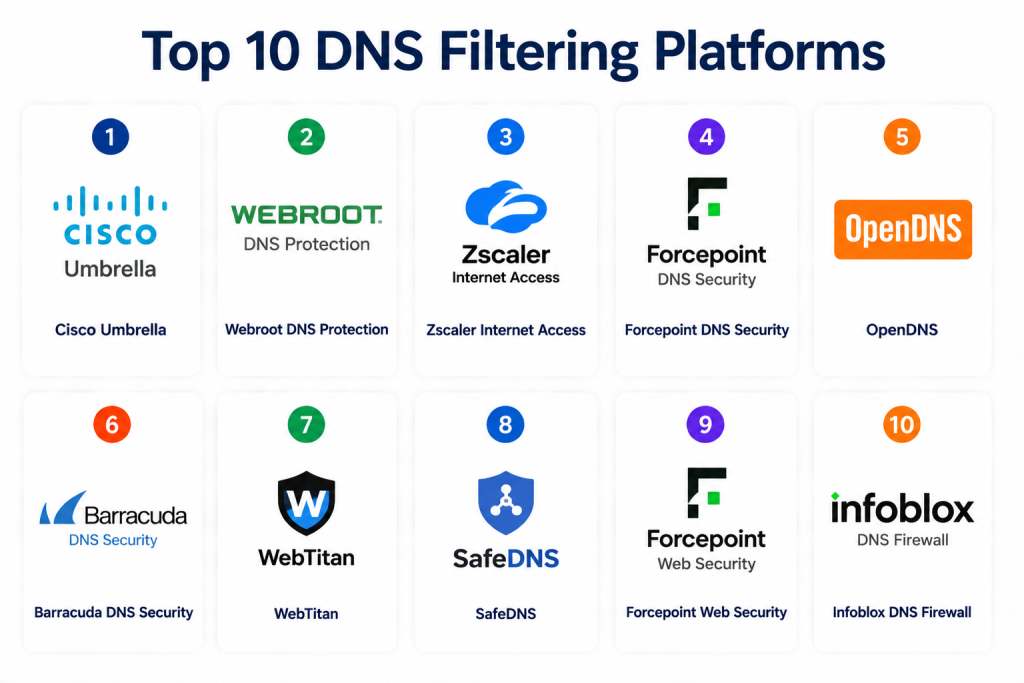
Top 10 DNS Filtering Platforms
1- Cisco Umbrella
Short description: Cisco Umbrella provides cloud-delivered DNS security and content filtering for enterprises and MSPs
Key Features
- Real-time malware and phishing domain blocking
- AI-driven threat intelligence
- Cloud-based DNS filtering
- Policy customization per user/group
- Integration with SIEM and endpoint security
- Reporting and analytics dashboards
Pros
- Enterprise-grade security
- Cloud-native and scalable
- Extensive threat intelligence
Cons
- Premium pricing for advanced features
- Complexity for small teams
Platforms / Deployment
- Web / Cloud
Security & Compliance
- SOC 2, ISO 27001, GDPR
Integrations & Ecosystem
- Endpoint security, SIEM platforms, SD-WAN, APIs
Support & Community
- Documentation, enterprise support, community portal
2- Webroot DNS Protection
Short description: Webroot offers cloud-based DNS filtering and threat protection with AI-driven domain analysis
Key Features
- Domain blocking for malware and phishing
- AI-based threat detection
- Cloud-delivered security
- Reporting and analytics
- Policy management
Pros
- Easy deployment
- Strong AI-driven detection
- Cloud-native and scalable
Cons
- Limited advanced analytics in lower tiers
- Regional coverage may vary
Platforms / Deployment
- Web / Cloud
Security & Compliance
- SOC 2, GDPR
Integrations & Ecosystem
- SIEM, endpoint protection, APIs
Support & Community
- Documentation, support portal, community forum
3- Zscaler Internet Access
Short description: Zscaler provides secure DNS filtering with threat intelligence, cloud security, and SSL inspection
Key Features
- DNS and URL filtering
- Malware and phishing protection
- Cloud-native security
- Policy-based user/group control
- Real-time analytics and reporting
Pros
- Enterprise-scale cloud security
- Comprehensive threat protection
- Granular policy controls
Cons
- Premium pricing
- Complex initial setup
Platforms / Deployment
- Web / Cloud
Security & Compliance
- SOC 2, ISO 27001, GDPR, HIPAA
Integrations & Ecosystem
- Endpoint security, SIEM, cloud apps, APIs
Support & Community
- Documentation, enterprise support, training
4- Forcepoint DNS Security
Short description: Forcepoint offers AI-powered DNS filtering to block malicious domains and enforce content policies
Key Features
- Real-time malware and phishing detection
- AI and behavioral analytics
- Policy-based domain filtering
- Cloud or hybrid deployment
- Reporting and visibility dashboards
Pros
- Adaptive security
- Strong analytics
- Cloud or hybrid options
Cons
- Advanced features may require premium plans
- Learning curve for configuration
Platforms / Deployment
- Web / Cloud / Hybrid
Security & Compliance
- SOC 2, ISO 27001, GDPR
Integrations & Ecosystem
- Endpoint, SIEM, SD-WAN, APIs
Support & Community
- Documentation, support portal, enterprise assistance
5- OpenDNS
Short description: OpenDNS provides cloud-based DNS filtering, phishing protection, and content control for enterprises
Key Features
- Domain and URL filtering
- Threat intelligence updates
- Cloud deployment
- Policy and user-based management
- Reporting dashboards
Pros
- Easy to deploy
- Strong phishing protection
- Cloud-native
Cons
- Limited advanced analytics
- Requires Cisco account for full features
Platforms / Deployment
- Web / Cloud
Security & Compliance
- SOC 2, GDPR
Integrations & Ecosystem
- Endpoint, SIEM, APIs
Support & Community
- Documentation, support portal, community forums
6- Barracuda DNS Security
Short description: Barracuda DNS Security provides DNS threat protection, malware blocking, and content filtering for enterprises
Key Features
- Malware and phishing domain blocking
- Policy-based filtering
- Cloud or on-prem deployment
- Reporting and analytics
- AI-based threat intelligence
Pros
- Multi-layered protection
- Flexible deployment
- Enterprise-grade security
Cons
- Premium cost for advanced features
- Complex setup
Platforms / Deployment
- Web / Cloud / On-prem
Security & Compliance
- SOC 2, ISO 27001, GDPR
Integrations & Ecosystem
- Endpoint, SIEM, APIs
Support & Community
- Documentation, support portal, enterprise training
7- WebTitan
Short description: WebTitan delivers cloud and on-prem DNS filtering for malware, phishing, and content control
Key Features
- Spam and malware blocking
- Policy-based filtering
- Real-time analytics
- Multi-tenant deployment for MSPs
- AI-driven threat detection
Pros
- Affordable for SMBs
- Flexible deployment
- Cloud and on-prem support
Cons
- Limited enterprise analytics
- Premium features require subscription
Platforms / Deployment
- Web / Cloud / On-prem
Security & Compliance
- SOC 2, GDPR
Integrations & Ecosystem
- Endpoint security, SIEM, APIs
Support & Community
- Documentation, support portal
8- SafeDNS
Short description: SafeDNS provides DNS filtering and threat protection with cloud-based management and reporting
Key Features
- Malware and phishing domain filtering
- Cloud-based management console
- Policy customization
- Reporting dashboards
- AI-based analysis
Pros
- Easy to deploy
- SMB-friendly pricing
- Cloud-native
Cons
- Limited enterprise reporting
- Fewer integrations compared to competitors
Platforms / Deployment
- Web / Cloud
Security & Compliance
- SOC 2, GDPR
Integrations & Ecosystem
- Email security, SIEM, APIs
Support & Community
- Documentation, support portal
9- Forcepoint Web Security
Short description: Forcepoint Web Security integrates DNS filtering with web threat protection for enterprises
Key Features
- DNS and URL filtering
- Malware and ransomware protection
- Cloud or hybrid deployment
- Analytics and reporting dashboards
- User and group policy management
Pros
- Integrated web and DNS security
- Enterprise-grade analytics
- Adaptive threat detection
Cons
- Premium pricing
- Requires configuration expertise
Platforms / Deployment
- Web / Cloud / Hybrid
Security & Compliance
- SOC 2, ISO 27001, GDPR
Integrations & Ecosystem
- Endpoint, SIEM, SD-WAN, APIs
Support & Community
- Documentation, enterprise support
10- Infoblox DNS Firewall
Short description: Infoblox DNS Firewall offers DNS threat protection and filtering with policy enforcement and threat intelligence
Key Features
- Malicious domain blocking
- Real-time threat intelligence
- Policy-based filtering
- Analytics dashboards
- Cloud or on-prem deployment
Pros
- Enterprise-grade DNS protection
- Scalable deployment
- Threat intelligence integration
Cons
- Premium cost
- Complex configuration
Platforms / Deployment
- Web / Cloud / On-prem
Security & Compliance
- SOC 2, ISO 27001, GDPR
Integrations & Ecosystem
- Endpoint, SIEM, APIs
Support & Community
- Documentation, support portal, enterprise training
Comparison Table
| Tool Name | Best For | Platform(s) Supported | Deployment | Standout Feature | Public Rating |
|---|---|---|---|---|---|
| Cisco Umbrella | Enterprise | Web | Cloud | AI-driven DNS threat intelligence | N/A |
| Webroot DNS Protection | SMB & Enterprise | Web | Cloud | AI domain analysis | N/A |
| Zscaler Internet Access | Enterprise | Web | Cloud | URL filtering & SSL inspection | N/A |
| Forcepoint DNS Security | Enterprise | Web | Cloud / Hybrid | AI adaptive filtering | N/A |
| OpenDNS | SMB & Enterprise | Web | Cloud | Cloud-based DNS protection | N/A |
| Barracuda DNS Security | Enterprise | Web | Cloud / On-prem | Multi-layered filtering | N/A |
| WebTitan | SMB / MSPs | Web | Cloud / On-prem | Multi-tenant support | N/A |
| SafeDNS | SMB | Web | Cloud | Policy customization | N/A |
| Forcepoint Web Security | Enterprise | Web | Cloud / Hybrid | Web + DNS security | N/A |
| Infoblox DNS Firewall | Enterprise | Web | Cloud / On-prem | Threat intelligence integration | N/A |
Evaluation & Scoring
| Tool Name | Core | Ease | Integrations | Security | Performance | Support | Value | Weighted Total |
|---|---|---|---|---|---|---|---|---|
| Cisco Umbrella | 9 | 8 | 8 | 9 | 9 | 8 | 7 | 8.6 |
| Webroot DNS Protection | 8 | 8 | 7 | 8 | 8 | 7 | 7 | 7.9 |
| Zscaler Internet Access | 9 | 8 | 8 | 9 | 9 | 8 | 7 | 8.5 |
| Forcepoint DNS Security | 8 | 7 | 7 | 8 | 8 | 7 | 7 | 7.7 |
| OpenDNS | 7 | 8 | 7 | 8 | 7 | 7 | 7 | 7.3 |
| Barracuda DNS Security | 8 | 7 | 7 | 8 | 8 | 7 | 7 | 7.7 |
| WebTitan | 7 | 7 | 7 | 8 | 7 | 7 | 7 | 7.3 |
| SafeDNS | 7 | 8 | 6 | 8 | 7 | 7 | 7 | 7.3 |
| Forcepoint Web Security | 8 | 7 | 7 | 8 | 8 | 7 | 7 | 7.7 |
| Infoblox DNS Firewall | 8 | 7 | 7 | 8 | 8 | 7 | 7 | 7.7 |
Which DNS Filtering Tool Is Right for You?
Solo / Freelancer
Choose cloud-based solutions with simple setup and reporting
SMB
Select affordable cloud DNS filters with adaptive threat detection
Mid-Market
Platforms with AI-driven risk detection and analytics dashboards are recommended
Enterprise
Focus on scalable, multi-layered DNS security solutions with compliance reporting
Budget vs Premium
Budget-friendly options provide core DNS filtering; premium options include AI, analytics, and hybrid deployment
Feature Depth vs Ease of Use
High-feature platforms provide enterprise-grade protection; simpler tools allow faster deployment
Integrations & Scalability
Choose solutions that integrate with endpoint, SIEM, and cloud infrastructure
Security & Compliance Needs
Prioritize SOC 2, ISO 27001, GDPR compliant solutions
Frequently Asked Questions
1- What is a DNS filtering platform?
A DNS filtering platform monitors DNS requests to block malicious, phishing, or inappropriate websites
2- How do these platforms detect threats?
They use AI, threat intelligence, and behavior analysis to block suspicious domains in real-time
3- Can SMBs use DNS filtering tools?
Yes, many cloud-based platforms are affordable and easy to deploy
4- Are these tools cloud or on-prem?
Most modern platforms are cloud-native, with hybrid and on-prem options for enterprises
5- Can DNS filtering block phishing and malware?
Yes, they block known malicious domains, ransomware, and phishing URLs
6- How complex is setup?
Cloud-based tools are plug-and-play; enterprise solutions may require admin configuration
7- Do these tools support remote users?
Yes, cloud DNS filtering protects remote, mobile, and BYOD users
8- Are AI features standard?
Yes, AI is used for predictive threat scoring and adaptive filtering
9- Can DNS filtering reduce ransomware risk?
Yes, by blocking communication with malicious domains, it prevents malware propagation
10- Are reporting and analytics available?
Yes, dashboards provide threat visibility, blocked domains, and compliance insights
Conclusion
DNS Filtering Platforms protect organizations from malicious websites, phishing, and ransomware while enhancing visibility and network security. Choosing the right platform depends on deployment preference, threat detection capabilities, and scalability. Next steps: evaluate features, test deployment, and ensure compliance and coverage before full adoption
