Introduction
Risk-based Authentication (RBA) Tools dynamically adjust the level of authentication required based on the assessed risk of a login or transaction. By analyzing factors like device, location, behavior, and login patterns, these tools protect against fraud while maintaining a frictionless user experience. RBA helps organizations reduce account takeover, phishing attacks, and unauthorized access without burdening low-risk users with unnecessary verification steps.
In today’s digital landscape, where cyberattacks and credential-stuffing incidents are increasing, risk-based authentication is critical for enterprises, fintechs, SaaS providers, and e-commerce platforms. Modern RBA platforms leverage AI and machine learning to detect anomalies, adapt in real-time, and integrate with multi-factor authentication (MFA) for robust security.
Real-World Use Cases:
- Adaptive login verification for web and mobile applications
- Fraud prevention for banking, fintech, and e-commerce platforms
- Transaction authentication for sensitive financial operations
- Securing remote workforce access and VPN logins
- Integration with identity and access management (IAM) systems
Evaluation Criteria for Buyers:
- Real-time risk scoring and analysis
- Integration with existing IAM or SSO solutions
- Device, location, and behavioral analytics
- Adaptive MFA support
- AI and machine learning capabilities
- Regulatory and compliance alignment
- User experience and friction minimization
- Reporting and analytics dashboards
- Deployment flexibility (cloud, on-prem, hybrid)
- Scalability for high-volume authentication requests
Best for: Enterprises, banks, fintechs, SaaS providers, e-commerce merchants, organizations needing dynamic authentication and fraud prevention
Not ideal for: Small businesses with minimal login traffic or low-risk applications where simple MFA suffices
Key Trends in Risk-based Authentication Tools
- AI-driven risk scoring and anomaly detection
- Behavior-based authentication using keystroke, mouse, and device patterns
- Integration with MFA, biometrics, and adaptive verification
- Real-time fraud monitoring and alerting
- Cloud-native and hybrid deployment models for global scalability
- Regulatory compliance for GDPR, PSD2, SOC 2, and ISO 27001
- API-first architecture for easy integration with IAM, SSO, and endpoint security
- Mobile-first authentication and push-based verification
- Continuous authentication for sessions and transactions
- Analytics and reporting dashboards for risk trends and mitigation
How We Selected These Tools
- Evaluated market adoption and industry mindshare
- Reviewed feature completeness including risk scoring, MFA, and analytics
- Assessed reliability, uptime, and real-time performance
- Examined security posture including encryption, compliance, and audit capabilities
- Checked integrations with IAM, SSO, and security platforms
- Considered scalability and global deployment options
- Prioritized AI and machine learning capabilities
- Evaluated user experience and adaptive authentication mechanisms
- Balanced cost-effectiveness with feature depth
- Ensured strong documentation, support, and community resources
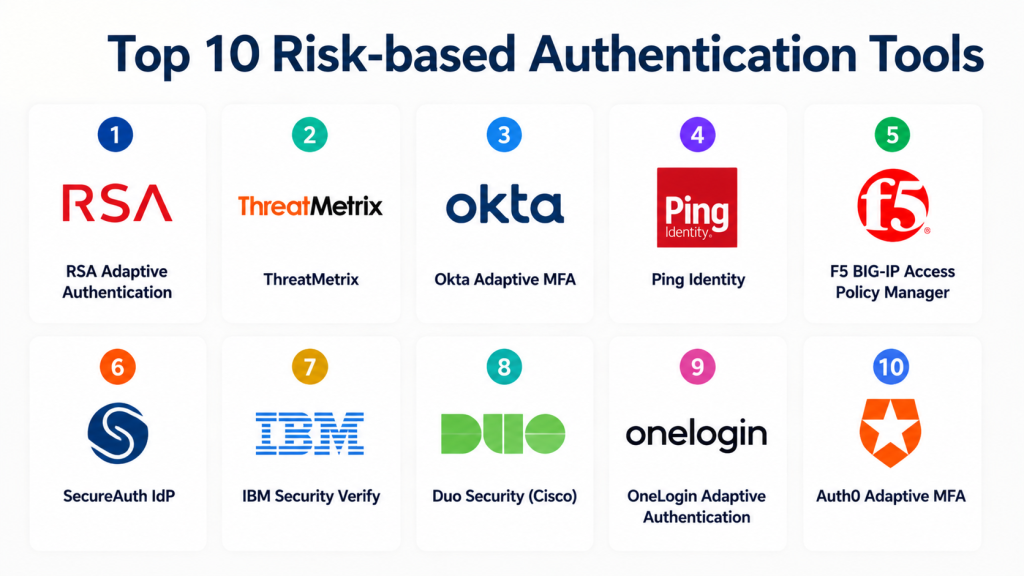
Top 10 Risk-based Authentication Tools
1- RSA Adaptive Authentication
Short description: RSA Adaptive Authentication provides real-time risk-based login and transaction verification for enterprises and financial institutions
Key Features
- Adaptive login risk scoring
- Behavioral and device analytics
- Integration with MFA and SSO
- Real-time fraud detection
- Session monitoring and continuous authentication
- Regulatory compliance tools
Pros
- Enterprise-grade security
- Flexible deployment options
- Strong analytics and reporting
Cons
- Complex setup for small teams
- Licensing cost may be high
Platforms / Deployment
- Web / Cloud / On-prem
Security & Compliance
- SOC 2, ISO 27001, GDPR, PCI DSS
Integrations & Ecosystem
Supports IAM, SSO, banking apps, and SaaS integrations
- REST APIs
- SDKs
- Webhooks
Support & Community
- Enterprise support tiers, documentation, active forums
2- ThreatMetrix
Short description: ThreatMetrix delivers digital identity intelligence and risk-based authentication for secure access and transaction verification
Key Features
- Device and location profiling
- Behavioral analytics
- AI-based fraud detection
- Transaction risk scoring
- Real-time adaptive MFA
Pros
- Excellent fraud prevention
- Real-time analysis and scoring
- Broad global coverage
Cons
- May require tuning for custom applications
- Premium pricing
Platforms / Deployment
- Web / Cloud
Security & Compliance
- SOC 2, ISO 27001, GDPR
Integrations & Ecosystem
- APIs, IAM, SSO, banking systems, e-commerce platforms
Support & Community
- Support tiers, onboarding documentation, knowledge base
3- Okta Adaptive MFA
Short description: Okta Adaptive MFA combines risk-based authentication with multi-factor capabilities for enterprise identity management
Key Features
- Adaptive login risk scoring
- Integration with SSO and IAM
- Push notifications, SMS, and email MFA
- Contextual and behavior-based access policies
- Analytics dashboard
Pros
- Easy integration with cloud apps
- User-friendly adaptive experience
- Scalable for large enterprises
Cons
- Some advanced analytics require premium plans
- Cloud-only deployment may limit on-prem use
Platforms / Deployment
- Web / Cloud
Security & Compliance
- SOC 2, ISO 27001, GDPR, PCI DSS
Integrations & Ecosystem
- SaaS apps, IAM platforms, REST APIs, SDKs
Support & Community
- Documentation, enterprise support, community forum
4- Ping Identity
Short description: Ping Identity provides risk-based adaptive authentication and identity security for enterprise applications
Key Features
- Adaptive login policies
- Device and behavioral analytics
- Integration with MFA and SSO
- Continuous session monitoring
- API-first design for integration
Pros
- Enterprise-grade scalability
- Strong SSO and IAM integrations
- Flexible policies for risk-based access
Cons
- Onboarding may be complex
- Premium plans for advanced features
Platforms / Deployment
- Web / Cloud / On-prem
Security & Compliance
- SOC 2, ISO 27001, GDPR
Integrations & Ecosystem
- IAM, SSO, SaaS apps, APIs, SDKs
Support & Community
- Documentation, support, community forums
5- F5 BIG-IP Access Policy Manager
Short description: F5 BIG-IP APM offers risk-based access control and adaptive authentication for enterprises
Key Features
- Dynamic access policies
- Device fingerprinting and location analysis
- MFA integration
- Session and transaction monitoring
- Detailed reporting
Pros
- Advanced network-level authentication
- Customizable policies
- High reliability
Cons
- Complex for small deployments
- Licensing cost
Platforms / Deployment
- Web / On-prem / Cloud
Security & Compliance
- SOC 2, ISO 27001, PCI DSS
Integrations & Ecosystem
- VPNs, IAM, SSO, APIs
Support & Community
- Enterprise support, documentation, community resources
6- SecureAuth IdP
Short description: SecureAuth IdP combines risk-based authentication with identity management and behavioral analytics
Key Features
- Adaptive MFA
- Risk scoring based on behavior
- Device recognition
- Integration with IAM and SSO
- Analytics dashboard
Pros
- Flexible deployment
- Strong adaptive capabilities
- Scalable
Cons
- Advanced analytics may require premium licenses
- Configuration complexity
Platforms / Deployment
- Web / Cloud / On-prem
Security & Compliance
- SOC 2, ISO 27001, GDPR
Integrations & Ecosystem
- SaaS, VPNs, IAM, APIs, SDKs
Support & Community
- Support tiers, documentation, knowledge base
7- IBM Security Verify
Short description: IBM Security Verify offers adaptive authentication and AI-driven risk scoring for enterprise identity security
Key Features
- AI-based risk scoring
- MFA and SSO integration
- Behavioral analytics
- Session monitoring
- Compliance reporting
Pros
- AI-driven insights
- Strong enterprise support
- Flexible deployment
Cons
- Complexity for small teams
- Premium cost
Platforms / Deployment
- Web / Cloud / On-prem
Security & Compliance
- SOC 2, ISO 27001, GDPR
Integrations & Ecosystem
- IAM, SSO, SaaS apps, REST APIs, SDKs
Support & Community
- Enterprise documentation, onboarding, support team
8- Duo Security (Cisco)
Short description: Duo Security provides risk-based authentication with device trust, MFA, and adaptive login controls
Key Features
- Device and location risk scoring
- Adaptive MFA
- Session and transaction monitoring
- Analytics and reporting dashboards
- Integration with SSO and IAM
Pros
- Easy deployment for cloud apps
- User-friendly interface
- Scalable for enterprise
Cons
- Some advanced analytics require premium
- Limited on-prem support
Platforms / Deployment
- Web / Cloud / Mobile
Security & Compliance
- SOC 2, ISO 27001, GDPR, PCI DSS
Integrations & Ecosystem
- IAM, SSO, cloud apps, APIs
Support & Community
- Documentation, tutorials, support, community forum
9- OneLogin Adaptive Authentication
Short description: OneLogin provides risk-based adaptive authentication integrated with SSO and identity management
Key Features
- Adaptive login policies
- Behavioral analytics
- MFA and SSO support
- Risk-based session management
- Analytics dashboards
Pros
- Simplified integration with enterprise apps
- User-friendly interface
- Scalable
Cons
- Premium plans required for advanced features
- Limited advanced reporting
Platforms / Deployment
- Web / Cloud
Security & Compliance
- SOC 2, ISO 27001, GDPR
Integrations & Ecosystem
- SaaS apps, IAM, SSO, APIs, SDKs
Support & Community
- Documentation, support, community forum
10- Auth0 Adaptive MFA
Short description: Auth0 provides risk-based authentication with adaptive MFA and AI-driven threat detection
Key Features
- Adaptive MFA
- AI-based risk scoring
- Behavioral analytics
- API-first integration
- Reporting and monitoring
Pros
- Developer-friendly
- Flexible API integrations
- Cloud scalability
Cons
- Some advanced features require premium
- May require developer setup
Platforms / Deployment
- Web / Cloud
Security & Compliance
- SOC 2, ISO 27001, GDPR
Integrations & Ecosystem
- SaaS apps, IAM, REST APIs, SDKs
Support & Community
- Developer portal, documentation, support tiers
Comparison Table
| Tool Name | Best For | Platform(s) Supported | Deployment | Standout Feature | Public Rating |
|---|---|---|---|---|---|
| RSA Adaptive Authentication | Enterprises & banks | Web | Cloud / On-prem | Risk scoring & behavior analytics | N/A |
| ThreatMetrix | Global merchants | Web | Cloud | Digital identity intelligence | N/A |
| Okta Adaptive MFA | Cloud & enterprise apps | Web / Mobile | Cloud | Adaptive MFA & SSO | N/A |
| Ping Identity | Enterprise IAM | Web | Cloud / On-prem | Policy-driven adaptive authentication | N/A |
| F5 BIG-IP APM | Network & enterprise | Web / On-prem | On-prem / Cloud | Dynamic access policies | N/A |
| SecureAuth IdP | Enterprises | Web / Mobile | Cloud / On-prem | Behavioral-based MFA | N/A |
| IBM Security Verify | Enterprise apps | Web | Cloud / On-prem | AI risk scoring | N/A |
| Duo Security | Cloud & enterprise | Web / Mobile | Cloud | Device trust & adaptive MFA | N/A |
| OneLogin Adaptive Authentication | SaaS & enterprise | Web | Cloud | Risk-based SSO & MFA | N/A |
| Auth0 Adaptive MFA | Developers & SaaS | Web / Mobile | Cloud | AI threat detection | N/A |
Evaluation & Scoring
| Tool Name | Core | Ease | Integrations | Security | Performance | Support | Value | Weighted Total |
|---|---|---|---|---|---|---|---|---|
| RSA Adaptive Authentication | 9 | 8 | 8 | 9 | 9 | 8 | 7 | 8.6 |
| ThreatMetrix | 8 | 8 | 8 | 9 | 8 | 7 | 7 | 8.0 |
| Okta Adaptive MFA | 8 | 9 | 8 | 9 | 8 | 8 | 7 | 8.3 |
| Ping Identity | 8 | 8 | 8 | 9 | 8 | 7 | 7 | 8.0 |
| F5 BIG-IP APM | 8 | 7 | 7 | 8 | 8 | 7 | 7 | 7.7 |
| SecureAuth IdP | 8 | 7 | 7 | 8 | 7 | 7 | 7 | 7.5 |
| IBM Security Verify | 8 | 7 | 7 | 8 | 8 | 7 | 7 | 7.7 |
| Duo Security | 8 | 8 | 7 | 8 | 8 | 7 | 7 | 7.8 |
| OneLogin Adaptive Authentication | 7 | 8 | 7 | 8 | 7 | 7 | 7 | 7.4 |
| Auth0 Adaptive MFA | 7 | 8 | 7 | 8 | 7 | 7 | 7 | 7.4 |
Weighted totals reflect comparative capabilities for risk-based authentication, adaptive MFA, and enterprise integration.
Which Risk-based Authentication Tool Is Right for You?
Solo / Freelancer
Use developer-friendly adaptive MFA tools with easy integration and sandbox environments
SMB
Select RBA solutions with pre-built policies, analytics, and cloud-based deployment
Mid-Market
Platforms with AI-driven risk scoring, behavioral analytics, and SSO integration are recommended
Enterprise
Focus on globally scalable, policy-driven, and AI-integrated RBA platforms with compliance reporting
Budget vs Premium
Budget-friendly options provide core adaptive authentication; premium options include AI, analytics, and enterprise-scale features
Feature Depth vs Ease of Use
Platforms with advanced analytics and AI provide higher security depth, while simpler solutions enable faster adoption
Integrations & Scalability
Choose tools supporting IAM, SSO, SaaS apps, and high-volume login scenarios
Security & Compliance Needs
Prioritize PCI DSS, SOC 2, ISO 27001, GDPR, and regulatory alignment
Frequently Asked Questions
1- What is risk-based authentication?
Risk-based authentication evaluates login or transaction risk and adjusts authentication requirements dynamically
2- How do RBA tools assess risk?
Tools analyze location, device, behavior, and login patterns, often using AI and machine learning
3- Can small businesses use RBA?
Yes, cloud-based RBA tools allow SMBs to secure apps without heavy infrastructure
4- Are RBA tools compatible with MFA?
Yes, they often integrate adaptive MFA, biometrics, push notifications, and SSO
5- How complex is implementation?
Complexity depends on existing IAM integration, API usage, and policy customization
6- Are RBA tools cloud or on-prem?
Most modern tools support cloud, some offer hybrid or on-prem deployment for enterprise flexibility
7- Can RBA reduce fraud?
Yes, adaptive risk scoring and behavioral analytics significantly reduce account takeovers and phishing attacks
8- Do these tools support mobile apps?
Yes, many RBA tools are mobile-ready with SDKs and push-based authentication
9- Are AI features common in RBA?
Yes, AI enables risk scoring, anomaly detection, and predictive authentication
10- What are alternatives to RBA tools?
Traditional MFA, static policies, or manual authentication workflows serve as alternatives
Conclusion
Risk-based Authentication Tools provide enterprises and SaaS providers with adaptive security, reducing fraud while preserving user experience. Choosing the right tool depends on your business size, integration needs, and compliance requirements. Next steps: evaluate platform features, test adaptive policies, and ensure compliance readiness for secure authentication
