Introduction
Open Banking Platforms are software frameworks that allow financial institutions to securely share customer data with third-party providers through APIs. They enable developers, fintech startups, and banks to build innovative financial products while ensuring compliance with data protection standards. With Open Banking, consumers can access consolidated financial insights, automated payments, lending solutions, and personalized financial advice in a secure and interoperable environment.
Open Banking is essential for businesses seeking to stay competitive in a digital-first financial ecosystem. The platforms help streamline banking operations, enhance customer experiences, and drive innovation across financial services.
Real-World Use Cases:
- Aggregating multi-bank account data for personal finance apps
- Enabling instant payments and automated invoice processing
- Streamlining lending decisions with AI-driven credit insights
- Powering digital wallets and fintech services with secure API access
- Improving fraud detection and compliance monitoring through centralized dashboards
Evaluation Criteria for Buyers:
- API breadth and developer tools
- Security and compliance certifications
- Integration capabilities with banking core systems
- Real-time data processing and reliability
- Ease of onboarding and support services
- AI and automation features
- Customization and scalability
- Pricing and value proposition
- Community and ecosystem strength
- Analytics and reporting capabilities
Best for: Banks, fintechs, digital wallets, developers building banking apps, and enterprises seeking regulatory-compliant integrations
Not ideal for: Small businesses with minimal banking integration needs, non-financial startups, or companies where basic banking APIs suffice without full Open Banking capabilities
Key Trends in Open Banking Platforms
- AI-powered insights for predictive analytics, personalized recommendations, and credit scoring
- Compliance-first approach with certifications like SOC 2, ISO 27001, GDPR, and PSD2
- Embedded finance enabling non-banks to offer banking-like services within apps
- Real-time payment support for instant and cross-border transactions
- Developer-centric design with SDKs, sandboxes, and detailed documentation
- Cloud-native deployment for scalability and reduced infrastructure overhead
- Interoperability with legacy banking systems, fintech tools, and open API standards
- Flexible pricing models including subscription, usage-based, and tiered options
- Security automation with anomaly detection and automated compliance reporting
- Multi-region support for global banking operations
How We Selected These Tools
- Reviewed market adoption and customer mindshare across regions
- Evaluated feature completeness including APIs, dashboards, automation, and AI modules
- Analyzed reliability and performance metrics such as uptime and scalability
- Assessed security posture including encryption, SSO, MFA, and compliance alignment
- Examined integration capabilities with banking cores, fintech apps, and ecosystems
- Considered customer fit across solo developers, SMBs, mid-market, and enterprise segments
- Prioritized platforms with transparent documentation and strong developer support
- Factored innovation and AI integration for forward-looking capabilities
- Balanced cost-effectiveness versus feature depth
- Ensured global applicability with multi-jurisdictional compliance support
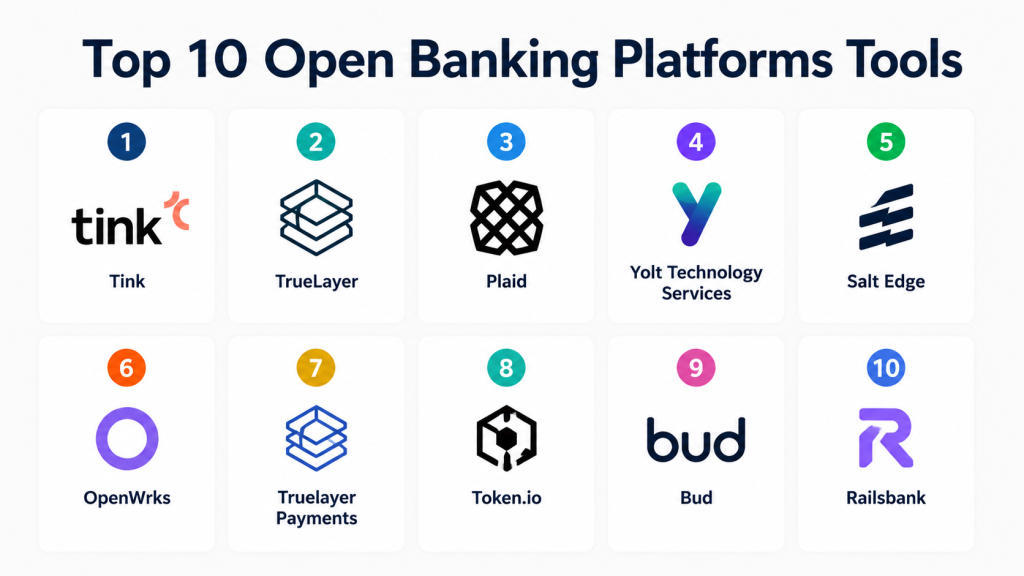
Top 10 Open Banking Platforms Tools
1- Tink
Short description: Tink provides a versatile Open Banking API platform for fintechs and banks, enabling account aggregation, payments, and data enrichment services
Key Features
- Multi-bank account aggregation
- Payment initiation APIs
- Data enrichment and categorization
- AI-driven financial insights
- Developer-friendly SDKs and sandbox
- Real-time transaction monitoring
- Compliance-ready APIs for PSD2 and GDPR
Pros
- Extensive European bank coverage
- Strong developer community and support
- Flexible API and integration options
Cons
- Pricing may be high for smaller fintechs
- Limited direct support in some regions
Platforms / Deployment
- Web / Cloud
Security & Compliance
- SOC 2, ISO 27001, GDPR, PSD2-compliant
Integrations & Ecosystem
Supports core banking systems, fintech apps, and payment processors
- REST APIs
- Webhooks
- SDKs
- AI integration
- Sandbox testing
Support & Community
- Dedicated support tiers, active developer forum, detailed documentation
2- TrueLayer
Short description: TrueLayer connects banks with apps using Open Banking APIs for payments, data access, and verification
Key Features
- Unified API for account info and payments
- KYC and identity verification modules
- Real-time account balance updates
- Sandbox and developer resources
- Multi-currency support
- Analytics dashboards
Pros
- Reliable European and UK bank integrations
- Strong API documentation and developer tools
Cons
- Limited coverage outside EU/UK
- Some advanced features require premium plan
Platforms / Deployment
- Web / Cloud
Security & Compliance
- SOC 2, ISO 27001, PSD2, GDPR
Integrations & Ecosystem
- Bank APIs, fintech apps, payment processors
- SDKs, Webhooks, reporting APIs
Support & Community
- Comprehensive onboarding, active developer community, tiered support
3- Plaid
Short description: Plaid enables developers to access banking data, build financial apps, and initiate payments across North America and Europe
Key Features
- Bank account linking
- Transaction data retrieval
- Payment initiation
- Identity verification
- Real-time balance and insights
- Multi-platform SDK support
Pros
- Broad US and EU bank coverage
- Developer-friendly SDKs and detailed documentation
Cons
- Pricing can be high for startups
- Limited coverage in APAC
Platforms / Deployment
- Web / Cloud
Security & Compliance
- SOC 2, ISO 27001, GDPR-compliant
Integrations & Ecosystem
- Fintech apps, accounting software, payment processors
- REST APIs, sandbox, SDKs, webhook integration
Support & Community
- Dedicated support, community forums, tutorials, knowledge base
4- Yolt Technology Services
Short description: Yolt Technology Services offers an Open Banking API platform for account aggregation, payments, and analytics for fintechs and banks
Key Features
- Account aggregation
- Payment initiation APIs
- Financial insights and categorization
- AI analytics integration
- Sandbox environment
- Multi-bank and multi-region coverage
Pros
- Strong European bank integration
- Scalable for mid-market fintechs
Cons
- Limited global presence outside Europe
- Some features require developer expertise
Platforms / Deployment
- Web / Cloud
Security & Compliance
- GDPR, PSD2, ISO 27001
Integrations & Ecosystem
- Core banking, fintech apps, reporting dashboards
- API, SDK, webhook, sandbox, analytics
Support & Community
- Onboarding support, documentation, developer community
5- Salt Edge
Short description: Salt Edge provides APIs for Open Banking data aggregation, payment initiation, and connectivity services for fintech and banking apps
Key Features
- Multi-bank account access
- Payment initiation
- Data enrichment and categorization
- Real-time analytics
- Multi-currency and multi-country support
Pros
- Extensive international bank coverage
- Compliance-focused, PSD2-ready
Cons
- May be complex for small developers
- Some advanced analytics are premium
Platforms / Deployment
- Web / Cloud
Security & Compliance
- SOC 2, ISO 27001, PSD2, GDPR
Integrations & Ecosystem
- Banking cores, fintech apps, payment networks
- REST APIs, webhooks, SDKs, sandbox testing
Support & Community
- Tiered support, developer portal, documentation
6- OpenWrks
Short description: OpenWrks delivers APIs for Open Banking account data, payments, and financial analysis for UK and EU fintech applications
Key Features
- Account aggregation
- Payment initiation
- Analytics dashboards
- Real-time balance updates
- Developer sandbox and testing
Pros
- Strong UK banking coverage
- Focus on fintech compliance
Cons
- Limited APAC coverage
- May need technical integration support
Platforms / Deployment
- Web / Cloud
Security & Compliance
- PSD2, ISO 27001, GDPR
Integrations & Ecosystem
- Core banking, fintech apps, reporting tools
- API, SDK, webhook, analytics modules
Support & Community
- Documentation, onboarding support, developer community
7- Truelayer Payments
Short description: Specialized platform focusing on secure Open Banking payments and verification APIs for developers and financial institutions
Key Features
- Payment initiation
- Real-time bank verification
- Recurring payments
- Sandbox environment
- Analytics dashboards
Pros
- Reliable payment APIs
- Strong fraud prevention modules
Cons
- Limited to supported regions
- Premium pricing for advanced features
Platforms / Deployment
- Web / Cloud
Security & Compliance
- PSD2, GDPR, SOC 2
Integrations & Ecosystem
- Fintech apps, payment processors, accounting software
- REST API, sandbox, SDKs
Support & Community
- Tiered support, community forums, tutorials
8- Token.io
Short description: Token.io provides APIs for instant bank payments, account linking, and financial data aggregation globally
Key Features
- Payment initiation
- Account aggregation
- Identity verification
- Multi-currency and cross-border payments
- Developer sandbox
Pros
- Strong real-time payment features
- Flexible API integration
Cons
- Coverage varies by region
- Some advanced analytics require premium plan
Platforms / Deployment
- Web / Cloud
Security & Compliance
- ISO 27001, PSD2, GDPR
Integrations & Ecosystem
- Core banking, fintech, payment networks
- SDKs, sandbox, APIs, webhook integration
Support & Community
- Documentation, developer support, tutorials
9- Bud
Short description: Bud offers Open Banking APIs for financial aggregation, lending, and AI-powered analytics for developers and banks
Key Features
- Account aggregation
- AI financial insights
- Lending support modules
- Payment initiation
- Analytics dashboards
Pros
- Strong AI analytics
- Flexible developer tools
Cons
- Limited coverage outside UK/EU
- Premium modules are expensive
Platforms / Deployment
- Web / Cloud
Security & Compliance
- GDPR, PSD2, ISO 27001
Integrations & Ecosystem
- Banking systems, fintech apps, analytics platforms
- API, SDK, sandbox, webhook integration
Support & Community
- Developer portal, onboarding, community forum
10- Railsbank
Short description: Railsbank is a global Open Banking platform offering banking-as-a-service APIs for payments, accounts, and compliance
Key Features
- Account creation and management
- Payment initiation
- Compliance and reporting modules
- Multi-currency support
- Developer sandbox and tools
Pros
- Global banking coverage
- Flexible API for fintechs and banks
Cons
- Complex onboarding for smaller teams
- Some premium features require advanced plan
Platforms / Deployment
- Web / Cloud
Security & Compliance
- PSD2, ISO 27001, SOC 2
Integrations & Ecosystem
- Banking systems, fintech apps, payment processors
- API, SDK, webhook, sandbox testing
Support & Community
- Developer support, documentation, community forums
Comparison Table
| Tool Name | Best For | Platform(s) Supported | Deployment | Standout Feature | Public Rating |
|---|---|---|---|---|---|
| Tink | European banks & fintechs | Web | Cloud | AI-driven insights | N/A |
| TrueLayer | UK/EU fintechs | Web | Cloud | Unified API | N/A |
| Plaid | NA/EU fintechs | Web | Cloud | Bank coverage & SDKs | N/A |
| Yolt | EU fintechs | Web | Cloud | Analytics dashboards | N/A |
| Salt Edge | International | Web | Cloud | Multi-bank global coverage | N/A |
| OpenWrks | UK/EU fintechs | Web | Cloud | Financial analysis dashboards | N/A |
| Truelayer Payments | Payment-centric fintechs | Web | Cloud | Secure payment APIs | N/A |
| Token.io | Global payment solutions | Web | Cloud | Real-time bank payments | N/A |
| Bud | UK/EU AI-powered fintechs | Web | Cloud | AI financial insights | N/A |
| Railsbank | Global banks & fintechs | Web | Cloud | Banking-as-a-service APIs | N/A |
Evaluation & Scoring
| Tool Name | Core | Ease | Integrations | Security | Performance | Support | Value | Weighted Total |
|---|---|---|---|---|---|---|---|---|
| Tink | 9 | 8 | 8 | 9 | 9 | 8 | 7 | 8.6 |
| TrueLayer | 8 | 8 | 8 | 9 | 8 | 8 | 7 | 8.3 |
| Plaid | 9 | 8 | 7 | 8 | 9 | 8 | 7 | 8.4 |
| Yolt | 8 | 7 | 7 | 8 | 8 | 7 | 7 | 7.7 |
| Salt Edge | 8 | 7 | 8 | 8 | 8 | 7 | 7 | 7.9 |
| OpenWrks | 7 | 7 | 7 | 8 | 7 | 7 | 7 | 7.4 |
| Truelayer Payments | 8 | 8 | 7 | 9 | 8 | 7 | 7 | 7.9 |
| Token.io | 8 | 7 | 7 | 8 | 8 | 7 | 7 | 7.7 |
| Bud | 8 | 7 | 7 | 8 | 7 | 7 | 7 | 7.5 |
| Railsbank | 8 | 7 | 8 | 8 | 8 | 7 | 7 | 7.9 |
Weighted totals provide a comparative perspective. Higher scores indicate broader capabilities and reliability for enterprise and fintech usage.
Which Open Banking Platforms Tool Is Right for You?
Solo / Freelancer
Use Plaid or Tink sandbox for experimentation and lightweight integration
SMB
TrueLayer or Salt Edge provide robust banking coverage with manageable pricing
Mid-Market
Yolt or Token.io for scalable analytics, payment features, and cross-border capabilities
Enterprise
Railsbank and Bud offer global reach, advanced AI insights, and compliance-ready APIs
Budget vs Premium
Budget-focused: OpenWrks, Yolt
Premium/high-capability: Tink, Plaid, Railsbank, Token.io
Feature Depth vs Ease of Use
High feature depth: Tink, Plaid, Bud
Easier onboarding: TrueLayer, OpenWrks
Integrations & Scalability
Token.io, Railsbank, and Salt Edge provide strong multi-region API connectivity for scaling
Security & Compliance Needs
Enterprises and regulated fintechs should prioritize Tink, TrueLayer, Truelayer Payments for PSD2, GDPR, SOC 2 alignment
Frequently Asked Questions
1- What is Open Banking?
Open Banking is a framework where banks securely share customer data with authorized third-party providers via APIs, enabling innovative financial services
2- How do Open Banking Platforms handle security?
They typically employ encryption, SSO, MFA, RBAC, and comply with PSD2, SOC 2, ISO 27001, and GDPR where applicable
3- Are these platforms global?
Coverage varies. Plaid focuses on NA/EU, Tink on Europe, Railsbank and Token.io provide broader global reach
4- Can SMEs use Open Banking Platforms?
Yes, SMBs can leverage simpler APIs like TrueLayer or OpenWrks for account aggregation and payments
5- How much do these platforms cost?
Pricing models vary: subscription, usage-based, or tiered. Costs depend on business size and region
6- How difficult is integration?
Platforms offer SDKs, sandbox environments, and APIs. Ease depends on technical expertise and platform choice
7- Are AI features common?
Yes, AI is increasingly integrated for analytics, credit scoring, financial insights, and automation
8- What industries benefit most?
Fintech, banking, lending, digital wallets, accounting software, and payment services gain the most
9- Can I switch platforms easily?
Switching requires data migration, API changes, and onboarding; platforms with standardized APIs make this easier
10- Alternatives to Open Banking Platforms?
Manual banking integrations, spreadsheets, or basic banking APIs suffice for small businesses or low-complexity use cases
Conclusion
Open Banking Platforms are essential for digital banking innovation, offering secure API connectivity, payments, analytics, and AI insights. Choosing the right platform depends on company size, integration needs, geographic coverage, and budget. Solo developers may prefer Plaid or Tink sandboxes, SMBs can leverage TrueLayer or Salt Edge, and enterprises benefit from Railsbank or Bud’s advanced capabilities. Evaluate based on security, compliance, integrations, and feature depth. Next steps: shortlist run a pilot with key APIs, and validate security, scalability, and integration readiness before full deployment
