Introduction
Relevance Evaluation Toolkits are platforms and frameworks that measure and validate the quality, accuracy, and relevance of AI model outputs, particularly in search engines, recommendation systems, and NLP applications. They help organizations assess whether their AI and ML models are delivering results that align with user intent and business objectives.
As AI-driven search and recommendation systems become widespread, relevance evaluation is essential for optimizing performance, improving user experience, and maintaining trust in AI outputs.
Real-world use cases include
- Evaluating search engine query results for accuracy
- Testing AI recommendation engines for relevance
- Benchmarking NLP models for semantic understanding
- Measuring AI outputs for marketing or eCommerce personalization
- Validating relevance of AI-generated content and responses
What buyers should evaluate
- Support for multiple evaluation metrics (precision, recall, NDCG, MRR)
- Multi-modal evaluation for text, images, and multi-media results
- Integration with AI/ML pipelines
- Automated and reproducible testing workflows
- Scalability for large datasets
- Deployment flexibility (cloud, on-prem, hybrid)
- Visualization and analytics for evaluation results
- Reproducibility and versioning of experiments
- Benchmarking against ground truth or labeled datasets
- Cost and licensing model
Best for: Data scientists, ML engineers, AI research teams, enterprises running search, recommendation, or content generation models
Not ideal for: Teams without structured datasets or small-scale AI experiments
Key Trends in Relevance Evaluation Toolkits
- Increased adoption of standardized evaluation metrics for AI outputs
- Support for multi-modal evaluation including text, images, and video
- Integration with MLOps pipelines for continuous relevance monitoring
- AI-assisted automatic evaluation for large datasets
- Cloud-native platforms for scalable evaluation
- Benchmarking and reporting dashboards for enterprise adoption
- Low-code SDKs for easier experiment setup
- Versioned evaluation workflows for reproducibility
- Support for both online and offline evaluation
- Open-source frameworks gaining adoption for research and experimentation
How We Selected These Tools
- Coverage of key evaluation metrics
- Multi-modal support for text, images, and video
- Integration with AI/ML pipelines
- Automation of evaluation workflows
- Scalability for enterprise datasets
- Visualization and reporting capabilities
- Reproducibility and experiment versioning
- Security and access controls
- Open-source and vendor adoption
- Practical applicability for search, recommendation, and content evaluation
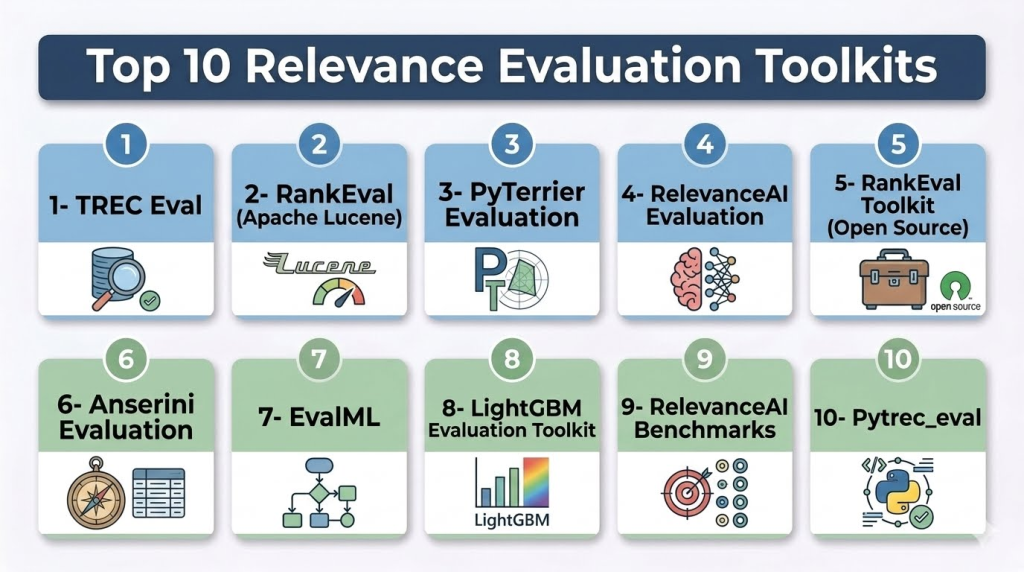
Top 10 Relevance Evaluation Toolkits
1- TREC Eval
Short description: TREC Eval is a classic evaluation toolkit for information retrieval, used to assess search engine relevance against labeled datasets.
Key Features
- Standard IR metrics: precision, recall, MAP, NDCG
- Supports multiple datasets and query types
- Script-based evaluation
- Benchmarking capabilities
- Integration with search engine outputs
- Open-source framework
- Experiment reproducibility
Pros
- Widely adopted in IR research
- Simple and scriptable
- Supports multiple evaluation metrics
Cons
- CLI-based, less user-friendly
- Limited visualization
Platforms / Deployment
- Cloud / Self-hosted
Security & Compliance
- Not publicly stated
Integrations & Ecosystem
- Python scripts, REST outputs
- Search engine integration
- IR research pipelines
Support & Community
Open-source community and academic usage
2- RankEval (Apache Lucene)
Short description: RankEval is an evaluation toolkit integrated with Lucene for measuring search relevance in enterprise search systems.
Key Features
- Relevance evaluation metrics (NDCG, precision, recall)
- Integration with Lucene search engine
- Benchmarking and comparison
- Scriptable evaluation
- Multi-query evaluation
- Automated testing workflows
- Dataset management
Pros
- Tight Lucene integration
- Supports batch evaluation
- Scalable for large queries
Cons
- Limited multi-modal support
- Requires technical knowledge
Platforms / Deployment
- Cloud / Self-hosted
Security & Compliance
- Not publicly stated
Integrations & Ecosystem
- Lucene, Solr, Elasticsearch
- Python and Java integration
- ML pipeline output evaluation
Support & Community
Open-source community
3- PyTerrier Evaluation
Short description: PyTerrier Evaluation provides Python-based relevance evaluation for IR and search systems using modern ML pipelines.
Key Features
- Python SDK for evaluation
- Standard IR metrics
- Integration with PyTerrier pipelines
- Supports large datasets
- Multi-query evaluation
- Reproducible experiments
- Visualization of results
Pros
- Python-native and developer-friendly
- Supports scalable evaluation
- Integration with modern ML pipelines
Cons
- Less known outside IR research
- Limited multi-modal support
Platforms / Deployment
- Cloud / Self-hosted
Security & Compliance
- Not publicly stated
Integrations & Ecosystem
- PyTerrier pipelines
- Python ML frameworks
- Benchmark datasets
Support & Community
Active open-source community
4- RelevanceAI Evaluation
Short description: RelevanceAI Evaluation is a cloud-native evaluation platform for semantic search and AI recommendation systems.
Key Features
- Multi-modal relevance evaluation
- Semantic and vector-based metrics
- Integration with ML pipelines
- Analytics dashboards
- Reproducible evaluation workflows
- API and SDK support
- Cloud deployment
Pros
- Scalable for enterprise datasets
- Cloud-managed and accessible
- Multi-modal support
Cons
- Cloud-only
- Enterprise pricing
Platforms / Deployment
- Cloud
Security & Compliance
- Not publicly stated
Integrations & Ecosystem
- Python SDK, REST API
- ML pipeline integration
- Vector embedding evaluation
Support & Community
Vendor support with documentation
5- RankEval Toolkit (Open Source)
Short description: Open-source IR evaluation toolkit providing metrics and evaluation workflows for search engines.
Key Features
- Standard metrics: NDCG, precision, recall, MAP
- Supports batch evaluation
- Scriptable experiments
- Reproducible pipelines
- Integration with search engine outputs
- Open-source framework
- Analytics scripts
Pros
- Open-source and flexible
- Supports multiple evaluation metrics
- Scalable for large datasets
Cons
- CLI-based
- Limited visualization
Platforms / Deployment
- Cloud / Self-hosted
Security & Compliance
- Not publicly stated
Integrations & Ecosystem
- Python, Java, REST outputs
- Search engine pipelines
- ML evaluation pipelines
Support & Community
Open-source community
6- Anserini Evaluation
Short description: Anserini Evaluation is a Java-based IR evaluation toolkit supporting research and enterprise search benchmarking.
Key Features
- Standard IR metrics
- Integration with Anserini search pipelines
- Script-based evaluation
- Batch query evaluation
- Benchmark datasets support
- Visualization scripts
- Automated testing workflows
Pros
- Integrated with Anserini
- Java-native
- Supports reproducible evaluation
Cons
- Less Python support
- CLI-heavy
Platforms / Deployment
- Cloud / Self-hosted
Security & Compliance
- Not publicly stated
Integrations & Ecosystem
- Java, Lucene
- Search engine integration
- ML pipelines
Support & Community
Open-source academic community
7- EvalML
Short description: EvalML is a Python library for ML evaluation, including relevance and ranking metrics for predictive models.
Key Features
- Supports relevance metrics for classification and ranking
- Python SDK
- Integration with ML pipelines
- Multi-metric evaluation
- Reproducible experiments
- Analytics and visualization
- API integration
Pros
- Python-native and flexible
- Scalable for ML models
- Integrates with pipelines
Cons
- Limited multi-modal evaluation
- Cloud deployment dependent on user
Platforms / Deployment
- Cloud / Self-hosted
Security & Compliance
- Not publicly stated
Integrations & Ecosystem
- Python ML frameworks
- REST API pipelines
- Experiment tracking tools
Support & Community
Open-source community
8- LightGBM Evaluation Toolkit
Short description: Toolkit for evaluating ranking and relevance in tree-based ML models and recommendation systems.
Key Features
- Supports NDCG, MAP, precision, recall
- Python SDK integration
- Batch evaluation
- Multi-metric reporting
- Reproducible experiments
- Visualization scripts
- Benchmark datasets
Pros
- Integrated with LightGBM models
- Python SDK
- Scalable for large datasets
Cons
- Limited multi-modal support
- Specific to tree-based models
Platforms / Deployment
- Cloud / Self-hosted
Security & Compliance
- Not publicly stated
Integrations & Ecosystem
- Python, LightGBM, ML pipelines
- Experiment tracking
- Reporting dashboards
Support & Community
Open-source and active community
9- RelevanceAI Benchmarks
Short description: Cloud-native platform for semantic search and AI recommendation evaluation at scale.
Key Features
- Multi-modal metrics
- Semantic relevance evaluation
- Integration with embeddings and vector search
- Analytics dashboards
- API and SDK support
- Automated evaluation workflows
- Cloud deployment
Pros
- Scalable cloud-native solution
- Multi-modal and vector evaluation
- Enterprise-friendly dashboards
Cons
- Cloud-only
- Enterprise pricing
Platforms / Deployment
- Cloud
Security & Compliance
- Not publicly stated
Integrations & Ecosystem
- Python SDK, REST API
- AI embeddings pipelines
- ML pipeline integration
Support & Community
Vendor support
10- Pytrec_eval
Short description: Pytrec_eval is a Python evaluation toolkit for IR metrics, widely used in research and enterprise search benchmarking.
Key Features
- Standard IR metrics (precision, recall, NDCG, MAP)
- Python integration
- Scriptable evaluation workflows
- Reproducible experiments
- Supports multiple queries and datasets
- Benchmarking and comparison
- Open-source framework
Pros
- Python-native
- Flexible and scriptable
- Open-source and reproducible
Cons
- CLI-based interface
- Limited multi-modal support
Platforms / Deployment
- Cloud / Self-hosted
Security & Compliance
- Not publicly stated
Integrations & Ecosystem
- Python ML pipelines
- IR search engine integration
- Experiment management
Support & Community
Open-source community
Comparison Table
| Tool | Best For | Platform(s) | Deployment | Standout Feature | Public Rating |
|---|---|---|---|---|---|
| TREC Eval | IR benchmarking | Cloud/Self-hosted | Hybrid | Standard IR metrics | N/A |
| RankEval (Lucene) | Lucene search | Cloud/Self-hosted | Hybrid | Tight Lucene integration | N/A |
| PyTerrier Eval | Python IR pipelines | Cloud/Self-hosted | Hybrid | Python-native | N/A |
| RelevanceAI Evaluation | Semantic search | Cloud | Cloud | Multi-modal evaluation | N/A |
| RankEval Toolkit | Open-source IR | Cloud/Self-hosted | Hybrid | Scriptable workflows | N/A |
| Anserini Eval | Java IR pipelines | Cloud/Self-hosted | Hybrid | Benchmark datasets | N/A |
| EvalML | ML model evaluation | Cloud/Self-hosted | Hybrid | Multi-metric evaluation | N/A |
| LightGBM Eval | Tree-based ML | Cloud/Self-hosted | Hybrid | Ranking metrics | N/A |
| RelevanceAI Benchmarks | Semantic AI | Cloud | Cloud | Vector search evaluation | N/A |
| Pytrec_eval | Python IR | Cloud/Self-hosted | Hybrid | Standard IR metrics | N/A |
Evaluation & Scoring of Relevance Evaluation Toolkits
| Tool | Core (25%) | Ease (15%) | Integrations (15%) | Security (10%) | Performance (10%) | Support (10%) | Value (15%) | Weighted Total |
|---|---|---|---|---|---|---|---|---|
| TREC Eval | 9 | 7 | 8 | 7 | 8 | 7 | 8 | 7.9 |
| RankEval (Lucene) | 8 | 7 | 8 | 7 | 8 | 7 | 8 | 7.7 |
| PyTerrier Eval | 8 | 8 | 8 | 7 | 8 | 7 | 8 | 7.9 |
| RelevanceAI Eval | 8 | 8 | 8 | 7 | 8 | 7 | 8 | 7.9 |
| RankEval Toolkit | 8 | 7 | 7 | 7 | 8 | 7 | 7 | 7.5 |
| Anserini Eval | 8 | 7 | 7 | 7 | 8 | 7 | 7 | 7.5 |
| EvalML | 8 | 8 | 7 | 7 | 8 | 7 | 8 | 7.7 |
| LightGBM Eval | 8 | 7 | 7 | 7 | 8 | 7 | 7 | 7.5 |
| RelevanceAI Benchmarks | 8 | 8 | 8 | 7 | 8 | 7 | 8 | 7.9 |
| Pytrec_eval | 8 | 7 | 7 | 7 | 8 | 7 | 7 | 7.5 |
Which Relevance Evaluation Toolkit Is Right for You?
Solo / Freelancer
- Pytrec_eval, PyTerrier Eval
Python-native, lightweight, scriptable evaluation
SMB
- RelevanceAI Evaluation, EvalML
Cloud or hybrid solutions with dashboards
Mid-Market
- RankEval (Lucene), LightGBM Eval, Anserini Eval
Enterprise-ready pipelines and reproducible experiments
Enterprise
- RelevanceAI Benchmarks, TREC Eval, RankEval Toolkit
Scalable evaluation, multi-query, multi-modal
Budget vs Premium
- Budget: Pytrec_eval, PyTerrier Eval
- Premium: RelevanceAI Evaluation, RelevanceAI Benchmarks
Feature Depth vs Ease of Use
- Ease: PyTerrier Eval, EvalML
- Depth: RankEval (Lucene), TREC Eval
Integrations & Scalability
- Best: RelevanceAI Evaluation, RankEval (Lucene), RelevanceAI Benchmarks
Security & Compliance Needs
- Enterprise-ready: RelevanceAI Evaluation, TREC Eval, RankEval (Lucene)
Frequently Asked Questions
1- What are relevance evaluation toolkits?
Platforms to measure AI model output quality, accuracy, and relevance.
2- Do they support multi-modal AI outputs?
Some platforms support text, images, and vector embeddings.
3- Can these toolkits integrate with ML pipelines?
Yes, they offer Python SDKs, REST APIs, and experiment workflows.
4- Are there open-source options?
Yes, TREC Eval, PyTerrier Eval, RankEval Toolkit, and Pytrec_eval are open-source.
5- Can they scale for enterprise datasets?
Yes, cloud-native and hybrid platforms handle large-scale evaluations.
6- How do they measure relevance?
Using metrics like NDCG, precision, recall, MAP, and MRR.
7- Are these tools cloud-only?
Some are cloud-native; many support hybrid or self-hosted deployment.
8- Which industries benefit most?
Search engines, eCommerce, content recommendation, AI research, and NLP applications.
9- Can they evaluate AI-generated content?
Yes, they are used to benchmark generated outputs against labeled datasets.
10- How should I choose the right toolkit?
Consider deployment, metric support, model type, integration needs, and dataset scale.
Conclusion
Relevance Evaluation Toolkits are essential for ensuring AI outputs and search results are accurate, relevant, and aligned with user intent. They provide metrics, reproducibility, and benchmarking for optimizing AI and recommendation systems.
Selecting the right toolkit depends on model type, deployment preferences, and dataset scale. A practical approach is to shortlist run pilot evaluations, and validate metrics, reproducibility, and integration before enterprise deployment.
