Introduction
Confidential Computing Platforms are solutions that protect data in use by encrypting it during processing, ensuring sensitive information remains secure even while being analyzed or processed by AI, cloud, or enterprise applications. These platforms provide hardware-based Trusted Execution Environments (TEEs) and software-level controls to protect data confidentiality and integrity.
As enterprises increasingly process sensitive data in cloud or multi-party environments, Confidential Computing is critical for regulatory compliance, privacy, and risk reduction while enabling analytics and AI on sensitive datasets.
Real-world use cases include
- Secure multi-party computation in finance and healthcare
- Cloud-based AI and ML on sensitive datasets
- Protecting intellectual property and trade secrets
- Regulatory compliance with GDPR, HIPAA, and sector-specific rules
- Enabling collaboration across organizations without exposing raw data
What buyers should evaluate
- Hardware and software TEE support (Intel SGX, AMD SEV, ARM TrustZone)
- Encryption and key management
- Integration with cloud providers and AI/ML platforms
- Scalability for enterprise workloads
- Monitoring and auditing capabilities
- Deployment flexibility (cloud, on-prem, hybrid)
- Performance and latency overhead
- Multi-party and federated computation support
- Security and compliance certifications
- Cost and licensing model
Best for: Enterprises handling sensitive or regulated data, AI teams processing confidential datasets, cloud architects, and organizations seeking secure collaboration
Not ideal for: Teams with non-sensitive workloads or small experimental deployments
Key Trends in Confidential Computing Platforms
- Adoption of Trusted Execution Environments (TEEs) across cloud providers
- Integration with AI/ML pipelines for privacy-preserving model training
- Support for hybrid and multi-cloud confidential computing
- Hardware acceleration for performance optimization
- Multi-party computation and federated learning support
- Enhanced monitoring, auditing, and compliance reporting
- Low-code SDKs for secure development
- Standardization of confidential computing protocols and frameworks
- Enterprise-ready key management and cryptography
- Increasing focus on secure collaboration across organizations
How We Selected These Tools
- Support for multiple TEEs and confidential computing standards
- Integration with cloud providers and AI/ML pipelines
- Scalability for enterprise workloads
- Monitoring, auditing, and reporting capabilities
- Performance and minimal latency overhead
- Security certifications (SOC 2, ISO 27001, GDPR, HIPAA)
- Deployment flexibility (cloud, on-prem, hybrid)
- Multi-party and federated computation support
- Usability for developers and security teams
- Vendor reputation and adoption in enterprise environments
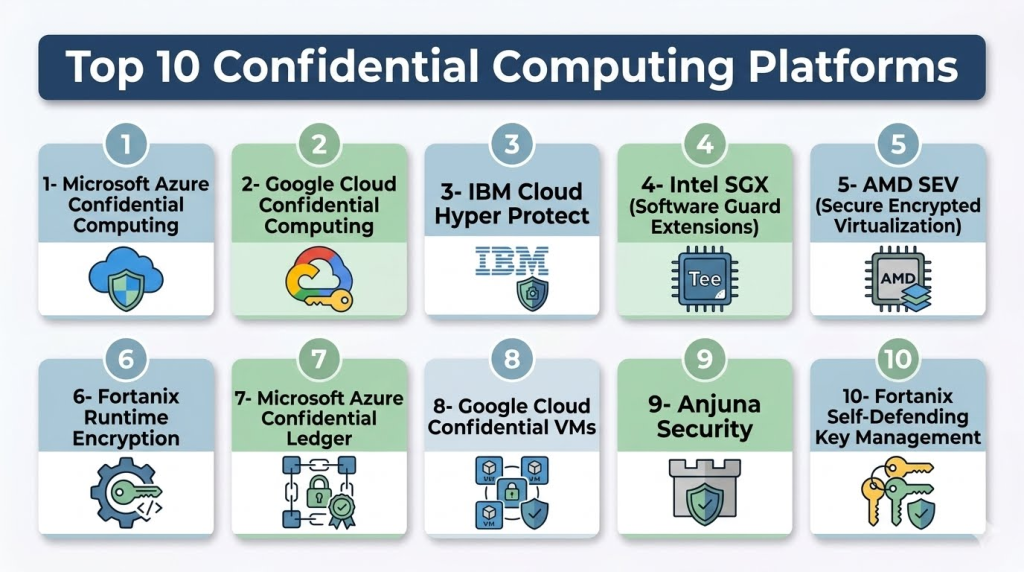
Top 10 Confidential Computing Platforms
1- Microsoft Azure Confidential Computing
Short description: Azure Confidential Computing provides hardware-enforced data protection for cloud workloads, enabling secure processing of sensitive data.
Key Features
- Trusted Execution Environments (Intel SGX)
- Hardware-enforced encryption for data in use
- Integration with Azure AI and ML pipelines
- Key management and secure enclaves
- Monitoring and auditing dashboards
- API and SDK support
- Hybrid cloud deployment
Pros
- Fully managed cloud platform
- Strong enterprise integration
- Supports confidential AI workloads
Cons
- Limited to Azure ecosystem
- Cloud-only deployment
Platforms / Deployment
- Cloud
Security & Compliance
- Intel SGX, encryption, RBAC
- ISO 27001, SOC 2, GDPR
Integrations & Ecosystem
- Azure AI, ML, and storage
- APIs and SDKs for developers
- Monitoring and logging services
Support & Community
Enterprise support with Azure documentation
2- Google Cloud Confidential Computing
Short description: Google Cloud Confidential Computing protects data in use with AMD SEV and TEE for secure cloud processing.
Key Features
- Trusted Execution Environments (AMD SEV)
- Secure enclaves for data in use
- Integration with Vertex AI and BigQuery
- API and SDK support
- Monitoring and auditing
- Multi-tenant isolation
- Performance optimization
Pros
- Cloud-native and fully managed
- Supports AI/ML workloads
- Enterprise-grade security
Cons
- Limited on-prem support
- Cloud provider lock-in
Platforms / Deployment
- Cloud
Security & Compliance
- AMD SEV, encryption, RBAC
- ISO 27001, SOC 2, GDPR, HIPAA
Integrations & Ecosystem
- Google Vertex AI, BigQuery
- Python SDK, REST APIs
- Cloud monitoring and logging
Support & Community
Google enterprise support and documentation
3- IBM Cloud Hyper Protect
Short description: IBM Hyper Protect provides confidential computing and secure enclaves for workloads with sensitive or regulated data.
Key Features
- Trusted Execution Environments (IBM Secure Enclaves)
- Hardware-based data encryption
- Key management and secure boot
- Integration with IBM Cloud AI/ML
- Monitoring and compliance dashboards
- Multi-cloud and hybrid support
- API integration
Pros
- Enterprise-grade security
- Supports AI and regulated workloads
- Hybrid cloud flexibility
Cons
- Higher complexity for deployment
- Enterprise pricing
Platforms / Deployment
- Cloud / Hybrid
Security & Compliance
- Encryption, RBAC, audit logs
- SOC 2, ISO 27001, HIPAA
Integrations & Ecosystem
- IBM Watson AI, ML pipelines
- REST APIs, Python SDKs
- Cloud storage and key management
Support & Community
Enterprise support with technical documentation
4- Intel SGX (Software Guard Extensions)
Short description: Intel SGX provides hardware-level TEEs for confidential computing and secure application execution.
Key Features
- Hardware-enforced secure enclaves
- Key management and encryption
- Integration with AI and ML pipelines
- APIs for application development
- Memory isolation for data protection
- Performance monitoring tools
- Multi-party computation support
Pros
- Strong hardware-level security
- Broad industry adoption
- Supports confidential AI workloads
Cons
- Requires compatible Intel hardware
- Developer expertise required
Platforms / Deployment
- On-prem / Cloud
Security & Compliance
- Trusted Execution Environment (TEE)
- Not publicly stated
Integrations & Ecosystem
- Python, C/C++ SDKs
- ML and AI frameworks
- Cloud providers supporting Intel SGX
Support & Community
Intel enterprise support and developer community
5- AMD SEV (Secure Encrypted Virtualization)
Short description: AMD SEV enables hardware-based memory encryption for virtualized workloads to ensure data remains secure in use.
Key Features
- Encrypted virtual machine memory
- TEE support for cloud workloads
- Integration with cloud providers
- Key management
- Performance optimization
- Multi-tenant isolation
- API support
Pros
- Hardware-enforced security
- Low overhead encryption
- Supports multi-cloud deployment
Cons
- Requires AMD EPYC hardware
- Limited developer tooling
Platforms / Deployment
- On-prem / Cloud
Security & Compliance
- Memory encryption, RBAC
- Not publicly stated
Integrations & Ecosystem
- Cloud providers (Google Cloud, Azure, AWS)
- APIs and SDKs for AI/ML integration
Support & Community
Vendor support and enterprise community
6- Fortanix Runtime Encryption
Short description: Fortanix provides confidential computing and runtime encryption for protecting data in use across cloud and on-prem environments.
Key Features
- Runtime encryption of data in memory
- Secure enclaves (Intel SGX)
- Key management and secure boot
- Integration with AI/ML pipelines
- Auditing and monitoring dashboards
- Multi-cloud support
- API and SDK integration
Pros
- Enterprise-ready security
- Hybrid and cloud support
- AI/ML integration
Cons
- Complexity in deployment
- Costly for smaller teams
Platforms / Deployment
- Cloud / On-prem / Hybrid
Security & Compliance
- Encryption, RBAC, audit logs
- SOC 2, ISO 27001
Integrations & Ecosystem
- Python SDK, REST APIs
- ML frameworks integration
- Cloud services
Support & Community
Vendor enterprise support
7- Microsoft Azure Confidential Ledger
Short description: Azure Confidential Ledger provides tamper-proof and confidential storage for sensitive application and AI data.
Key Features
- Hardware-enforced encryption
- Immutable ledger storage
- Integration with Azure AI and ML pipelines
- Monitoring and auditing dashboards
- API access
- Secure key management
- Compliance reporting
Pros
- Enterprise-grade security
- Cloud-managed and scalable
- Auditing and compliance features
Cons
- Limited to Azure ecosystem
- Cloud-only deployment
Platforms / Deployment
- Cloud
Security & Compliance
- TEE, encryption, RBAC
- SOC 2, ISO 27001, GDPR
Integrations & Ecosystem
- Azure AI, ML, storage
- Python SDK, REST APIs
- Logging and monitoring
Support & Community
Enterprise Azure support
8- Google Cloud Confidential VMs
Short description: Google Cloud Confidential VMs provide hardware-enforced memory encryption to secure cloud workloads in use.
Key Features
- AMD SEV-based encryption
- Integration with AI/ML pipelines
- Monitoring and logging
- API and SDK support
- Multi-tenant security
- Performance optimization
- Cloud-native deployment
Pros
- Fully managed and scalable
- Supports AI workloads
- Enterprise-grade security
Cons
- GCP ecosystem lock-in
- Cloud-only
Platforms / Deployment
- Cloud
Security & Compliance
- TEE, memory encryption, RBAC
- ISO 27001, SOC 2, GDPR
Integrations & Ecosystem
- Vertex AI, BigQuery
- Python SDK, REST API
- ML pipelines
Support & Community
Google enterprise support
9- Anjuna Security
Short description: Anjuna provides confidential computing for cloud and on-prem environments, protecting sensitive workloads in use.
Key Features
- Secure enclaves (Intel SGX)
- Runtime encryption
- Key management
- API and SDK support
- Auditing and monitoring
- Hybrid cloud support
- Integration with AI/ML pipelines
Pros
- Hardware-level security
- Multi-cloud deployment
- Enterprise-ready
Cons
- Requires technical setup
- Licensing costs
Platforms / Deployment
- Cloud / On-prem / Hybrid
Security & Compliance
- TEE, encryption, audit logs
- Not publicly stated
Integrations & Ecosystem
- Python SDKs, REST APIs
- ML frameworks
- Cloud storage and key management
Support & Community
Enterprise vendor support
10- Fortanix Self-Defending Key Management
Short description: Fortanix SDK for confidential computing integrates encryption, key management, and runtime security for AI and cloud workloads.
Key Features
- Hardware-enforced runtime encryption
- Key management and secure boot
- TEE support (Intel SGX)
- Auditing and compliance reporting
- API and SDK support
- Integration with AI/ML pipelines
- Multi-cloud deployment
Pros
- Enterprise-grade confidentiality
- Scalable across cloud and hybrid
- Strong monitoring and auditing
Cons
- Deployment complexity
- Costly for small workloads
Platforms / Deployment
- Cloud / On-prem / Hybrid
Security & Compliance
- TEE, encryption, RBAC
- SOC 2, ISO 27001
Integrations & Ecosystem
- ML frameworks
- Python SDK, REST APIs
- Cloud services
Support & Community
Enterprise support and documentation
Comparison Table
| Tool | Best For | Platform(s) | Deployment | Standout Feature | Public Rating |
|---|---|---|---|---|---|
| Azure Confidential Computing | Enterprise cloud | Cloud | Cloud | Intel SGX TEE | N/A |
| Google Confidential Computing | Cloud AI | Cloud | Cloud | AMD SEV TEE | N/A |
| IBM Hyper Protect | Enterprise AI | Cloud/Hybrid | Hybrid | Secure enclaves | N/A |
| Intel SGX | Hardware-level | On-prem/Cloud | Hybrid | Secure enclaves | N/A |
| AMD SEV | Virtualized workloads | On-prem/Cloud | Hybrid | Memory encryption | N/A |
| Fortanix Runtime Encryption | Multi-cloud AI | Cloud/Hybrid | Hybrid | Runtime encryption | N/A |
| Azure Confidential Ledger | Enterprise storage | Cloud | Cloud | Immutable ledger | N/A |
| Google Confidential VMs | Cloud AI workloads | Cloud | Cloud | Encrypted memory | N/A |
| Anjuna Security | Cloud/on-prem AI | Cloud/Hybrid | Hybrid | Hardware TEE | N/A |
| Fortanix Self-Defending Key Management | Multi-cloud AI | Cloud/Hybrid | Hybrid | Key management + runtime security | N/A |
Evaluation & Scoring of Confidential Computing Platforms
| Tool | Core (25%) | Ease (15%) | Integrations (15%) | Security (10%) | Performance (10%) | Support (10%) | Value (15%) | Weighted Total |
|---|---|---|---|---|---|---|---|---|
| Azure Confidential Computing | 9 | 8 | 8 | 9 | 8 | 8 | 8 | 8.4 |
| Google Confidential Computing | 9 | 8 | 8 | 9 | 8 | 8 | 8 | 8.4 |
| IBM Hyper Protect | 8 | 7 | 8 | 9 | 8 | 8 | 8 | 8.1 |
| Intel SGX | 8 | 7 | 7 | 9 | 8 | 7 | 7 | 7.8 |
| AMD SEV | 8 | 7 | 7 | 9 | 8 | 7 | 7 | 7.8 |
| Fortanix Runtime Encryption | 8 | 7 | 8 | 9 | 8 | 8 | 8 | 8.0 |
| Azure Confidential Ledger | 8 | 8 | 8 | 9 | 8 | 8 | 8 | 8.1 |
| Google Confidential VMs | 8 | 8 | 8 | 9 | 8 | 8 | 8 | 8.1 |
| Anjuna Security | 8 | 7 | 8 | 9 | 8 | 8 | 8 | 8.0 |
| Fortanix Self-Defending KMS | 8 | 7 | 8 | 9 | 8 | 8 | 8 | 8.0 |
Which Confidential Computing Platform Is Right for You?
Solo / Freelancer
- Intel SGX, AMD SEV
Open-source and hardware-level options for experimentation
SMB
- Fortanix Runtime Encryption, Fortanix Self-Defending KMS
Cloud-enabled confidential computing for mid-scale AI workloads
Mid-Market
- IBM Hyper Protect, Azure Confidential Ledger
Hybrid deployments with enterprise security and auditing
Enterprise
- Azure Confidential Computing, Google Confidential Computing, Google Confidential VMs
High-scale AI, multi-cloud, and regulatory compliance
Budget vs Premium
- Budget: Intel SGX, AMD SEV
- Premium: Azure Confidential Computing, Google Confidential Computing, IBM Hyper Protect
Feature Depth vs Ease of Use
- Ease: Azure Confidential Ledger, Google Confidential VMs
- Depth: Azure Confidential Computing, IBM Hyper Protect, Fortanix
Integrations & Scalability
- Best: Azure Confidential Computing, Google Confidential Computing, Fortanix
Security & Compliance Needs
- Enterprise-ready: Azure Confidential Computing, IBM Hyper Protect, Google Confidential Computing
Frequently Asked Questions
1- What is confidential computing?
It is a method to encrypt data while it is in use, ensuring data privacy even during processing.
2- Do these platforms support AI/ML workloads?
Yes, most integrate with AI/ML pipelines for privacy-preserving computation.
3- Are hardware TEEs required?
Platforms like Intel SGX and AMD SEV use TEEs, while cloud services manage it for you.
4- Can confidential computing be used in the cloud?
Yes, major providers like Azure, Google Cloud, and IBM support cloud-native confidential computing.
5- Do these tools support multi-cloud deployments?
Many enterprise platforms provide hybrid and multi-cloud options.
6- How is compliance handled?
Confidential computing platforms offer encryption, audit logs, and regulatory compliance support.
7- Are these platforms suitable for small projects?
Hardware TEEs are ideal for experimentation; cloud-managed platforms suit mid to large-scale deployments.
8- Can these platforms integrate with existing AI pipelines?
Yes, most provide APIs and SDKs for integration with ML frameworks.
9- What industries benefit most?
Finance, healthcare, government, and enterprise AI teams handling sensitive data.
10- How should I choose the right confidential computing platform?
Evaluate deployment preferences, AI workloads, compliance needs, and integration requirements.
Conclusion
Confidential Computing Platforms are essential for secure, privacy-preserving, and compliant AI and cloud workloads. They protect data in use, enabling enterprises to safely leverage sensitive information for AI, analytics, and collaborative computing.
Choosing the right platform depends on workload type, deployment model, integration needs, and regulatory requirements. A practical approach is to shortlist platforms, run pilot workloads, and validate security, performance, and compliance before enterprise-wide adoption.
