Introduction
Semantic Search Platforms are solutions that understand the intent and context behind search queries, rather than relying solely on keyword matching. By leveraging AI, natural language processing (NLP), and machine learning, these platforms deliver more relevant and accurate results, improving user experience and operational efficiency.
In today’s data-rich environment, enterprises need to search across structured and unstructured data—from documents and databases to chatbots and knowledge bases. Semantic search enables employees, customers, and AI systems to find precise answers quickly, boosting productivity, analytics, and decision-making.
Real-world use cases include
- Enterprise knowledge management and document search
- AI chatbots and virtual assistants
- Customer support portals with intelligent search
- eCommerce product search with contextual understanding
- Data discovery and analytics for business intelligence
What buyers should evaluate
- Accuracy and relevance of semantic results
- Natural language understanding and query flexibility
- Integration with structured and unstructured data sources
- Real-time indexing and search speed
- Support for AI and machine learning enhancements
- Deployment flexibility (cloud, on-premises, hybrid)
- Security and access controls
- Scalability and performance under large datasets
- Analytics and reporting capabilities
- Cost and licensing structure
Best for: Enterprises, eCommerce platforms, AI teams, knowledge management teams, and customer support departments seeking improved search relevance
Not ideal for: Small websites or teams with basic keyword search needs
Key Trends in Semantic Search Platforms
- Integration of large language models (LLMs) for contextual understanding
- Real-time indexing for dynamic datasets
- Multi-modal semantic search (text, images, video)
- Cloud-native deployments for scalability and global reach
- Embedding-based search for vector similarity and AI retrieval
- Low-code and API-driven integration
- Strong security and compliance features for enterprise data
- Analytics dashboards for search performance monitoring
- Hybrid and multi-cloud support for diverse infrastructures
- Continuous learning and automated query optimization
How We Selected These Tools
- Adoption in enterprise and AI-driven environments
- Accuracy and performance of semantic retrieval
- Integration with multiple data sources and formats
- Support for NLP, vector embeddings, and AI models
- Scalability and real-time search capabilities
- Security, compliance, and governance support
- Ease of deployment and administration
- API and developer tool availability
- Vendor support and community engagement
- Practical applicability for business and analytics use cases
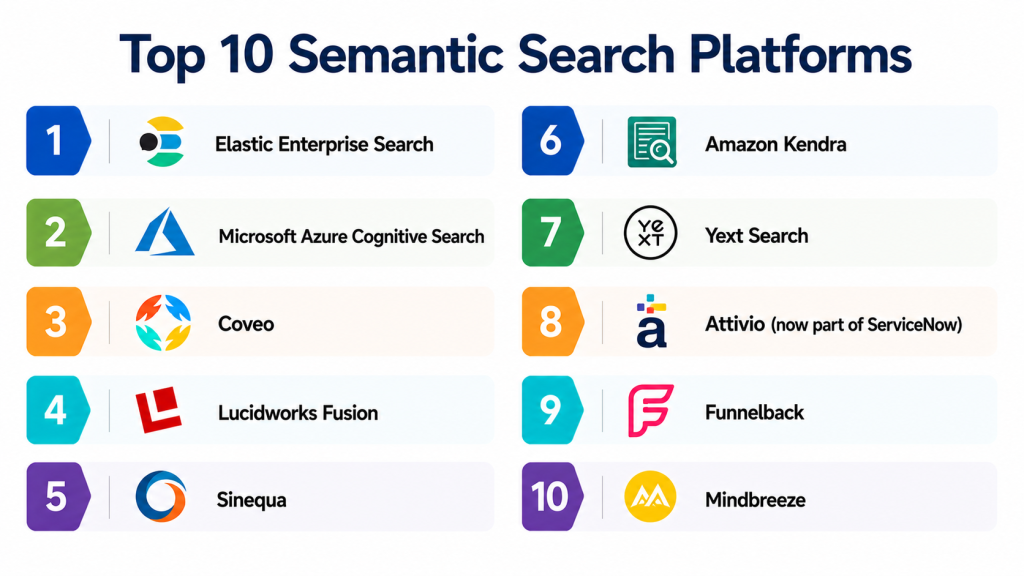
Top 10 Semantic Search Platforms
1- Elastic Enterprise Search
Short description: Elastic Enterprise Search provides a platform for contextual and AI-powered search across structured and unstructured datasets, integrating seamlessly with enterprise applications.
Key Features
- Full-text and semantic search capabilities
- NLP and AI integration for query understanding
- Real-time indexing and updates
- Multi-source connectors (databases, apps, cloud storage)
- Analytics dashboards for search performance
- Scalable cluster architecture
- API-first design
Pros
- Flexible and scalable
- Supports hybrid data sources
- Strong analytics and reporting
Cons
- Requires setup and configuration expertise
- Can be resource-intensive for very large datasets
Platforms / Deployment
- Cloud / Self-hosted / Hybrid
Security & Compliance
- SSO/SAML, RBAC, encryption
- SOC 2, GDPR
Integrations & Ecosystem
- APIs for custom integrations
- Databases, cloud apps, document stores
- AI and ML model integration
Support & Community
Active open-source and enterprise support with strong documentation
2- Microsoft Azure Cognitive Search
Short description: Azure Cognitive Search provides semantic search and AI-enriched indexing within the Azure ecosystem for structured and unstructured data.
Key Features
- Semantic ranking and natural language understanding
- AI enrichment with cognitive skills
- Real-time indexing
- Multi-source data integration
- Security and access controls
- Built-in analytics and monitoring
- API and SDK support
Pros
- Deep Azure integration
- Strong AI capabilities
- Easy cloud deployment
Cons
- Best for Azure users
- Limited outside Microsoft ecosystem
Platforms / Deployment
- Cloud (Azure)
Security & Compliance
- Enterprise security standards
- SSO, encryption, RBAC
Integrations & Ecosystem
- Azure SQL, Blob Storage, Cosmos DB
- Power BI and AI services
- APIs for custom applications
Support & Community
Microsoft enterprise support and community forums
3- Coveo
Short description: Coveo provides an AI-powered semantic search platform for enterprise search, eCommerce, and knowledge management applications.
Key Features
- Contextual and personalized search
- NLP and machine learning ranking
- Multi-source data indexing
- Real-time content updates
- Analytics for search performance
- AI recommendations
- API and SDK support
Pros
- Personalization capabilities
- Real-time semantic relevance
- Integrates well with enterprise systems
Cons
- Enterprise pricing
- May require tuning for large datasets
Platforms / Deployment
- Cloud / Hybrid
Security & Compliance
- Not publicly stated
Integrations & Ecosystem
- Salesforce, ServiceNow, SharePoint
- Databases, SaaS apps
- REST APIs
Support & Community
Vendor support with training and community resources
4- Lucidworks Fusion
Short description: Lucidworks Fusion is a platform for AI-driven semantic search and discovery across enterprise content, datasets, and applications.
Key Features
- NLP and machine learning pipelines
- Relevance tuning and ranking
- Multi-source indexing
- Analytics and search insights
- Real-time search updates
- API-first platform
- Security and governance controls
Pros
- Enterprise-ready
- Flexible architecture
- Strong AI integration
Cons
- Complexity in deployment
- Higher licensing cost
Platforms / Deployment
- Cloud / Self-hosted / Hybrid
Security & Compliance
- Not publicly stated
Integrations & Ecosystem
- Databases, document stores
- BI and analytics platforms
- APIs for application integration
Support & Community
Enterprise support and active documentation
5- Sinequa
Short description: Sinequa provides a cognitive search platform for enterprises, leveraging AI and NLP for semantic retrieval across large content repositories.
Key Features
- Semantic and contextual search
- NLP and machine learning relevance
- Multi-source indexing
- Analytics dashboards
- Security and governance
- Real-time updates
- API support
Pros
- Strong enterprise focus
- Scalable and reliable
- Excellent NLP capabilities
Cons
- Complex setup
- Enterprise pricing
Platforms / Deployment
- Cloud / Self-hosted / Hybrid
Security & Compliance
- Not publicly stated
Integrations & Ecosystem
- ERP, CRM, document stores
- APIs for custom workflows
- Analytics platforms
Support & Community
Enterprise support with knowledge base and technical community
6- Amazon Kendra
Short description: Amazon Kendra is a fully managed AI-powered semantic search service for enterprise content on AWS.
Key Features
- NLP-powered search
- Multi-source connectors
- Contextual relevance and ranking
- Real-time indexing
- Enterprise security and access controls
- Analytics for search usage
- API integration
Pros
- Fully managed AWS service
- Easy setup and scalability
- High relevance results
Cons
- AWS lock-in
- Limited outside AWS environment
Platforms / Deployment
- Cloud (AWS)
Security & Compliance
- SSO, encryption, RBAC
- AWS enterprise compliance standards
Integrations & Ecosystem
- S3, SharePoint, Salesforce
- APIs for applications
- AWS analytics and AI services
Support & Community
AWS enterprise support and documentation
7- Yext Search
Short description: Yext provides an AI-powered semantic search platform for digital experiences, including websites, chatbots, and knowledge bases.
Key Features
- NLP and contextual search
- Multi-source indexing
- Real-time updates
- Analytics and search insights
- API and SDK support
- Security and access control
- Personalization
Pros
- Quick deployment
- Tailored for digital experience
- Easy content integration
Cons
- Limited for enterprise analytics
- SaaS-only
Platforms / Deployment
- Cloud
Security & Compliance
- Not publicly stated
Integrations & Ecosystem
- Websites, chatbots, CRM systems
- APIs for custom integration
Support & Community
Vendor support and online resources
8- Attivio (now part of ServiceNow)
Short description: Attivio offers a cognitive search and insight platform with semantic understanding across enterprise content.
Key Features
- AI-powered semantic search
- NLP and entity recognition
- Multi-source indexing
- Analytics dashboards
- Security and access control
- Real-time content updates
- API integration
Pros
- Enterprise-grade
- Strong AI and NLP
- Scalable
Cons
- Integration can be complex
- Costly for smaller deployments
Platforms / Deployment
- Cloud / Self-hosted
Security & Compliance
- Not publicly stated
Integrations & Ecosystem
- Enterprise applications
- CRM and document stores
- APIs and BI tools
Support & Community
Vendor support with technical resources
9- Funnelback
Short description: Funnelback provides a semantic search engine for websites, intranets, and digital experiences with AI-enhanced relevance.
Key Features
- NLP and semantic relevance
- Real-time indexing
- Multi-source connectors
- Analytics and reporting
- Security and access controls
- API integration
- Custom ranking
Pros
- Easy deployment for web and intranet
- Strong analytics
- Flexible search customization
Cons
- Less suited for enterprise-scale knowledge graphs
- Limited multi-cloud features
Platforms / Deployment
- Cloud / Self-hosted
Security & Compliance
- Not publicly stated
Integrations & Ecosystem
- Websites, SharePoint, document repositories
- APIs for custom applications
Support & Community
Vendor support with documentation
10- Mindbreeze
Short description: Mindbreeze provides AI-powered semantic search for enterprise knowledge management and content discovery.
Key Features
- Contextual search and NLP
- Multi-source indexing
- Analytics and reporting dashboards
- Real-time updates
- Security and governance
- API and SDK support
- AI relevance tuning
Pros
- Enterprise-grade search
- High relevance and personalization
- Scalable architecture
Cons
- Enterprise pricing
- Technical setup required
Platforms / Deployment
- Cloud / Self-hosted / Hybrid
Security & Compliance
- Not publicly stated
Integrations & Ecosystem
- Document repositories, CRM systems
- APIs for custom workflows
- Analytics platforms
Support & Community
Enterprise support and training resources
Comparison Table
| Tool | Best For | Platform(s) | Deployment | Standout Feature | Public Rating |
|---|---|---|---|---|---|
| Elastic Enterprise Search | Enterprise apps | Cloud/Linux | Hybrid | AI-powered relevance | N/A |
| Azure Cognitive Search | Azure ecosystem | Cloud | Cloud | Semantic ranking & NLP | N/A |
| Coveo | Enterprise & eCommerce | Cloud/Hybrid | Cloud | Contextual personalization | N/A |
| Lucidworks Fusion | Enterprise content | Cloud/Hybrid | Hybrid | AI relevance tuning | N/A |
| Sinequa | Enterprise knowledge | Cloud/Hybrid | Hybrid | Cognitive search | N/A |
| Amazon Kendra | AWS workloads | Cloud | Cloud | Managed semantic search | N/A |
| Yext | Digital experiences | Cloud | Cloud | Tailored semantic search | N/A |
| Attivio | Enterprise insights | Cloud/Hybrid | Hybrid | Cognitive search & NLP | N/A |
| Funnelback | Websites & intranets | Cloud/Hybrid | Hybrid | AI-enhanced relevance | N/A |
| Mindbreeze | Knowledge management | Cloud/Hybrid | Hybrid | Contextual relevance & personalization | N/A |
Evaluation & Scoring of Semantic Search Platforms
| Tool | Core (25%) | Ease (15%) | Integrations (15%) | Security (10%) | Performance (10%) | Support (10%) | Value (15%) | Weighted Total |
|---|---|---|---|---|---|---|---|---|
| Elastic | 9 | 7 | 9 | 8 | 8 | 8 | 8 | 8.3 |
| Azure Cognitive | 8 | 8 | 8 | 8 | 8 | 7 | 8 | 7.9 |
| Coveo | 8 | 7 | 8 | 7 | 8 | 7 | 8 | 7.8 |
| Lucidworks | 8 | 7 | 8 | 8 | 8 | 7 | 8 | 7.9 |
| Sinequa | 8 | 7 | 8 | 8 | 8 | 7 | 8 | 7.9 |
| Amazon Kendra | 8 | 8 | 8 | 8 | 8 | 7 | 8 | 7.9 |
| Yext | 7 | 8 | 7 | 7 | 7 | 7 | 7 | 7.2 |
| Attivio | 8 | 7 | 8 | 8 | 8 | 7 | 8 | 7.9 |
| Funnelback | 7 | 8 | 7 | 7 | 7 | 7 | 7 | 7.2 |
| Mindbreeze | 8 | 7 | 8 | 8 | 8 | 7 | 8 | 7.9 |
Which Semantic Search Tool Is Right for You?
Solo / Freelancer
- Yext, Funnelback
Lightweight platforms for small-scale search deployment
SMB
- Coveo, Lucidworks, Mindbreeze
Good mix of ease-of-use and AI-powered relevance
Mid-Market
- Elastic, Azure Cognitive Search, Amazon Kendra
Scalable search with semantic and AI capabilities
Enterprise
- Sinequa, Attivio, Lucidworks Fusion
Enterprise-grade search with governance and AI relevance
Budget vs Premium
- Budget: Yext, Funnelback
- Premium: Sinequa, Elastic, Lucidworks
Feature Depth vs Ease of Use
- Ease-focused: Yext, Azure Cognitive
- Depth-focused: Elastic, Sinequa, Lucidworks
Integrations & Scalability
- Strongest: Elastic, Azure Cognitive, Lucidworks
Security & Compliance Needs
- Enterprise-ready: Elastic, Sinequa, Azure Cognitive
Frequently Asked Questions
1- What is a semantic search platform?
It uses AI and NLP to understand query intent and context, providing more accurate search results than keyword-based systems.
2- Do these platforms support multi-source data?
Yes, most can index structured and unstructured data across databases, documents, SaaS, and cloud storage.
3- Are coding skills required?
Some platforms offer low-code or visual interfaces, but many enterprise tools require technical setup and API integration.
4- Can they support AI and ML workflows?
Yes, they integrate with AI models and machine learning pipelines for better contextual understanding.
5- Do these platforms support real-time indexing?
Yes, platforms like Elastic, Amazon Kendra, and Lucidworks provide real-time search updates.
6- Are these tools suitable for small businesses?
Some SaaS-focused tools like Yext and Funnelback work well for smaller organizations.
7- How is security handled?
Most enterprise platforms offer encryption, SSO, RBAC, and compliance features like SOC 2 and GDPR.
8- What industries benefit most?
Enterprise knowledge management, eCommerce, customer support, AI-driven analytics, and corporate search applications.
9- Can these tools personalize search results?
Yes, AI-driven relevance ranking and personalization are common features in most platforms.
10- How do I choose the right semantic search platform?
Evaluate scale, integrations, AI/NLP capabilities, deployment type, and cost. Pilot multiple tools before full adoption.
Conclusion
Semantic Search Platforms are essential for enterprises and digital businesses seeking accurate, context-aware, and AI-driven search. They improve discovery, analytics, and user experience across structured and unstructured data.
Selecting the right tool depends on your team size, deployment needs, AI integration, and governance requirements. A practical approach is to shortlist run pilot queries, and validate relevance, performance, and integrations before enterprise-wide adoption.
