Introduction
Enterprise Risk Management (ERM) tools are software platforms that help organizations identify, assess, monitor, and mitigate risks across the business. ERM tools centralize risk data, automate risk assessments, support compliance reporting, and provide analytics that inform strategic and operational decisions. These systems help organizations understand their risk landscape holistically rather than in isolated silos.
In 2026, ERM tools are more essential than ever as businesses face evolving threats — from cyberattacks and supply chain disruptions to regulatory scrutiny and geopolitical uncertainty. Organizations need ERM systems that not only automate workflows and reporting but also leverage analytics to predict emerging risk patterns and guide decisions in real time.
Real‑world use cases include:
- Mapping enterprise‑wide risk exposures and dependencies.
- Conducting structured risk assessments with scoring and prioritization.
- Aligning risk appetite with business strategy and compliance frameworks.
- Automating incident reporting and mitigation tracking.
- Providing executive dashboards that inform board‑level decisions.
Evaluation criteria for buyers include:
- Risk taxonomy and assessment flexibility
- Integration with finance, compliance, and audit systems
- Support for regulatory and standards frameworks (e.g., ISO 31000)
- Analytics, dashboards, and predictive risk modeling
- Workflow automation and approvals
- Deployment and scalability for global operations
- Security posture (RBAC, encryption, audit logs)
- Ease of use and configurability
- Vendor reputation and support
- Total cost of ownership and value
Best for: Large enterprises, risk management teams, compliance officers, and executives looking for centralized risk visibility and decision support.
Not ideal for: Very small organizations or those with limited risk reporting needs; simple spreadsheets or lightweight GRC modules may suffice.
Key Trends in Enterprise Risk Management ERM Tools
- AI‑Driven Predictive Analytics: Tools now anticipate risk trends using machine learning and historical data.
- Real‑Time Monitoring: Integration with IoT, security systems, and operational data for continuous risk insights.
- Automated Regulatory Reporting: Built‑in templates and workflows for compliance with ISO, SOX, GDPR, and other frameworks.
- Cloud‑Native Architectures: SaaS ERM deployments for global access and agile scaling.
- Risk Intelligence Dashboards: Executive‑ready visuals of risk exposures, trends, and KPIs.
- Integrated GRC Suites: ERM converges with governance, audit, and compliance modules.
- Mobile Risk Capture: Field personnel can report incidents or hazards via mobile apps.
- Scenario Modeling & Simulations: Evaluate “what if” scenarios for strategic planning.
- Role‑Based Access & Security: Strong RBAC, encryption, and audit logs for sensitive data.
How We Selected These Tools (Methodology)
- Evaluated feature completeness across risk assessment, analytics, workflows, and reporting.
- Assessed market adoption and usage in enterprise environments.
- Reviewed scalability for multi‑region, multi‑division deployments.
- Considered integration capabilities with ERP, compliance, audit, and security systems.
- Analyzed security posture including RBAC, MFA, encryption, and audit trails.
- Examined usability and configurability for risk teams and executives.
- Checked support, documentation, and training offerings.
- Considered AI/ML risk modeling and predictive capabilities.
- Reviewed value against cost for comparable features and performance.
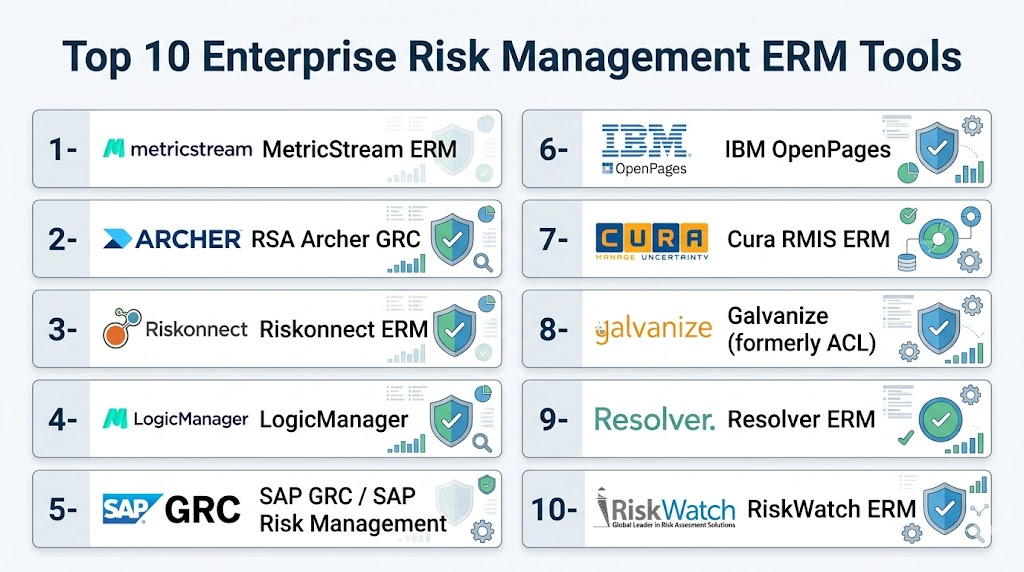
Top 10 Enterprise Risk Management ERM Tools
1‑ MetricStream ERM
Short description: A comprehensive enterprise risk management platform designed for global organizations, offering centralized risk control, analytics, and compliance workflows.
Key Features
- Risk taxonomy and assessment builder
- Heat maps and risk scoring models
- Integrated compliance tracking
- Workflow automation and approvals
- Dashboards and analytics
- Audit and issue management
Pros
- Extremely configurable for enterprise risk frameworks
- Strong compliance and control workflows
Cons
- Higher implementation complexity
- Premium pricing
Platforms / Deployment
- Web / iOS / Android
- Cloud / Hybrid
Security & Compliance
Not publicly stated
Integrations & Ecosystem
Broad integration support for ERP, audit, compliance, and security tools.
- API ecosystem
- Compliance frameworks (SOX, GDPR) connectors
- BI tool integration
Support & Community
Vendor support available; extensive documentation.
2‑ RSA Archer GRC
Short description: A widely recognized risk and governance platform with strong ERM capabilities tailored for large enterprises.
Key Features
- Risk and control libraries
- Integrated incident and issue management
- Regulatory compliance workflows
- Risk reporting and dashboards
- Scenario analyses
- Audit and policy management
Pros
- Deep GRC integration
- Proven enterprise risk framework support
Cons
- Complex setup and customization
- Requires experienced administrators
Platforms / Deployment
- Web / iOS / Android
- Cloud / On‑prem / Hybrid
Security & Compliance
Not publicly stated
Integrations & Ecosystem
- ERP and security platform connectors
- API access for automation
- BI and data visualization interfaces
Support & Community
Strong vendor support; substantial enterprise user community.
3‑ Riskonnect ERM
Short description: Cloud‑native ERM platform focused on automation, collaboration, and real‑time risk visibility for enterprise teams.
Key Features
- Risk heat maps and dashboards
- Incident and issue tracking
- Automated workflows
- Integration with compliance and audit systems
- Predictive analytics modules
- Mobile risk capture
Pros
- Cloud‑native with agile deployment
- User‑friendly interface
Cons
- Advanced analytics may require add‑ons
- Enterprise modules can be expensive
Platforms / Deployment
- Web / iOS / Android
- Cloud
Security & Compliance
Not publicly stated
Integrations & Ecosystem
- API connectors
- ERP and compliance system integrations
- Mobile reporting tools
Support & Community
Vendor support included; standard documentation.
4‑ LogicManager
Short description: ERM and risk intelligence platform for structured risk assessments, compliance, and control monitoring.
Key Features
- Risk scoring and tracking
- Compliance and control libraries
- Automated workflows
- Dashboards and report templates
- Audit support
- Scenario planning
Pros
- Highly configurable workflows
- Strong risk assessment tools
Cons
- Can require significant configuration
- Reporting customization has learning curve
Platforms / Deployment
- Web / iOS / Android
- Cloud
Security & Compliance
Not publicly stated
Integrations & Ecosystem
- API access
- Compliance and audit system connectors
- BI tool integration
Support & Community
Vendor support and documentation available.
5‑ SAP GRC / SAP Risk Management
Short description: Enterprise resource planning‑integrated risk management suite from SAP, ideal for global enterprises with existing SAP stacks.
Key Features
- Integrated risk and control framework
- Automated compliance workflows
- Incident and issue logging
- Policy and audit support
- Advanced reporting
- SAP ecosystem integration
Pros
- Native integration with SAP ERP
- Strong regulatory capabilities
Cons
- Best for SAP environment users
- Higher cost and implementation complexity
Platforms / Deployment
- Web / iOS / Android
- Cloud / Hybrid / On‑prem
Security & Compliance
Not publicly stated
Integrations & Ecosystem
- Deep SAP ecosystem connectors
- API support
- Compliance and audit integrations
Support & Community
Large enterprise support; strong community forums.
6‑ IBM OpenPages
Short description: Enterprise‑scale ERM solution from IBM, blending risk, compliance, and governance data for robust decision support.
Key Features
- ERM and policy management
- Advanced analytics
- Workflow automation
- Integrated dashboards
- Audit and regulatory workflows
- Scenario simulation tools
Pros
- Enterprise scalability
- Strong analytics and reporting
Cons
- Can be complex to deploy
- Premium pricing
Platforms / Deployment
- Web / iOS / Android
- Cloud / Hybrid / On‑prem
Security & Compliance
Not publicly stated
Integrations & Ecosystem
- API connectors
- ERP and compliance tool integrations
- BI tools
Support & Community
Vendor support and enterprise documentation.
7‑ Cura RMIS ERM
Short description: Risk and safety management platform with ERM capabilities tailored for operational risk and incident tracking.
Key Features
- Incident and risk assessments
- Dashboards and analytics
- Compliance tracking
- Automated workflows
- Mobile reporting
- Incident investigation support
Pros
- Strong operational risk focus
- Field‑ready mobile reporting
Cons
- Less suited for complex financial risk modeling
- Smaller enterprise footprint
Platforms / Deployment
- Web / iOS / Android
- Cloud
Security & Compliance
Not publicly stated
Integrations & Ecosystem
- API connections
- Operational system integration
- Mobile data connectors
Support & Community
Vendor support included; documentation standard.
8‑ Galvanize (formerly ACL)
Short description: ERM and GRC platform with strong analytics, controls testing, and compliance workflows.
Key Features
- Risk assessments and scoring
- Control testing dashboards
- Incident tracking
- Automated workflows
- Reporting and alerts
- BI integration
Pros
- Data analytics‑centric capabilities
- Strong GRC ecosystem
Cons
- Advanced analytics can be complex
- Requires training for full adoption
Platforms / Deployment
- Web / iOS / Android
- Cloud
Security & Compliance
Not publicly stated
Integrations & Ecosystem
- BI tool integration
- API connectors
- Compliance systems
Support & Community
Vendor support; active community hub.
9‑ Resolver ERM
Short description: Cloud‑first ERM tool focused on risk assessment, incident tracking, and executive reporting.
Key Features
- Risk assessment builder
- Incident and issue logging
- Dashboards and KPI reports
- Compliance and control tracking
- Automated workflows
- Mobile reporting
Pros
- Strong UI and usability
- Scales well for mid‑market and enterprise
Cons
- Some enterprise‑grade features require upgrades
- Reporting templates limited at basic tiers
Platforms / Deployment
- Web / iOS / Android
- Cloud
Security & Compliance
Not publicly stated
Integrations & Ecosystem
- API access
- ERP and audit integrations
- Mobile connectors
Support & Community
Vendor support available; documentation provided.
10‑ RiskWatch ERM
Short description: Flexible ERM platform focused on risk assessments, scoring, and compliance workflows for enterprise teams.
Key Features
- Assessment templates
- Risk scoring and heat maps
- Compliance tracking
- Dashboards and reporting
- Automated alerts
- Mobile access
Pros
- Flexible assessment capabilities
- User‑friendly dashboards
Cons
- Smaller enterprise footprint
- Advanced analytics limited
Platforms / Deployment
- Web / iOS / Android
- Cloud
Security & Compliance
Not publicly stated
Integrations & Ecosystem
- API ecosystem
- Compliance system connections
- Reporting tools
Support & Community
Vendor support; standard documentation.
Comparison Table (Top 10)
| Tool Name | Best For | Platform(s) Supported | Deployment | Standout Feature | Public Rating |
|---|---|---|---|---|---|
| MetricStream ERM | Large enterprises | Web/iOS/Android | Cloud/Hybrid | Comprehensive risk control | N/A |
| RSA Archer GRC | Enterprise GRC | Web/iOS/Android | Cloud/On‑prem/Hybrid | Deep GRC integration | N/A |
| Riskonnect ERM | Cloud‑first teams | Web/iOS/Android | Cloud | Real‑time risk dashboards | N/A |
| LogicManager | Configurable ERM workflows | Web/iOS/Android | Cloud | Risk assessment and controls | N/A |
| SAP GRC / Risk Management | SAP stack users | Web/iOS/Android | Cloud/Hybrid/On‑prem | SAP ecosystem integration | N/A |
| IBM OpenPages | Large enterprises | Web/iOS/Android | Cloud/Hybrid/On‑prem | Analytics and simulations | N/A |
| Cura RMIS ERM | Operational risk teams | Web/iOS/Android | Cloud | Field‑ready incident reporting | N/A |
| Galvanize | Analytics‑centric ERM | Web/iOS/Android | Cloud | Control testing dashboards | N/A |
| Resolver ERM | Mid‑market to enterprise | Web/iOS/Android | Cloud | Usability and dashboards | N/A |
| RiskWatch ERM | Risk assessments | Web/iOS/Android | Cloud | Flexible scoring | N/A |
Evaluation & Scoring of Enterprise Risk Management ERM Tools
| Tool Name | Core (25%) | Ease (15%) | Integrations (15%) | Security (10%) | Performance (10%) | Support (10%) | Value (15%) | Weighted Total (0‑10) |
|---|---|---|---|---|---|---|---|---|
| MetricStream ERM | 9 | 7 | 8 | 7 | 8 | 8 | 7 | 8.0 |
| RSA Archer GRC | 9 | 6 | 8 | 7 | 8 | 8 | 7 | 7.8 |
| Riskonnect ERM | 8 | 8 | 7 | 7 | 8 | 8 | 7 | 7.8 |
| LogicManager | 7 | 7 | 7 | 7 | 7 | 7 | 7 | 7.2 |
| SAP GRC / Risk Mgmt | 8 | 6 | 8 | 7 | 8 | 8 | 7 | 7.6 |
| IBM OpenPages | 9 | 6 | 8 | 7 | 8 | 8 | 7 | 7.8 |
| Cura RMIS ERM | 7 | 8 | 7 | 7 | 7 | 7 | 7 | 7.2 |
| Galvanize | 8 | 7 | 8 | 7 | 8 | 8 | 7 | 7.6 |
| Resolver ERM | 8 | 8 | 7 | 7 | 8 | 8 | 7 | 7.4 |
| RiskWatch ERM | 7 | 8 | 7 | 7 | 7 | 7 | 7 | 7.2 |
Interpretation: Weighted totals are comparative. Tools with higher scores provide broader capabilities, but the best choice depends on organizational context, integration needs, and risk strategy.
Which Enterprise Risk Management ERM Tool Is Right for You?
Solo / Freelancer
Small risk teams or departments may find Riskonnect ERM or Resolver ERM flexible without enterprise complexity.
SMB
Mid‑sized organizations looking for usability and dashboards should evaluate Resolver ERM and Galvanize.
Mid‑Market
Organizations requiring deeper control frameworks benefit from LogicManager or SAP GRC / Risk Management.
Enterprise
Large global organizations should consider MetricStream ERM, RSA Archer GRC, or IBM OpenPages for advanced architecture and integration.
Budget vs Premium
Budget‑friendly: Resolver ERM, LogicManager
Premium: MetricStream ERM, RSA Archer GRC, IBM OpenPages
Feature Depth vs Ease of Use
Feature depth: MetricStream ERM, RSA Archer GRC
Ease of adoption: Riskonnect ERM, Resolver ERM
Integrations & Scalability
Best for scale: MetricStream ERM, SAP GRC / Risk Management
Good for moderate scale: LogicManager, Resolver ERM
Security & Compliance Needs
High compliance: RSA Archer GRC, SAP GRC
Balanced compliance: Riskonnect ERM, IBM OpenPages
Frequently Asked Questions (FAQs)
1. What pricing models do ERM tools use?
Most ERM vendors offer subscription SaaS pricing, enterprise licenses, or modular pricing based on users and capabilities.
2. How long does implementation take?
Implementation timelines vary from 8–20 weeks for mid‑market organizations to 6–12 months for large global deployments.
3. Can ERM tools integrate with ERP and audit systems?
Yes, modern ERM tools provide APIs and pre‑built connectors for ERP, audit, compliance, and BI systems.
4. Are mobile apps available for field risk reporting?
Many ERM platforms include mobile access for risk capture, issue logging, and dashboard viewing.
5. How secure are these platforms?
Security varies by vendor. Look for role‑based access control, encryption, MFA, and audit logging.
6. Do ERM tools support predictive risk analytics?
Yes, tools like MetricStream ERM and IBM OpenPages include predictive modules leveraging AI or ML.
7. Can small organizations benefit from ERM?
Yes — mid‑market and smaller teams can leverage tools like Resolver ERM and Riskonnect ERM for streamlined risk insights.
8. How do ERM tools help with compliance?
They automate compliance workflows, provide evidence trails, and support regulatory reporting for frameworks like ISO 31000.
9. Can ERM tools handle global multi‑department structures?
Yes, enterprise‑grade ERM solutions support global access, multi‑currency, multi‑business unit risk views, and centralized reporting.
10. Are dashboards and analytics standard in ERM platforms?
Yes — risk dashboards and analytical reporting are core capabilities that help executives monitor exposures and trends.
Conclusion
Enterprise Risk Management (ERM) tools are vital for gaining centralized risk visibility, automating workflows, and supporting strategic decisions. Small and mid‑market teams can start with adaptable platforms like Riskonnect ERM or Resolver ERM, while global enterprises stand to benefit most from robust suites like MetricStream ERM, RSA Archer GRC, or IBM OpenPages. Buyers should shortlist conduct pilots, validate integration and compliance capabilities, and scale based on their risk profile, complexity, and organizational objectives. Implemented thoughtfully, ERM systems reduce risk exposure, improve governance, and support resilient growth throughout the enterprise.
