Introduction
Food Supply Chain Traceability Tools enable companies to track food products and ingredients through harvesting, processing, distribution, and retail. These systems provide visibility across the entire food journey, ensuring safety, compliance, quality control, and consumer transparency. With rising regulatory demands and consumer expectations for food safety, traceability technology has become critical for food producers, processors, and distributors.
Real-world use cases include:
- Tracking food origin and ingredient sources for safety verification
- Supporting rapid recall response with precise batch tracking
- Demonstrating compliance with food safety standards
- Monitoring cold chain conditions and handling exceptions
- Providing transparency to consumers and trading partners
What buyers should evaluate:
- End-to-end traceability depth and granularity
- Integration with ERP, WMS, IoT sensors, and cold chain systems
- Real-time alerts and exception management
- Quality control and compliance reporting
- Analytics and dashboards
- Multi-stakeholder visibility (farm to fork)
- Security and access controls
- Ease of deployment and user adoption
Best for: Food manufacturers, processors, distributors, quality managers, and retailers focused on food safety, compliance, and consumer confidence.
Not ideal for: Very small food operations with minimal supply chain complexity where manual or basic digital tracking suffices.
Key Trends in Food Supply Chain Traceability Tools
- Adoption of blockchain and distributed ledger for immutable trace records
- Integration with IoT sensors for cold chain monitoring and condition tracking
- AI‑driven anomaly detection for quality deviations
- Cloud‑first platforms for global visibility
- Enhanced analytics for predictive quality control
- Mobile real‑time scanning and alerts for field use
- Regulatory compliance for food safety standards
- Traceability across multi‑tier supplier networks
- Customer transparency tools for consumer engagement
- Flexible subscription and modular pricing models
How We Selected These Tools (Methodology)
- Evaluated market adoption and food‑industry relevance
- Reviewed feature completeness, including traceability, maps, alerts, and analytics
- Assessed reliability and performance in real food operations
- Considered security posture, including encryption and access controls
- Verified integration capabilities with ERP, WMS, IoT, and cold chain systems
- Checked support for multi‑tier supply chain visibility
- Prioritized platforms with real‑time alerts and exception handling
- Reviewed vendor support quality and documentation
- Balanced cost against functionality and scalability
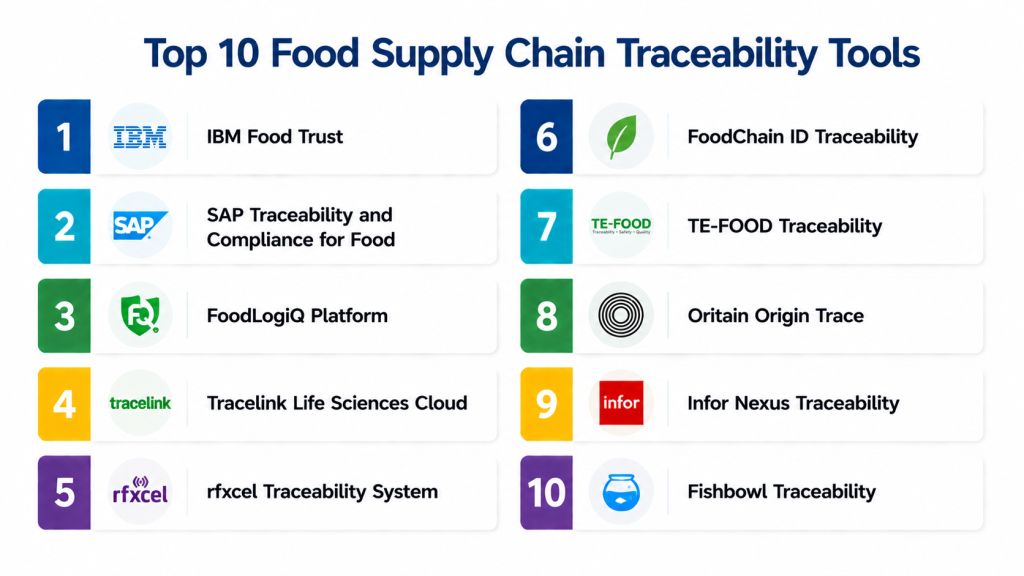
Top 10 Food Supply Chain Traceability Tools
1- IBM Food Trust
Short description: IBM Food Trust is an enterprise‑grade traceability platform that provides end‑to‑end visibility and immutable supply chain records using blockchain technology.
Key Features
- Blockchain‑backed trace records
- End‑to‑end farm‑to‑fork visibility
- Real‑time trace event monitoring
- Supplier collaboration portals
- Regulatory compliance templates
- Analytics dashboards
- Mobile scanning support
Pros
- Strong tamper‑proof trace records
- Deep global food chain visibility
- Supports complex multi‑stakeholder networks
Cons
- Complexity for smaller operations
- Premium pricing
Platforms / Deployment
- Web / iOS / Android
- Cloud / Hybrid
Security & Compliance
- Encryption, access controls, audit logs
Integrations & Ecosystem
Integrates with ERP, WMS, IoT sensors
- Data connectors
- Supply partner APIs
Support & Community
Enterprise support and documentation
2- SAP Traceability and Compliance for Food
Short description: SAP’s traceability suite ensures comprehensive tracking of food products with regulatory compliance support and integration across SAP landscapes.
Key Features
- Multi‑stage trace mapping
- Recall simulation and execution
- Regulatory compliance checks
- Analytics dashboards
- Supplier trace data aggregation
- Integration with SAP ERP
- Alerts and exceptions
Pros
- Strong ERP integration
- Regulatory compliance focus
Cons
- Requires SAP ecosystem expertise
- Less flexible for non‑SAP systems
Platforms / Deployment
- Web / iOS / Android
- Cloud / On‑premises / Hybrid
Security & Compliance
- SOC 2, encryption, role‑based access
Integrations & Ecosystem
- SAP ERP / MES / WMS
- Partner APIs
Support & Community
Strong SAP support and community
3- FoodLogiQ Platform
Short description: FoodLogiQ provides traceability and quality management for food producers and distributors, with real‑time tracking and alerts.
Key Features
- End‑to‑end traceability
- Supplier network management
- Recall readiness simulation
- Analytics and dashboards
- Mobile scanning and data capture
- Exception alerts
- Compliance reporting
Pros
- Food‑industry focus
- Good supplier collaboration
Cons
- Implementation planning required
- Premium pricing for full features
Platforms / Deployment
- Web / iOS / Android
- Cloud
Security & Compliance
- Encryption and access controls
Integrations & Ecosystem
- ERP and WMS integration
- IoT sensor feeds
Support & Community
Vendor support and resources
4- Tracelink Life Sciences Cloud
Short description: TraceLink offers a food‑ready traceability solution with serialization, compliance, and multi‑tier visibility for complex supply chains.
Key Features
- End‑to‑end traceability
- Supplier network visibility
- Analytics and dashboards
- Regulatory compliance support
- Exception management
- Real‑time alerts
- Integration with ERP/MES
Pros
- Cloud‑first architecture
- Strong analytics
Cons
- Higher cost
- Tailored for regulated industries
Platforms / Deployment
- Web / iOS / Android
- Cloud
Security & Compliance
- Encryption, access control
Integrations & Ecosystem
- ERP/MES connectors
- IoT sensors
Support & Community
Enterprise support
5- rfxcel Traceability System
Short description: rfxcel provides real‑time traceability and compliance tracking for food, beverage, and life sciences product supply chains.
Key Features
- Real‑time tracking
- Cold chain condition monitoring
- Supplier trace network
- Regulatory reports
- Analytics dashboards
- Exception alerts
- Mobile scanning
Pros
- Good cold chain support
- Real‑time visibility
Cons
- Implementation complexity
- Premium cost
Platforms / Deployment
- Web / iOS / Android
- Cloud / Hybrid
Security & Compliance
- Encryption and audit logs
Integrations & Ecosystem
- ERP/WMS
- IoT and cold chain sensors
Support & Community
Vendor support and documentation
6- FoodChain ID Traceability
Short description: FoodChain ID provides traceability and certification tracking with strong food safety program integration.
Key Features
- Traceability maps
- Recall readiness tools
- Supplier data aggregation
- Compliance reporting
- Analytics dashboards
- Exception alerts
- Mobile scanning
Pros
- Food safety focus
- Supports certification tracking
Cons
- Less deep ERP integrations
- Training may be needed
Platforms / Deployment
- Web / iOS / Android
- Cloud
Security & Compliance
- Not publicly stated
Integrations & Ecosystem
- Partner APIs
- Analytics platforms
Support & Community
Vendor support
7- TE-FOOD Traceability
Short description: TE‑FOOD delivers farm‑to‑fork tracking using blockchain and IoT scanning, with focus on food authenticity and safety.
Key Features
- Blockchain‑based trace records
- IoT and mobile scanning
- Farm‑to‑consumer tracking
- Real‑time alerts
- Analytics dashboards
- Supplier collaboration
- Compliance tracking
Pros
- Blockchain enables tamper‑proof history
- Mobile and IoT scanning
Cons
- Emerging ecosystem
- Integration effort
Platforms / Deployment
- Web / iOS / Android
- Cloud
Security & Compliance
- Blockchain security features
Integrations & Ecosystem
- IoT sensors
- Mobile scanning systems
Support & Community
Vendor support
8- Oritain Origin Trace
Short description: Oritain’s traceability system scientifically validates origin and supply chain history for food products.
Key Features
- Origin authentication
- Supply chain mapping
- Real‑time trace data
- Analytics reports
- Compliance tracking
- Mobile access
- Supplier verification
Pros
- Strong origin validation
- Useful for high‑risk products
Cons
- Narrow focus
- Integration scope limited
Platforms / Deployment
- Web / iOS / Android
- Cloud
Security & Compliance
- Not publicly stated
Integrations & Ecosystem
- APIs
- Analytics integrations
Support & Community
Vendor support available
9- Infor Nexus Traceability
Short description: Infor Nexus offers traceability with real‑time visibility, compliance, and collaboration across global food supply networks.
Key Features
- Global trace visibility
- Analytics dashboards
- Exception alerts
- Mobile access
- Supplier tracking
- ERP/WMS connectors
- Compliance reports
Pros
- Strong global visibility
- Enterprise‑grade scalability
Cons
- Setup complexity
- Higher cost
Platforms / Deployment
- Web / iOS / Android
- Cloud / Hybrid
Security & Compliance
- Not publicly stated
Integrations & Ecosystem
- ERP/WMS integrations
- Analytics systems
Support & Community
Enterprise support
10- Fishbowl Traceability
Short description: Fishbowl provides a traceability module for SMB food manufacturers with barcode and lot tracking.
Key Features
- Barcode/QR scanning
- Lot and batch control
- Real‑time alerts
- Basic analytics dashboards
- ERP integration
- Mobile scanning
- Exception tracking
Pros
- Affordable for small businesses
- Easy to adopt
Cons
- Limited analytics depth
- Not suited for large enterprises
Platforms / Deployment
- Web / iOS / Android
- Cloud / Hybrid
Security & Compliance
- Not publicly stated
Integrations & Ecosystem
- ERP connectors
- Barcode systems
Support & Community
Documentation and support
Comparison Table (Top 10)
| Tool Name | Best For | Platform(s) Supported | Deployment | Standout Feature | Public Rating |
|---|---|---|---|---|---|
| IBM Food Trust | Large global food networks | Web, iOS, Android | Cloud/Hybrid | Blockchain trace records | N/A |
| SAP Traceability | Regulated food environments | Web, iOS, Android | Cloud/Hybrid | ERP integration and compliance | N/A |
| FoodLogiQ | Food producers & distributors | Web, iOS, Android | Cloud | Supplier collaboration & alerts | N/A |
| TraceLink | Complex supply chains | Web, iOS, Android | Cloud | Analytics and event tracking | N/A |
| rfxcel | Cold chain & real‑time monitoring | Web, iOS, Android | Cloud/Hybrid | Cold chain visibility | N/A |
| FoodChain ID | Certification & safety integration | Web, iOS, Android | Cloud | Food safety data | N/A |
| TE‑FOOD | Farm‑to‑consumer trace | Web, iOS, Android | Cloud | Blockchain + IoT | N/A |
| Oritain Origin | High‑risk origin validation | Web, iOS, Android | Cloud | Scientific origin trace | N/A |
| Infor Nexus | Global collaboration | Web, iOS, Android | Cloud/Hybrid | Enterprise global visibility | N/A |
| Fishbowl | SMB food traceability | Web, iOS, Android | Cloud/Hybrid | Affordable barcode tracking | N/A |
Evaluation & Scoring of Food Supply Chain Traceability Tools
| Tool Name | Core (25%) | Ease (15%) | Integrations (15%) | Security (10%) | Performance (10%) | Support (10%) | Value (15%) | Weighted Total (0–10) |
|---|---|---|---|---|---|---|---|---|
| IBM Food Trust | 9 | 7 | 8 | 8 | 9 | 8 | 7 | 8.2 |
| SAP Traceability | 9 | 6 | 9 | 8 | 8 | 7 | 7 | 8.0 |
| FoodLogiQ | 8 | 7 | 8 | 7 | 8 | 7 | 7 | 7.6 |
| TraceLink | 8 | 7 | 8 | 8 | 8 | 7 | 7 | 7.7 |
| rfxcel | 8 | 7 | 8 | 8 | 8 | 7 | 7 | 7.6 |
| FoodChain ID | 7 | 7 | 7 | 7 | 7 | 7 | 7 | 7.0 |
| TE‑FOOD | 8 | 7 | 7 | 8 | 7 | 7 | 7 | 7.4 |
| Oritain Origin | 7 | 7 | 6 | 7 | 7 | 7 | 7 | 7.0 |
| Infor Nexus | 8 | 7 | 8 | 7 | 8 | 7 | 7 | 7.5 |
| Fishbowl | 7 | 8 | 7 | 7 | 7 | 7 | 8 | 7.4 |
Interpretation: Weighted totals help compare tools across core traceability features, integrations, ease of use, security, performance, support, and value.
Which Food Supply Chain Traceability Tool Is Right for You?
Solo / Freelancer
Fishbowl offers an affordable entry point with barcode and basic trace tracking.
SMB
FoodLogiQ or Fishbowl provide manageability, collaboration, and visibility for mid‑sized food operations.
Mid‑Market
rfxcel or Infor Nexus balance real‑time monitoring with analytics and collaboration.
Enterprise
IBM Food Trust, SAP Traceability, or TraceLink deliver comprehensive supply chain visibility for global food networks.
Budget vs Premium
Budget: Fishbowl or FoodChain ID for essential trace needs
Premium: IBM Food Trust or SAP Traceability for deep analytics and compliance
Feature Depth vs Ease of Use
Feature‑rich platforms deliver comprehensive compliance but require onboarding; simpler tools prioritize quick adoption.
Integrations & Scalability
Select tools with strong ERP, WMS, and IoT integrations for multi‑tier trace consistency.
Security & Compliance Needs
Enterprise trace systems should include encryption, audit logs, access controls, and regulatory compliance monitoring.
Frequently Asked Questions (FAQs)
1. What pricing models are offered?
Most food traceability tools offer subscription or modular pricing based on users, sites, and features.
2. How long does implementation take?
Cloud‑first tools can launch quickly; fully integrated enterprise installations may require longer.
3. Can these systems integrate with ERP or cold chain systems?
Yes, leading solutions provide connectors or APIs for ERP, WMS, IoT, and cold chain data sources.
4. Do they support real‑time alerts?
Yes, real‑time event alerts and exceptions are standard in top traceability tools.
5. Is blockchain necessary for traceability?
Blockchain enhances immutability and transparency but is not required for all traceability use cases.
6. How do traceability tools help with recalls?
They enable rapid pinpointing of affected batches and supply partners for efficient recall execution.
7. Do these tools support mobile scanning?
Yes, mobile scanning for QR or barcode capture is common for field use.
8. Are these suitable for small businesses?
Some tools like Fishbowl and FoodChain ID are designed for SMBs; large enterprise suites may be more than needed.
9. What are common adoption mistakes?
Neglecting integration planning and underestimating training can limit traceability success.
10. How do analytics help?
Analytics help identify trends, root causes of quality issues, and areas for supply chain optimization.
Conclusion
Food Supply Chain Traceability Tools are essential for ensuring safety, compliance, and transparency in complex food supply networks. Small and mid‑sized operations can begin with tools like Fishbowl or FoodLogiQ, while enterprises benefit from IBM Food Trust, SAP Traceability, or TraceLink for deep visibility and compliance. Start by shortlisting running pilot tests, and validating integrations and alerts before full deployment to achieve trusted traceability and supply chain confidence.
