Introduction
Carbon Accounting Platforms are software solutions that help organizations track, measure, and manage greenhouse gas emissions across operations, supply chains, and product lifecycles. These platforms provide data-driven insights for sustainability reporting, compliance, and carbon reduction strategies.
Organizations use carbon accounting platforms to improve transparency, optimize resource use, reduce environmental impact, and meet corporate sustainability goals. Accurate carbon accounting also supports regulatory compliance and enhances stakeholder trust.
Real-world use cases include:
- Tracking organizational carbon emissions across facilities.
- Measuring supply chain and product lifecycle carbon footprints.
- Reporting emissions for ESG compliance and investor disclosures.
- Setting and monitoring carbon reduction targets.
- Evaluating offsets and renewable energy initiatives.
Evaluation criteria for buyers:
- Scope of carbon tracking (Scope 1, 2, 3 emissions).
- Integration with enterprise resource planning (ERP) and supply chain systems.
- Automated data collection from sensors, IoT, or utility records.
- Reporting and analytics capabilities for ESG or regulatory compliance.
- Forecasting and scenario modeling for carbon reduction strategies.
- User interface and accessibility for sustainability teams.
- Scalability for multi-location or global operations.
- Data security and compliance with reporting standards.
- AI or automated analytics capabilities.
- Pricing suitable for SMEs, mid-market, and enterprise organizations.
Best for: Sustainability teams, ESG managers, energy-intensive industries, supply chain managers, and enterprises seeking structured carbon tracking.
Not ideal for: Small organizations without emissions tracking needs; manual spreadsheets may suffice for minimal carbon accounting requirements.
Key Trends in Carbon Accounting Platforms
- AI and machine learning for emissions forecasting and anomaly detection.
- Integration with ERP, IoT, and energy management systems.
- Cloud-native platforms for real-time emissions monitoring.
- Automated ESG and regulatory reporting workflows.
- Scenario modeling for carbon reduction strategies.
- Scope 3 supply chain emissions tracking.
- Multi-site and global operations support.
- Mobile and web dashboards for team collaboration.
- Subscription-based or pay-per-asset pricing models.
- Support for carbon offsetting and renewable energy integrations.
How We Selected These Tools (Methodology)
- Evaluated market adoption across enterprise and sustainability-focused organizations.
- Reviewed feature completeness: carbon measurement, reporting, analytics, and forecasting.
- Assessed reliability and performance for real-time and historical emissions tracking.
- Verified security measures and data compliance where publicly stated.
- Examined integration capabilities with ERP, IoT, and utility data sources.
- Considered scalability for local, regional, and global operations.
- Assessed AI-driven analytics for emissions forecasting and reduction planning.
- Reviewed usability and operator accessibility.
- Evaluated customer support, onboarding, and documentation quality.
- Compared pricing models across SMEs, mid-market, and enterprise organizations.
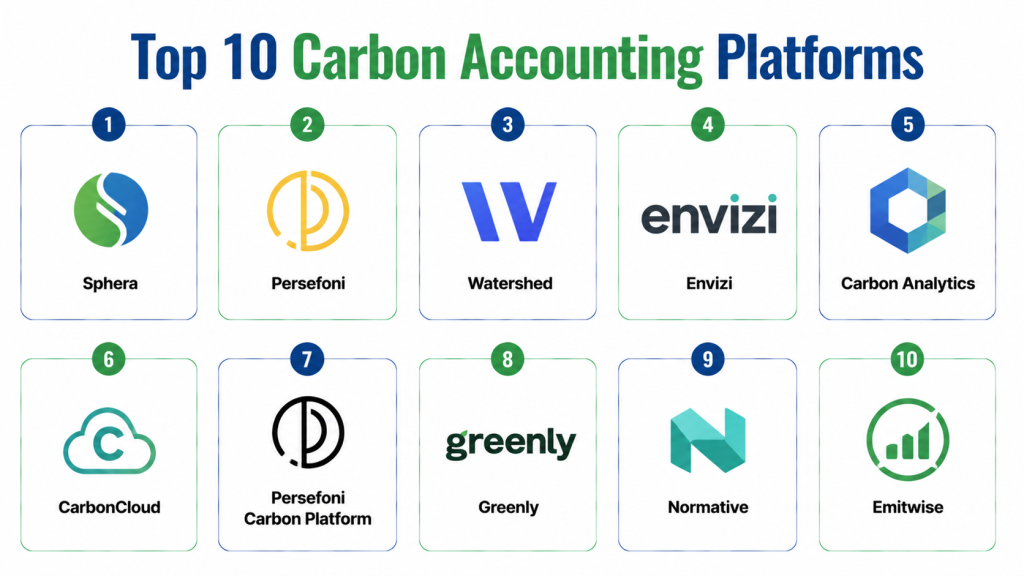
Top 10 Carbon Accounting Platforms
1- Sphera
Short description: Enterprise carbon management platform for tracking and reporting emissions, with analytics and regulatory compliance tools.
Key Features
- Scope 1, 2, and 3 emissions tracking
- ESG reporting and dashboards
- Automated data collection
- Scenario modeling and forecasting
- Integration with ERP and supply chain systems
- Cloud-based analytics
Pros
- Comprehensive coverage for all emission scopes
- Strong enterprise reporting capabilities
Cons
- Enterprise-focused, may be complex for small teams
- Premium pricing
Platforms / Deployment
- Web
- Cloud
Security & Compliance
- Not publicly stated
Integrations & Ecosystem
- ERP and utility data
- Supply chain systems
- API for custom workflows
Support & Community
- Documentation, training, and enterprise support
2- Persefoni
Short description: Carbon accounting and ESG platform enabling enterprises to monitor emissions, set reduction goals, and produce sustainability reports.
Key Features
- Enterprise emissions tracking
- Scenario planning and forecasting
- ESG reporting dashboards
- Data automation from ERP and energy records
- Multi-site support
- AI-assisted analytics
Pros
- User-friendly interface
- Strong ESG reporting support
Cons
- Focused on enterprise clients
- Integration setup may require consulting
Platforms / Deployment
- Web
- Cloud
Security & Compliance
- Not publicly stated
Integrations & Ecosystem
- ERP systems
- IoT energy meters
- API for reporting
Support & Community
- Training, documentation, and customer support
3- Watershed
Short description: Platform for carbon measurement, reduction tracking, and supply chain emissions analysis.
Key Features
- Carbon footprint measurement
- Scope 3 supply chain tracking
- Reduction target monitoring
- Automated ESG reporting
- Forecasting and scenario modeling
- Cloud dashboards
Pros
- Excellent supply chain tracking
- Strong analytics for reduction strategies
Cons
- Enterprise focus
- Subscription may be expensive for SMEs
Platforms / Deployment
- Web
- Cloud
Security & Compliance
- Not publicly stated
Integrations & Ecosystem
- Supply chain systems
- ERP and IoT integration
- API access
Support & Community
- Documentation, support portal, and training
4- Envizi
Short description: Carbon management platform providing emissions tracking, analytics, and ESG reporting for large organizations.
Key Features
- Emissions tracking across all scopes
- ESG compliance dashboards
- Forecasting and scenario modeling
- Automated reporting
- Integration with energy and resource data
- Multi-site management
Pros
- Comprehensive reporting and analytics
- Cloud-based scalability
Cons
- High learning curve
- Best suited for enterprise users
Platforms / Deployment
- Web
- Cloud
Security & Compliance
- Not publicly stated
Integrations & Ecosystem
- ERP and IoT energy systems
- Data export and API integration
Support & Community
- Documentation and training
5- Carbon Analytics
Short description: Software for businesses to measure emissions, track reductions, and generate sustainability reports.
Key Features
- Carbon footprint calculation
- Reduction goal tracking
- Automated ESG reporting
- Data import from ERP systems
- Scenario modeling
- Analytics dashboards
Pros
- Simple and accessible for mid-market
- Clear reduction insights
Cons
- Less advanced AI features
- Limited enterprise customization
Platforms / Deployment
- Web
- Cloud
Security & Compliance
- Not publicly stated
Integrations & Ecosystem
- ERP and finance systems
- Data export
- API access
Support & Community
- Documentation and support portal
6- CarbonCloud
Short description: Platform focusing on product lifecycle emissions and supply chain carbon management.
Key Features
- Product carbon footprint analysis
- Supply chain tracking
- Scenario modeling
- Reporting dashboards
- Data export
- Cloud analytics
Pros
- Detailed product-level insights
- Supports supply chain transparency
Cons
- Enterprise-focused
- Requires detailed input data
Platforms / Deployment
- Web
- Cloud
Security & Compliance
- Not publicly stated
Integrations & Ecosystem
- ERP, inventory, and supply chain systems
- API access
Support & Community
- Documentation and support portal
7- Persefoni Carbon Platform
Short description: Enterprise software for carbon accounting, emissions reduction planning, and ESG reporting.
Key Features
- Scope 1, 2, and 3 tracking
- Automated ESG dashboards
- Scenario analysis and forecasting
- Data import from utilities and ERP
- Multi-site monitoring
- Cloud analytics
Pros
- Strong compliance reporting
- Enterprise scalability
Cons
- Complex setup
- Premium subscription
Platforms / Deployment
- Web
- Cloud
Security & Compliance
- Not publicly stated
Integrations & Ecosystem
- ERP, utility meters, and IoT devices
- API integration
Support & Community
- Enterprise support and documentation
8- Greenly
Short description: Carbon accounting platform for small to medium-sized businesses to monitor and reduce emissions.
Key Features
- Emissions tracking
- ESG reporting
- Reduction goal planning
- Analytics dashboards
- Scenario modeling
- Cloud deployment
Pros
- Accessible to SMEs
- Simple interface
Cons
- Less advanced features for large enterprises
- Limited supply chain tracking
Platforms / Deployment
- Web / iOS / Android
- Cloud
Security & Compliance
- Not publicly stated
Integrations & Ecosystem
- ERP integration
- Data export
- API access
Support & Community
- Documentation and customer support
9- Normative
Short description: Platform for corporate carbon footprint management with automated data integration and ESG reporting.
Key Features
- Automated emissions calculation
- Scope 1, 2, 3 tracking
- ESG dashboards and reporting
- Forecasting tools
- Multi-location support
- Cloud analytics
Pros
- Automated data collection
- Clear reporting features
Cons
- Enterprise-focused pricing
- May require technical integration
Platforms / Deployment
- Web
- Cloud
Security & Compliance
- Not publicly stated
Integrations & Ecosystem
- ERP systems
- Utility and finance data
- API access
Support & Community
- Documentation and support portal
10- Emitwise
Short description: Enterprise carbon accounting software for emissions tracking, reduction planning, and reporting.
Key Features
- Multi-scope carbon tracking
- Reduction target monitoring
- Scenario modeling
- Automated ESG reporting
- Analytics dashboards
- Cloud-based deployment
Pros
- Strong enterprise focus
- AI-assisted analytics
Cons
- Complex for small teams
- Premium pricing
Platforms / Deployment
- Web
- Cloud
Security & Compliance
- Not publicly stated
Integrations & Ecosystem
- ERP and utility data
- API integration
- Cloud analytics
Support & Community
- Documentation and enterprise support
Comparison Table (Top 10)
| Tool Name | Best For | Platform(s) Supported | Deployment | Standout Feature | Public Rating |
|---|---|---|---|---|---|
| Sphera | Enterprise carbon tracking | Web | Cloud | Multi-scope emissions tracking | N/A |
| Persefoni | Enterprise & ESG reporting | Web | Cloud | ESG dashboards | N/A |
| Watershed | Supply chain emissions | Web | Cloud | Scope 3 tracking | N/A |
| Envizi | Multi-site organizations | Web | Cloud | Forecasting and scenario modeling | N/A |
| Carbon Analytics | Mid-market businesses | Web | Cloud | Simple emissions insights | N/A |
| CarbonCloud | Product-level analysis | Web | Cloud | Product lifecycle carbon tracking | N/A |
| Persefoni Carbon Platform | Enterprise ESG & compliance | Web | Cloud | Automated ESG reporting | N/A |
| Greenly | SMEs | Web / iOS / Android | Cloud | Simple interface | N/A |
| Normative | Corporate ESG reporting | Web | Cloud | Automated data integration | N/A |
| Emitwise | Enterprise carbon management | Web | Cloud | AI-assisted analytics | N/A |
Evaluation & Scoring of Carbon Accounting Platforms
| Tool Name | Core | Ease | Integrations | Security | Performance | Support | Value | Weighted Total |
|---|---|---|---|---|---|---|---|---|
| Sphera | 9 | 7 | 8 | 7 | 8 | 8 | 7 | 7.9 |
| Persefoni | 8 | 8 | 7 | 7 | 8 | 7 | 7 | 7.7 |
| Watershed | 8 | 7 | 7 | 7 | 8 | 7 | 7 | 7.4 |
| Envizi | 8 | 7 | 7 | 7 | 8 | 7 | 7 | 7.4 |
| Carbon Analytics | 7 | 8 | 6 | 7 | 7 | 7 | 7 | 7.0 |
| CarbonCloud | 8 | 7 | 7 | 7 | 8 | 7 | 7 | 7.3 |
| Persefoni Carbon Platform | 8 | 7 | 7 | 7 | 8 | 7 | 7 | 7.3 |
| Greenly | 7 | 8 | 6 | 7 | 7 | 7 | 7 | 6.9 |
| Normative | 7 | 7 | 7 | 7 | 7 | 7 | 7 | 7.0 |
| Emitwise | 8 | 7 | 7 | 7 | 8 | 7 | 7 | 7.3 |
Which Carbon Accounting Tool Is Right for You?
Solo / Freelancer
- Greenly or Carbon Analytics for small-scale carbon tracking projects.
SMB
- CarbonCloud or Normative for mid-market emissions reporting and analytics.
Mid-Market
- Watershed or Envizi for multi-site operations with scenario modeling and reduction planning.
Enterprise
- Sphera, Persefoni, or Emitwise for large-scale carbon management, ESG reporting, and AI-assisted analytics.
Budget vs Premium
- Smaller operators can start with Greenly or Carbon Analytics; premium platforms provide AI analytics, compliance automation, and supply chain tracking.
Feature Depth vs Ease of Use
- Sphera and Watershed offer advanced analytics; Greenly and Carbon Analytics prioritize ease of use.
Integrations & Scalability
- Enterprises benefit from ERP, utility, and IoT integration; smaller organizations can leverage simpler cloud-based dashboards.
Security & Compliance Needs
- Platforms offering automated ESG reporting, audit-ready data, and regulatory compliance are recommended for industrial and global operations.
Frequently Asked Questions (FAQs)
1- Can these platforms track Scope 3 emissions?
Yes, most enterprise platforms like Watershed and Sphera support supply chain emissions tracking.
2- Are AI or predictive analytics included?
Some platforms provide AI-assisted forecasts, anomaly detection, and reduction scenario modeling.
3- Can historical emissions be analyzed?
Yes, all platforms store historical datasets for trend analysis and reporting.
4- Are these platforms mobile-friendly?
Many offer web dashboards and mobile apps for field teams or remote access.
5- How scalable are these tools?
Enterprise platforms support multi-location operations; simpler cloud dashboards suit SMEs.
6- Can data be integrated from ERP or IoT sensors?
Yes, most platforms support integration with enterprise data systems and connected devices.
7- Are these platforms suitable for compliance reporting?
Yes, ESG dashboards, regulatory reporting, and automated analytics support compliance requirements.
8- Do they support carbon offset management?
Some platforms allow integration of offsets and renewable energy data for net-zero strategies.
9- Are they easy for small teams to use?
Platforms like Greenly and Carbon Analytics provide simplified interfaces for small organizations.
10- What pricing models exist?
Options include subscription, pay-per-asset, or enterprise licenses; low-cost solutions exist for smaller organizations.
Conclusion
Carbon Accounting Platforms empower organizations to track, analyze, and reduce greenhouse gas emissions effectively. Solo users may start with Greenly or Carbon Analytics, mid-market operations benefit from CarbonCloud or Watershed, and enterprises gain the most value from Sphera, Persefoni, or Emitwise. Next steps: shortlist 2–3 platforms based on scope, integration, and analytics needs, run pilot projects, and validate reporting and reduction capabilities.
