Introduction
Document Redaction Tools help organizations permanently remove or hide sensitive information from digital files before sharing, storing, or publishing them. These tools are commonly used to redact personal information, financial records, legal evidence, healthcare data, classified content, and confidential business documents. Modern platforms support PDFs, scanned documents, images, emails, spreadsheets, and collaborative workflows.
As organizations handle growing volumes of regulated data, document redaction has become a core requirement for compliance, cybersecurity, and privacy protection. Businesses now face stricter expectations around GDPR, HIPAA, financial regulations, and internal governance policies. AI-powered automation is also reshaping how organizations identify sensitive content at scale.
Real-world use cases include:
- Legal discovery and court filings
- Government and public records disclosure
- Healthcare document privacy protection
- Financial and banking compliance workflows
- Enterprise document sharing and collaboration
Evaluation Criteria for Buyers
- Accuracy of automated redaction
- OCR and scanned document handling
- Batch processing capabilities
- Security and compliance controls
- Audit logs and reporting
- Ease of use for non-technical users
- API and workflow integrations
- Deployment flexibility
- Collaboration and review workflows
- Cost efficiency at scale
Best for: Legal teams, government agencies, healthcare organizations, financial institutions, compliance departments, and enterprises handling confidential records.
Not ideal for: Small teams with occasional one-time redaction needs or organizations already using lightweight PDF editing workflows that do not require advanced compliance or automation features.
Key Trends in Document Redaction Tools
- AI-driven sensitive data detection is becoming standard for names, account numbers, PHI, PII, and confidential business content.
- OCR accuracy improvements are helping organizations redact scanned documents and handwritten records more effectively.
- Cloud-native redaction platforms are gaining adoption due to remote collaboration needs.
- More enterprises are demanding API-first automation for integrating redaction into workflows.
- Compliance-driven purchasing is increasing across healthcare, finance, and public sector organizations.
- Real-time collaborative review workflows are becoming more common in enterprise environments.
- Zero-trust security expectations are pushing vendors toward stronger encryption and audit logging.
- Multi-format support is expanding beyond PDFs into video, email, and multimedia content.
- Hybrid deployment models are growing for organizations with strict data residency requirements.
- AI-assisted quality checks are reducing accidental exposure risks during large-scale document processing.
How We Selected These Tools
The tools in this list were selected using a balanced evaluation methodology focused on enterprise readiness, usability, and market relevance.
Selection criteria included:
- Industry adoption and market visibility
- Feature completeness across redaction workflows
- OCR and automation capabilities
- Reliability for large document volumes
- Security and compliance positioning
- Ease of deployment and administration
- API availability and workflow integration support
- Customer suitability across SMB and enterprise environments
- Support quality and onboarding maturity
- Long-term scalability for regulated industries
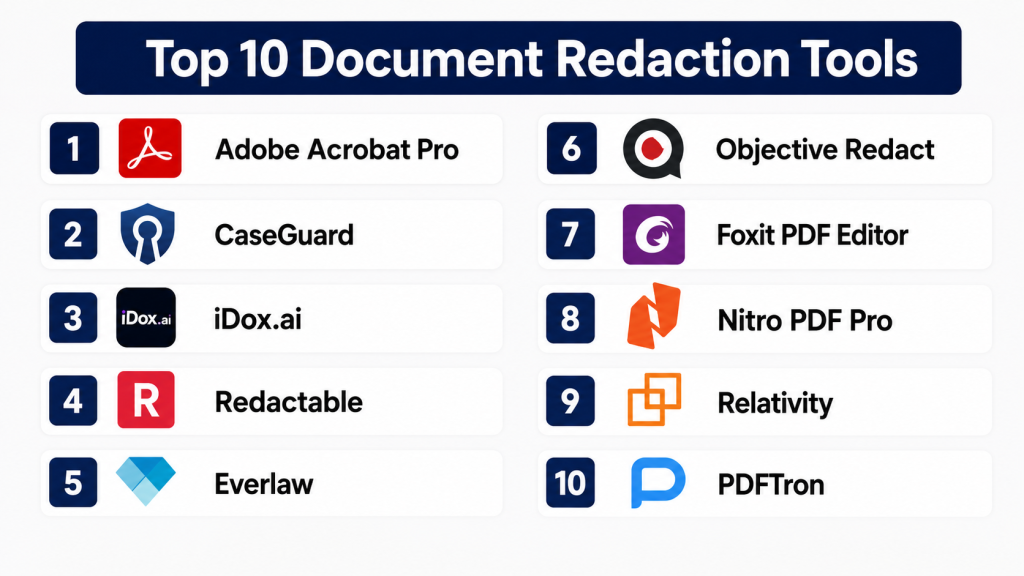
Top 10 Document Redaction Tools
1- Adobe Acrobat Pro
Short description: Adobe Acrobat Pro remains one of the most widely used document redaction platforms for PDF workflows. It is suitable for businesses, legal teams, and enterprise users that require dependable PDF editing and permanent redaction capabilities.
Key Features
- Permanent PDF redaction tools
- OCR for scanned documents
- Batch redaction workflows
- Search-and-remove functionality
- Metadata and hidden content removal
- Digital signature integration
- Document comparison tools
Pros
- Familiar interface for most business users
- Strong PDF ecosystem integration
- Reliable enterprise-grade document handling
Cons
- Advanced workflows may require training
- Subscription pricing can become expensive
- Limited advanced AI automation compared to specialized platforms
Platforms / Deployment
- Windows / macOS / Web
- Cloud / Desktop Hybrid
Security & Compliance
- Encryption support
- MFA support through Adobe ecosystem
- Audit capabilities
- GDPR support features
- Other certifications vary by deployment
Integrations & Ecosystem
Adobe integrates well with enterprise document workflows, cloud storage systems, and collaboration platforms.
- Microsoft 365
- SharePoint
- Google Drive
- Dropbox
- Adobe Document Cloud APIs
Support & Community
Adobe has extensive documentation, enterprise onboarding resources, and a very large global user community.
2- CaseGuard
Short description: CaseGuard focuses on automated redaction for legal, law enforcement, and compliance-driven organizations. It supports documents, audio, video, and image redaction workflows.
Key Features
- AI-assisted automated redaction
- Video and audio redaction
- Bulk processing capabilities
- Facial recognition masking
- OCR support
- Multi-format handling
- Workflow audit tracking
Pros
- Strong multimedia redaction support
- Designed for regulated workflows
- Useful for law enforcement operations
Cons
- Enterprise pricing may be high
- Advanced configuration can take time
- Smaller ecosystem compared to larger vendors
Platforms / Deployment
- Windows
- Cloud / Self-hosted options
Security & Compliance
- RBAC support
- Audit logs
- Encryption capabilities
- Compliance features for regulated industries
Integrations & Ecosystem
CaseGuard supports workflow integrations for compliance and investigative environments.
- Case management systems
- Evidence management platforms
- Export APIs
- OCR integrations
Support & Community
Support quality is generally strong for enterprise customers. Community size is smaller than mainstream PDF platforms.
3- iDox.ai
Short description: iDox.ai is an AI-powered redaction platform focused on automated sensitive data detection and compliance workflows. It is suitable for organizations processing large document volumes.
Key Features
- AI-based sensitive data identification
- Batch redaction automation
- OCR support
- Compliance-oriented templates
- Cloud-based collaboration
- Automated document classification
- Multi-language support
Pros
- Strong AI automation capabilities
- Efficient large-scale processing
- Modern user interface
Cons
- Internet-dependent cloud workflows
- Some advanced controls require premium plans
- Limited offline capabilities
Platforms / Deployment
- Web
- Cloud
Security & Compliance
- Encryption support
- Access controls
- GDPR-focused workflows
- Audit logging
Integrations & Ecosystem
iDox.ai supports integration with modern cloud document environments.
- Cloud storage platforms
- Workflow APIs
- Enterprise document systems
- OCR pipelines
Support & Community
The platform offers onboarding assistance and documentation, though the broader community remains relatively small.
4- Redactable
Short description: Redactable is a cloud-first PDF redaction platform designed for legal teams, compliance professionals, and business users requiring collaborative workflows.
Key Features
- Browser-based redaction
- Team collaboration workflows
- Search-and-redact capabilities
- Audit trails
- Bulk document processing
- OCR functionality
- Secure sharing controls
Pros
- Easy-to-use interface
- Strong collaborative capabilities
- No heavy desktop installation required
Cons
- Primarily PDF-focused
- Cloud-only deployment may not fit all industries
- Limited multimedia support
Platforms / Deployment
- Web
- Cloud
Security & Compliance
- Encryption
- Audit trails
- Access controls
- Compliance-focused workflows
Integrations & Ecosystem
The platform supports integrations with modern business productivity environments.
- Google Workspace
- Microsoft 365
- Cloud storage providers
- Workflow APIs
Support & Community
Documentation is straightforward and onboarding is relatively easy for non-technical teams.
5- Everlaw
Short description: Everlaw is primarily an ediscovery platform with advanced redaction capabilities. It is widely used by legal teams handling litigation and compliance investigations.
Key Features
- Legal document review workflows
- Advanced PDF redaction
- Collaboration tools
- AI-assisted document analysis
- Large-scale case management
- Search indexing
- Audit tracking
Pros
- Excellent for legal investigations
- Strong collaborative review environment
- Scales well for enterprise litigation
Cons
- More expensive than standalone tools
- Complex platform for smaller organizations
- Primarily focused on legal use cases
Platforms / Deployment
- Web
- Cloud
Security & Compliance
- Encryption
- Access controls
- Audit logs
- Compliance-oriented architecture
Integrations & Ecosystem
Everlaw integrates with enterprise legal and discovery workflows.
- Legal hold systems
- Cloud storage
- Document repositories
- API integrations
Support & Community
Enterprise support quality is generally strong, especially for litigation-heavy organizations.
6- Objective Redact
Short description: Objective Redact is widely used in government and public sector environments for secure document sanitization and disclosure workflows.
Key Features
- Automated sensitive data detection
- Batch redaction
- OCR support
- Metadata cleaning
- Audit logging
- Secure review workflows
- Multi-format support
Pros
- Strong public-sector focus
- Reliable compliance workflows
- Good scalability for large departments
Cons
- Interface may feel enterprise-heavy
- Less suited for casual business users
- Pricing varies significantly
Platforms / Deployment
- Windows / Web
- Cloud / Hybrid
Security & Compliance
- Encryption
- Audit logging
- Access controls
- Government-focused compliance support
Integrations & Ecosystem
Objective Redact supports integration with enterprise governance environments.
- Government document systems
- SharePoint
- Workflow APIs
- Records management systems
Support & Community
Support is enterprise-oriented with implementation assistance for large deployments.
7- Foxit PDF Editor
Short description: Foxit PDF Editor offers PDF editing and redaction functionality for SMBs and enterprises seeking a cost-effective Adobe alternative.
Key Features
- PDF redaction
- OCR support
- Batch document processing
- Annotation tools
- Form management
- Secure PDF sharing
- Collaboration workflows
Pros
- Lower cost than some competitors
- Lightweight desktop experience
- Strong PDF editing functionality
Cons
- Limited advanced AI automation
- Some enterprise features require upgrades
- Interface consistency varies
Platforms / Deployment
- Windows / macOS / Web
- Cloud / Desktop Hybrid
Security & Compliance
- Encryption
- Digital signatures
- Access permissions
- Security capabilities vary by edition
Integrations & Ecosystem
Foxit supports common enterprise document workflows and integrations.
- Microsoft 365
- Google Workspace
- SharePoint
- Cloud storage providers
Support & Community
Foxit has strong documentation and an active user base in business PDF workflows.
8- Nitro PDF Pro
Short description: Nitro PDF Pro combines document editing and redaction capabilities for organizations seeking productivity-focused PDF management tools.
Key Features
- Permanent redaction
- OCR scanning
- PDF editing
- Batch processing
- Digital signatures
- Workflow automation
- Document collaboration
Pros
- Productivity-oriented interface
- Competitive enterprise pricing
- Good Microsoft ecosystem compatibility
Cons
- Less advanced AI automation
- Some features limited by licensing tiers
- Smaller ecosystem than Adobe
Platforms / Deployment
- Windows / macOS / Web
- Cloud / Hybrid
Security & Compliance
- Encryption
- Access permissions
- Audit support
- Security features vary by deployment
Integrations & Ecosystem
Nitro integrates well with office productivity workflows.
- Microsoft 365
- SharePoint
- Cloud storage systems
- Document management platforms
Support & Community
Nitro offers enterprise onboarding and standard documentation resources.
9- Relativity
Short description: Relativity is a large-scale ediscovery and compliance platform with advanced redaction and legal review capabilities for enterprise environments.
Key Features
- Enterprise ediscovery workflows
- Large-scale redaction
- AI-assisted document analysis
- Compliance reporting
- Advanced search indexing
- Review collaboration
- Case management tools
Pros
- Excellent scalability
- Strong enterprise compliance workflows
- Advanced legal analytics
Cons
- Expensive implementation
- Requires specialist administration
- Overkill for small organizations
Platforms / Deployment
- Web
- Cloud / Self-hosted
Security & Compliance
- RBAC
- Audit logs
- Encryption
- Enterprise security capabilities
Integrations & Ecosystem
Relativity has a mature legal and compliance ecosystem.
- Legal review platforms
- Enterprise storage systems
- APIs
- Governance tools
Support & Community
Large enterprise support network with strong partner ecosystem and training resources.
10- PDFTron
Short description: PDFTron provides developer-focused PDF and document processing APIs including advanced redaction functionality for custom applications.
Key Features
- Developer APIs
- Automated redaction
- OCR capabilities
- Cross-platform SDKs
- Batch processing
- Workflow automation
- Custom application integration
Pros
- Excellent developer flexibility
- Strong API ecosystem
- Scalable for custom enterprise solutions
Cons
- Requires technical implementation skills
- Less suitable for non-technical teams
- Pricing varies by usage scale
Platforms / Deployment
- Windows / macOS / Linux / Web / Mobile
- Cloud / Self-hosted / Hybrid
Security & Compliance
- Encryption support
- Access controls
- Enterprise deployment flexibility
- Additional compliance details vary
Integrations & Ecosystem
PDFTron integrates deeply into custom enterprise applications and developer workflows.
- REST APIs
- SDK integrations
- Cloud storage platforms
- Enterprise workflow systems
- Mobile app frameworks
Support & Community
Strong developer documentation and API support with an active technical user community.
Comparison Table
| Tool Name | Best For | Platforms Supported | Deployment | Standout Feature | Public Rating |
|---|---|---|---|---|---|
| Adobe Acrobat Pro | General enterprise PDF workflows | Windows, macOS, Web | Hybrid | Reliable PDF redaction | N/A |
| CaseGuard | Law enforcement and multimedia redaction | Windows | Cloud, Self-hosted | Audio and video redaction | N/A |
| iDox.ai | AI-powered compliance automation | Web | Cloud | AI-driven data detection | N/A |
| Redactable | Collaborative PDF workflows | Web | Cloud | Browser-based teamwork | N/A |
| Everlaw | Legal discovery teams | Web | Cloud | Litigation-focused workflows | N/A |
| Objective Redact | Government organizations | Windows, Web | Hybrid | Public-sector compliance | N/A |
| Foxit PDF Editor | SMB PDF management | Windows, macOS, Web | Hybrid | Cost-effective editing | N/A |
| Nitro PDF Pro | Productivity-focused businesses | Windows, macOS, Web | Hybrid | Office productivity integration | N/A |
| Relativity | Enterprise legal operations | Web | Cloud, Self-hosted | Large-scale ediscovery | N/A |
| PDFTron | Developers and custom apps | Multi-platform | Hybrid | Developer API ecosystem | N/A |
Evaluation & Scoring of Document Redaction Tools
| Tool Name | Core | Ease | Integrations | Security | Performance | Support | Value | Weighted Total |
| Adobe Acrobat Pro | 9 | 9 | 8 | 8 | 9 | 9 | 7 | 8.45 |
| CaseGuard | 9 | 7 | 7 | 9 | 8 | 8 | 7 | 7.95 |
| iDox.ai | 8 | 8 | 7 | 8 | 8 | 7 | 8 | 7.80 |
| Redactable | 8 | 9 | 7 | 8 | 7 | 7 | 8 | 7.85 |
| Everlaw | 9 | 7 | 8 | 9 | 9 | 9 | 6 | 8.20 |
| Objective Redact | 8 | 7 | 7 | 9 | 8 | 8 | 7 | 7.65 |
| Foxit PDF Editor | 8 | 8 | 7 | 7 | 8 | 7 | 9 | 7.85 |
| Nitro PDF Pro | 8 | 8 | 8 | 7 | 8 | 7 | 8 | 7.90 |
| Relativity | 10 | 6 | 9 | 10 | 10 | 9 | 5 | 8.40 |
| PDFTron | 9 | 6 | 10 | 9 | 9 | 8 | 7 | 8.25 |
These scores are comparative rather than absolute. Enterprise legal platforms naturally score higher in compliance and scalability, while SMB-focused products may score better for usability and pricing. Buyers should prioritize categories that align with operational requirements rather than focusing only on total score. Organizations with strict regulatory obligations may value security and auditability more heavily than simplicity or pricing.
Which Document Redaction Tool Is Right for You?
Solo / Freelancer
Freelancers and consultants typically benefit from lightweight PDF-focused tools with straightforward pricing. Foxit PDF Editor and Nitro PDF Pro are practical choices because they combine editing and redaction without requiring enterprise deployment complexity.
SMB
Small and medium businesses often need affordable tools with collaboration and compliance support. Adobe Acrobat Pro and Redactable are strong options for SMB environments where usability and team workflows matter.
Mid-Market
Mid-sized organizations handling growing compliance requirements may prefer iDox.ai or Objective Redact. These tools provide stronger automation and scalable document handling while maintaining manageable operational complexity.
Enterprise
Large enterprises with legal, healthcare, or government workloads should evaluate Relativity, Everlaw, or CaseGuard. These platforms support advanced governance, auditability, and large-scale document review operations.
Budget vs Premium
Budget-focused buyers should consider Foxit PDF Editor or Nitro PDF Pro. Premium enterprise buyers requiring advanced analytics, AI automation, and compliance management may find better long-term value in Relativity or Everlaw.
Feature Depth vs Ease of Use
Adobe Acrobat Pro balances usability and functionality effectively. Relativity and PDFTron offer deeper capabilities but require more technical expertise and administration resources.
Integrations & Scalability
Organizations with custom workflows and large-scale automation needs should evaluate PDFTron or Relativity due to their strong APIs and enterprise integration ecosystems.
Security & Compliance Needs
Healthcare, government, and financial organizations should prioritize tools with audit logging, RBAC, encryption, and compliance-oriented workflows. CaseGuard, Relativity, and Objective Redact stand out in highly regulated environments.
Frequently Asked Questions
1. What is a document redaction tool?
A document redaction tool permanently removes sensitive information from files before sharing or publishing them. This prevents hidden metadata or confidential data from being accidentally exposed.
2. Why is permanent redaction important?
Simple black boxes or visual hiding methods can often be reversed. Proper redaction permanently deletes sensitive information from the document layer and metadata.
3. Which industries use document redaction tools most?
Legal, healthcare, government, insurance, banking, and compliance-heavy industries are among the largest users because they regularly handle regulated information.
4. Can AI automatically identify sensitive information?
Many modern tools now use AI to detect names, addresses, account numbers, and other confidential data. However, human review is still important for accuracy.
5. Are cloud-based redaction tools secure?
Cloud-based tools can be secure if they offer encryption, audit logs, access controls, and compliance features. Organizations with strict data residency rules may still prefer self-hosted deployments.
6. What file types can these tools redact?
Most platforms support PDFs, scanned documents, images, spreadsheets, and text files. Some advanced platforms also support audio and video redaction.
7. How important is OCR in document redaction?
OCR is critical for scanned files because it converts image-based text into searchable content that can be accurately redacted.
8. What is the biggest mistake organizations make during redaction?
One common mistake is relying on visual masking instead of permanent deletion. Another is skipping quality review checks before document release.
9. Are open-source redaction tools a good alternative?
Open-source tools can work for technical teams with limited requirements, but enterprise organizations often prefer commercial platforms for compliance, support, and auditability.
10. How should organizations evaluate document redaction software?
Buyers should test automation accuracy, OCR quality, workflow integration, scalability, and compliance capabilities before selecting a long-term platform.
Conclusion
Document redaction tools have evolved from simple PDF editing utilities into critical compliance and privacy management platforms. Organizations now expect AI-assisted automation, scalable workflows, strong security controls, and integration flexibility across enterprise ecosystems. The right solution depends heavily on industry requirements, deployment preferences, and document complexity. SMBs may prioritize usability and affordability, while enterprises often require advanced governance, auditability, and large-scale automation. Rather than searching for a universal winner, organizations should shortlist two or three tools, run controlled pilot projects, validate integration requirements, and confirm security expectations before making a long-term investment decision.
