Introduction
Preference Management Tools help organizations capture, manage, and honor customer communication preferences across multiple channels. By centralizing preference data, businesses can respect user choices, improve engagement, and maintain compliance with data privacy regulations such as GDPR and CCPA.
Why it matters now: Customers increasingly demand control over how and when brands communicate with them. Preference management ensures organizations send relevant, permitted communications while avoiding privacy violations. It also reduces unsubscribe rates, boosts engagement, and strengthens customer trust.
Real-world use cases:
- Centralizing email, SMS, push, and in-app communication preferences.
- Managing opt-in and opt-out for marketing campaigns.
- Compliance reporting for GDPR, CCPA, and other privacy laws.
- Providing self-service portals for customers to update preferences.
- Integrating preference data with CRM and marketing automation platforms.
Evaluation criteria for buyers:
- Multi-channel support for communications.
- Ease of use for administrators and customers.
- Integration with CRM, marketing automation, and analytics.
- Compliance features and audit trail reporting.
- Scalability for growing datasets.
- Security and access controls.
- Customization and branding of preference portals.
- Automation and workflow capabilities.
Best for: Marketing teams, data privacy officers, and customer experience teams in mid-market and enterprise organizations.
Not ideal for: Small businesses with limited communication channels or minimal regulatory obligations; simple email preference tools may suffice.
Key Trends in Preference Management Tools
- AI-driven recommendations for personalized communication preferences.
- Centralized dashboards for managing cross-channel preferences.
- Cloud-native deployments for scalability and flexibility.
- Automation of consent capture and preference updates.
- Integration with CRM, marketing, and analytics platforms.
- Real-time audit trails and reporting for compliance.
- Self-service portals for customer-managed preferences.
- Modular subscription models for SMBs to enterprises.
- Privacy-by-design approach embedded in tool workflows.
- Multi-language support for global audiences.
How We Selected These Tools (Methodology)
- Reviewed market adoption among marketing, CRM, and data privacy teams.
- Assessed feature completeness, including multi-channel preference capture and self-service portals.
- Evaluated integration capabilities with marketing automation, CRM, and analytics platforms.
- Checked security and compliance credentials: GDPR, CCPA, SOC 2.
- Analyzed ease of use and administrative workflow management.
- Considered scalability for enterprise and mid-market needs.
- Examined reporting and audit capabilities.
- Prioritized tools with automation and AI features.
- Balanced suitability for SMB, mid-market, and enterprise clients.
- Reviewed support and community resources.
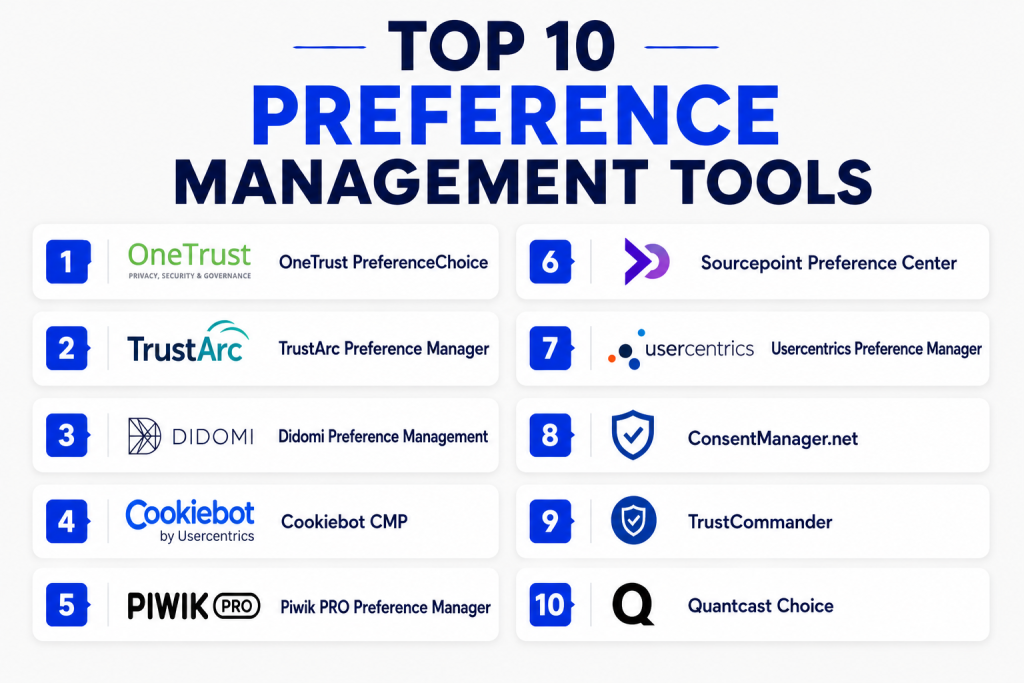
Top 10 Preference Management Tools
#1 — OneTrust PreferenceChoice
Short description: Enterprise-grade platform for managing multi-channel preferences and compliance across customer communications.
Key Features
- Multi-channel preference management
- Self-service portals for customers
- Real-time consent enforcement
- Integration with CRM and marketing platforms
- Automated compliance reporting
- Customizable dashboards
- AI-assisted preference recommendations
Pros
- Comprehensive enterprise solution
- Strong compliance features
Cons
- Premium pricing
- Steep learning curve for smaller teams
Platforms / Deployment
- Web
- Cloud
Security & Compliance
- GDPR, CCPA, SOC 2, ISO 27001
Integrations & Ecosystem
- Salesforce, HubSpot, Marketo
- API for custom workflows
- Connectors for BI platforms
Support & Community
- Enterprise support tiers
- Extensive documentation and training
#2 — TrustArc Preference Manager
Short description: Provides centralized preference management with automated compliance and reporting.
Key Features
- Preference capture across channels
- Automated regulatory updates
- Audit trail and reporting
- Integration with CRM and marketing automation
- Real-time updates
Pros
- Strong compliance and governance
- Easy-to-use dashboards
Cons
- Enterprise-focused pricing
- Limited SMB features
Platforms / Deployment
- Web
- Cloud
Security & Compliance
- GDPR, CCPA, SOC 2
Integrations & Ecosystem
- CRM systems, Google Analytics
- API access for automation
Support & Community
- Documentation available
- Customer support tiers
#3 — Didomi Preference Management
Short description: Offers multi-channel preference management with self-service portals and real-time updates.
Key Features
- Multi-channel preference capture
- Self-service portals
- API integrations
- Real-time updates and compliance enforcement
- Reporting and audit logs
Pros
- User-friendly interface
- Real-time preference management
Cons
- Some integrations require technical setup
- Higher pricing for smaller teams
Platforms / Deployment
- Web / iOS / Android
- Cloud
Security & Compliance
- GDPR, CCPA
Integrations & Ecosystem
- Salesforce, HubSpot, Marketo
- API for workflows
Support & Community
- Documentation available
- Customer support and training
#4 — Cookiebot CMP
Short description: Provides automated web consent and preference management focused on cookies and online tracking.
Key Features
- Cookie consent and preference capture
- Automated compliance monitoring
- Reporting and audit trails
- CMS integration
- Self-service preference portals
Pros
- Easy web deployment
- Automated compliance checks
Cons
- Focused primarily on cookies
- Limited enterprise features
Platforms / Deployment
- Web
- Cloud
Security & Compliance
- GDPR, CCPA
Integrations & Ecosystem
- WordPress, Drupal, Shopify
- API access
Support & Community
- Knowledge base and guides
- Email support
#5 — Piwik PRO Preference Manager
Short description: Enterprise-focused tool for privacy-conscious preference management and analytics integration.
Key Features
- Multi-channel preference capture
- Customizable self-service portals
- Compliance dashboards and reporting
- API for integration with analytics and marketing platforms
- Audit trail features
Pros
- Strong privacy focus
- Scalable for large datasets
Cons
- Enterprise pricing
- Requires setup expertise
Platforms / Deployment
- Web
- Cloud / On-premises
Security & Compliance
- GDPR, HIPAA
Integrations & Ecosystem
- Piwik PRO Analytics, CRM systems
- API connectors
Support & Community
- Documentation and training
- Enterprise support tiers
#6 — Sourcepoint Preference Center
Short description: Centralized preference management for digital media and advertising compliance.
Key Features
- Multi-channel preference capture
- Self-service portals
- Automated compliance updates
- Reporting and audit logs
- API integration
Pros
- Ideal for publishers and advertisers
- Automated compliance
Cons
- Focused on digital media
- Less suitable for SMBs outside publishing
Platforms / Deployment
- Web
- Cloud
Security & Compliance
- GDPR, CCPA
Integrations & Ecosystem
- Ad servers, analytics platforms
- API for integration
Support & Community
- Documentation and guides
- Customer support tiers
#7 — Usercentrics Preference Manager
Short description: Customizable preference management solution with self-service portals and compliance reporting.
Key Features
- Multi-channel preference capture
- Self-service customer portals
- Audit and reporting dashboards
- API integrations
- GDPR and CCPA compliance
Pros
- Highly customizable
- User-friendly interface
Cons
- Higher pricing for small teams
- Enterprise-focused support
Platforms / Deployment
- Web
- Cloud
Security & Compliance
- GDPR, CCPA
Integrations & Ecosystem
- Salesforce, HubSpot, analytics platforms
- API support
Support & Community
- Documentation and training
- Enterprise support tiers
#8 — ConsentManager.net
Short description: Multi-channel preference management with automated compliance updates for websites and apps.
Key Features
- Cookie and preference management
- Self-service portals
- Multi-language support
- Reporting and audit trails
- API integration
Pros
- Easy deployment
- Automated compliance updates
Cons
- Focused primarily on cookie preferences
- Limited enterprise features
Platforms / Deployment
- Web / iOS / Android
- Cloud
Security & Compliance
- GDPR, CCPA
Integrations & Ecosystem
- CMS platforms, marketing automation tools
- API access
Support & Community
- Documentation and guides
- Email support
#9 — TrustCommander
Short description: Enterprise-grade preference management with audit trails and automated compliance.
Key Features
- Multi-channel preference capture
- Self-service portals
- Compliance dashboards and reporting
- API integrations
- Audit logs
Pros
- Enterprise-ready
- Strong compliance focus
Cons
- Higher cost
- Less intuitive for smaller teams
Platforms / Deployment
- Web
- Cloud
Security & Compliance
- GDPR, CCPA, SOC 2
Integrations & Ecosystem
- CRM systems, marketing platforms
- API connectors
Support & Community
- Documentation and training
- Enterprise support tiers
#10 — Quantcast Choice
Short description: Preference and consent management for digital advertising compliance.
Key Features
- Cookie and preference management
- Self-service portals
- Real-time compliance updates
- Reporting and audit trails
- API integration
Pros
- Optimized for advertisers and publishers
- Real-time enforcement
Cons
- Focused on digital media
- Enterprise pricing
Platforms / Deployment
- Web
- Cloud
Security & Compliance
- GDPR, CCPA
Integrations & Ecosystem
- Ad servers, analytics platforms
- API integration
Support & Community
- Documentation and guides
- Customer support tiers
Comparison Table (Top 10)
| Tool Name | Best For | Platform(s) Supported | Deployment | Standout Feature | Public Rating |
|---|---|---|---|---|---|
| OneTrust PreferenceChoice | Enterprise marketers | Web | Cloud | Granular preference management | N/A |
| TrustArc Preference Manager | Compliance teams | Web | Cloud | Automated regulatory updates | N/A |
| Didomi Preference Management | Multi-channel marketers | Web / iOS / Android | Cloud | Real-time updates | N/A |
| Cookiebot CMP | Website owners | Web | Cloud | Automated cookie compliance | N/A |
| Piwik PRO Preference Manager | Enterprises | Web | Cloud / On-premises | Privacy-focused analytics | N/A |
| Sourcepoint Preference Center | Publishers & advertisers | Web | Cloud | Digital media compliance | N/A |
| Usercentrics Preference Manager | Enterprises | Web | Cloud | Customizable portals | N/A |
| ConsentManager.net | SMBs and websites | Web / iOS / Android | Cloud | Multi-language compliance | N/A |
| TrustCommander | Enterprises | Web | Cloud | Centralized preference & auditing | N/A |
| Quantcast Choice | Digital advertisers | Web | Cloud | Real-time enforcement | N/A |
Evaluation & Scoring of Preference Management Tools
| Tool Name | Core (25%) | Ease (15%) | Integrations (15%) | Security (10%) | Performance (10%) | Support (10%) | Value (15%) | Weighted Total (0–10) |
|---|---|---|---|---|---|---|---|---|
| OneTrust PreferenceChoice | 9 | 7 | 8 | 9 | 8 | 8 | 7 | 8.2 |
| TrustArc Preference Manager | 8 | 8 | 7 | 9 | 8 | 7 | 7 | 7.9 |
| Didomi Preference Management | 8 | 8 | 8 | 9 | 8 | 7 | 7 | 8.0 |
| Cookiebot CMP | 7 | 8 | 6 | 8 | 7 | 6 | 7 | 7.2 |
| Piwik PRO Preference Manager | 8 | 7 | 7 | 9 | 8 | 7 | 7 | 7.9 |
| Sourcepoint Preference Center | 8 | 7 | 7 | 9 | 8 | 7 | 7 | 7.9 |
| Usercentrics Preference Manager | 8 | 8 | 8 | 9 | 8 | 7 | 7 | 8.0 |
| ConsentManager.net | 7 | 8 | 6 | 8 | 7 | 6 | 7 | 7.2 |
| TrustCommander | 8 | 7 | 7 | 9 | 8 | 7 | 7 | 7.9 |
| Quantcast Choice | 7 | 8 | 7 | 8 | 7 | 6 | 7 | 7.3 |
Which Preference Management Tool Is Right for You?
Solo / Freelancer
ConsentManager.net or Cookiebot CMP offer simple, cost-effective solutions for small teams.
SMB
Didomi or Usercentrics CMP provide scalable preference management and self-service portals.
Mid-Market
TrustArc and Piwik PRO offer enterprise features, reporting, and compliance dashboards.
Enterprise
OneTrust PreferenceChoice, Sourcepoint, or TrustCommander deliver comprehensive multi-channel coverage and AI-enhanced preference management.
Budget vs Premium
SMBs can focus on affordable solutions like Cookiebot; enterprises may require OneTrust or Sourcepoint for full-scale compliance.
Feature Depth vs Ease of Use
Platforms like OneTrust provide extensive features but require training; Didomi emphasizes usability with strong core functionality.
Integrations & Scalability
Ensure CRM, marketing, and analytics integrations. Cloud solutions provide scalability; hybrid options add flexibility.
Security & Compliance Needs
Enterprises should prioritize GDPR, CCPA, SOC 2, and HIPAA-compliant tools for secure preference management.
Frequently Asked Questions (FAQs)
1. What is a Preference Management Tool?
A platform to capture, manage, and honor customer communication preferences across channels while maintaining compliance.
2. Which businesses benefit most?
Organizations with multi-channel marketing and regulated industries benefit most, including mid-market and enterprise companies.
3. Can SMBs use these tools effectively?
Yes, SMBs can adopt tools like Didomi or ConsentManager.net for cost-effective, user-friendly preference management.
4. Do these tools support multiple channels?
Yes, top tools manage web, mobile, email, SMS, and push notifications for marketing campaigns.
5. How do these tools ensure compliance?
They provide audit logs, reporting, and real-time enforcement of privacy regulations such as GDPR and CCPA.
6. Can these tools integrate with CRMs?
Yes, most tools integrate with Salesforce, HubSpot, Marketo, and other marketing platforms.
7. Is setup complicated?
It varies; SMB-focused tools are simple to deploy, while enterprise solutions may require configuration and training.
8. Can customers update their preferences?
Yes, self-service portals allow customers to manage opt-ins, opt-outs, and communication preferences.
9. Are multi-language options supported?
Many platforms offer multi-language preference portals for global compliance and customer accessibility.
10. How often should preference policies be updated?
Regularly, especially when adding new channels or following updated privacy regulations.
Conclusion
Selecting the right Preference Management Tool depends on your organization’s size, communication complexity, and regulatory needs. SMBs can prioritize usability and cost, while enterprises may require multi-channel coverage, automation, and compliance features. Shortlist 2–3 tools that match your integration and reporting requirements, pilot them, and scale to ensure customer trust, compliance, and engagement.
