Introduction
Push Notification Platforms are software tools that enable businesses and developers to send alerts, updates, and messages directly to users’ devices in real time. These notifications can appear on mobile phones, tablets, or web browsers, helping organizations maintain engagement, drive conversions, and retain users. In simple terms, these platforms allow businesses to communicate instantly and effectively with their audience.
Push notifications are critical for modern digital experiences because users expect immediate, relevant information. Effective platforms provide analytics, segmentation, personalization, and automation to maximize engagement and optimize messaging campaigns. Organizations rely on these tools to deliver timely transactional alerts, marketing messages, and user notifications without relying solely on email or SMS.
Real-world use cases include
- Sending transactional notifications such as account confirmations, order updates, and password resets
- Running marketing campaigns with personalized content
- Notifying users of important app updates, promotions, or service outages
- Engaging inactive users with targeted messages
- Sending multi-channel messages including in-app and web notifications
Buyers should evaluate these criteria
- Multi-platform support for iOS, Android, and web
- API and SDK flexibility for integration
- Automation and scheduling capabilities
- Analytics and reporting dashboards
- Personalization and segmentation features
- Security and compliance with encryption and privacy regulations
- Scalability for high-volume notifications
- Cost and pricing flexibility
- Ease of use and dashboard functionality
- Quality of support, documentation, and community
Best for: Developers, marketers, product managers, and enterprises seeking real-time engagement and user retention through personalized notifications
Not ideal for: Organizations without apps or web platforms that do not rely on direct user engagement, or those that only use email/SMS for communications
Key Trends in Push Notification Platforms
- AI-driven personalization for optimized engagement
- Cross-device delivery for mobile, web, and desktop notifications
- Automation of notifications based on user behavior and triggers
- Integration with marketing automation and CRM systems
- Advanced analytics dashboards with conversion tracking
- Privacy-compliant messaging for GDPR, CCPA, and other regulations
- Cloud-native platforms for high scalability and low latency
- Multi-language support and localization for global audiences
- Rich media notifications including images, videos, and interactive content
- Flexible pricing models including subscription or pay-per-notification
How We Selected These Tools
- Evaluated market adoption across SMB, mid-market, and enterprise segments
- Assessed feature completeness including automation, personalization, and analytics
- Reviewed performance and reliability, including delivery latency
- Examined security posture and compliance features
- Considered integration options with apps, CRM, and marketing tools
- Analyzed scalability and ability to handle high-volume notifications
- Investigated quality of documentation and onboarding
- Evaluated customer feedback and reputation in the industry
Top 10 Push Notification Platforms
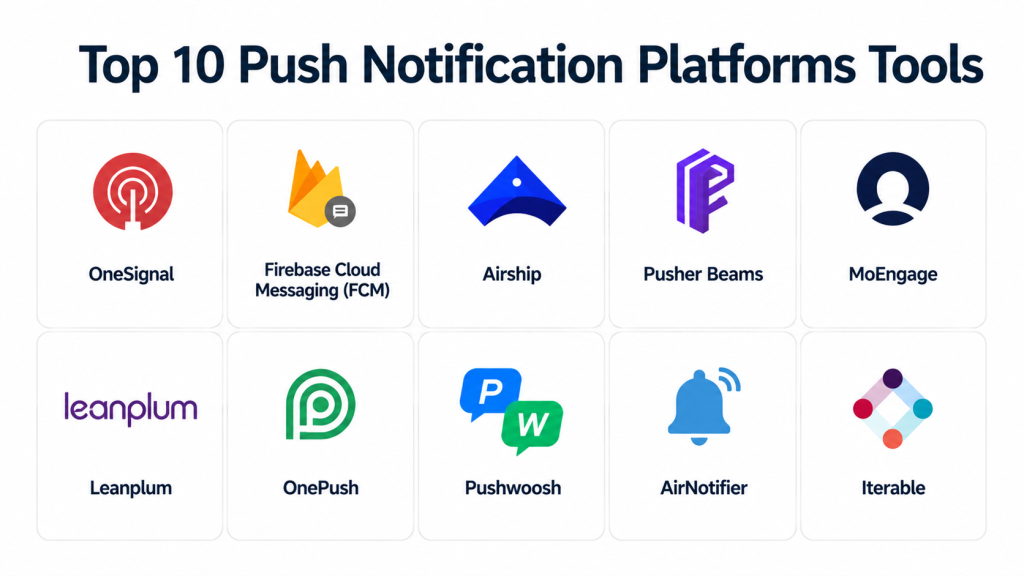
#1 — OneSignal
Short description: OneSignal enables multi-platform push notifications for web and mobile with personalization, automation, and analytics for marketers and developers
Key Features
- Multi-platform support for iOS, Android, and web
- Segmentation and personalization
- Automation and triggered messages
- Real-time analytics and reporting
- Rich media notifications
- API and SDK integrations
Pros
- Free tier available
- Easy integration and user-friendly interface
Cons
- Advanced features require premium plans
- Limited email/SMS support on lower tiers
Platforms / Deployment
- Web / iOS / Android
- Cloud
Security & Compliance
- Encryption in transit
- GDPR compliant
- Not publicly stated
Integrations & Ecosystem
- Web and mobile app integration
- SDKs for multiple platforms
- CRM and marketing automation integration
Support & Community
- Documentation and guides
- Support tiers available
- Active developer community
#2 — Firebase Cloud Messaging
Short description: Firebase Cloud Messaging provides a free platform for developers to send notifications and messages across mobile and web applications
Key Features
- Multi-platform support for iOS, Android, and web
- Event-triggered notifications
- High-volume delivery
- Analytics integration via Firebase
- Customizable message formats
Pros
- Free and reliable
- Integration with Google ecosystem
Cons
- Limited marketing features
- Advanced personalization requires additional tools
Platforms / Deployment
- Web / iOS / Android
- Cloud
Security & Compliance
- Encryption in transit
- Not publicly stated
Integrations & Ecosystem
- Firebase analytics
- Google Ads and Firebase integration
- SDK and API support
Support & Community
- Google documentation
- Community forums
- Limited official support
#3 — Airship
Short description: Airship provides enterprise push notifications with advanced automation, segmentation, and analytics for mobile apps and web
Key Features
- Advanced segmentation and targeting
- Automation and triggered messages
- Real-time analytics and reporting
- A/B testing for notifications
- Multi-channel support including push, email, and SMS
Pros
- Enterprise-grade features
- Strong automation and personalization
Cons
- Higher pricing
- Requires onboarding for full use
Platforms / Deployment
- Web / iOS / Android
- Cloud
Security & Compliance
- Encryption and access controls
- GDPR compliant
- Not publicly stated
Integrations & Ecosystem
- CRM and marketing automation
- SDKs for mobile apps
- Webhook support
Support & Community
- Documentation and onboarding
- Enterprise support tiers
- Community forums
#4 — Pusher Beams
Short description: Pusher Beams is a developer-focused platform for real-time transactional notifications across web and mobile
Key Features
- Real-time push delivery
- API and SDK integration
- Event-driven triggers
- Analytics and delivery reports
- Multi-platform support
Pros
- Developer-friendly
- Reliable delivery
Cons
- Limited marketing features
- Smaller enterprise ecosystem
Platforms / Deployment
- Web / iOS / Android
- Cloud
Security & Compliance
- Encryption in transit
- Not publicly stated
Integrations & Ecosystem
- Backend API integration
- Webhooks for events
- SDK support
Support & Community
- Documentation and sample projects
- Ticket-based support
- Developer community
#5 — MoEngage
Short description: MoEngage is a customer engagement platform with push notifications, automation, AI-driven personalization, and analytics
Key Features
- AI-powered segmentation
- Automation and lifecycle messaging
- Multi-channel support
- Analytics dashboards
- Personalized recommendations
Pros
- Advanced analytics
- Multi-channel engagement
Cons
- Premium pricing
- Requires onboarding
Platforms / Deployment
- Web / iOS / Android
- Cloud
Security & Compliance
- Encryption and access control
- GDPR compliant
- Not publicly stated
Integrations & Ecosystem
- CRM integration
- Mobile and web SDKs
- API access
Support & Community
- Documentation and guides
- Enterprise support tiers
- Active community
#6 — Leanplum
Short description: Leanplum offers push notifications, A/B testing, and mobile engagement analytics for product and marketing teams
Key Features
- Multi-channel messaging
- A/B testing
- Analytics dashboards
- Event-based automation
- Segmentation and targeting
Pros
- Data-driven insights
- Strong mobile engagement
Cons
- Pricing may be high
- Complexity for smaller teams
Platforms / Deployment
- Web / iOS / Android
- Cloud
Security & Compliance
- Encryption and secure API
- GDPR compliant
- Not publicly stated
Integrations & Ecosystem
- Mobile SDKs
- CRM and marketing tools
- Webhooks for backend events
Support & Community
- Documentation and onboarding
- Support tiers available
- Active user community
#7 — OnePush
Short description: OnePush is a lightweight, developer-friendly platform for web and mobile push notifications
Key Features
- Web and mobile push support
- Segmentation and targeting
- Analytics and reporting
- Automation and scheduling
- API and SDK integration
Pros
- Simple and cost-effective
- Developer-friendly
Cons
- Limited enterprise features
- Less advanced analytics
Platforms / Deployment
- Web / iOS / Android
- Cloud
Security & Compliance
- Encryption supported
- Not publicly stated
Integrations & Ecosystem
- SDK and API support
- CRM and backend integration
- Webhooks
Support & Community
- Documentation provided
- Email and ticket support
- Small active community
#8 — Pushwoosh
Short description: Pushwoosh provides push notifications and in-app messaging with automation and analytics
Key Features
- Mobile and web push support
- In-app messages
- Segmentation and targeting
- Analytics and performance tracking
- API and SDK integration
Pros
- Multi-channel support
- Rich analytics
Cons
- Learning curve
- Premium pricing for SMBs
Platforms / Deployment
- Web / iOS / Android
- Cloud
Security & Compliance
- Encryption supported
- Not publicly stated
Integrations & Ecosystem
- Mobile SDKs
- API access
- CRM integration
Support & Community
- Documentation
- Support tiers
- Community forums
#9 — AirNotifier
Short description: AirNotifier is an open-source push notification server for web and mobile apps with full developer control
Key Features
- Open-source and self-hosted
- Multi-platform push support
- API and SDK integration
- Delivery reporting
- Customizable automation
Pros
- Fully customizable
- Free for developers
Cons
- Requires self-hosting
- Limited analytics
Platforms / Deployment
- Web / iOS / Android
- Self-hosted / Cloud optional
Security & Compliance
- Not publicly stated
Integrations & Ecosystem
- API and SDK support
- Backend integration
- Custom automation
Support & Community
- Open-source community
- Documentation available
- Community support only
#10 — Iterable
Short description: Iterable is a marketing and engagement platform with push notifications, automation, and analytics for enterprise campaigns
Key Features
- Multi-channel push notifications
- Event-triggered automation
- Segmentation and personalization
- Analytics dashboards
- API and SDK integration
Pros
- Enterprise-level features
- Strong automation and personalization
Cons
- Premium pricing
- Complexity for smaller teams
Platforms / Deployment
- Web / iOS / Android
- Cloud
Security & Compliance
- Encryption and access controls
- GDPR compliant
- Not publicly stated
Integrations & Ecosystem
- CRM and marketing integration
- Mobile SDKs
- API and webhook support
Support & Community
- Documentation and onboarding
- Enterprise support tiers
- Active community
Comparison Table Top 10
| Tool Name | Best For | Platform(s) Supported | Deployment | Standout Feature | Public Rating |
|---|---|---|---|---|---|
| OneSignal | SMB, Developers | Web/iOS/Android | Cloud | Multi-platform notifications | N/A |
| Firebase Cloud Messaging | Developers | Web/iOS/Android | Cloud | Free real-time messaging | N/A |
| Airship | Enterprise, Marketing | Web/iOS/Android | Cloud | Automation and segmentation | N/A |
| Pusher Beams | Developers, SMB | Web/iOS/Android | Cloud | Real-time transactional notifications | N/A |
| MoEngage | Marketing, Product teams | Web/iOS/Android | Cloud | AI-powered personalization | N/A |
| Leanplum | Mobile apps, Marketers | Web/iOS/Android | Cloud | A/B testing and analytics | N/A |
| OnePush | SMB, Developers | Web/iOS/Android | Cloud | Lightweight and cost-effective | N/A |
| Pushwoosh | SMB, Marketing teams | Web/iOS/Android | Cloud | Multi-channel engagement | N/A |
| AirNotifier | Developers, Technical teams | Web/iOS/Android | Self-hosted/Cloud | Open-source customizable | N/A |
| Iterable | Enterprise Marketing | Web/iOS/Android | Cloud | Enterprise automation and analytics | N/A |
Evaluation & Scoring of Push Notification Platforms
| Tool Name | Core (25%) | Ease (15%) | Integrations (15%) | Security (10%) | Performance (10%) | Support (10%) | Value (15%) | Weighted Total (0–10) |
|---|---|---|---|---|---|---|---|---|
| OneSignal | 9 | 9 | 8 | 8 | 9 | 8 | 9 | 8.7 |
| Firebase Cloud Messaging | 8 | 8 | 7 | 8 | 9 | 7 | 10 | 8.2 |
| Airship | 9 | 7 | 9 | 8 | 9 | 8 | 7 | 8.2 |
| Pusher Beams | 8 | 9 | 7 | 7 | 8 | 7 | 8 | 7.8 |
| MoEngage | 9 | 8 | 8 | 8 | 8 | 8 | 7 | 8.0 |
| Leanplum | 8 | 8 | 8 | 7 | 8 | 7 | 7 | 7.6 |
| OnePush | 7 | 9 | 6 | 7 | 7 | 6 | 8 | 7.0 |
| Pushwoosh | 8 | 8 | 7 | 7 | 8 | 7 | 7 | 7.4 |
| AirNotifier | 7 | 7 | 6 | 6 | 7 | 6 | 8 | 6.7 |
| Iterable | 9 | 7 | 8 | 8 | 9 | 8 | 7 | 8.0 |
Which Push Notification Platforms Tool Is Right for You
Solo / Freelancer
- OnePush or Pusher Beams for simple notifications
- Firebase Cloud Messaging for free, reliable delivery
SMB
- OneSignal or Pushwoosh for multi-platform campaigns
- MoEngage for basic analytics and automation
Mid-Market
- Leanplum, MoEngage, Airship for personalization and analytics
- Iterable for multi-channel campaigns
Enterprise
- Airship, Iterable, OneSignal for high-volume campaigns and segmentation
- MoEngage for AI-driven optimization
Budget vs Premium
- Budget: Firebase, OnePush, Pusher Beams
- Premium: Airship, Iterable, MoEngage, Pushwoosh
Feature Depth vs Ease of Use
- Depth: Airship, Iterable, MoEngage
- Ease: OneSignal, Firebase, OnePush
Integrations & Scalability
- Enterprise: API-first, CRM and marketing integration
- SMB: dashboards and ready-made templates
Security & Compliance Needs
- Enterprise: encryption and privacy compliance
- SMB: secure delivery and authentication
Frequently Asked Questions (FAQs)
1 What are Push Notification Platforms?
Platforms that deliver messages and alerts to devices to increase engagement and retention
2 How can I improve user engagement?
Segment audiences, personalize notifications, and use AI-driven targeting
3 Are these platforms secure?
Most provide encryption and access controls; verify compliance certifications
4 Can notifications be sent across devices?
Yes, multi-platform support covers mobile, web, and desktop
5 How are push notifications different from email?
Push notifications are instant, event-driven messages, unlike bulk email campaigns
6 Can performance metrics be tracked?
Yes, dashboards report opens, clicks, conversions, and engagement
7 How do I integrate push notifications with my app?
Integration is via APIs or SDKs for web and mobile apps
8 Are free tiers available?
Some platforms offer free plans for limited use or testing
9 Can notifications be automated?
Yes, triggers, schedules, and AI-driven automation are supported
10 Is it easy to switch platforms?
Yes, though migrating segments, triggers, and analytics requires careful planning
Conclusion
Push Notification Platforms are critical for apps and websites that rely on real-time communication and engagement. Choosing the right platform depends on audience size, business needs, budget, and campaign complexity. Freelancers and SMBs can use OnePush, Pusher Beams, or Firebase, while mid-market and enterprise organizations benefit from Airship, MoEngage, Leanplum, or Iterable. Shortlist two to three tools, run pilot campaigns, monitor results, and validate integrations before full deployment
