Introduction
Load Balancers are hardware or software solutions designed to distribute network or application traffic across multiple servers, ensuring optimal performance, high availability, and reliability. They prevent any single server from becoming a bottleneck, reducing latency and downtime for users.
In modern IT environments, where hybrid cloud, microservices, and global applications are common, load balancers are crucial for sustaining uptime and delivering consistent user experiences. They also enhance security, provide SSL/TLS termination, and enable analytics for traffic management.
Real-world use cases include
- Distributing traffic across web servers for high-traffic applications
- Supporting cloud-native and containerized applications
- Ensuring failover during hardware or server outages
- Optimizing API or microservices request handling
- Improving performance and resource utilization across multiple regions
Buyers should evaluate
- Load balancing algorithms and flexibility
- High availability and failover capabilities
- SSL/TLS offloading and certificate management
- Security features including WAF and DDoS protection
- Integration with cloud and on-premises infrastructure
- Monitoring, analytics, and reporting
- Ease of configuration and automation
- Platform and deployment options
- Pricing and licensing models
- Vendor support and community
Best for: IT managers, cloud architects, DevOps teams, mid-market and enterprise organizations
Not ideal for: Small-scale websites or projects where basic DNS round-robin is sufficient
Key Trends in Load Balancers
- AI-assisted traffic optimization and predictive scaling
- Multi-cloud and hybrid cloud support
- Automated SSL/TLS management and health checks
- Embedded security features including WAF and DDoS mitigation
- Integration with observability and analytics platforms
- Support for containerized microservices and Kubernetes
- Flexible deployment options: hardware, software, or cloud-native
- Dynamic traffic distribution based on server performance
- Usage-based and subscription pricing models
- Integration with CI/CD and DevOps pipelines
How We Selected These Tools
- Market adoption and mindshare
- Feature completeness including security, automation, and analytics
- Reliability and performance for high-traffic scenarios
- Security posture including encryption, WAF, and RBAC
- Compatibility with cloud, on-premises, and hybrid infrastructures
- Fit for SMB, mid-market, and enterprise customers
- Vendor stability and roadmap
- Ease of onboarding and usability
- Pricing transparency and scalability
- Availability of support resources and active community
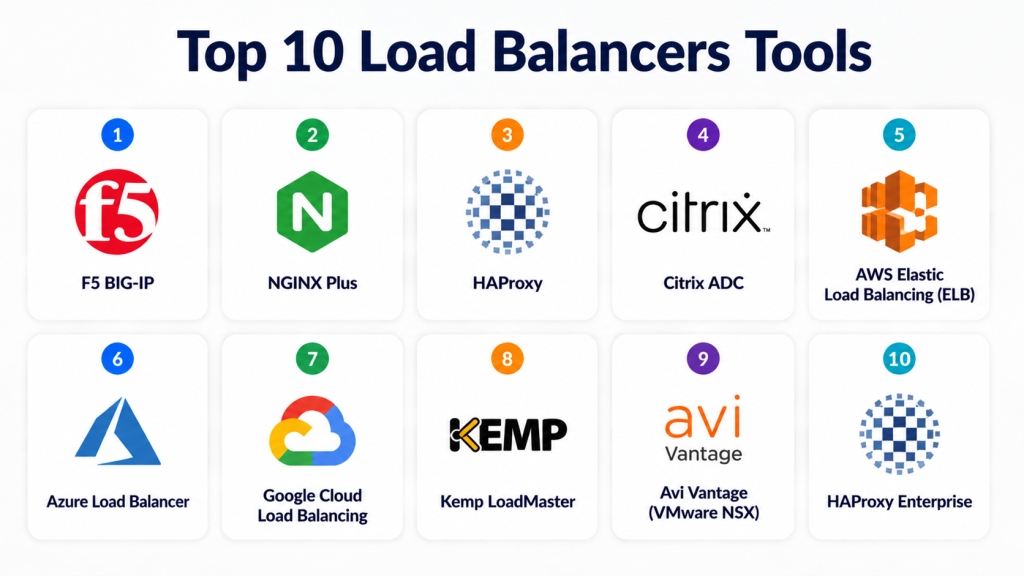
Top 10 Load Balancers Tools
#1 — F5 BIG-IP
Short description: Enterprise-grade hardware and software load balancer with advanced traffic management and security features
Key Features
- Global and local load balancing
- SSL/TLS offloading
- WAF and DDoS protection
- Health monitoring and failover
- Traffic shaping and prioritization
- Integration with cloud and on-premises networks
- Analytics dashboards
Pros
- Scalable for large enterprises
- Advanced security and optimization
Cons
- High cost
- Requires expert configuration
Platforms / Deployment
- Hardware appliance, Web
- Cloud / On-premises / Hybrid
Security & Compliance
- SSL/TLS, RBAC, MFA
- SOC 2, ISO 27001
Integrations & Ecosystem
- AWS, Azure, GCP
- CI/CD automation via APIs
- Observability and monitoring platforms
Support & Community
- Enterprise support tiers
- Comprehensive documentation
- Active community forums
#2 — NGINX Plus
Short description: Software load balancer and reverse proxy for HTTP, TCP, and UDP traffic suitable for web and microservices
Key Features
- Layer 4 and Layer 7 load balancing
- Dynamic configuration and automation
- SSL/TLS termination
- Health checks and failover
- HTTP caching and compression
- API gateway integration
- Monitoring dashboards
Pros
- Cloud-native and flexible
- Container and microservices ready
Cons
- Advanced features require subscription
- Less hardware-level security
Platforms / Deployment
- Web, Linux
- Cloud / On-premises / Hybrid
Security & Compliance
- SSL/TLS, RBAC
- Not publicly stated
Integrations & Ecosystem
- Kubernetes, Docker
- CI/CD pipelines
- Observability tools
Support & Community
- Enterprise support
- Documentation
- Developer community
#3 — HAProxy
Short description: Open-source and enterprise-grade software load balancer for HTTP/TCP traffic
Key Features
- Layer 4 and Layer 7 load balancing
- SSL/TLS termination
- Health checks and failover
- Traffic analytics and logging
- API and CI/CD integration
- Multi-cloud and hybrid support
- High concurrency handling
Pros
- Lightweight and high performance
- Flexible open-source or enterprise editions
Cons
- Limited GUI
- Advanced setup requires technical knowledge
Platforms / Deployment
- Windows, Linux
- Cloud / On-premises / Hybrid
Security & Compliance
- SSL/TLS
- Not publicly stated
Integrations & Ecosystem
- CI/CD pipelines
- Kubernetes, Docker
- Monitoring tools
Support & Community
- Enterprise support available
- Documentation
- Active community
#4 — Citrix ADC
Short description: Application delivery controller with load balancing, security, and optimization for enterprise environments
Key Features
- Global and local load balancing
- SSL/TLS offloading
- WAF and DDoS protection
- Traffic compression and caching
- Health checks and failover
- API gateway functionality
- Analytics dashboards
Pros
- Enterprise-grade performance
- Advanced security
Cons
- Expensive
- Complex setup
Platforms / Deployment
- Hardware appliance, Web
- Cloud / On-premises / Hybrid
Security & Compliance
- SSL/TLS, RBAC, MFA
- SOC 2, ISO 27001
Integrations & Ecosystem
- Cloud providers
- API automation
- Monitoring tools
Support & Community
- Enterprise support tiers
- Documentation
- Community forums
#5 — AWS Elastic Load Balancing (ELB)
Short description: Managed cloud load balancing for AWS applications supporting multiple layers
Key Features
- Layer 4 and Layer 7 load balancing
- Automatic scaling
- Health checks and failover
- SSL/TLS termination
- Integration with AWS services
- Monitoring and metrics
- Multi-region high availability
Pros
- Fully managed and scalable
- Native AWS integration
Cons
- AWS ecosystem only
- Advanced configuration requires AWS knowledge
Platforms / Deployment
- Web
- Cloud
Security & Compliance
- SSL/TLS, IAM integration
- SOC 2, ISO 27001
Integrations & Ecosystem
- AWS EC2, ECS, Lambda
- Cloud monitoring
- CI/CD pipelines
Support & Community
- AWS support tiers
- Documentation
- Active forums
#6 — Azure Load Balancer
Short description: Cloud-native load balancing for Azure, distributing traffic efficiently across applications
Key Features
- Layer 4 load balancing
- Health probes and monitoring
- High availability and auto-scaling
- SSL offloading via Application Gateway
- Multi-region support
- Analytics and metrics dashboards
- CI/CD integration
Pros
- Seamless Azure integration
- Scalable and reliable
Cons
- Limited Layer 7 features
- Azure ecosystem dependent
Platforms / Deployment
- Web
- Cloud
Security & Compliance
- SSL/TLS
- SOC 2, ISO 27001
Integrations & Ecosystem
- Azure VMs, Kubernetes
- CI/CD pipelines
- Monitoring tools
Support & Community
- Microsoft support
- Documentation
- Community forums
#7 — Google Cloud Load Balancing
Short description: Global, fully managed load balancing for applications on Google Cloud
Key Features
- HTTP(S), TCP, UDP load balancing
- Autoscaling and failover
- SSL/TLS termination
- Health checks and analytics
- Cloud-native monitoring
- Multi-region support
- CI/CD integration
Pros
- Fully managed, global reach
- Supports multi-region deployments
Cons
- Limited outside GCP
- Learning curve for advanced features
Platforms / Deployment
- Web
- Cloud
Security & Compliance
- SSL/TLS, IAM
- SOC 2, ISO 27001
Integrations & Ecosystem
- GCP Compute Engine, Kubernetes
- Monitoring tools
- CI/CD pipelines
Support & Community
- Google support
- Documentation
- Community forums
#8 — Kemp LoadMaster
Short description: Hardware and virtual load balancer for enterprise applications with optimization and security
Key Features
- Layer 4 and Layer 7 balancing
- SSL/TLS offloading
- WAF and DDoS mitigation
- Health monitoring and failover
- Traffic shaping and compression
- High availability
- Analytics dashboards
Pros
- Enterprise-grade optimization
- Security features
Cons
- Costly licensing
- Hardware setup required for appliances
Platforms / Deployment
- Web, Windows, Linux
- Cloud / On-premises / Hybrid
Security & Compliance
- SSL/TLS, RBAC
- SOC 2, ISO 27001
Integrations & Ecosystem
- Cloud providers
- CI/CD pipelines
- Monitoring platforms
Support & Community
- Enterprise support
- Documentation
- Active forums
#9 — Avi Vantage
Short description: Software-defined load balancer for hybrid cloud, suitable for modern enterprise deployments
Key Features
- Layer 4 and Layer 7 balancing
- Auto-scaling and traffic management
- SSL/TLS termination
- Health monitoring and failover
- API-driven automation
- Kubernetes integration
- Analytics dashboards
Pros
- Hybrid and cloud-ready
- Advanced automation
Cons
- Expensive for SMBs
- Learning curve
Platforms / Deployment
- Web, Linux
- Cloud / On-premises / Hybrid
Security & Compliance
- SSL/TLS, RBAC
- SOC 2, ISO 27001
Integrations & Ecosystem
- VMware NSX, Kubernetes
- CI/CD pipelines
- Monitoring platforms
Support & Community
- Enterprise support
- Documentation
- Community forums
#10 — HAProxy Enterprise
Short description: High-performance open-source and enterprise load balancer for HTTP, TCP, and UDP
Key Features
- Layer 4 and Layer 7 balancing
- SSL/TLS termination
- Health checks and failover
- Traffic analytics
- Multi-cloud and hybrid support
- API integration
- CI/CD pipelines
Pros
- Lightweight and high-performance
- Flexible deployment
Cons
- Limited GUI
- Advanced configuration requires expertise
Platforms / Deployment
- Windows, Linux, macOS
- Cloud / On-premises / Hybrid
Security & Compliance
- SSL/TLS
- Not publicly stated
Integrations & Ecosystem
- Kubernetes, Docker
- CI/CD pipelines
- Monitoring tools
Support & Community
- Enterprise support available
- Documentation
- Community forums
Comparison Table
| Tool Name | Best For | Platform(s) Supported | Deployment | Standout Feature | Public Rating |
|---|---|---|---|---|---|
| F5 BIG-IP | Enterprise | Hardware, Web | Cloud / On-prem / Hybrid | Traffic management & security | N/A |
| NGINX Plus | Developers & Teams | Web, Linux | Cloud / On-prem / Hybrid | Cloud-native & container-ready | N/A |
| HAProxy | SMB & Enterprise | Windows, Linux | Cloud / On-prem / Hybrid | High concurrency & open-source | N/A |
| Citrix ADC | Enterprise | Hardware, Web | Cloud / On-prem / Hybrid | Optimization & WAF | N/A |
| AWS ELB | Enterprises | Web | Cloud | Fully managed AWS load balancing | N/A |
| Azure Load Balancer | Mid-Market, Enterprise | Web | Cloud | Cloud-native scalability | N/A |
| Google Cloud LB | Enterprises | Web | Cloud | Global & autoscaling | N/A |
| Kemp LoadMaster | Enterprise | Web, Windows, Linux | Cloud / On-prem / Hybrid | Optimization & security | N/A |
| Avi Vantage | Enterprise | Web, Linux | Cloud / On-prem / Hybrid | Hybrid & API-driven automation | N/A |
| HAProxy Enterprise | Enterprise | Windows, Linux, macOS | Cloud / On-prem / Hybrid | High-performance & flexible | N/A |
Evaluation & Scoring
| Tool Name | Core | Ease | Integrations | Security | Performance | Support | Value | Weighted Total |
|---|---|---|---|---|---|---|---|---|
| F5 BIG-IP | 9 | 7 | 8 | 9 | 9 | 8 | 6 | 8.0 |
| NGINX Plus | 8 | 8 | 8 | 8 | 8 | 7 | 7 | 7.8 |
| HAProxy | 8 | 7 | 7 | 8 | 8 | 7 | 7 | 7.5 |
| Citrix ADC | 9 | 7 | 8 | 9 | 9 | 7 | 6 | 7.9 |
| AWS ELB | 9 | 8 | 8 | 9 | 9 | 8 | 7 | 8.4 |
| Azure Load Balancer | 8 | 8 | 7 | 8 | 8 | 7 | 7 | 7.7 |
| Google Cloud LB | 9 | 8 | 8 | 9 | 9 | 7 | 7 | 8.2 |
| Kemp LoadMaster | 9 | 7 | 8 | 9 | 9 | 7 | 6 | 7.9 |
| Avi Vantage | 9 | 7 | 8 | 9 | 9 | 8 | 6 | 8.0 |
| HAProxy Enterprise | 8 | 7 | 7 | 8 | 8 | 7 | 7 | 7.5 |
Which Load Balancers Tool Is Right for You?
Solo / Freelancer
NGINX Plus or HAProxy for small websites or test environments
SMB
Azure Load Balancer or Kemp LoadMaster for high availability and cloud integration
Mid-Market
AWS ELB or Google Cloud LB for scalable, cloud-native workloads
Enterprise
F5 BIG-IP, Citrix ADC, or Avi Vantage for advanced security, analytics, and multi-cloud orchestration
Budget vs Premium
Budget options handle basic load distribution; premium tools include WAF, analytics, and global scaling
Feature Depth vs Ease of Use
Enterprise appliances provide advanced functionality; software solutions prioritize ease of deployment
Integrations & Scalability
Choose tools compatible with cloud, container, CI/CD, and monitoring ecosystems
Security & Compliance Needs
Prioritize SSL/TLS, authentication, WAF, and enterprise compliance certifications
Frequently Asked Questions
1. What is a load balancer?
A device or software that distributes network traffic across servers to improve performance and uptime
2. Why are load balancers important?
They prevent server overload, reduce latency, and ensure high availability
3. What types of load balancers exist?
Layer 4, Layer 7, hardware, software, and cloud-managed options
4. Do load balancers provide security?
Many include SSL/TLS termination, WAF, and DDoS mitigation
5. Can load balancers scale automatically?
Cloud-managed solutions can autoscale based on traffic load
6. Are load balancers compatible with microservices?
Yes, modern load balancers support containerized and microservices architectures
7. How do load balancers integrate with CI/CD?
They provide APIs and automation for deployment and traffic management
8. Do they work across multiple clouds?
Some enterprise solutions support hybrid and multi-cloud deployments
9. Is setup complex?
Hardware requires planning, software and cloud options are easier to deploy
10. How much traffic can a load balancer handle?
Capacity varies by tool, deployment, and infrastructure; enterprise options support high volumes
Conclusion
Load balancers are essential for ensuring high availability, performance, and security for modern applications. Solo users benefit from NGINX or HAProxy, SMBs from Azure or Kemp, and enterprises require F5, Citrix, or Avi Vantage for advanced features. Evaluate based on scalability, security, integrations, and cost. Shortlist 2–3 tools and test in pilot deployments to achieve optimal application reliability and user experience.
