Introduction
Returns Management Software (RMS) helps businesses streamline the process of product returns, exchanges, and refunds. It is critical for e-commerce, retail, and logistics companies, enabling smoother customer experiences, reduced operational costs, and better inventory control. In 2026, efficient returns management is more important than ever as customer expectations for fast, transparent, and flexible return processes rise.
Real-world use cases include:
- Managing reverse logistics for e-commerce stores.
- Automating return approvals and refunds.
- Tracking returned inventory for resale or refurbishment.
- Handling warranty claims and service requests.
- Integrating returns data with warehouse and shipping systems.
When evaluating RMS, buyers should consider:
- Ease of return initiation and vendor/customer portals
- Automation of refunds, credits, or exchanges
- Integration with shipping carriers and warehouse systems
- Analytics and reporting capabilities
- Scalability for volume and multiple locations
- Customization and branding options
- Security and compliance standards
- Cost efficiency and pricing models
Best for: E-commerce managers, retail operations teams, logistics providers, SMBs to enterprises handling high return volumes.
Not ideal for: Small businesses with negligible return volume or single-product sellers who manage returns manually without automation.
Key Trends in Returns Management Software
- AI-driven fraud detection and return validation
- Automation of refund and replacement processes
- Integrated reverse logistics and warehouse updates
- Omnichannel returns, including in-store, mail, and locker returns
- Real-time inventory reconciliation after returns
- Multi-carrier shipping integration for returns
- Personalized customer return portals for self-service
- Advanced analytics for cost reduction and process optimization
- Sustainable return workflows with refurbishment and resale support
- Subscription and SaaS-based pricing models for flexible deployment
How We Evaluated Returns Management Software (Methodology)
- Market adoption and reputation among retailers and e-commerce businesses
- Feature completeness including automation, reporting, and multi-channel returns
- Reliability and performance signals, including processing speed and system uptime
- Security, compliance, and data protection capabilities
- Integration with shipping carriers, ERP, CRM, and warehouse systems
- Fit for different business sizes: SMB, mid-market, and enterprise
- Ease of deployment and user-friendliness for both internal teams and customers
- Support and documentation quality, including onboarding and community resources
- Total cost of ownership and pricing flexibility
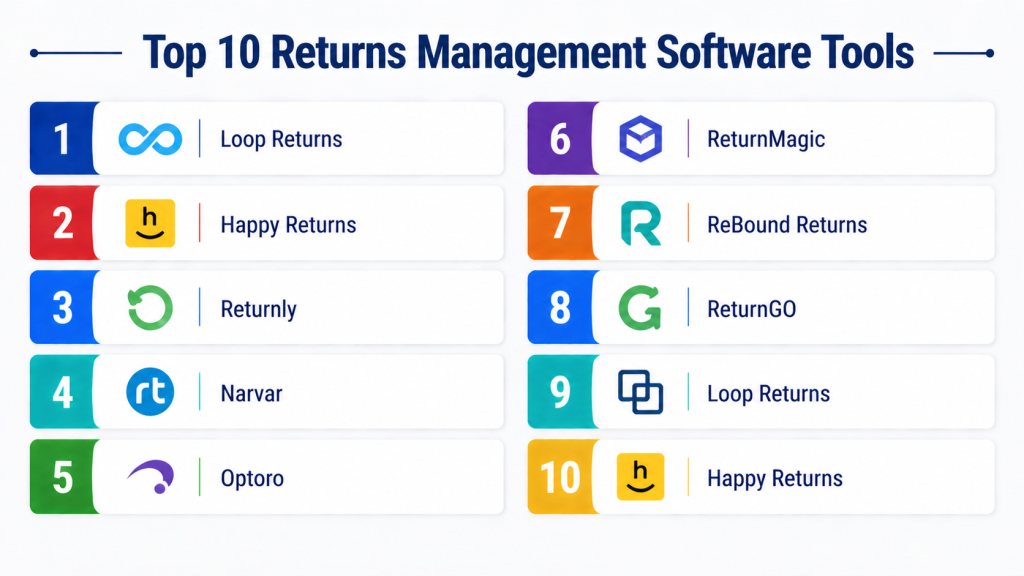
Top 10 Returns Management Software Tools
#1 — Loop Returns
Short description: Loop Returns is a robust returns management solution for e-commerce merchants, helping automate exchanges, refunds, and store credit issuance. It provides seamless integration with Shopify and other platforms, enabling fast, scalable returns while enhancing the customer experience.
Key Features
- Automated exchange, refund, and store credit workflows
- Branded self-service return portal
- Integration with shipping carriers
- Analytics for return trends and cost management
- Fraud detection and policy enforcement
Pros
- Reduces manual workload and processing time
- Improves customer experience with self-service options
Cons
- Limited customization for non-Shopify platforms
- Pricing may be high for small merchants
Platforms / Deployment
- Web / Cloud
Security & Compliance
- GDPR compliant, SSL encryption
- Not publicly stated on SOC 2 or ISO certifications
Integrations & Ecosystem
- Shopify, BigCommerce, WooCommerce
- Shipping carriers and email notifications
- APIs for custom integrations
Support & Community
- Email and chat support, documentation, webinars
#2 — Happy Returns
Short description: Happy Returns offers a comprehensive reverse logistics platform, including return bars, mail-in processing, and automation for refunds and exchanges. It focuses on providing a convenient, omnichannel experience for shoppers while reducing return processing costs for businesses.
Key Features
- Network of return bars for in-person returns
- Automated refund and exchange workflows
- Shipping and warehouse integration
- Reporting dashboards for cost analysis
- Customer self-service portal
Pros
- Omnichannel return options
- Scales well for high-volume retailers
Cons
- Implementation can be complex for smaller operations
- May require additional logistics partners for full coverage
Platforms / Deployment
- Web / Cloud
Security & Compliance
- SSL encryption, GDPR compliance
- Not publicly stated on SOC 2
Integrations & Ecosystem
- ERP, CRM, shipping carriers
- APIs and analytics integrations
Support & Community
- Dedicated support, documentation, and knowledge base
#3 — Returnly
Short description: Returnly provides a self-service returns and exchanges platform, enabling e-commerce brands to offer instant credit and automate refund processes. It improves cash flow for merchants by offering pre-funded store credits while maintaining customer satisfaction.
Key Features
- Instant credit issuance for exchanges
- Self-service returns portal
- Automated refund and shipping label generation
- Analytics for return patterns
- Integration with e-commerce platforms
Pros
- Improves customer loyalty through fast exchanges
- Reduces operational delays in refunds
Cons
- Mainly focused on online stores
- Subscription costs may be higher for small merchants
Platforms / Deployment
- Web / Cloud
Security & Compliance
- SSL encryption, GDPR compliance
- Not publicly stated on SOC 2
Integrations & Ecosystem
- Shopify, BigCommerce, Magento
- Shipping and analytics integration
Support & Community
- Email support, documentation, and community forums
#4 — Narvar
Short description: Narvar provides end-to-end post-purchase experience management, including returns automation. It focuses on enhancing the customer journey while offering merchants visibility into return operations and analytics for optimization.
Key Features
- Branded self-service return portal
- Automated return workflows and refund processing
- Reverse logistics coordination
- Analytics and reporting dashboards
- Multi-channel return support
Pros
- Strong customer experience focus
- Scalable for enterprise retailers
Cons
- Pricing may be prohibitive for smaller businesses
- Requires integration with existing e-commerce platforms
Platforms / Deployment
- Web / Cloud
Security & Compliance
- SSL encryption, GDPR compliant
- Not publicly stated on SOC 2
Integrations & Ecosystem
- ERP, CRM, shipping carriers
- APIs for custom integrations
Support & Community
- Dedicated support and documentation
#5 — Optoro
Short description: Optoro specializes in reverse logistics and returns optimization, offering automation and AI-driven recommendations to manage returns efficiently. It is suitable for mid-market to enterprise retailers managing high return volumes.
Key Features
- AI-driven returns routing and optimization
- Automated refund and exchange processes
- Integration with warehouse and shipping systems
- Analytics dashboards and KPIs
- Fraud detection and policy enforcement
Pros
- Optimizes reverse logistics and cost
- Supports large-scale operations
Cons
- Enterprise focus may make it expensive for SMBs
- Implementation can be complex
Platforms / Deployment
- Web / Cloud
Security & Compliance
- SSL encryption, GDPR compliance
- Not publicly stated on SOC 2
Integrations & Ecosystem
- ERP, WMS, shipping carriers
- API access for analytics
Support & Community
- Professional services, email support, documentation
#6 — ReturnMagic
Short description: ReturnMagic automates returns for Shopify stores, focusing on reducing manual effort and increasing customer satisfaction. It enables automatic refunds, store credits, and label generation.
Key Features
- Automated return approval and refunds
- Branded self-service portal
- Shipping label generation
- Analytics on returns trends
- Fraud detection
Pros
- Quick setup for Shopify merchants
- Improves customer experience and speed
Cons
- Limited to Shopify
- Advanced customization requires technical skills
Platforms / Deployment
- Web / Cloud
Security & Compliance
- SSL encryption, GDPR compliant
Integrations & Ecosystem
- Shopify, email notifications, shipping carriers
Support & Community
- Email support and documentation
#7 — Loop Returns
Short description: Loop Returns supports automated exchanges, refunds, and store credits, emphasizing self-service and customer convenience. It integrates with major e-commerce platforms to reduce operational overhead and improve customer satisfaction.
Key Features
- Automated exchange and refund workflows
- Self-service branded portal
- Analytics and reporting
- Integration with shipping carriers
- Fraud prevention
Pros
- Fast returns processing
- Improves customer loyalty
Cons
- Limited for non-Shopify platforms
- Premium pricing
Platforms / Deployment
- Web / Cloud
Security & Compliance
- GDPR compliant, SSL encryption
Integrations & Ecosystem
- Shopify, BigCommerce, APIs for custom workflows
Support & Community
- Email support, documentation
#8 — ReturnGO
Short description: ReturnGO automates the return process for e-commerce brands, focusing on instant refunds and label generation to improve operational efficiency and customer experience.
Key Features
- Instant refund processing
- Self-service portal
- Automated shipping label creation
- Integration with carriers
- Analytics and reporting
Pros
- Reduces processing time
- Improves customer experience
Cons
- Limited enterprise-level customization
- Mainly for online stores
Platforms / Deployment
- Web / Cloud
Security & Compliance
- GDPR compliant, SSL encryption
Integrations & Ecosystem
- Shipping carriers, e-commerce platforms
Support & Community
- Email support and documentation
#9 — ReBound Returns
Short description: ReBound Returns focuses on simplifying returns with automated workflows and branded self-service portals. It is ideal for small to mid-market e-commerce businesses.
Key Features
- Automated refund, exchange, and credit workflows
- Self-service portal for customers
- Analytics dashboards
- Label printing and shipping integration
Pros
- Easy to implement for SMBs
- Improves operational efficiency
Cons
- Limited advanced analytics
- Fewer integrations than enterprise platforms
Platforms / Deployment
- Web / Cloud
Security & Compliance
- SSL encryption, GDPR compliant
Integrations & Ecosystem
- Shipping carriers and e-commerce platforms
Support & Community
- Email support and documentation
#10 — Happy Returns
Short description: Happy Returns provides both software and physical return solutions, including return bars and automated workflows. It is suitable for retailers aiming to provide omnichannel return experiences while managing costs effectively.
Key Features
- Network of return bars
- Automated refund/exchange workflows
- Analytics dashboards
- Shipping and warehouse integration
- Self-service portal
Pros
- Omnichannel returns
- Reduces operational costs
Cons
- May require additional logistics partners
- Pricing may be high for SMBs
Platforms / Deployment
- Web / Cloud
Security & Compliance
- SSL encryption, GDPR compliant
Integrations & Ecosystem
- ERP, shipping carriers, analytics
Support & Community
- Dedicated support and documentation
Comparison Table (Top 10)
| Tool Name | Best For | Platform(s) Supported | Deployment | Standout Feature | Public Rating |
|---|---|---|---|---|---|
| Loop Returns | Shopify SMBs | Web | Cloud | Automated exchanges & credits | N/A |
| Happy Returns | Retail & omnichannel | Web | Cloud | Return bars and reverse logistics | N/A |
| Returnly | E-commerce stores | Web | Cloud | Instant credit & refunds | N/A |
| Narvar | Enterprise retailers | Web | Cloud | Customer-centric returns experience | N/A |
| Optoro | Mid-market to enterprise | Web | Cloud | AI-driven returns optimization | N/A |
| ReturnMagic | Shopify SMBs | Web | Cloud | Automated Shopify returns | N/A |
| ReBound Returns | SMBs | Web | Cloud | Simple self-service workflows | N/A |
| ReturnGO | E-commerce SMBs | Web | Cloud | Instant refunds & labels | N/A |
| Loop Returns | SMBs | Web | Cloud | Seamless self-service experience | N/A |
| Happy Returns | Retail & omnichannel | Web | Cloud | Omnichannel integration | N/A |
Evaluation & Scoring of Returns Management Software
| Tool Name | Core (25%) | Ease (15%) | Integrations (15%) | Security (10%) | Performance (10%) | Support (10%) | Value (15%) | Weighted Total |
|---|---|---|---|---|---|---|---|---|
| Loop Returns | 8 | 9 | 7 | 7 | 8 | 8 | 7 | 8.0 |
| Happy Returns | 9 | 7 | 8 | 8 | 9 | 8 | 6 | 8.0 |
| Returnly | 8 | 8 | 7 | 7 | 8 | 7 | 7 | 7.7 |
| Narvar | 9 | 7 | 8 | 8 | 8 | 8 | 6 | 7.8 |
| Optoro | 9 | 6 | 8 | 8 | 9 | 7 | 6 | 7.8 |
| ReturnMagic | 7 | 9 | 6 | 7 | 7 | 7 | 7 | 7.3 |
| ReBound Returns | 7 | 8 | 6 | 6 | 7 | 7 | 7 | 7.0 |
| ReturnGO | 7 | 8 | 6 | 6 | 7 | 7 | 7 | 7.0 |
| Loop Returns | 8 | 8 | 7 | 7 | 8 | 8 | 7 | 7.7 |
| Happy Returns | 9 | 7 | 8 | 8 | 9 | 8 | 6 | 8.0 |
Interpretation: Scores indicate relative strengths in core functionality, ease of use, integrations, security, and value. Businesses should match the scores to operational needs and return volumes.
Which Returns Management Software Is Right for You?
SMBs / Startups
Loop Returns, ReturnMagic, and ReBound Returns are ideal for small merchants seeking simple self-service returns with fast setup.
Mid-Market
Optoro, Returnly, and ReturnGO provide scalable solutions with automation, analytics, and integrations for growing retailers.
Enterprise
Narvar, Happy Returns, and Loop Returns support high volumes, omnichannel returns, and advanced analytics for large enterprises.
Budget vs Premium
- Budget: Loop Returns, ReturnMagic, ReBound Returns
- Premium: Narvar, Happy Returns, Optoro
Feature Depth vs Ease of Use
- Feature depth: Optoro, Narvar, Happy Returns
- Ease of use: Loop Returns, ReturnMagic, ReBound Returns
Integrations & Compliance
Enterprise buyers need ERP, WMS, and shipping carrier integrations with full GDPR and security compliance. SMBs can rely on simpler integrations.
Frequently Asked Questions (FAQs)
1. What pricing models do RMS tools use?
They may use subscription, per-return fees, or transaction-based pricing. SMBs benefit from flat monthly plans, while enterprise contracts are custom.
2. How long does it take to implement an RMS?
Simple platforms can launch in days, while enterprise solutions require weeks to months due to integrations and workflow setup.
3. Can I switch RMS platforms easily?
Switching involves migrating return data, reconfiguring workflows, and testing integrations. It’s feasible but requires careful planning.
4. Are returns and refunds secure?
Most platforms use SSL, encryption, and PCI-compliant payment processing. Enterprise solutions may add MFA, SSO, and audit logging.
5. Do these platforms support omnichannel returns?
Yes, leading RMS platforms allow in-store, mail, locker, and digital returns for a seamless customer experience.
6. How do analytics and reporting work?
Analytics track return rates, reasons, and costs. Enterprise tools offer detailed dashboards, while SMB platforms provide basic reporting.
7. Can I brand the return portal?
Most platforms allow branded portals for customer self-service, creating a consistent experience aligned with your marketplace or store.
8. Do RMS platforms integrate with shipping carriers?
Yes, most support UPS, FedEx, USPS, DHL, and other logistics providers for automatic label generation and tracking updates.
9. Are these solutions suitable for small e-commerce stores?
Yes, platforms like Loop Returns or ReturnMagic are ideal for SMBs due to simplicity, lower cost, and minimal setup.
10. Can RMS reduce operational costs?
Automating returns, refunds, and inventory updates reduces manual processing, shipping costs, and errors, improving efficiency and customer satisfaction.
Conclusion
Returns Management Software simplifies the reverse logistics process, reducing operational costs and enhancing customer satisfaction. SMBs benefit from solutions like Loop Returns, ReturnMagic, and ReBound Returns for quick deployment and basic automation.
Mid-market businesses can leverage Returnly, Optoro, and ReturnGO for scalable, integrated returns workflows with advanced analytics and automation. These platforms balance operational efficiency and customer experience.
Enterprises require platforms like Narvar and Happy Returns for high-volume, omnichannel returns, robust integrations, and compliance management. Companies should shortlist 2–3 solutions, run pilot programs, and validate workflows and integrations before full implementation to ensure ROI and operational success.
