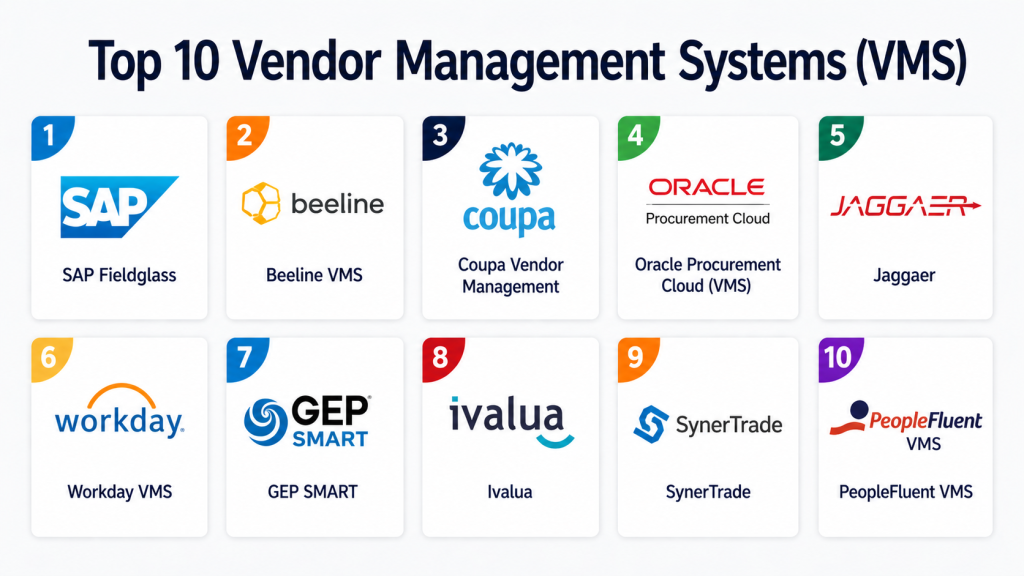
Introduction
Vendor Management Systems (VMS) are software platforms designed to help organizations manage relationships with external vendors, suppliers, contractors, and service providers. These systems centralize vendor data, streamline procurement workflows, enforce compliance, and improve visibility into vendor performance and spending.
In modern enterprises, especially with distributed workforces and global supply chains, VMS platforms have evolved into critical infrastructure. They now integrate with identity management, cybersecurity, zero trust frameworks, and access control systems to ensure secure onboarding, controlled access, and compliance with regulations. As organizations rely more on third-party vendors, managing risk, performance, and cost becomes essential.
Common use cases include:
- Managing contingent workforce and staffing vendors
- Tracking vendor performance and compliance
- Automating procurement and onboarding workflows
- Monitoring contracts and spend
- Ensuring secure access and vendor risk management
Key evaluation criteria:
- Vendor onboarding and lifecycle management
- Compliance and risk management features
- Integration with procurement and HR systems
- Security and access control capabilities
- Reporting and analytics
- Scalability and performance
- Ease of use and customization
- Pricing and value
Best for: Enterprises, HR teams, procurement teams, staffing agencies, and organizations managing multiple vendors or contractors.
Not ideal for: Small businesses with limited vendor relationships or simple procurement needs.
Key Trends in Vendor Management Systems (VMS)
- AI-driven vendor analytics: Predict vendor performance and risks
- Integrated risk management: Built-in compliance and security monitoring
- Zero Trust vendor access: Controlled and verified vendor interactions
- Automation of onboarding workflows: Faster vendor approvals
- Cloud-native VMS platforms: Scalable and accessible globally
- Vendor self-service portals: Improved collaboration
- Real-time spend visibility: Better financial control
- Integration with ERP and HR systems: Unified operations
- Compliance-first design: Support for global regulations
How We Evaluated Vendor Management Systems (Methodology)
- Assessed market adoption and enterprise usage
- Evaluated feature completeness across vendor lifecycle
- Reviewed security posture and compliance capabilities
- Measured integration ecosystem (ERP, HR, procurement)
- Considered ease of use and onboarding experience
- Analyzed performance and scalability
- Compared automation and AI capabilities
- Evaluated pricing flexibility and value
Top 10 Vendor Management Systems (VMS)
#1 — SAP Fieldglass
Short description: SAP Fieldglass is a leading enterprise VMS platform designed for managing contingent workforce and services procurement. It provides end-to-end visibility into vendor operations and spending. The platform is widely used by large organizations with complex vendor ecosystems. It integrates deeply with SAP ERP systems. Fieldglass offers strong compliance and reporting capabilities. It supports global operations and regulatory requirements. It is best suited for enterprises.
Key Features
- Contingent workforce management
- Vendor lifecycle management
- Spend analytics
- Compliance tracking
- Workflow automation
- Reporting and dashboards
Pros
- Strong enterprise capabilities
- Deep SAP integration
Cons
- Complex implementation
- High cost
Platforms / Deployment
Web
Cloud
Security & Compliance
SSO, RBAC, encryption
Supports enterprise compliance standards
Integrations & Ecosystem
Deep integration with SAP ecosystem and enterprise tools.
- SAP ERP
- Procurement systems
- APIs
Support & Community
Enterprise-level support, strong partner ecosystem.
#2 — Beeline VMS
Short description: Beeline is a widely used VMS platform for managing contingent workforce and vendor relationships. It provides automation and analytics for procurement and HR teams. The platform supports global operations. It offers strong reporting capabilities. Beeline is known for its flexibility and scalability. It is ideal for enterprises with complex vendor requirements.
Key Features
- Vendor management
- Workforce management
- Analytics and reporting
- Workflow automation
- Compliance tracking
Pros
- Scalable for large organizations
- Strong analytics
Cons
- Learning curve
- Implementation complexity
Platforms / Deployment
Web
Cloud
Security & Compliance
SSO, MFA, encryption
Supports enterprise standards
Integrations & Ecosystem
Integrates with HR and procurement systems.
- ERP systems
- HR platforms
- APIs
Support & Community
Enterprise support with global reach.
#3 — Coupa Vendor Management
Short description: Coupa offers a comprehensive spend management platform with vendor management capabilities. It provides visibility into vendor performance and spending. The platform integrates procurement, finance, and supplier management. It is suitable for mid-market and enterprise organizations. Coupa emphasizes data-driven decision-making. It includes automation and analytics.
Key Features
- Supplier management
- Spend analytics
- Procurement integration
- Workflow automation
- Risk management
Pros
- Strong spend visibility
- Integrated platform
Cons
- Complex setup
- Premium pricing
Platforms / Deployment
Web
Cloud
Security & Compliance
Encryption, RBAC
Supports compliance frameworks
Integrations & Ecosystem
Strong integration with procurement tools.
- ERP systems
- Financial tools
- APIs
Support & Community
Enterprise-level support.
#4 — Oracle VMS (Oracle Procurement Cloud)
Short description: Oracle VMS is part of Oracle’s procurement cloud suite. It provides vendor management, sourcing, and procurement capabilities. It is designed for large enterprises. The platform integrates with Oracle ERP. It supports global vendor operations. It offers advanced analytics. It is powerful but requires expertise.
Key Features
- Vendor lifecycle management
- Procurement integration
- Analytics
- Workflow automation
- Compliance tracking
Pros
- Strong enterprise capabilities
- Deep Oracle integration
Cons
- Complex implementation
- Requires training
Platforms / Deployment
Web
Cloud
Security & Compliance
SSO, encryption
Supports enterprise compliance standards
Integrations & Ecosystem
Oracle ecosystem integration.
- ERP
- Finance tools
- APIs
Support & Community
Enterprise support, strong documentation.
#5 — Jaggaer
Short description: Jaggaer is a procurement and supplier management platform with strong VMS capabilities. It focuses on sourcing, supplier management, and analytics. It is used by enterprises and public sector organizations. It supports compliance and risk management. It offers automation and reporting. It is suitable for complex procurement environments.
Key Features
- Supplier management
- Sourcing and procurement
- Analytics
- Risk management
- Workflow automation
Pros
- Strong procurement capabilities
- Good analytics
Cons
- Complex interface
- Requires training
Platforms / Deployment
Web
Cloud
Security & Compliance
Encryption, RBAC
Supports compliance standards
Integrations & Ecosystem
Integrates with enterprise systems.
- ERP
- Procurement tools
- APIs
Support & Community
Enterprise support available.
#6 — Workday VMS
Short description: Workday offers vendor and contingent workforce management as part of its HR platform. It integrates vendor data with HR and finance. It is suitable for organizations using Workday ecosystem. It provides analytics and automation. It is scalable and cloud-based. It is best for HR-driven vendor management.
Key Features
- Vendor and workforce management
- HR integration
- Analytics
- Workflow automation
- Reporting
Pros
- Strong HR integration
- Cloud-native platform
Cons
- Limited standalone usage
- Requires Workday ecosystem
Platforms / Deployment
Web
Cloud
Security & Compliance
SSO, MFA, encryption
Supports enterprise compliance
Integrations & Ecosystem
Workday ecosystem integration.
- HR systems
- Finance tools
- APIs
Support & Community
Strong enterprise support.
#7 — GEP SMART
Short description: GEP SMART is a unified procurement platform with vendor management capabilities. It combines sourcing, procurement, and supplier management. It is designed for enterprises. It provides analytics and automation. It supports global operations. It is flexible and scalable.
Key Features
- Supplier management
- Procurement integration
- Analytics
- Workflow automation
- Risk management
Pros
- Unified platform
- Strong analytics
Cons
- Complex setup
- Requires training
Platforms / Deployment
Web
Cloud
Security & Compliance
Encryption, RBAC
Supports compliance standards
Integrations & Ecosystem
Enterprise integrations.
- ERP
- Procurement systems
- APIs
Support & Community
Enterprise support available.
#8 — Ivalua
Short description: Ivalua is a supplier management platform with strong VMS features. It focuses on procurement, sourcing, and supplier collaboration. It is highly customizable. It supports compliance and analytics. It is suitable for enterprises. It provides flexibility but requires setup effort.
Key Features
- Supplier lifecycle management
- Procurement integration
- Analytics
- Workflow automation
- Compliance tracking
Pros
- Highly customizable
- Strong supplier collaboration
Cons
- Implementation complexity
- Requires expertise
Platforms / Deployment
Web
Cloud
Security & Compliance
SSO, encryption
Supports compliance frameworks
Integrations & Ecosystem
Flexible integration capabilities.
- ERP
- Procurement tools
- APIs
Support & Community
Enterprise support.
#9 — SynerTrade
Short description: SynerTrade is a procurement and supplier management platform with VMS capabilities. It provides sourcing, supplier management, and analytics. It is used by enterprises. It supports compliance and automation. It is suitable for global operations.
Key Features
- Supplier management
- Sourcing
- Analytics
- Workflow automation
- Compliance tracking
Pros
- Good procurement features
- Scalable
Cons
- Limited market presence
- Requires training
Platforms / Deployment
Web
Cloud
Security & Compliance
Encryption
Not publicly stated
Integrations & Ecosystem
Supports enterprise integrations.
- ERP
- APIs
Support & Community
Moderate support.
#10 — PeopleFluent VMS
Short description: PeopleFluent provides workforce and vendor management solutions. It focuses on contingent workforce management. It includes analytics and automation. It is suitable for mid-market and enterprise organizations. It integrates with HR systems. It is flexible but less widely adopted.
Key Features
- Workforce management
- Vendor management
- Analytics
- Workflow automation
- Reporting
Pros
- Flexible platform
- Good workforce focus
Cons
- Smaller ecosystem
- Limited adoption
Platforms / Deployment
Web
Cloud
Security & Compliance
Encryption, RBAC
Not publicly stated
Integrations & Ecosystem
Integrates with HR systems.
- HR platforms
- APIs
Support & Community
Moderate support.
Comparison Table (Top 10)
| Tool Name | Best For | Platform(s) Supported | Deployment | Standout Feature | Public Rating |
|---|---|---|---|---|---|
| SAP Fieldglass | Enterprise | Web | Cloud | Workforce management | N/A |
| Beeline | Enterprise | Web | Cloud | Analytics | N/A |
| Coupa | Enterprise | Web | Cloud | Spend visibility | N/A |
| Oracle VMS | Enterprise | Web | Cloud | Procurement integration | N/A |
| Jaggaer | Enterprise | Web | Cloud | Supplier sourcing | N/A |
| Workday VMS | Enterprise | Web | Cloud | HR integration | N/A |
| GEP SMART | Enterprise | Web | Cloud | Unified platform | N/A |
| Ivalua | Enterprise | Web | Cloud | Customization | N/A |
| SynerTrade | Enterprise | Web | Cloud | Procurement tools | N/A |
| PeopleFluent | Mid-market | Web | Cloud | Workforce focus | N/A |
Evaluation & Scoring of Vendor Management Systems
| Tool | Core | Ease | Integrations | Security | Performance | Support | Value | Total |
|---|---|---|---|---|---|---|---|---|
| SAP Fieldglass | 10 | 6 | 9 | 9 | 9 | 9 | 7 | 8.7 |
| Beeline | 9 | 7 | 9 | 9 | 9 | 8 | 7 | 8.5 |
| Coupa | 9 | 7 | 9 | 9 | 9 | 8 | 7 | 8.5 |
| Oracle VMS | 9 | 6 | 9 | 9 | 9 | 8 | 6 | 8.3 |
| Jaggaer | 8 | 7 | 8 | 8 | 8 | 7 | 7 | 7.9 |
| Workday | 8 | 8 | 8 | 9 | 8 | 8 | 7 | 8.1 |
| GEP SMART | 8 | 7 | 8 | 8 | 8 | 7 | 7 | 7.8 |
| Ivalua | 8 | 6 | 8 | 8 | 8 | 7 | 7 | 7.7 |
| SynerTrade | 7 | 6 | 7 | 7 | 7 | 6 | 7 | 7.0 |
| PeopleFluent | 7 | 7 | 7 | 7 | 7 | 7 | 7 | 7.2 |
Scores are comparative and based on weighted evaluation across features, usability, integrations, security, and value.
Which Vendor Management System Is Right for You?
Solo / Freelancer
Not typically required; simple procurement tools may suffice.
SMB
Lightweight vendor tools or ERP add-ons are better options.
Mid-Market
Workday VMS or PeopleFluent provide balanced features.
Enterprise
SAP Fieldglass, Beeline, Coupa, Oracle are best choices.
Budget vs Premium
Budget: PeopleFluent
Premium: SAP Fieldglass, Coupa
Feature Depth vs Ease of Use
Depth: SAP, Oracle
Ease: Workday, PeopleFluent
Integrations & Scalability
Best: SAP, Oracle, Coupa
Moderate: Jaggaer, GEP
Security & Compliance Needs
High: SAP, Oracle, Workday
Basic: PeopleFluent, SynerTrade
Frequently Asked Questions (FAQs)
1. What is a Vendor Management System?
A VMS is a platform used to manage vendor relationships and processes. It centralizes vendor data and workflows. It helps track performance and compliance. It improves procurement efficiency. It is widely used in enterprises.
2. Why is VMS important?
It improves visibility into vendor operations. It reduces risks and ensures compliance. It streamlines procurement workflows. It helps manage costs effectively. It supports better decision-making.
3. Are VMS platforms secure?
Most enterprise VMS platforms include strong security features. These include encryption and access control. Many support compliance standards. Security depends on configuration. Organizations must evaluate vendors carefully.
4. How long does implementation take?
Implementation varies by complexity. Enterprise systems may take months. Smaller deployments are faster. Training and customization add time. Planning is essential.
5. Can VMS integrate with ERP systems?
Yes, most VMS platforms integrate with ERP systems. This improves data flow. It reduces duplication. Integration is critical for efficiency. APIs are commonly used.
6. Who uses VMS platforms?
Procurement teams, HR teams, and enterprises use VMS platforms. They manage vendors and contractors. It is common in large organizations. It supports global operations.
7. What industries use VMS?
IT, healthcare, manufacturing, and finance use VMS platforms. Any organization with vendors can benefit. It is especially useful for large enterprises. It improves vendor management.
8. What are common mistakes?
Choosing based only on cost is a mistake. Ignoring integration needs causes issues. Lack of training reduces adoption. Overlooking scalability limits growth. Security should be prioritized.
9. Are VMS platforms scalable?
Yes, most platforms are designed to scale. Enterprise tools handle large volumes. SMB tools may have limits. Choosing the right tool is important. Scalability ensures long-term value.
10. How to switch VMS platforms?
Switching involves data migration and training. Planning is essential. Testing should be done first. Gradual rollout reduces risks. Vendors may provide support.
Conclusion
Vendor Management Systems have become critical for organizations managing complex vendor ecosystems and global supply chains. With increasing reliance on third-party vendors, businesses need tools that provide visibility, control, and compliance across the vendor lifecycle. Platforms like SAP Fieldglass, Beeline, and Coupa lead the market with strong enterprise capabilities, while tools like Workday and PeopleFluent offer flexibility for mid-market organizations.
The best VMS depends on your organization’s size, vendor complexity, and integration needs. Rather than selecting based solely on features, businesses should focus on scalability, security, and alignment with existing systems. A practical next step is to shortlist a few platforms, test them in pilot environments, and validate their fit. This ensures long-term efficiency and risk management.
