
Sharavathi Valley Wildlife Sanctuary
Sharavathi Valley Wildlife Sanctuary |
About: |
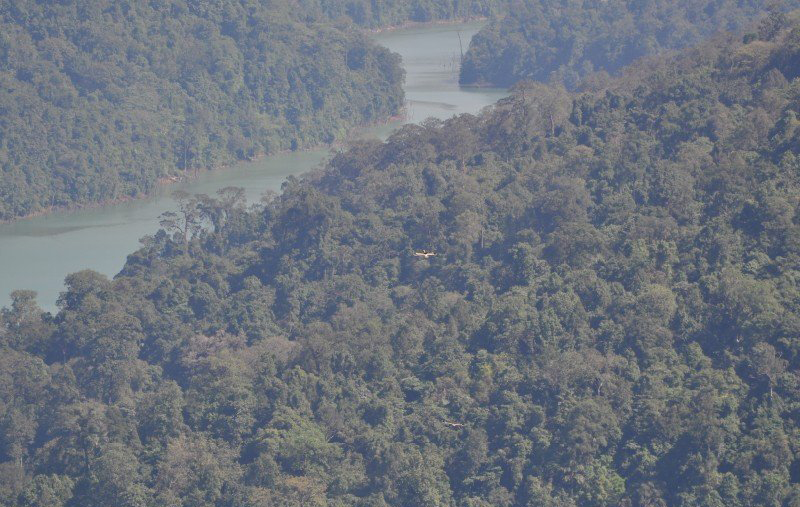
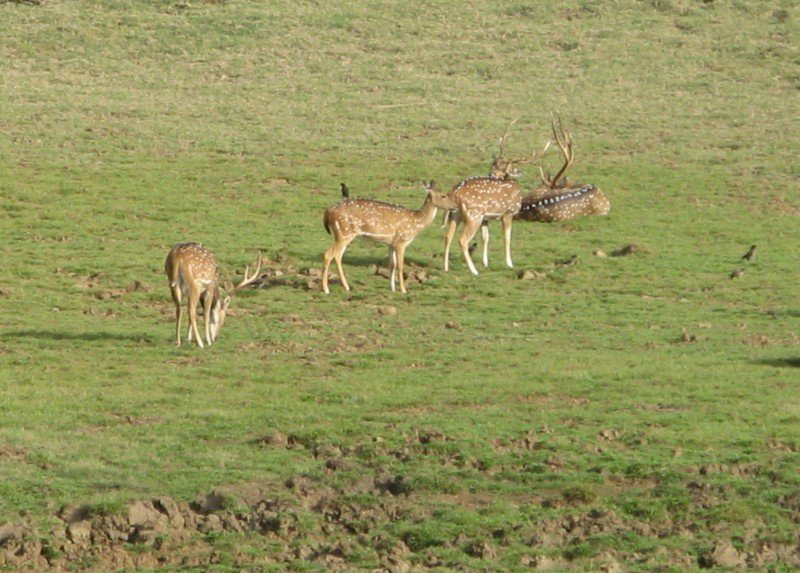
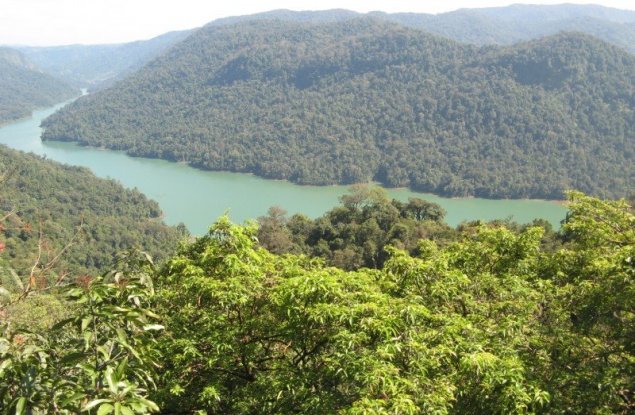
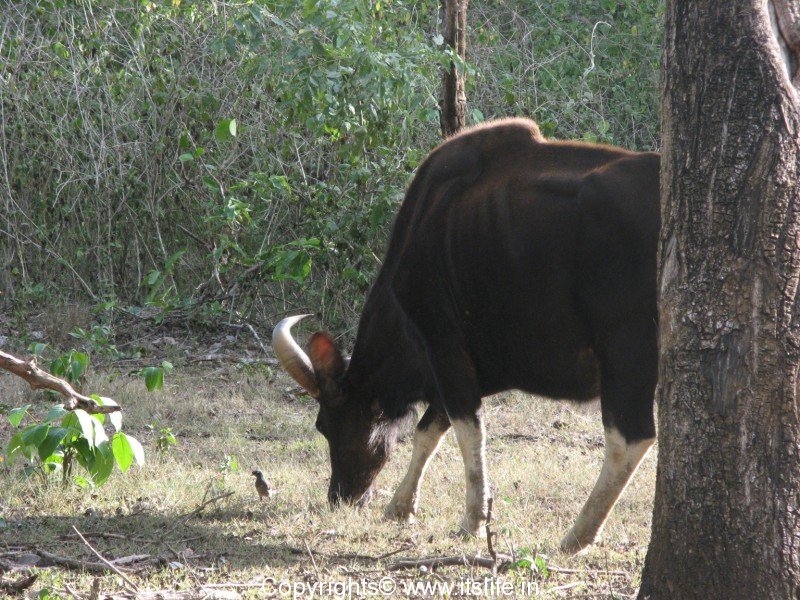
| Located in Shimoga District, Sharavathi Valley Wildlife Sanctuary spans over 431 sq km. Apart from the area occupied by the Liganamakki Reservoir or Honnemaradu, the sanctuary is divided into core zone, buffer zone and tourism zone. The Sharavathi Valley Wildlife Sanctuary (Latitude 13°54'10" to 14°16'31", Longitude 74°38'32" to 74°59'45") includes a large part of the Linganamakki reservoir formed by the damming of the Sharavathi River by the Karnataka Power Corporation. The river was dammed in 1958. The sanctuary covers an area of 431 sq. km. The sanctuary is nourished by the Sharavathi River. The Sharavathi Sanctuary is cloaked in evergreen, semi-green and moist deciduous forests of the Western Ghats and is contiguous with the Mookambika Sanctuary. These comprise flora species that yield spices, soapnuts, natural dyes, medicines, fruits, oil seeds, cane and bamboo, dhupa, gum, and honey. Besides gaur and several groups of lion-tailed macaque, the sanctuary is home to a variety of species including tiger, leopard (black panther), wild dog, jackal, sloth bear, spotted deer, sambar, barking deer, mouse deer, wild pig, common langur, bonnet macaque, Malabar giant squirrel, giant flying squirrel, porcupine, otter and pangolin. Reptiles include king cobra, python, rat snake (some almost black), crocodile and monitor lizard. Three species of hornbill, paradise flycatcher, racket tailed drongo, blue-throated barbet and Indian lorikeet are the avian fauna here.
☀ Flora : The sanctuary has mainly evergreen, semi-green and some moist deciduous forests. Trees in the evergreen forest include species such as Dipterocarpus indicus, Calophyllum tomentosum, Machilus macrantha, Caryota urens and Aporosa lindleyana. [8] In the semi-evergreen and moist deciduous forests, common species include Lagerstroemia lanceolata, Hopea parviflora, Dalbergia latifolia, Dillenia pentagyna, Careya arborea, Emblica officinalis, Randia sp., Terminalia sp. and Vitex altissima.[8] ☀ Fauna : The sanctuary is a refuge of the endangered Lion-tailed macaque. Other mammals include tiger, leopard (black panther), wild dog, jackal, sloth bear, spotted deer, sambar, barking deer, mouse deer, wild pig, common langur, bonnet macaque, Malabar giant squirrel, giant flying squirrel, porcupine, otter and pangolin. Reptiles include king cobra, python, rat snake, crocodile and monitor lizard.[8] Some of the avian species found in the sanctuary include three species of hornbill, paradise flycatcher, racket-tailed drongo, blue-throated barbet and Indian lories and lorikeets. |
Location info: |
| Address:Located in Shimoga District, Sharavathi Valley Wildlife Sanctuary spans over 431 sq km. |
| District:Shimoga district |
| Nearest City: Sagar |
| Best time to visit: The best time to visit is from November to May. |
Climate/Weather: |
| Temperatures range from 15° to 38 °C and mean annual rainfall is 4500 mm. |
History: |
Interesting things to do: |
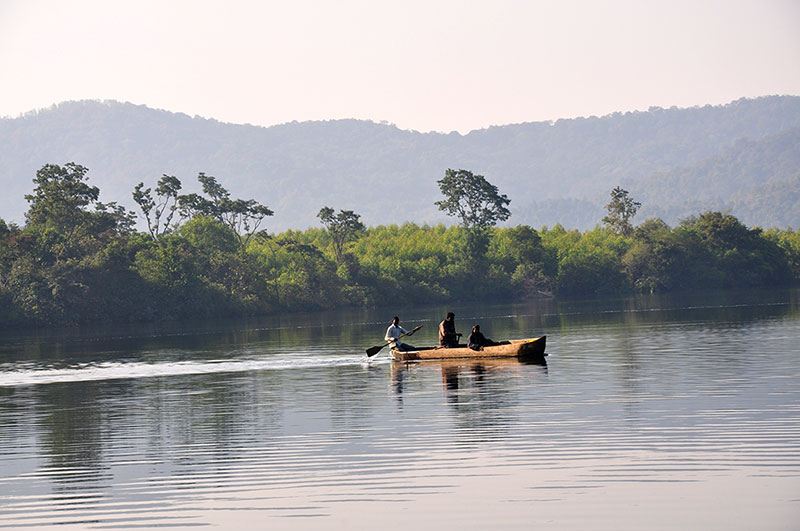
| Sharavathi Backwater is a heaven for nature lovers. In this camping program u can do Kayaking/Coracling/Rowing raft/diving/simming with life jacket/camping in an Island. etc |
Interesting things to Visit: |
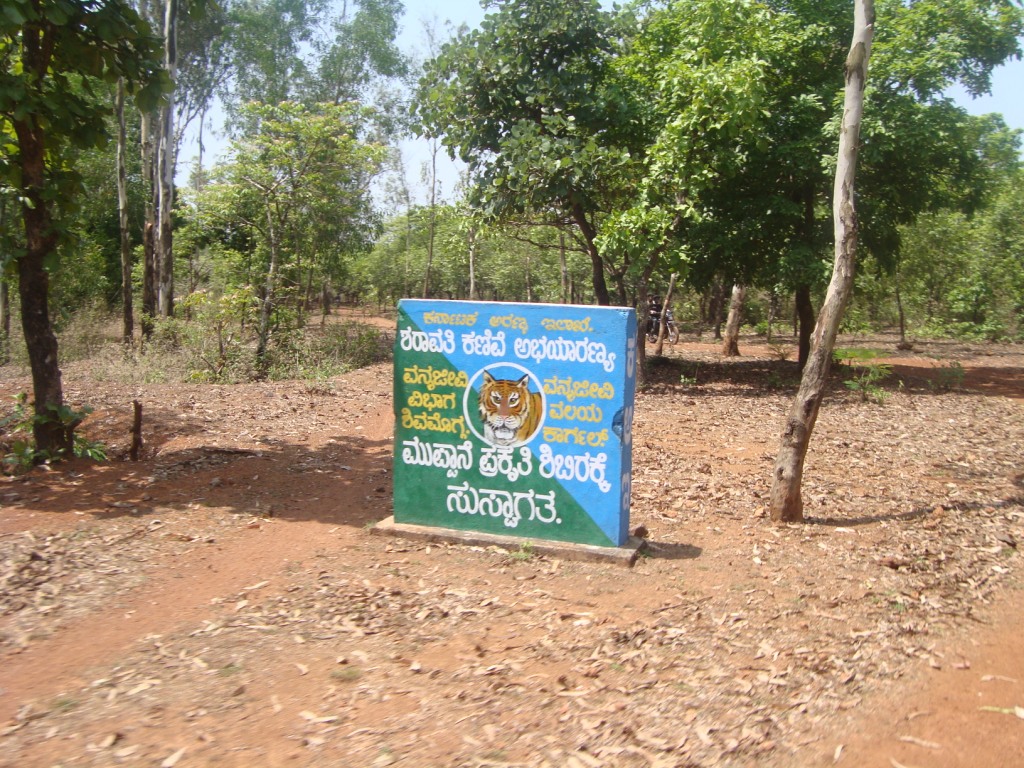
| The northern part of the sanctuary is mainly semi evergreen forest, degraded in many areas. The entire route from Kargal, through the sanctuary, has numerous villages often bordered by plantations. A large part of the eastern part of the sanctuary is the Linganamakki reservoir itself. Whilst most of our time was spent trekking in the Mupanne area.
exploring the trail that leads to Kanur fort, through with dense evergreen forest on either side of the road. The road to Kanur is a 12 km "kuchcha" road from the main road. The western part of the forest, from Kone to Nagavalli (9 km.) is through dense impenetrable evergreen forest. Bhimeshwar, a temple, is approximately 3 km. from Kone, is possibly the only place where one could trek a bit. |
Mobile range info: |
How to reach? |
| Nearest Railway Station: Shimoga |
| Nearest Airport: Bangalore |
| Road Transport: from Sirsi to Kargal (65 km), stopping at Jog Falls on the way. Kargal, which is on the northern border of the sanctuary, also has the office of the Karnataka Forest Service and we obtained permission for entry from the RFO (Mr T Parashuramappa). The road connecting Kargal and Bhatkal (on the Karnataka coast, approx. 70 km. from Kargal) passes through the sanctuary. Whilst Kargal is the entry point from the northern boundary of the sanctuary, Nagavalli is the exit on the coastal boundary (Kargal-Nagvalli is approx. 85 km.) Bangalore ➜Tumkur ➜ Arasikere ➜ Shimoga ➜ Sagar ➜ Gubbagodu |
Nearest Visiting places: |
| Ramachandrapura Math : Ramachandrapura Math is a Hindu religious institution located on the banks of the river Sharavathi in the town of Hosanagara in Shimoga district. One of the goals of this institution is the protection of Indian breed cattle (Bos indicus). A World Cattle Conference was organised by this institution in the year 2007 to promote propagation and improvement of Indian breeds of cattle.
Honnemaradu : Honnemaradu is an island on the reservoir formed by the Linganamakki dam. It is located in the Sagara taluk of Shimoga district. This place is good for watersports and hence attracts its enthusiasts. Some of the water sports possible here are canoeing, kayaking and wind surfing. Bird-watching enthusiasts also visit this place. |
Nearest Petrol Pump: |
| Kargal |
Hotels/Lodge/Accommodation: |
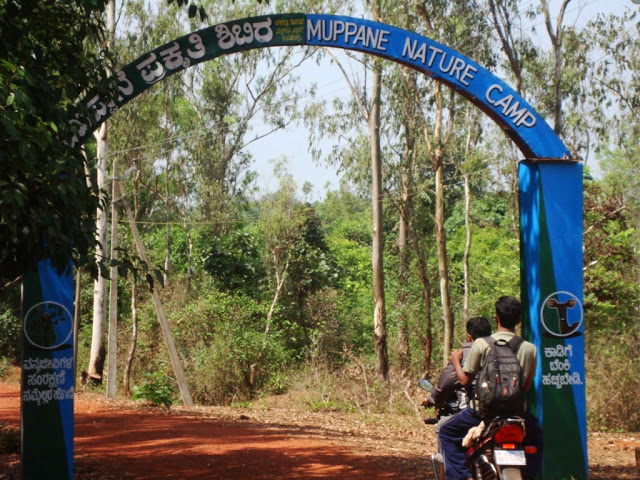
| Accommodation is available in the vicinity. Stay at the forest rest house at Mupanne, which is 12 km from Kargal. Mupanne has Forest Rest House and Tents, which are maintained by the Wildlife Division of the Karnataka Forest Service. The Rest House is on the edge of the Linganamakki reservoir, amidst semi- evergreen forest, approximately 3 km from the main road. |
Things to carry: |
Tips & Suggestions: |
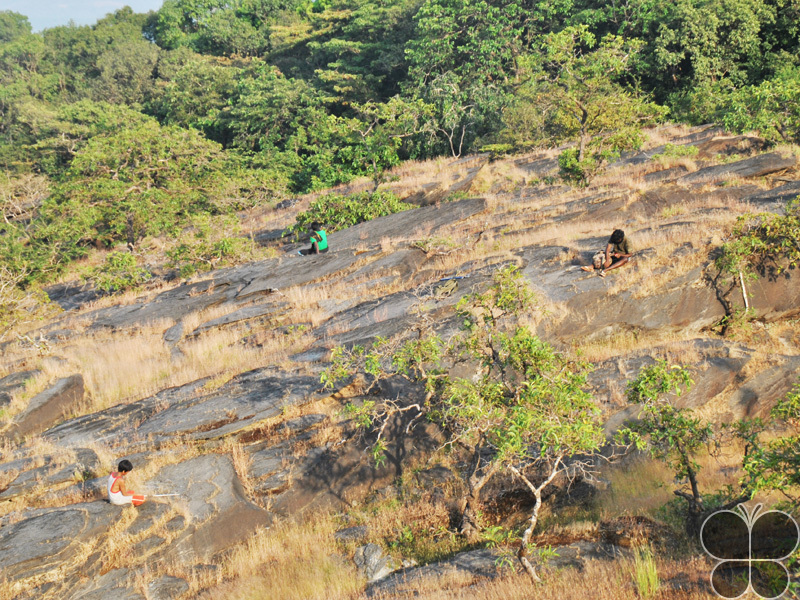
| Camping Sites: Gubbagodu Trek Length: 3KM and rest is Water sports Difficulty Level: Moderate Things To Be Aware Of: Smoking /Alchohol/non-veg consumtion is not allowed Approximate Cost: Rs.1800 for 2 days including travel in sleeper bus |
Help Line/Phone Number: |
| Police Station:Kargal |
| Nearest Hospital:Kargal |
| Society/Community Phone Number |
Sharavathi Valley Wildlife Sanctuary Nearest Attraction |
| Agumbe Hillstation |
| Agumbe, a small village located in Karnataka for all those who wish to find peace with nature in the western ghats. It is known to be the wettest region in Karnataka receiving highest rainfall. The tiny village is much known for its beautiful sunset and the trek opportunities it offer.....more |
| Shettihalli Wildlife Sanctuary |
| Shettihalli Wildlife Sanctuary is located in Shimoga District of Karnataka. It spreads over 395 sq km of tropical evergreen and semi-evergreen forests. The sanctuary is inhabited by tiger, leopard, wild dog, jackal, gaur, elephant, sloth bear, sambar deer, spotted deer, wild pig,....more |
| Ikkeri Archeology |
| Ikkeri is situated in Shimoga district of Karnataka state at about 3 km to the south of Sagar. The word Ikkeri in Kannada means "Two Streets". This place was the capital of Keladi Nayakas for some years....more |
| Keladi |
| Keladi is 10 km away from Ikkeri and was the Nayaka capital. You enter the precincts with its several small shrines through a long-roofed wooden entrance.....more |
| Barkana Falls |
| Barkana Falls' are among the ten highest waterfalls in India. They are located near Agumbe in Shimoga district of state of Karnataka. Barkana falls are formed by Sita river. Currently Barkana falls are the prime source of one of the hydro electric projects in Karnataka.....more |
| Honnemaradu Falls |
| Honnemaradu, the village, having been engulfed in the mid-1960s by the Liganamakki dam, has been literally resurrected today. This haven for water sport enthusiasts, tucked away in the lush greenery of the Western Ghats, is in the Shimoga District in north-west Karnataka, about 25 km from Sagar town on the way to Jog Falls.....more |
| Jog WaterFalls |
| The tallest and no doubt the most impressive waterfall in India, the Jog Falls(also known as the Gerusoppa waterfalls) is located about 400 kms from Bangalore in Karnataka. It is created by the Sharavathi River which comes down in cascades from a height of 292 meters at Gerusoppa in four distinct falls, called the Raja, Rani, Rover and Rocket.....more |
| Kunchikal Falls |
| Kunchikal Falls are the highest waterfalls in India and second highest waterfalls in Asia. They are located near Agumbe in Shimoga district of state of Karnataka. Kumchikal falls are formed by Varahi river. Currently Kunchikal falls are the prime source of one of the hydro electric projects in Karnataka.....more |
| Dandavathi River |
| Dandavathi is a river that flows in Sorab, India. It originates near Kuppe (Sorab taluk) and ends in the Varada river near Sagar. Sorab's Sri Ranganatha temple is built on the bay of the Dandavathi river.....more |
| Sharavathi River |
| Sharavathi is a river which originates and flows entirely within the state of Karnataka in India. It is one of the few westward flowing rivers of India and a major part of the river basin lies in the Western Ghats. The famous Jog Falls are formed by this river.....more |
| Varada river |
| Varada River, the only source of water for the Sagar town, is the major river of Shimoga District. Sagar is an industrial town in the heart of the Western Ghats, Sagar is located in Shimoga District of Karnataka. It is 75 km north-west of Shimoga.....more |
| Varahi River |
| Varahi River is a river flowing through Western Ghats to Basrur, Kundapur and Gungulli in western India. Varahi is a west flowing river which takes its birth in the Western Ghats at Hebbagilu, near Agumbe in Shimoga District.....more |
| Gudavi Bird Sanctuary |
| Sorab taluk of Shimoga district, comes alive in June as the energetic chirping of birds fills the air. The tree-lined banks of the Gudavi Lake become a brilliant mosaic of colours, with branches buried under bright plumage.....more |
| Mandagadde Bird Sanctuary |
| The Mandagadde Bird Sanctuary is situated in the Malenaadu region under the Shimoga district, towards Theerthahalli in Karnataka. The Mandagadde Bird Sanctuary has a spectacular collection of migratory birds.....more |
| Gajanur Dam |
| Gajanur is a village 12 km from Shivamogga in the Shivamogga District of Karnataka, India. The Tunga River flows through the village. Gajanur is well known for the dam built across the river.....more |
| Linganamakki dam |
| The Linganamakki dam was constructed by the Karnataka State Government in 1964. Located in the Sagara taluk, the dam has a length of 2.4 km, stretching across the Sharavathi river. It is located about 6 km from Jog Falls....more |
| Tunga Anicut Dam |
| Situiated 15 km from Shimoga, this dam was built across the river Tungabadra. You can enjoy boat trips around the lake. Situated around 15 Km from Shimoga, Tunga Anicut Dam is a popular choice for picnic among the locales.....more |
| Nagar |
| ....more |
| Humbucha |
| ....more |
SELECT YOUR HOLIDAY DESTINATION
-
Aero Sports in Karnataka
-
Archaeology in Karnataka
-
Beaches in Karnataka
-
Bird Sanctuaries in Karnataka
-
Bouldering Spot in Karnataka
-
Camping in Karnataka
-
Cave Explorations in Karnataka
-
Culturals Place in Karnataka
-
Dams in Karnataka
-
Districts Of Karnataka
-
Fairs in Karnataka
-
Festivals in Karnataka
-
Go-Karting in Karnataka
-
Hill Stations in Karnataka
-
Historical Places in Karnataka
-
Holiday Resorts in Karnataka
-
Islands in Karnataka
-
Landscape in Karnataka
-
Mountain Biking in Karnataka
-
National Parks in Karnataka
-
Orbit Network
-
Pilgrims Destinations
-
Para-sailing in Karnataka
-
River rafting in Karnataka
-
Rivers in Karnataka
-
Rock Climbing in Karnataka
-
Safari in Karnataka
-
Temples in Karnataka
-
Trekking in Karnataka
-
Water Sports in Karnataka
-
Waterfalls in Karnataka
-
Wildlife Sanctuaries in Karnataka