Introduction
Operating Room (OR) Scheduling Software helps hospitals and surgical centers manage surgical schedules, optimize resource allocation, and improve patient flow. In plain terms, it is a system that coordinates operating rooms, surgical teams, and patient appointments to maximize efficiency while minimizing delays or cancellations.
In 2026, the need for streamlined OR management has intensified. Hospitals face increasing pressure to handle complex surgeries, adhere to regulatory standards, and integrate new technologies such as AI-assisted scheduling. Manual or fragmented scheduling approaches often lead to underutilized operating rooms, staff burnout, and suboptimal patient experiences.
Real-world use cases include:
- Multi-OR Coordination: Managing overlapping surgeries and avoiding conflicts between surgical teams.
- Resource Optimization: Allocating specialized equipment and personnel efficiently.
- Emergency Handling: Quickly adjusting schedules to accommodate urgent cases.
- Analytics & Reporting: Tracking OR utilization, surgeon performance, and patient outcomes.
- Patient Communication: Sending automated notifications and pre-op instructions.
What buyers should evaluate:
- User interface and ease of scheduling
- Real-time availability and conflict detection
- Integration with EHR/EMR systems
- Analytics and reporting capabilities
- Security and compliance (HIPAA, SOC 2)
- AI/automation features for optimization
- Scalability for multiple facilities
- Mobile access and remote monitoring
- Support and onboarding quality
- Cost and value relative to features
Best for: Hospitals, surgical centers, and healthcare networks seeking efficient OR management, real-time scheduling, and advanced analytics. Particularly valuable for facilities with high surgical volume or multiple operating rooms.
Not ideal for: Small clinics with minimal surgical volume, organizations using manual scheduling that do not require complex OR optimization, or facilities already fully integrated into comprehensive hospital management systems.
Key Trends in Operating Room Scheduling Software
- AI-driven schedule optimization to reduce downtime and conflicts.
- Predictive analytics for case duration and resource utilization.
- Cloud-based platforms enabling multi-facility access and centralized control.
- Integration with EHR/EMR, anesthesia, and patient tracking systems.
- Automated notifications and patient communication workflows.
- Enhanced mobile interfaces for on-the-go staff access.
- Compliance-driven features for HIPAA, SOC 2, and GDPR.
- Data visualization dashboards for operational insights.
- Interoperability with surgical equipment and IoT devices.
- Flexible subscription and pricing models to support scalability.
How We Selected These Tools (Methodology)
- Analyzed market adoption and mindshare within healthcare IT.
- Assessed feature completeness, focusing on scheduling, analytics, and integrations.
- Evaluated reliability signals such as uptime, performance, and customer feedback.
- Reviewed security posture for HIPAA compliance, audit logging, and RBAC.
- Examined ecosystem connectivity, including EHR/EMR and third-party APIs.
- Considered suitability for different facility sizes and surgical volumes.
- Prioritized tools with AI or automation capabilities for 2026 relevance.
- Factored in vendor support quality and documentation completeness.
- Checked scalability for multi-OR and multi-facility deployments.
- Avoided tools with uncertain reliability or minimal adoption.
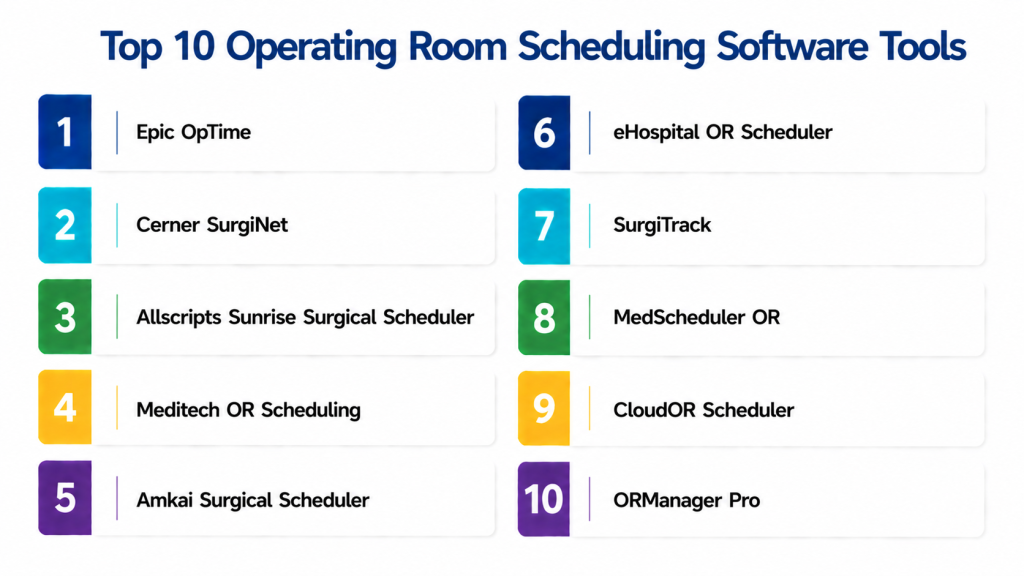
Top 10 Operating Room Scheduling Software Tools
1- Epic OpTime
Short description: Epic OpTime is a comprehensive OR scheduling solution designed for large hospitals and healthcare networks seeking integrated surgical management.
Key Features
- Real-time OR availability and conflict detection
- Integrated with Epic EHR/EMR ecosystem
- Case tracking and pre-op planning
- Analytics dashboards for utilization and outcomes
- Automated notifications for staff and patients
- Mobile access via Epic Haiku/Canto apps
Pros
- Deep integration with Epic EMR
- Scalable for multi-hospital networks
- Strong reporting and analytics capabilities
Cons
- High implementation cost
- Steep learning curve for staff
- Limited flexibility outside Epic ecosystem
Platforms / Deployment
- Web / Windows / iOS / Android
- Cloud / On-premises hybrid
Security & Compliance
- HIPAA compliant, RBAC, audit logging
- SOC 2 / ISO 27001: Not publicly stated
Integrations & Ecosystem
Epic OpTime primarily integrates with Epic EHR modules for anesthesia, perioperative documentation, and patient records.
- Anesthesia workflows
- EMR patient records
- Lab and imaging results
- Billing modules
- Mobile apps for surgeons
Support & Community
- Epic provides robust onboarding and training programs
- Dedicated customer support tiers
- Active user community forums
2- Cerner SurgiNet
Short description: Cerner SurgiNet offers an end-to-end OR scheduling and management platform for hospitals of all sizes, emphasizing efficiency and patient safety.
Key Features
- Dynamic OR schedule management
- Integration with Cerner EMR and perioperative solutions
- Real-time resource allocation
- Reporting and compliance dashboards
- Mobile scheduling and alerts
Pros
- Strong EMR integration
- Streamlined surgical workflow
- Scalable across multiple ORs
Cons
- Interface may feel dated
- Implementation requires significant training
- Premium cost for full features
Platforms / Deployment
- Web / Windows / iOS
- Cloud / On-premises hybrid
Security & Compliance
- HIPAA, SSO, MFA
- SOC 2 / ISO 27001: Not publicly stated
Integrations & Ecosystem
- Cerner EMR and billing modules
- Anesthesia information management
- Patient tracking and communication tools
- Reporting APIs
Support & Community
- Dedicated support and training
- User community for sharing best practices
- Documentation extensive but can be technical
3- Allscripts Sunrise Surgical Scheduler
Short description: Designed for mid-to-large healthcare systems, Allscripts offers a cloud-based OR scheduling platform with analytics and automation.
Key Features
- Drag-and-drop schedule interface
- Predictive case duration estimation
- Integration with EMR and patient portals
- Reporting and KPI dashboards
- Automated notifications
Pros
- Cloud-native for easier updates
- Modern, intuitive interface
- Automation reduces manual errors
Cons
- Limited offline capabilities
- Integration complexity with non-Allscripts EMRs
- Advanced analytics may require add-ons
Platforms / Deployment
- Web / Windows / iOS / Android
- Cloud / Hybrid
Security & Compliance
- HIPAA, RBAC
- SOC 2 / ISO 27001: Not publicly stated
Integrations & Ecosystem
- Allscripts EMR and billing
- Lab and imaging systems
- Mobile scheduling tools
- API access for custom integrations
Support & Community
- Online knowledge base and tutorials
- 24/7 support options
- Active user community
4- Meditech OR Scheduling
Short description: Meditech’s OR module helps hospitals streamline scheduling, resource allocation, and documentation, particularly for mid-sized facilities.
Key Features
- Real-time OR calendar
- Staff and equipment allocation
- Pre-op checklist integration
- Analytics on utilization and outcomes
- Patient communication automation
Pros
- Integrated with Meditech EMR
- Efficient workflow management
- Moderate cost relative to enterprise competitors
Cons
- Less advanced AI features
- Learning curve for complex schedules
- Limited mobile access
Platforms / Deployment
- Web / Windows
- Cloud / On-premises
Security & Compliance
- HIPAA, encryption
- SOC 2 / ISO 27001: Not publicly stated
Integrations & Ecosystem
- Meditech EMR modules
- Lab and imaging systems
- Billing and revenue cycle
- Limited external APIs
Support & Community
- Vendor-provided onboarding
- Documentation adequate for administrators
- Community forums limited
5- Amkai Surgical Scheduler
Short description: Amkai provides a flexible, cloud-based OR scheduling system suitable for hospitals and surgical centers focused on optimizing resource use.
Key Features
- Multi-OR management
- Automated conflict detection
- Staff assignment and shift planning
- Analytics dashboards
- Integration with EHR systems
Pros
- Cloud-first and intuitive
- AI-based optimization
- Scalable for multi-facility networks
Cons
- Limited brand recognition
- Smaller support community
- Some integrations require manual configuration
Platforms / Deployment
- Web / iOS / Android
- Cloud
Security & Compliance
- HIPAA compliant
- SOC 2 / ISO 27001: Not publicly stated
Integrations & Ecosystem
- Major EHR connectors
- Lab and imaging systems
- Scheduling APIs
- Mobile apps
Support & Community
- Online support and documentation
- Moderate community activity
- Vendor-led onboarding
6- eHospital OR Scheduler
Short description: A modular OR scheduling tool for hospitals and surgical centers focusing on efficiency and reporting.
Key Features
- Drag-and-drop OR schedule management
- Staff and equipment allocation
- Analytics on utilization
- Emergency case adjustments
- Notifications to surgeons and staff
Pros
- Simple interface
- Flexible deployment options
- Cost-effective for mid-sized facilities
Cons
- Limited AI/automation
- Fewer advanced analytics
- Smaller vendor support network
Platforms / Deployment
- Web / Windows / iOS
- Cloud / Hybrid
Security & Compliance
- HIPAA
- SOC 2 / ISO 27001: Not publicly stated
Integrations & Ecosystem
- EHR and EMR systems
- Lab and imaging connectors
- Reporting and dashboard integration
Support & Community
- Vendor support with SLA
- Documentation adequate
- Limited online community
7- SurgiTrack
Short description: SurgiTrack offers a modern OR scheduling platform emphasizing workflow automation and predictive analytics.
Key Features
- Predictive case duration
- AI-assisted scheduling
- OR utilization dashboards
- Staff and equipment management
- Automated alerts
Pros
- AI-driven insights
- Cloud-based, easy deployment
- Supports multi-site operations
Cons
- Premium pricing for AI features
- Smaller adoption in enterprise hospitals
- Integration can require IT resources
Platforms / Deployment
- Web / iOS / Android
- Cloud
Security & Compliance
- HIPAA, encryption
- SOC 2 / ISO 27001: Not publicly stated
Integrations & Ecosystem
- EHR/EMR systems
- Lab and imaging
- API for custom workflows
- Mobile app access
Support & Community
- Dedicated vendor support
- Online resources available
- Emerging user community
8- MedScheduler OR
Short description: MedScheduler OR focuses on smaller hospitals and surgical centers, offering easy-to-use scheduling and reporting.
Key Features
- Real-time calendar
- Staff allocation
- Patient notifications
- Analytics and reporting
- Emergency case handling
Pros
- Affordable
- Easy to implement
- Suitable for small to mid-sized hospitals
Cons
- Limited advanced analytics
- Minimal AI capabilities
- Less robust integration options
Platforms / Deployment
- Web / Windows / iOS
- Cloud
Security & Compliance
- HIPAA
- SOC 2 / ISO 27001: Not publicly stated
Integrations & Ecosystem
- EHR connectors
- Lab and imaging interfaces
- Reporting APIs
Support & Community
- Vendor support available
- Basic documentation
- Small user community
9- CloudOR Scheduler
Short description: CloudOR is a fully cloud-native OR scheduling software designed for multi-location hospital networks.
Key Features
- Multi-site schedule management
- Resource optimization
- Analytics dashboards
- Notifications and reminders
- Mobile access
Pros
- Cloud-native, easy to scale
- Mobile-friendly
- Good for multi-facility operations
Cons
- Less known brand
- May require integration effort
- Advanced analytics require add-ons
Platforms / Deployment
- Web / iOS / Android
- Cloud
Security & Compliance
- HIPAA
- SOC 2 / ISO 27001: Not publicly stated
Integrations & Ecosystem
- EMR/EHR connectors
- Lab and imaging
- Mobile apps
- API support
Support & Community
- Online support
- Documentation standard
- Emerging community
10- ORManager Pro
Short description: ORManager Pro is a versatile OR scheduling solution for hospitals aiming to improve utilization and communication across teams.
Key Features
- Dynamic OR scheduling
- Resource allocation
- Staff notifications
- Analytics and reporting
- Emergency adjustments
Pros
- Flexible deployment
- Intuitive interface
- Supports analytics-driven decisions
Cons
- Limited AI automation
- Smaller vendor community
- Integration complexity
Platforms / Deployment
- Web / Windows / iOS
- Cloud / Hybrid
Security & Compliance
- HIPAA
- SOC 2 / ISO 27001: Not publicly stated
Integrations & Ecosystem
- EMR/EHR systems
- Lab and imaging
- Reporting APIs
- Mobile app access
Support & Community
- Vendor support available
- Documentation adequate
- Limited online user community
Comparison Table (Top 10)
| Tool Name | Best For | Platform(s) Supported | Deployment | Standout Feature | Public Rating |
|---|---|---|---|---|---|
| Epic OpTime | Large hospitals | Web/Windows/iOS/Android | Cloud / Hybrid | Epic EMR integration | N/A |
| Cerner SurgiNet | Hospitals of all sizes | Web/Windows/iOS | Cloud / Hybrid | Workflow automation | N/A |
| Allscripts Sunrise | Mid-to-large hospitals | Web/Windows/iOS/Android | Cloud / Hybrid | AI-assisted scheduling | N/A |
| Meditech OR | Mid-sized hospitals | Web/Windows | Cloud / On-prem | Efficient workflow | N/A |
| Amkai Surgical Scheduler | Multi-OR hospitals | Web/iOS/Android | Cloud | AI optimization | N/A |
| eHospital OR Scheduler | Mid-sized hospitals | Web/Windows/iOS | Cloud / Hybrid | Emergency case adjustments | N/A |
| SurgiTrack | Multi-site hospitals | Web/iOS/Android | Cloud | Predictive analytics | N/A |
| MedScheduler OR | Small-mid hospitals | Web/Windows/iOS | Cloud | Ease of use | N/A |
| CloudOR Scheduler | Multi-location networks | Web/iOS/Android | Cloud | Multi-site scheduling | N/A |
| ORManager Pro | Hospitals seeking flexibility | Web/Windows/iOS | Cloud / Hybrid | Team communication | N/A |
Evaluation & Scoring of Operating Room Scheduling Software
| Tool Name | Core (25%) | Ease (15%) | Integrations (15%) | Security (10%) | Performance (10%) | Support (10%) | Value (15%) | Weighted Total |
|---|---|---|---|---|---|---|---|---|
| Epic OpTime | 9 | 6 | 8 | 9 | 9 | 8 | 6 | 7.85 |
| Cerner SurgiNet | 8 | 7 | 7 | 9 | 8 | 8 | 7 | 7.70 |
| Allscripts Sunrise | 8 | 8 | 7 | 8 | 8 | 7 | 7 | 7.55 |
| Meditech OR | 7 | 7 | 6 | 8 | 7 | 7 | 8 | 7.20 |
| Amkai Surgical Scheduler | 8 | 8 | 7 | 8 | 8 | 7 | 7 | 7.55 |
| eHospital OR Scheduler | 7 | 8 | 6 | 7 | 7 | 6 | 8 | 7.05 |
| SurgiTrack | 8 | 8 | 7 | 8 | 8 | 7 | 7 | 7.55 |
| MedScheduler OR | 6 | 8 | 6 | 7 | 7 | 6 | 8 | 6.90 |
| CloudOR Scheduler | 7 | 8 | 6 | 7 | 7 | 6 | 8 | 7.00 |
| ORManager Pro | 7 | 8 | 6 | 7 | 7 | 6 | 8 | 7.00 |
Interpretation: Scores are comparative, helping hospitals evaluate which solution aligns with their priorities—core functionality, ease of use, integration, security, performance, support, and value.
Which Operating Room Scheduling Software Tool Is Right for You?
Solo / Freelancer
Smaller surgical centers may prefer MedScheduler OR for ease of use and cost-effectiveness.
SMB
Mid-sized hospitals benefit from Meditech OR or eHospital OR Scheduler, balancing features and affordability.
Mid-Market
Facilities with moderate OR volume should consider Allscripts Sunrise or Amkai Surgical Scheduler for AI-assisted optimization and reporting.
Enterprise
Large hospitals or multi-site networks will gain maximum value from Epic OpTime, Cerner SurgiNet, or SurgiTrack for integration, scalability, and analytics.
Budget vs Premium
Smaller facilities can use MedScheduler OR or eHospital OR Scheduler; premium solutions like Epic OpTime are justified for multi-hospital networks.
Feature Depth vs Ease of Use
High-feature solutions (Epic, Cerner) may require training; simpler tools (MedScheduler, eHospital) offer quick onboarding.
Integrations & Scalability
Choose tools like Epic OpTime, Cerner SurgiNet, or SurgiTrack for multi-site operations and robust EHR integration.
Security & Compliance Needs
Ensure HIPAA compliance and audit capabilities; enterprise tools generally have stronger compliance features.
Frequently Asked Questions (FAQs)
1. What is the typical cost of OR scheduling software?
Costs vary widely from small cloud subscriptions to high-end enterprise implementations. Pricing is often based on OR count and feature set.
2. How long does it take to implement an OR scheduling tool?
Implementation ranges from a few weeks for small hospitals to several months for large networks, depending on integration complexity.
3. Can OR scheduling software integrate with any EHR?
Most tools integrate with major EHRs like Epic, Cerner, and Meditech. Some may require custom APIs for other systems.
4. Are AI features necessary for small hospitals?
Not essential for small volume, but AI can optimize OR utilization and reduce delays in larger facilities.
5. How is patient data secured in these systems?
Leading platforms offer HIPAA compliance, encryption, RBAC, and audit logs. Verify vendor claims during evaluation.
6. Can I manage multiple hospitals from one platform?
Yes, enterprise tools like Epic OpTime, Cerner SurgiNet, and CloudOR allow multi-site scheduling and centralized reporting.
7. What mobile options are available for staff?
Many solutions provide iOS/Android apps for real-time updates, notifications, and schedule access.
8. Is training required for staff?
Yes, enterprise tools often require structured training. Simpler platforms may need minimal onboarding.
9. Can I switch software easily if needed?
Migration can be complex due to patient data and EHR integrations; plan carefully before switching.
10. What are common mistakes when implementing OR scheduling software?
Rushing implementation, ignoring staff input, underestimating integration effort, and insufficient training are frequent pitfalls.
Conclusion
Selecting the right Operating Room Scheduling Software depends on facility size, surgical volume, integration requirements, and budget. Enterprise hospitals benefit from deep integrations and analytics with tools like Epic OpTime, while smaller centers may prioritize simplicity and cost with MedScheduler OR. Key considerations include ease of use, AI optimization, compliance, and multi-site scalability. Next steps: shortlist aligned with your facility needs, run a pilot to test usability and integration, and validate that security and reporting meet compliance requirements.
