Introduction
Disaster Management & Response Platforms (DMRP) are software systems designed to help governments, agencies, and organizations plan for, respond to, and recover from natural and human-made disasters. These platforms integrate incident reporting, resource management, communication, analytics, and situational awareness tools to improve response efficiency and coordination. In complex disaster scenarios, timely and accurate data is critical to minimize damage, save lives, and optimize resource allocation.
Real-world use cases include:
- Coordinating emergency response during floods, earthquakes, hurricanes, or wildfires.
- Managing disaster relief resources, shelters, and personnel.
- Real-time monitoring and alerts for public safety and early warning systems.
- Facilitating inter-agency communication and coordination.
- Analyzing disaster trends to improve future preparedness and resilience.
Evaluation criteria for buyers:
- Core functionality (incident management, resource allocation, reporting)
- Integration with emergency services, GIS, and communication systems
- Security and compliance for sensitive data
- Real-time situational awareness and alerts
- Scalability for local, regional, or national deployments
- AI and automation for predictive analytics and resource optimization
- Ease of use for operators and responders
- Mobile and field access for emergency personnel
- Deployment flexibility (cloud, on-premises, hybrid)
- Vendor support, training, and documentation
Best for: Emergency management agencies, government authorities, humanitarian organizations, municipal disaster teams, and large enterprises with critical infrastructure.
Not ideal for: Small organizations or non-emergency operations with minimal disaster coordination needs, where basic task management or spreadsheet solutions may suffice.
Key Trends in Disaster Management & Response Platforms
- Adoption of AI and machine learning for predictive disaster modeling and resource allocation.
- Cloud-based platforms with hybrid or on-premises options for security and scalability.
- Integration with GIS, IoT sensors, and early warning systems for situational awareness.
- Mobile apps for field responders and volunteer coordination.
- Advanced security and access control with encryption, RBAC, and audit trails.
- Automated alerts, notifications, and incident reporting.
- Data visualization with dashboards, geospatial mapping, and real-time analytics.
- Interoperability with government, health, and humanitarian databases.
- AI-assisted resource optimization during emergency response.
- Flexible pricing and deployment models for local, regional, and national agencies.
How We Selected These Tools (Methodology)
- Evaluated market adoption and trust among emergency management agencies.
- Assessed feature completeness, including incident management, resource coordination, and reporting.
- Reviewed performance and reliability in live disaster scenarios.
- Verified security and compliance including encryption, RBAC, and audit logs.
- Considered integration capabilities with GIS, communication networks, and government systems.
- Measured fit across local, regional, and national deployments.
- Factored in ease of use for operators and responders.
- Included AI and automation features for predictive modeling and resource allocation.
- Examined deployment flexibility (cloud, on-premises, hybrid).
- Assessed vendor support, documentation, and training resources.
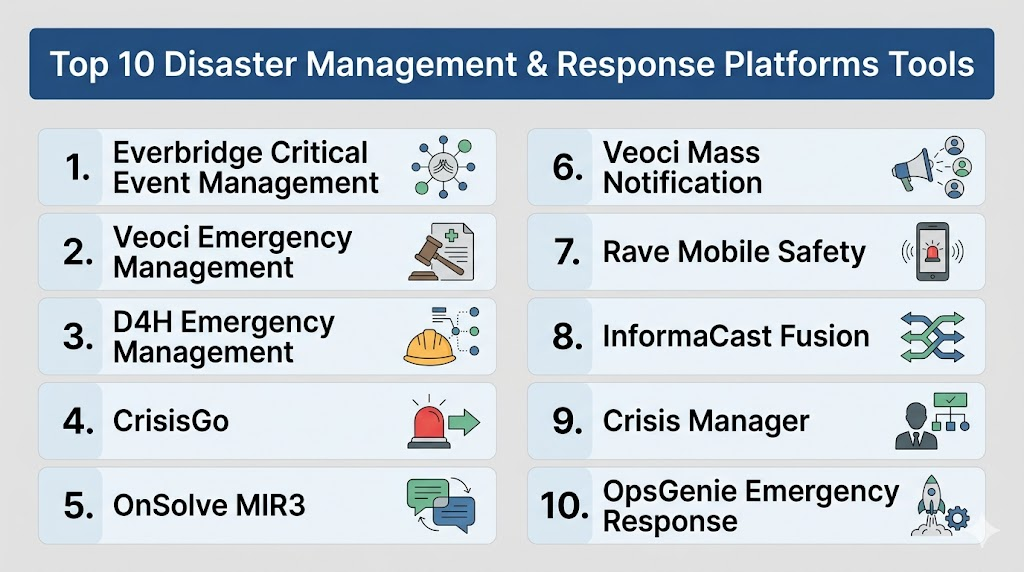
Top 10 Disaster Management & Response Platforms Tools
1- Everbridge Critical Event Management
Short description: Cloud-based platform for real-time alerts, situational awareness, and emergency response coordination for enterprises and agencies.
Key Features
- Real-time incident alerts and notifications
- Crisis communication with multi-channel messaging
- Integration with GIS and IoT sensors
- Resource and personnel coordination dashboards
- Analytics for risk assessment and response
- Mobile apps for field teams
- Compliance reporting and audit logs
Pros
- Scalable for enterprise and municipal deployments
- Strong real-time communication features
Cons
- Premium pricing
- Requires training for full adoption
Platforms / Deployment
- Web / iOS / Android
- Cloud
Security & Compliance
- SOC 2, encryption, RBAC, audit trails
Integrations & Ecosystem
- GIS platforms, IoT sensor networks, emergency services
- API for custom integrations
Support & Community
- Vendor support and training
- Documentation available
- Moderate community presence
2- Veoci Emergency Management
Short description: Platform for disaster response, incident tracking, and resource management with mobile and web access.
Key Features
- Incident reporting and workflow automation
- Resource and personnel tracking
- GIS integration for situational awareness
- Analytics dashboards and reporting
- Mobile apps for responders
- Notification and alert system
Pros
- User-friendly interface
- Cloud-native and scalable
Cons
- Limited AI-assisted forecasting
- Smaller global adoption
Platforms / Deployment
- Web / iOS / Android
- Cloud / Hybrid
Security & Compliance
- Encryption, RBAC, audit logs
- Not publicly stated
Integrations & Ecosystem
- GIS, emergency services, communication platforms
- API for workflows
Support & Community
- Vendor support
- Documentation included
- Moderate community presence
3- D4H Emergency Management
Short description: Cloud-based emergency response system for incident management, resource coordination, and reporting.
Key Features
- Incident tracking and reporting
- Resource allocation dashboards
- Mobile field apps
- GIS integration and mapping
- Automated alerts and notifications
- Compliance reporting
Pros
- Flexible deployment
- Mobile-friendly for responders
Cons
- Limited AI predictive features
- Moderate learning curve
Platforms / Deployment
- Web / iOS / Android
- Cloud / Hybrid
Security & Compliance
- Encryption, RBAC, audit trails
- Not publicly stated
Integrations & Ecosystem
- GIS, municipal systems, communication platforms
- API for integration
Support & Community
- Vendor support
- Documentation included
- Small community
4- CrisisGo
Short description: Emergency management and communication platform for schools, municipalities, and organizations.
Key Features
- Mass notification system
- Incident reporting and management
- GIS mapping for situational awareness
- Mobile apps for field and staff communication
- Analytics dashboards
- Compliance and audit reporting
Pros
- Easy adoption for small-to-mid organizations
- Cloud-native and mobile-friendly
Cons
- Limited enterprise-scale analytics
- Smaller integration ecosystem
Platforms / Deployment
- Web / iOS / Android
- Cloud
Security & Compliance
- Encryption, RBAC, audit logs
- Not publicly stated
Integrations & Ecosystem
- GIS, communication platforms
- API for custom workflows
Support & Community
- Vendor support
- Documentation included
- Small community
5- OnSolve MIR3
Short description: Platform for emergency notifications, incident management, and crisis communications for organizations and government agencies.
Key Features
- Multi-channel notifications
- Incident tracking and workflows
- GIS integration
- Analytics and reporting dashboards
- Mobile apps for responders
- Automated alerts and notifications
Pros
- Scalable and reliable
- Strong notification capabilities
Cons
- Premium pricing
- Limited predictive AI
Platforms / Deployment
- Web / iOS / Android
- Cloud
Security & Compliance
- SOC 2, encryption, audit logs, RBAC
Integrations & Ecosystem
- GIS, communication platforms, emergency services
- API for custom integrations
Support & Community
- Vendor support and training
- Documentation available
- Moderate community
6- Veoci Mass Notification
Short description: Platform for emergency alerts, incident tracking, and operational coordination with mobile access.
Key Features
- Incident management
- Mass notification system
- GIS situational mapping
- Resource and personnel tracking
- Mobile applications for responders
Pros
- Easy to use and mobile-friendly
- Scalable for municipal agencies
Cons
- Limited AI features
- Smaller analytics capability
Platforms / Deployment
- Web / iOS / Android
- Cloud
Security & Compliance
- Encryption, RBAC, audit logs
- Not publicly stated
Integrations & Ecosystem
- GIS, municipal systems
- API for workflows
Support & Community
- Vendor support
- Documentation provided
- Small community
7- Rave Mobile Safety
Short description: Emergency communications and incident management platform for schools, municipalities, and organizations.
Key Features
- Multi-channel alerts and notifications
- Incident reporting and tracking
- GIS situational awareness
- Mobile apps for responders
- Analytics dashboards
Pros
- Trusted platform for mass notification
- Cloud-native and mobile-first
Cons
- Limited predictive modeling
- Smaller global adoption
Platforms / Deployment
- Web / iOS / Android
- Cloud
Security & Compliance
- Encryption, audit logs, RBAC
- Not publicly stated
Integrations & Ecosystem
- GIS and communication systems
- API for custom workflows
Support & Community
- Vendor support
- Documentation available
- Small user community
8- InformaCast Fusion
Short description: Emergency alert and incident management platform integrating notifications, GIS, and resource tracking.
Key Features
- Mass notifications across channels
- Incident and resource management
- GIS mapping and dashboards
- Mobile apps for field teams
- Analytics and reporting
Pros
- Scalable and reliable
- Mobile-friendly
Cons
- Limited predictive analytics
- Premium pricing
Platforms / Deployment
- Web / iOS / Android
- Cloud
Security & Compliance
- Encryption, audit logs, RBAC
- Not publicly stated
Integrations & Ecosystem
- GIS, emergency communications
- API for custom workflows
Support & Community
- Vendor support
- Documentation included
- Small community
9- Crisis Manager
Short description: Platform for emergency planning, incident response, and operational coordination.
Key Features
- Incident management and reporting
- Resource allocation
- GIS situational mapping
- Mobile apps for responders
- Notifications and alerts
Pros
- Affordable for small-to-mid agencies
- Cloud-native and mobile-friendly
Cons
- Limited AI features
- Smaller analytics capabilities
Platforms / Deployment
- Web / iOS / Android
- Cloud
Security & Compliance
- Encryption, RBAC, audit trails
- Not publicly stated
Integrations & Ecosystem
- GIS and communication platforms
- API for integration
Support & Community
- Vendor support
- Documentation included
- Small community
10- OpsGenie Emergency Response
Short description: Incident response and alert management platform for organizations and emergency agencies.
Key Features
- Incident and alert management
- Multi-channel notifications
- GIS mapping and dashboards
- Mobile apps for responders
- Analytics and reporting
Pros
- Real-time alerts and notifications
- Cloud-native
Cons
- Limited predictive AI
- Smaller adoption in government sectors
Platforms / Deployment
- Web / iOS / Android
- Cloud
Security & Compliance
- Encryption, RBAC, audit logs
- Not publicly stated
Integrations & Ecosystem
- GIS and communication platforms
- API for custom workflows
Support & Community
- Vendor support
- Documentation provided
- Moderate community
Comparison Table (Top 10)
| Tool Name | Best For | Platform(s) Supported | Deployment | Standout Feature | Public Rating |
|---|---|---|---|---|---|
| Everbridge | Enterprise & municipal | Web, iOS, Android | Cloud | Real-time alerts & communication | N/A |
| Veoci Emergency | Local & regional agencies | Web, iOS, Android | Cloud / Hybrid | Incident tracking & mobile access | N/A |
| D4H | Emergency services | Web, iOS, Android | Cloud / Hybrid | Resource coordination | N/A |
| CrisisGo | Schools & municipalities | Web, iOS, Android | Cloud | Easy-to-use mass notification | N/A |
| OnSolve MIR3 | Agencies & enterprises | Web, iOS, Android | Cloud | Multi-channel notifications | N/A |
| Veoci Mass Notification | Municipal & local agencies | Web, iOS, Android | Cloud | Mobile notifications & GIS | N/A |
| Rave Mobile Safety | Schools & organizations | Web, iOS, Android | Cloud | Mass alerts & incident tracking | N/A |
| InformaCast Fusion | Enterprises & agencies | Web, iOS, Android | Cloud | GIS & alert integration | N/A |
| Crisis Manager | Small-mid agencies | Web, iOS, Android | Cloud | Affordable incident management | N/A |
| OpsGenie | Organizations & responders | Web, iOS, Android | Cloud | Real-time alert management | N/A |
Evaluation & Scoring of Disaster Management & Response Platforms
| Tool Name | Core (25%) | Ease (15%) | Integrations (15%) | Security (10%) | Performance (10%) | Support (10%) | Value (15%) | Weighted Total |
|---|---|---|---|---|---|---|---|---|
| Everbridge | 9 | 8 | 8 | 9 | 8 | 8 | 7 | 8.45 |
| Veoci Emergency | 8 | 8 | 7 | 8 | 8 | 7 | 7 | 7.85 |
| D4H | 8 | 8 | 7 | 8 | 8 | 7 | 7 | 7.85 |
| CrisisGo | 7 | 8 | 6 | 7 | 7 | 7 | 6 | 7.05 |
| OnSolve MIR3 | 8 | 7 | 7 | 8 | 8 | 7 | 6 | 7.50 |
| Veoci Mass Notification | 7 | 8 | 6 | 7 | 7 | 7 | 6 | 6.95 |
| Rave Mobile Safety | 7 | 7 | 6 | 7 | 7 | 7 | 6 | 6.85 |
| InformaCast Fusion | 8 | 7 | 6 | 8 | 7 | 7 | 7 | 7.45 |
| Crisis Manager | 7 | 8 | 6 | 7 | 7 | 7 | 6 | 6.95 |
| OpsGenie | 8 | 8 | 6 | 8 | 7 | 7 | 6 | 7.25 |
Which Disaster Management & Response Platform Tool Is Right for You?
Solo / Freelancer
- Small agencies or NGOs: CrisisGo or Crisis Manager for affordability and simplicity.
SMB
- Local municipalities: Veoci Emergency or Veoci Mass Notification for mobile and GIS-enabled management.
Mid-Market
- Regional agencies: D4H or InformaCast Fusion for workflow automation and alerting.
Enterprise
- Large government and enterprise agencies: Everbridge, OnSolve MIR3, or Rave Mobile Safety for global coverage and predictive alerts.
Budget vs Premium
- Budget: CrisisGo, Crisis Manager
- Premium: Everbridge, OnSolve MIR3, D4H
Feature Depth vs Ease of Use
- Advanced AI and predictive tools (Everbridge, OnSolve MIR3) provide rich analytics but require training.
- Simpler tools (CrisisGo, Crisis Manager) allow fast adoption and straightforward management.
Integrations & Scalability
- Evaluate GIS layers, IoT sensor integrations, and inter-agency connectivity.
- Cloud-native platforms scale quickly; hybrid or on-prem options may suit sensitive government data.
Security & Compliance Needs
- SOC 2, encryption, RBAC, and audit trails recommended.
- Automated reporting ensures regulatory compliance and efficient disaster response.
Frequently Asked Questions (FAQs)
1. What deployment options are available?
Cloud, hybrid, or on-premises depending on agency requirements and data sensitivity.
2. Can responders use mobile apps for field updates?
Yes, most platforms provide mobile access for real-time incident updates.
3. Are AI features included?
Some tools offer predictive modeling, resource optimization, and alert prioritization.
4. How is sensitive disaster data secured?
Encryption, RBAC, audit trails, and MFA protect confidential information.
5. Can these systems integrate with GIS or IoT sensors?
Yes, enterprise-grade platforms integrate GIS, IoT, and municipal databases.
6. Are these platforms scalable?
Cloud-native solutions scale from local to national disaster management needs.
7. How long does onboarding take?
Simple tools take a few days; enterprise deployments require weeks of training.
8. Are small organizations supported?
Yes, CrisisGo and Crisis Manager are ideal for NGOs and small municipal teams.
9. What pricing models exist?
Subscription, per-user, or enterprise licensing; cloud storage may be additional.
10. What alternatives exist for minimal disaster coordination?
Spreadsheet tracking, simple task management, or email alerts can suffice for small-scale operations.
Conclusion
Disaster Management & Response Platforms are essential for coordinating emergency response, monitoring incidents, and optimizing resource allocation. Choosing the right system depends on agency size, deployment needs, AI and predictive capabilities, and integration with GIS and communication networks. Smaller agencies may prioritize cost and usability, while regional and national agencies benefit from scalable, AI-enabled, and cloud-native platforms. Evaluating top tools on core features, performance, security, and value allows administrators to shortlist 2–3 solutions, pilot workflows, and validate integration and compliance before full-scale adoption. The right DMRP platform enhances situational awareness, operational efficiency, and public safety readiness.
