Introduction
Cloud Identity Security Tools are platforms designed to secure user identities, manage access, and enforce authentication policies across cloud environments. As organizations increasingly adopt cloud infrastructure and SaaS applications, identity security has become a cornerstone of overall cybersecurity. These tools help prevent unauthorized access, credential compromise, and insider threats while enabling seamless user access.
Real-world use cases include:
- Securing employee access to cloud applications and resources
- Managing multi-factor authentication (MFA) and single sign-on (SSO)
- Detecting and responding to compromised credentials
- Enforcing least privilege access and role-based access controls (RBAC)
- Monitoring privileged account activity for compliance
Evaluation criteria buyers should consider:
- Authentication methods supported (SSO, MFA, adaptive authentication)
- Identity lifecycle management capabilities
- Access control and policy enforcement
- Integration with cloud apps and on-prem systems
- Threat detection and reporting capabilities
- Compliance and audit support
- Usability and administration features
- Scalability for enterprise environments
- Pricing and licensing flexibility
Best for: IT security teams, cloud administrators, and CIOs managing complex cloud environments in enterprises or large organizations.
Not ideal for: Small organizations with minimal cloud footprint or those using basic authentication and low-risk apps.
Key Trends in Cloud Identity Security
- AI-powered risk-based and adaptive authentication
- Integration with Zero Trust security frameworks
- Cloud-native identity analytics and behavioral monitoring
- Passwordless authentication adoption
- Cross-cloud SSO and federation support
- Privileged access management (PAM) integration
- Compliance automation for standards like SOC 2, ISO 27001, GDPR
- API-first architecture for extensibility with SaaS apps
- Enhanced user lifecycle and provisioning automation
- Threat intelligence feeds integrated into identity risk scoring
How We Selected These Tools (Methodology)
- Market adoption and enterprise recognition
- Feature breadth covering authentication, access, and monitoring
- Security posture and compliance capabilities
- Integration with cloud, SaaS, and on-prem applications
- User lifecycle and policy management flexibility
- Performance and scalability in large cloud environments
- Ease of deployment and administration
- Support, community engagement, and documentation quality
- AI/automation capabilities for adaptive authentication
- Pricing and licensing flexibility for different organization sizes
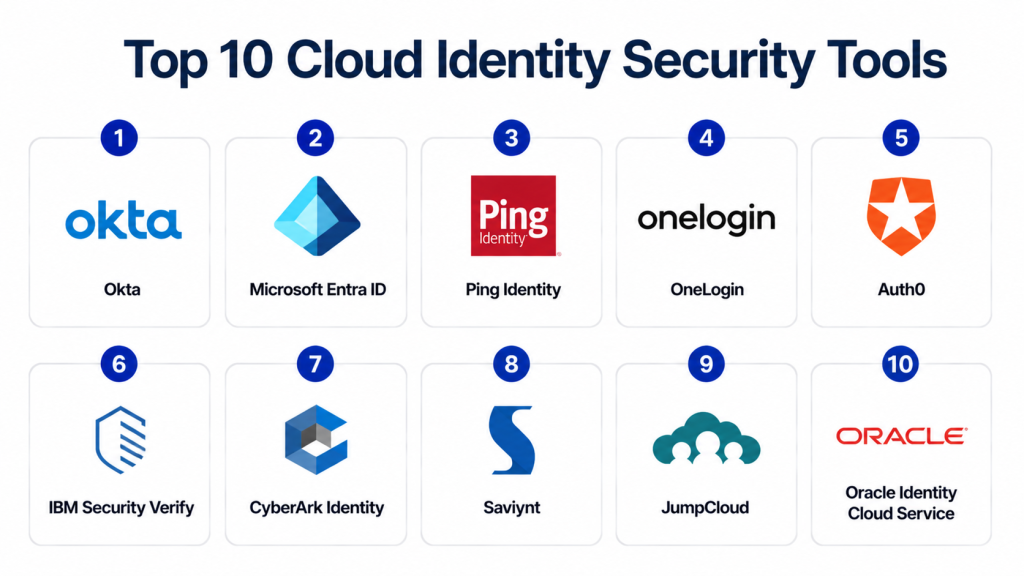
Top 10 Cloud Identity Security Tools
1- Okta
Short description: Okta provides cloud-native identity security with SSO, MFA, and lifecycle management for enterprise environments.
Key Features
- Single sign-on (SSO) across apps
- Multi-factor authentication (MFA)
- Lifecycle and provisioning management
- Threat detection and adaptive authentication
- API access management
- Integration with on-prem and cloud apps
Pros
- Strong enterprise adoption
- Wide app integration catalog
Cons
- Premium pricing for advanced features
- Some complex policy configurations
Platforms / Deployment
- Web / Windows / macOS
- Cloud
Security & Compliance
- SOC 2, ISO 27001, GDPR
- RBAC, audit logs, encryption
Integrations & Ecosystem
Supports Office 365, G Suite, Salesforce, AWS
- API integrations
- CI/CD and IAM workflows
- Extensive app catalog
Support & Community
- Enterprise support tiers
- Documentation and tutorials
- Active customer community
2- Microsoft Entra ID
Short description: Microsoft Entra ID (formerly Azure AD) provides cloud identity and access management for securing Microsoft and third-party cloud applications.
Key Features
- SSO and MFA
- Conditional access and risk-based authentication
- Identity lifecycle management
- Privileged identity management (PIM)
- Integration with Azure and Microsoft apps
Pros
- Deep integration with Microsoft ecosystem
- Enterprise-grade compliance and monitoring
Cons
- Complex configuration for hybrid environments
- Best value for Microsoft-heavy environments
Platforms / Deployment
- Web / Windows / macOS
- Cloud
Security & Compliance
- SOC 2, ISO 27001, GDPR, HIPAA
- RBAC, MFA, audit logs
Integrations & Ecosystem
- Office 365, Microsoft Teams, Azure apps
- API for custom integrations
- Security monitoring dashboards
Support & Community
- Enterprise support
- Extensive Microsoft documentation
- Global user community
3- Ping Identity
Short description: Ping Identity offers cloud and hybrid identity solutions with SSO, MFA, and access security for complex enterprise deployments.
Key Features
- Adaptive authentication and risk-based MFA
- Single sign-on
- API and application access management
- Directory integration
- Identity lifecycle management
Pros
- Flexible deployment options
- Strong security and adaptive policies
Cons
- Premium pricing for full enterprise features
- Steeper learning curve
Platforms / Deployment
- Web / Windows / Linux
- Cloud / Hybrid
Security & Compliance
- SOC 2, ISO 27001, GDPR
- RBAC, MFA, audit logs
Integrations & Ecosystem
- SaaS apps, on-prem apps, cloud APIs
- CI/CD pipeline integrations
- Custom authentication workflows
Support & Community
- Enterprise support tiers
- Documentation and training
- Active customer community
4- OneLogin
Short description: OneLogin provides identity and access management with SSO, MFA, and adaptive security for cloud-first organizations.
Key Features
- Single sign-on and MFA
- User provisioning and lifecycle management
- Risk-based authentication
- Directory integration
- Access policy management
Pros
- Cloud-first approach
- Strong adaptive authentication
Cons
- Smaller integration ecosystem than competitors
- Limited advanced analytics
Platforms / Deployment
- Web / Windows / macOS
- Cloud
Security & Compliance
- SOC 2, ISO 27001, GDPR
- RBAC, audit logging
Integrations & Ecosystem
- SaaS apps, on-prem systems
- API access
- CI/CD integrations
Support & Community
- Enterprise support
- Documentation
- User forums
5- Auth0
Short description: Auth0 (by Okta) provides developer-centric identity security for apps with SSO, MFA, and API authorization.
Key Features
- Developer-friendly identity APIs
- SSO and MFA
- OAuth2 and OpenID Connect support
- Custom rules and policies
- Social and enterprise login integration
Pros
- Easy developer adoption
- Flexible API-first approach
Cons
- Best suited for apps; may require integration for full enterprise IAM
- Advanced features cost extra
Platforms / Deployment
- Web / Windows / macOS
- Cloud
Security & Compliance
- SOC 2, ISO 27001, GDPR
- RBAC, MFA
Integrations & Ecosystem
- SaaS apps, custom applications
- API integrations
- Authentication workflows
Support & Community
- Enterprise support tiers
- Developer documentation
- Active developer community
6- IBM Security Verify
Short description: IBM Security Verify provides cloud identity management with SSO, MFA, and governance for enterprises.
Key Features
- SSO across cloud and on-prem apps
- Adaptive MFA
- Identity governance and administration
- Compliance dashboards
- Risk-based authentication
Pros
- Enterprise-grade security
- Compliance-focused analytics
Cons
- Best for large enterprises
- Higher cost
Platforms / Deployment
- Web / Windows / Linux
- Cloud / Hybrid
Security & Compliance
- SOC 2, ISO 27001, GDPR, HIPAA
- MFA, RBAC, audit logging
Integrations & Ecosystem
- SaaS and on-prem apps
- APIs for workflows
- Security dashboards
Support & Community
- Enterprise support
- Documentation
- Security analyst community
7- CyberArk Identity
Short description: CyberArk Identity secures privileged and regular accounts with SSO, MFA, and identity governance for cloud environments.
Key Features
- Privileged account management
- SSO and MFA
- Adaptive authentication
- Identity lifecycle management
- Risk-based policy enforcement
Pros
- Strong privileged access security
- Enterprise-focused
Cons
- Premium pricing
- Complex configuration
Platforms / Deployment
- Web / Windows / Linux
- Cloud / Hybrid
Security & Compliance
- SOC 2, ISO 27001, GDPR
- MFA, audit logs, RBAC
Integrations & Ecosystem
- SaaS apps, on-prem apps, cloud APIs
- CI/CD integrations
- Privileged account workflows
Support & Community
- Enterprise support
- Documentation
- Customer community
8- Saviynt
Short description: Saviynt provides cloud identity governance with SSO, MFA, access certification, and risk management for enterprises.
Key Features
- Identity governance and administration
- SSO and MFA
- Risk-based access policies
- Compliance reporting
- User lifecycle management
Pros
- Strong governance and risk management
- Compliance-ready dashboards
Cons
- Enterprise-focused, may be complex for SMBs
- Premium pricing
Platforms / Deployment
- Web / Windows / Linux
- Cloud / Hybrid
Security & Compliance
- SOC 2, ISO 27001, GDPR
- Audit logs, RBAC
Integrations & Ecosystem
- SaaS and on-prem apps
- API integrations
- Identity workflows
Support & Community
- Enterprise support tiers
- Documentation
- User forums
9- JumpCloud
Short description: JumpCloud offers cloud directory services with identity security, SSO, MFA, and device management for hybrid environments.
Key Features
- Cloud directory and SSO
- MFA and adaptive authentication
- Device management
- Policy enforcement
- Compliance reporting
Pros
- Lightweight and easy to adopt
- Device and identity management in one platform
Cons
- Smaller enterprise footprint
- Some advanced governance features limited
Platforms / Deployment
- Web / Windows / macOS / Linux
- Cloud
Security & Compliance
- SOC 2, GDPR
- MFA, RBAC
Integrations & Ecosystem
- SaaS apps, cloud apps, CI/CD
- APIs for identity workflows
- Policy management
Support & Community
- Enterprise and SMB support
- Documentation
- Community forum
10- Oracle Identity Cloud Service
Short description: Oracle Identity Cloud Service secures cloud and on-prem identities with SSO, MFA, and governance for enterprise deployments.
Key Features
- SSO and MFA
- Identity lifecycle management
- Risk-based access policies
- Compliance dashboards
- API access management
Pros
- Strong integration with Oracle ecosystem
- Enterprise-ready
Cons
- Best suited for large enterprises
- Learning curve
Platforms / Deployment
- Web / Windows / Linux
- Cloud / Hybrid
Security & Compliance
- SOC 2, ISO 27001, GDPR
- MFA, audit logs, RBAC
Integrations & Ecosystem
- Oracle apps, SaaS, on-prem apps
- CI/CD integrations
- Policy and workflow automation
Support & Community
- Enterprise support
- Documentation
- Oracle user community
Comparison Table
| Tool Name | Best For | Platform(s) Supported | Deployment | Standout Feature | Public Rating |
|---|---|---|---|---|---|
| Okta | Enterprises | Web, Windows, macOS | Cloud | SSO & MFA | N/A |
| Microsoft Entra ID | Enterprises | Web, Windows, macOS | Cloud | Deep Microsoft integration | N/A |
| Ping Identity | Enterprises | Web, Windows, Linux | Cloud/Hybrid | Adaptive authentication | N/A |
| OneLogin | SMB & Enterprises | Web, Windows, macOS | Cloud | Risk-based MFA | N/A |
| Auth0 | Developers | Web, Windows, macOS | Cloud | API-first developer approach | N/A |
| IBM Security Verify | Enterprises | Web, Windows, Linux | Cloud/Hybrid | Identity governance | N/A |
| CyberArk Identity | Enterprises | Web, Windows, Linux | Cloud/Hybrid | Privileged account security | N/A |
| Saviynt | Enterprises | Web, Windows, Linux | Cloud/Hybrid | Governance & compliance | N/A |
| JumpCloud | SMB & Mid-market | Web, Windows, macOS, Linux | Cloud | Cloud directory + device mgmt | N/A |
| Oracle Identity Cloud | Enterprises | Web, Windows, Linux | Cloud/Hybrid | Enterprise IAM & SSO | N/A |
Evaluation & Scoring
| Tool Name | Core | Ease | Integrations | Security | Performance | Support | Value | Weighted Total |
|---|---|---|---|---|---|---|---|---|
| Okta | 9 | 8 | 8 | 9 | 8 | 8 | 7 | 8.3 |
| Microsoft Entra ID | 9 | 7 | 8 | 9 | 8 | 8 | 7 | 8.2 |
| Ping Identity | 8 | 7 | 8 | 8 | 8 | 7 | 7 | 7.7 |
| OneLogin | 8 | 8 | 7 | 8 | 7 | 7 | 7 | 7.5 |
| Auth0 | 8 | 8 | 8 | 7 | 7 | 7 | 7 | 7.5 |
| IBM Security Verify | 8 | 7 | 7 | 8 | 7 | 7 | 6 | 7.2 |
| CyberArk Identity | 9 | 6 | 8 | 9 | 8 | 7 | 6 | 7.6 |
| Saviynt | 8 | 6 | 7 | 8 | 7 | 6 | 6 | 7.0 |
| JumpCloud | 7 | 8 | 7 | 7 | 7 | 6 | 7 | 7.0 |
| Oracle Identity Cloud | 8 | 6 | 7 | 8 | 7 | 7 | 6 | 7.1 |
Which Cloud Identity Security Tool Is Right for You?
Solo / Freelancer
Auth0 or JumpCloud for lightweight identity management and SSO.
SMB
OneLogin or Okta for simplified deployment and cloud app access.
Mid-Market
Ping Identity or JumpCloud for scalable identity security and multi-app SSO.
Enterprise
Okta, Microsoft Entra ID, CyberArk Identity for full lifecycle identity and privileged access security.
Budget vs Premium
Open-source or SMB-friendly tools (JumpCloud, Auth0) are cost-efficient; Okta, Microsoft Entra ID, CyberArk provide enterprise-grade features.
Feature Depth vs Ease of Use
Auth0 and OneLogin are developer-friendly; Okta and Microsoft Entra ID provide deeper enterprise controls.
Integrations & Scalability
Okta, Microsoft Entra ID, CyberArk scale across multi-cloud and enterprise SaaS apps; smaller tools fit mid-market or SMB deployments.
Security & Compliance Needs
Enterprises with regulatory requirements: Okta, CyberArk, Microsoft Entra ID; lightweight enforcement: JumpCloud, Auth0.
Frequently Asked Questions (FAQs)
1- What authentication methods are supported?
Most platforms support SSO, MFA, passwordless login, and adaptive authentication.
2- How quickly can identity policies be applied?
Many cloud-native platforms allow real-time policy enforcement across cloud apps and devices.
3- Can these tools integrate with existing CI/CD pipelines?
Yes, they provide APIs and connectors for integrating authentication and identity workflows.
4- Are these platforms compliant with regulations?
Top platforms comply with SOC 2, ISO 27001, GDPR, and HIPAA as needed.
5- Do these tools support hybrid environments?
Yes, enterprise platforms like Okta, Microsoft Entra ID, and CyberArk Identity support on-prem and cloud hybrid deployments.
6- Can developers use these tools for custom apps?
Yes, Auth0 and Ping Identity provide developer-friendly APIs for custom authentication and authorization.
7- How are privileged accounts managed?
CyberArk Identity and Microsoft Entra ID support privileged account lifecycle, RBAC, and auditing.
8- What reporting features are available?
Most platforms provide dashboards, audit logs, access reports, and compliance analytics.
9- Are there free tiers?
Auth0 and JumpCloud offer free tiers; enterprise platforms require paid subscriptions.
10- How often are security policies updated?
Policies should be updated regularly; adaptive platforms automatically adjust based on risk and threat detection.
Conclusion
Cloud Identity Security Tools are essential for securing cloud applications, managing user access, and ensuring compliance. The right tool depends on organization size, cloud footprint, and security requirements. Lightweight tools like Auth0 and JumpCloud work well for SMBs and developers, while Okta, Microsoft Entra ID, and CyberArk provide enterprise-grade controls, compliance, and scalability. Selecting the right platform ensures secure, compliant, and efficient identity management across all cloud environments.
