Introduction
Container Image Scanners are tools designed to analyze container images for security vulnerabilities, misconfigurations, and compliance risks before deployment. In cloud-native environments, containers are integral to CI/CD pipelines, microservices architectures, and hybrid cloud strategies. Ensuring that container images are secure and compliant is critical to protecting sensitive data and maintaining operational integrity.
Container adoption continues to grow alongside DevSecOps practices, making automated scanning essential for preventing breaches, regulatory violations, and operational downtime. These tools help organizations identify vulnerabilities early, enforce security policies, and maintain compliance across diverse cloud and on-prem environments.
Real-world use cases include:
- Scanning images in CI/CD pipelines to catch vulnerabilities before deployment
- Ensuring compliance with security standards like PCI DSS, GDPR, and HIPAA
- Detecting outdated or insecure base images across multiple registries
- Supporting DevSecOps automation with policy-as-code integration
- Continuous monitoring of container images in production for runtime threats
Evaluation criteria buyers should consider:
- Core scanning capabilities and depth
- Accuracy of vulnerability detection
- Integration with CI/CD pipelines
- Compliance and reporting features
- Ease of use and onboarding
- Performance and scalability
- Platform support (cloud, hybrid, on-prem)
- Support and community
- Pricing and total cost of ownership
Best for: DevOps engineers, security teams, and IT managers in organizations deploying containers in production. Especially useful for enterprises with strict compliance requirements.
Not ideal for: Teams running minimal container workloads, hobbyists, or organizations that rely exclusively on serverless or non-containerized architectures.
Key Trends in Container Image Scanners
- AI-driven vulnerability detection for faster, more accurate scanning
- Integration with GitOps and CI/CD pipelines for automated enforcement
- Compliance templates covering global regulations and industry standards
- Hybrid and multi-cloud registry scanning
- Runtime image monitoring complementing static scanning
- Policy-as-code enforcement to standardize security
- Container supply chain security monitoring from base image to deployment
- Support for SBOM (Software Bill of Materials) generation and verification
- SaaS-first deployment models for smaller teams
- Modular and API-first designs for extensibility with DevSecOps tools
How We Selected These Tools (Methodology)
- Market adoption and recognition in cloud-native and DevSecOps ecosystems
- Feature completeness including vulnerability, license, and compliance checks
- Reliability and performance in CI/CD pipelines
- Security posture signals: encryption, audit logs, RBAC, and regulatory support
- Integration capabilities with cloud registries, CI/CD platforms, and orchestration tools
- Customer fit across segments from freelancers to enterprise organizations
- Developer-first usability and learning curve
- Community engagement and open-source contributions
- Innovation and support for emerging container security trends
- Scalability and adaptability to hybrid/multi-cloud deployments
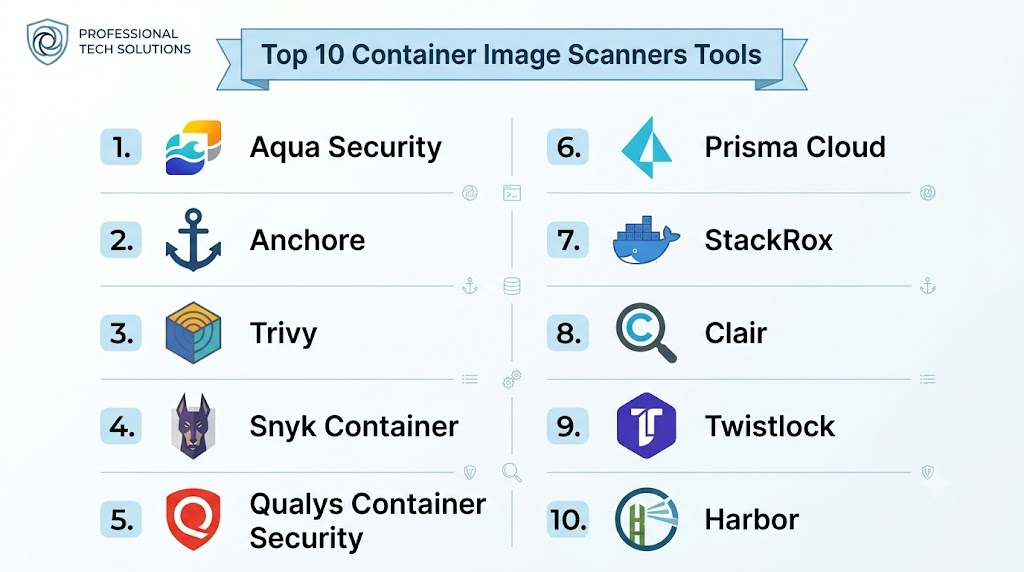
Top 10 Container Image Scanners Tools
1- Aqua Security
Short description: Aqua Security provides comprehensive image scanning, runtime protection, and compliance enforcement for enterprise container environments.
Key Features
- Vulnerability scanning for images and OS packages
- Compliance checks for CIS, NIST, PCI DSS
- Runtime protection and anomaly detection
- CI/CD integration with Jenkins, GitHub Actions, GitLab
- Image assurance and policy enforcement
- SBOM generation and verification
Pros
- Enterprise-grade security coverage
- Strong compliance reporting
Cons
- Premium pricing can be high for small teams
- Setup complexity for full runtime protection
Platforms / Deployment
- Linux / macOS / Windows
- Cloud / Self-hosted / Hybrid
Security & Compliance
- SSO/SAML, MFA, encryption, audit logs
- SOC 2, ISO 27001, GDPR
Integrations & Ecosystem
Supports Kubernetes, Docker, OpenShift and offers APIs for automation and reporting
- CI/CD pipeline integrations
- Kubernetes integration
- API automation
- Compliance reporting
- SBOM integration
Support & Community
- Enterprise support tiers
- Extensive documentation and tutorials
- Active community forums
2- Anchore
Short description: Anchore is an open-source container scanning platform emphasizing policy-as-code and compliance validation.
Key Features
- Vulnerability and license scanning
- Custom policy enforcement
- CI/CD integration
- Container metadata and SBOM analysis
- API-driven automation
Pros
- Open-source flexibility
- Strong policy-as-code features
Cons
- Advanced features may require enterprise edition
- Setup complexity for large-scale pipelines
Platforms / Deployment
- Linux / macOS
- Cloud / Self-hosted / Hybrid
Security & Compliance
- Not publicly stated
Integrations & Ecosystem
Supports CI/CD pipelines and GitOps tools
- Kubernetes integration
- OpenShift integration
- REST API for automation
Support & Community
- Community-driven support
- Enterprise support available
- Active GitHub repository
3- Trivy
Short description: Trivy is a lightweight, open-source vulnerability scanner for container images designed for fast CI/CD integration.
Key Features
- Fast image and filesystem scanning
- OS and language-specific vulnerabilities
- GitHub Actions and GitLab integration
- Minimal footprint
- SBOM generation
Pros
- Extremely fast and developer-friendly
- Free and open-source
Cons
- Limited runtime protection
- Enterprise features require Aqua Security subscription
Platforms / Deployment
- Linux / macOS / Windows
- Cloud / Self-hosted
Security & Compliance
- Not publicly stated
Integrations & Ecosystem
Supports CI/CD pipelines and GitOps workflows
- GitHub integration
- GitLab integration
- API support
Support & Community
- Community-driven support
- Extensive documentation
4- Snyk Container
Short description: Snyk provides developer-focused container security with automated vulnerability scanning and remediation guidance.
Key Features
- Vulnerability scanning for images and dependencies
- Automated remediation suggestions
- CI/CD pipeline integration
- License compliance checks
- Kubernetes security policies
Pros
- Developer-friendly, easy onboarding
- Remediation guidance integrated
Cons
- Premium plans required for advanced features
- Limited runtime scanning
Platforms / Deployment
- Linux / macOS / Windows
- Cloud / Hybrid
Security & Compliance
- Not publicly stated
Integrations & Ecosystem
Integrates with GitHub, GitLab, Bitbucket and CI/CD tools
- Kubernetes integration
- CI/CD automation
- REST APIs
Support & Community
- Extensive documentation
- Dedicated support tiers
- Active user community
5- Qualys Container Security
Short description: Qualys offers cloud-based container scanning and continuous monitoring with deep vulnerability detection.
Key Features
- Image scanning and registry monitoring
- Vulnerability prioritization
- Compliance policies and dashboards
- Runtime monitoring
- CI/CD integration
Pros
- Strong enterprise compliance features
- Continuous monitoring
Cons
- UI can be complex
- Pricing may be high for small teams
Platforms / Deployment
- Linux / Windows
- Cloud / Hybrid
Security & Compliance
- SOC 2, ISO 27001, GDPR
- RBAC, encryption, audit logs
Integrations & Ecosystem
Supports Kubernetes, Docker, OpenShift
- CI/CD pipelines
- API-driven workflows
- Compliance reporting
Support & Community
- Enterprise support tiers
- Comprehensive documentation
- Community forums
6- Prisma Cloud
Short description: Prisma Cloud offers cloud-native security with container image scanning, runtime protection, and compliance monitoring.
Key Features
- Vulnerability and misconfiguration scanning
- CI/CD integration
- Runtime defense for containers
- Compliance monitoring
- Policy enforcement and reporting
Pros
- Broad cloud-native coverage
- Multi-cloud support
Cons
- Complex pricing tiers
- Learning curve for full adoption
Platforms / Deployment
- Linux / Windows
- Cloud / Hybrid
Security & Compliance
- SOC 2, ISO 27001, GDPR
- MFA, RBAC, audit logging
Integrations & Ecosystem
Supports Kubernetes, AWS, Azure, GCP
- CI/CD integrations
- APIs for automation
- Policy enforcement
Support & Community
- Enterprise support
- Extensive documentation
- Active community
7- StackRox
Short description: StackRox provides container security with image scanning, runtime defense, and policy enforcement, integrated with OpenShift.
Key Features
- Vulnerability and compliance scanning
- Runtime protection and threat detection
- CI/CD and registry integration
- Policy-as-code enforcement
- Kubernetes-native monitoring
Pros
- Deep integration with OpenShift
- Strong runtime security
Cons
- Enterprise-focused, may be overkill for SMBs
- Requires Red Hat ecosystem
Platforms / Deployment
- Linux
- Cloud / Hybrid / Self-hosted
Security & Compliance
- Not publicly stated
Integrations & Ecosystem
Supports OpenShift and Kubernetes
- CI/CD pipelines
- APIs for policy automation
- Compliance enforcement
Support & Community
- Enterprise support
- Red Hat ecosystem
- Documentation
8- Clair
Short description: Clair is an open-source project for static analysis of vulnerabilities in container images.
Key Features
- Static vulnerability analysis
- API for integration with registries
- Lightweight scanning
- Open-source and extensible
- Multiple Linux distributions
Pros
- Free and open-source
- Flexible integration
Cons
- Lacks advanced compliance features
- Runtime protection absent
Platforms / Deployment
- Linux
- Self-hosted / Hybrid
Security & Compliance
- Not publicly stated
Integrations & Ecosystem
Supports Docker, Kubernetes, Harbor
- API integration with CI/CD pipelines
Support & Community
- Community-driven
- Active GitHub repository
- Documentation
9- Twistlock
Short description: Twistlock offers full lifecycle container security with image scanning, runtime defense, and compliance features.
Key Features
- Vulnerability scanning
- Runtime protection
- Compliance monitoring
- CI/CD integration
- Policy enforcement
Pros
- Comprehensive container security
- Strong enterprise support
Cons
- Complex interface
- Enterprise pricing
Platforms / Deployment
- Linux / Windows
- Cloud / Self-hosted / Hybrid
Security & Compliance
- SOC 2, ISO 27001, GDPR
- RBAC, audit logs
Integrations & Ecosystem
Supports Kubernetes, Docker, CI/CD pipelines
- API automation
- Policy enforcement
Support & Community
- Enterprise support tiers
- Documentation
- Community
10- Harbor
Short description: Harbor is an open-source container registry with integrated vulnerability scanning and access control.
Key Features
- Image registry with scanning
- Role-based access control
- Vulnerability prevention
- CI/CD integration
- Replication across registries
Pros
- Open-source, widely adopted
- Simple deployment for SMBs
Cons
- Limited runtime protection
- Enterprise features require extensions
Platforms / Deployment
- Linux
- Cloud / Self-hosted
Security & Compliance
- Not publicly stated
Integrations & Ecosystem
Supports Docker, Kubernetes, CI/CD tools
- APIs and webhooks
- RBAC integration
Support & Community
- Community support
- Active GitHub repository
- Documentation
Comparison Table
| Tool Name | Best For | Platform(s) Supported | Deployment | Standout Feature | Public Rating |
|---|---|---|---|---|---|
| Aqua Security | Enterprises | Linux / Windows / macOS | Cloud / Self-hosted / Hybrid | Full lifecycle protection | N/A |
| Anchore | Open-source | Linux / macOS | Cloud / Self-hosted / Hybrid | Custom policy enforcement | N/A |
| Trivy | Developers | Linux / macOS / Windows | Cloud / Self-hosted | Lightweight fast scanning | N/A |
| Snyk Container | Developers | Linux / macOS / Windows | Cloud / Hybrid | Automated remediation guidance | N/A |
| Qualys Container | Enterprise | Linux / Windows | Cloud / Hybrid | Continuous monitoring | N/A |
| Prisma Cloud | Multi-cloud | Linux / Windows | Cloud / Hybrid | Multi-cloud runtime defense | N/A |
| StackRox | OpenShift | Linux | Cloud / Hybrid / Self-hosted | OpenShift-native security | N/A |
| Clair | Open-source | Linux | Self-hosted / Hybrid | API-driven static scanning | N/A |
| Twistlock | Enterprises | Linux / Windows | Cloud / Self-hosted / Hybrid | Full lifecycle security | N/A |
| Harbor | SMBs / Developers | Linux | Cloud / Self-hosted | Integrated registry + scanning | N/A |
Evaluation & Scoring
| Tool Name | Core | Ease | Integrations | Security | Performance | Support | Value | Weighted Total |
|---|---|---|---|---|---|---|---|---|
| Aqua Security | 9 | 7 | 8 | 9 | 8 | 8 | 7 | 8.4 |
| Anchore | 8 | 6 | 7 | 7 | 7 | 6 | 8 | 7.4 |
| Trivy | 7 | 9 | 7 | 6 | 8 | 7 | 9 | 7.6 |
| Snyk Container | 8 | 8 | 8 | 7 | 8 | 7 | 8 | 7.8 |
| Qualys Container | 8 | 7 | 7 | 8 | 7 | 7 | 7 | 7.4 |
| Prisma Cloud | 9 | 6 | 8 | 8 | 8 | 7 | 6 | 7.7 |
| StackRox | 8 | 6 | 7 | 8 | 7 | 7 | 6 | 7.2 |
| Clair | 7 | 7 | 6 | 6 | 7 | 6 | 9 | 7.0 |
| Twistlock | 9 | 6 | 8 | 8 | 8 | 7 | 6 | 7.7 |
| Harbor | 7 | 8 | 7 | 6 | 7 | 6 | 8 | 7.2 |
Interpretation: Scores are comparative across tools. Higher totals indicate stronger overall performance, but team needs like developer-friendliness, compliance, or runtime monitoring may influence the choice.
Which Container Image Scanners Tool Is Right for You?
Solo / Freelancer
Trivy or Harbor provide fast scanning and simple CI/CD integration.
SMB
Anchore or Snyk Container balance developer-friendliness with compliance.
Mid-Market
Prisma Cloud or Qualys Container Security provide multi-cloud monitoring and policy enforcement.
Enterprise
Aqua Security or Twistlock deliver full lifecycle security, runtime protection, and compliance.
Budget vs Premium
Open-source tools (Trivy, Clair, Harbor) are cost-efficient; premium options (Aqua, Prisma, Twistlock) offer enterprise-grade features.
Feature Depth vs Ease of Use
Developers benefit from Trivy or Snyk; security teams may prefer Aqua or Prisma Cloud.
Integrations & Scalability
Prisma or Aqua for multi-cloud pipelines; Trivy, Snyk, Anchore for CI/CD-focused workflows.
Security & Compliance Needs
High compliance: Aqua, Qualys, Twistlock; minimal regulatory needs: Harbor, Trivy.
Frequently Asked Questions (FAQs)
1- What is the typical pricing model for container image scanners?
Most tools offer subscription-based pricing per node, image, or developer seat. Open-source options like Trivy and Clair are free.
2- How easy is onboarding for new teams?
Developer-focused tools like Trivy and Snyk offer quick CI/CD setup; enterprise solutions may require configuration and policy setup.
3- Can these scanners detect zero-day vulnerabilities?
They detect known vulnerabilities from databases. Frequent updates and AI-assisted scanners improve detection, but zero-day coverage is limited.
4- Are container image scanners enough for runtime security?
Static scanning identifies vulnerabilities before deployment. Runtime threats require additional tools like Aqua or Prisma Cloud.
5- Do these scanners integrate with CI/CD pipelines?
Yes, most support Jenkins, GitLab, GitHub Actions, Bitbucket, and custom workflows.
6- Can open-source tools replace enterprise scanners?
For small workloads, yes. Compliance-heavy environments benefit from enterprise reporting, policy enforcement, and runtime protection.
7- How often should images be scanned?
Scan images at build time, in CI/CD, and periodically for vulnerabilities in base images or dependencies.
8- Are there cloud-native alternatives?
Some cloud providers offer built-in scanning, sufficient for basic needs but lacking enterprise features.
9- What are common mistakes when choosing a scanner?
Ignoring runtime security, focusing only on open-source, and overlooking CI/CD or multi-cloud integrations.
10- Can these tools scan third-party base images?
Yes, they scan OS packages and application dependencies to detect known vulnerabilities.
Conclusion
Container Image Scanners are essential for securing container deployments. The best tool depends on team size, compliance requirements, cloud strategy, and CI/CD workflows. Developers benefit from speed and integration, while enterprises need full lifecycle protection, runtime monitoring, and compliance reporting. Choosing the right scanner ensures that container workloads remain secure, reliable, and compliant across all environments
