Introduction
Cloud Cost Allocation Tools are software solutions that help organizations track, distribute, and optimize cloud spending across business units, projects, or departments. These platforms provide detailed insights into usage patterns, chargeback/showback models, and cost trends, enabling IT and finance teams to manage budgets, control waste, and align cloud costs with business outcomes.
In 2026, cloud adoption continues to grow, with multi-cloud and hybrid environments adding complexity to financial management. Organizations need tools that provide granular visibility, automated allocation, and predictive analytics to ensure efficient cloud consumption and budget compliance.
Real-world use cases include:
- Allocating AWS, Azure, and GCP costs to specific departments or projects.
- Tracking SaaS subscriptions and cloud service consumption across teams.
- Forecasting cloud budgets and identifying overspending trends.
- Supporting chargeback and showback reporting to business units.
- Optimizing cloud resource utilization and reducing waste.
Evaluation Criteria for Buyers:
- Accuracy of cost allocation
- Multi-cloud support
- Reporting and analytics capabilities
- Integration with ERP and ITSM systems
- Automation of chargeback/showback workflows
- Scalability across hybrid IT environments
- Ease of use and adoption
- Security and compliance
Best for: IT managers, finance teams, cloud architects, and CIOs in organizations managing significant cloud resources seeking financial transparency and cost control.
Not ideal for: Small companies with minimal cloud usage or simple budgets where manual tracking suffices.
Key Trends in Cloud Cost Allocation Tools for 2026 and Beyond
- AI/ML-driven predictive cost forecasting and anomaly detection.
- Multi-cloud visibility and automated cost allocation across platforms.
- Integration with ERP, ITSM, and FinOps workflows.
- Real-time dashboards for finance and technical teams.
- Policy-based automation for budget enforcement and alerts.
- Focus on SaaS cost tracking and optimization.
- Cloud-native and hybrid deployment models.
- Granular reporting for compliance and internal audits.
- Embedded analytics for decision support and ROI evaluation.
How We Selected These Tools (Methodology)
- Evaluated market adoption and enterprise mindshare.
- Assessed depth and flexibility of cost allocation and analytics features.
- Considered accuracy and reliability signals for cloud spend tracking.
- Verified security posture and compliance support.
- Reviewed integration capabilities with ERP, ITSM, CMDB, and cloud providers.
- Checked usability and onboarding experience.
- Factored scalability for multi-cloud and multi-department scenarios.
- Evaluated reporting, visualization, and automation features.
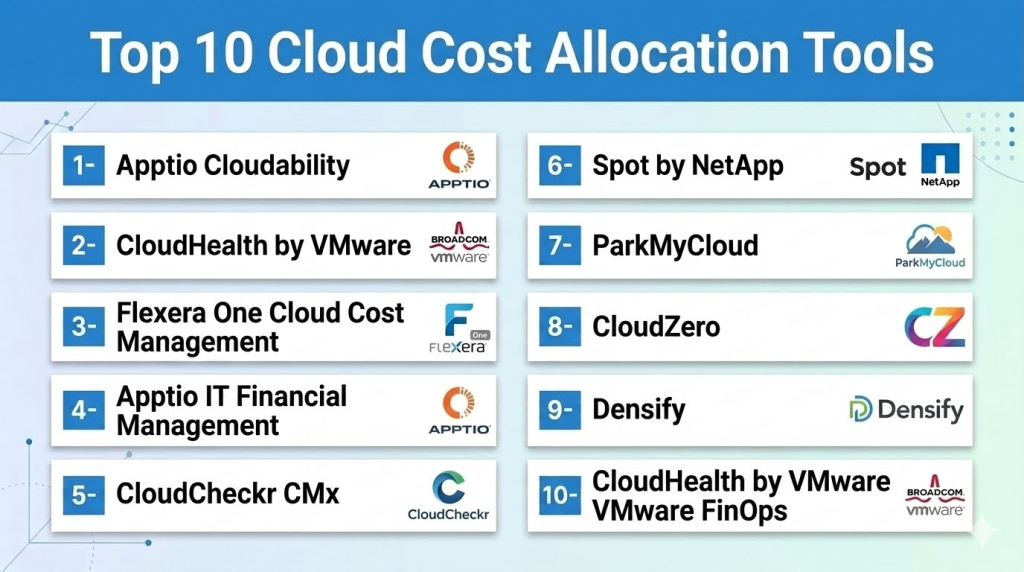
Top 10 Cloud Cost Allocation Tools
1- Apptio Cloudability
Short description: Cloudability delivers multi-cloud cost visibility, allocation, and optimization for enterprises seeking granular insights and predictive analytics.
Key Features
- Multi-cloud cost tracking (AWS, Azure, GCP)
- Automated cost allocation and tagging
- Budgeting and forecasting
- Chargeback and showback
- AI-driven optimization recommendations
Pros
- Strong predictive analytics
- Supports complex enterprise cost structures
Cons
- Higher cost for small teams
- Requires implementation expertise
Platforms / Deployment
- Web
- Cloud
Security & Compliance
- SOC 2, ISO 27001, encryption, SSO/SAML
Integrations & Ecosystem
Integrates with cloud providers, ERP, ITSM, and financial systems.
- AWS, Azure, GCP
- ServiceNow, SAP, Workday
- API for custom reporting
- FinOps dashboards
Support & Community
- 24/7 vendor support, documentation, training programs
2- CloudHealth by VMware
Short description: CloudHealth offers cloud cost allocation, budget management, and governance for multi-cloud enterprises.
Key Features
- Multi-cloud cost visibility and allocation
- Budgeting and forecasting
- Policy-driven optimization
- Chargeback/showback reporting
- Real-time dashboards
Pros
- Comprehensive cloud cost insights
- Policy automation reduces overspend
Cons
- Focused primarily on cloud, limited on-prem capabilities
- Learning curve for advanced analytics
Platforms / Deployment
- Web
- Cloud
Security & Compliance
- SOC 2, ISO 27001, GDPR
Integrations & Ecosystem
- AWS, Azure, GCP
- ITSM and ERP integration
- API connectivity for custom workflows
Support & Community
- Vendor support, online documentation, community forums
3- Flexera One Cloud Cost Management
Short description: Flexera One provides cost allocation, license optimization, and visibility across hybrid cloud environments.
Key Features
- Automated cost allocation and tagging
- SaaS and IaaS spend tracking
- Budgeting and forecasting
- Chargeback/showback
- Cloud resource optimization
Pros
- Unified view of cloud and SaaS spend
- Supports hybrid IT environments
Cons
- Advanced features require premium subscription
- Setup can be complex
Platforms / Deployment
- Web
- Cloud / Hybrid
Security & Compliance
- SOC 2, ISO 27001
Integrations & Ecosystem
- ERP, ITSM, cloud provider connectors
- APIs for automation
- SaaS license management
Support & Community
- Support tiers, training, documentation
4- Apptio IT Financial Management
Short description: While enterprise-focused, Apptio ITFM also includes cloud cost allocation and analytics modules for large IT portfolios.
Key Features
- Multi-cloud cost allocation
- Forecasting and budgeting
- Chargeback and showback
- Analytics and reporting
- Scenario modeling
Pros
- Robust analytics and planning
- Enterprise scalability
Cons
- Premium pricing
- Complex onboarding
Platforms / Deployment
- Web
- Cloud / Hybrid
Security & Compliance
- SOC 2, ISO 27001
Integrations & Ecosystem
- ITSM, ERP, cloud providers
- API support
- Financial systems integration
Support & Community
- Enterprise support, knowledge base, training programs
5- CloudCheckr CMx
Short description: CloudCheckr CMx is a cloud management and cost allocation tool offering real-time insights, reporting, and compliance features.
Key Features
- Cloud spend tracking
- Cost allocation and tagging
- Budgeting and forecasting
- Compliance reporting
- Chargeback/showback
Pros
- Granular visibility into cloud usage
- Policy enforcement for cost control
Cons
- Primarily cloud-focused
- Smaller ecosystem compared to enterprise tools
Platforms / Deployment
- Web
- Cloud
Security & Compliance
- SOC 2, ISO 27001
Integrations & Ecosystem
- AWS, Azure, GCP connectors
- ERP and ITSM systems
- API access for automation
Support & Community
- Vendor support, documentation, training
6- Spot by NetApp
Short description: Spot provides cloud cost visibility, automated allocation, and optimization using AI/ML for cost savings.
Key Features
- Multi-cloud cost allocation
- Automated savings recommendations
- Budget monitoring
- Chargeback/showback reports
- Usage forecasting
Pros
- AI-driven cost optimization
- Cloud-native focus
Cons
- Limited on-prem capabilities
- Premium pricing
Platforms / Deployment
- Web
- Cloud
Security & Compliance
- SOC 2, ISO 27001
Integrations & Ecosystem
- AWS, Azure, GCP
- ITSM/ERP connectors
- APIs for automation
Support & Community
- Vendor support, online documentation
7- ParkMyCloud
Short description: ParkMyCloud automates cloud resource scheduling, cost allocation, and governance for multi-cloud environments.
Key Features
- Automated cost allocation
- Idle resource scheduling
- Multi-cloud dashboards
- Budgeting and forecasting
- Chargeback reports
Pros
- Reduces cloud waste
- Simplifies cost governance
Cons
- Limited analytics depth
- Focused on scheduling and cost, not full ITFM
Platforms / Deployment
- Web
- Cloud
Security & Compliance
- SOC 2
Integrations & Ecosystem
- AWS, Azure, GCP
- ERP and ITSM integration
- API access
Support & Community
- Vendor support, documentation
8- CloudZero
Short description: CloudZero focuses on actionable cloud cost allocation and real-time visibility for engineering and finance teams.
Key Features
- Cost allocation by project/team
- Real-time dashboards
- Forecasting and anomaly detection
- Chargeback/showback
- Alerts and reporting
Pros
- Developer-friendly insights
- Real-time visibility into cloud costs
Cons
- Limited on-premises coverage
- Smaller feature set than enterprise ITFM
Platforms / Deployment
- Web
- Cloud
Security & Compliance
- SOC 2, ISO 27001
Integrations & Ecosystem
- AWS, Azure, GCP
- ITSM and ERP integration
- APIs for custom reporting
Support & Community
- Vendor support, knowledge base
9- Densify
Short description: Densify combines cloud cost allocation with optimization for workloads and resource utilization.
Key Features
- Cloud cost allocation
- Resource optimization
- Forecasting and budgeting
- Chargeback/showback
- Analytics dashboards
Pros
- Optimizes both cost and resource utilization
- Supports hybrid cloud
Cons
- Complex for smaller teams
- Enterprise pricing
Platforms / Deployment
- Web
- Cloud / Hybrid
Security & Compliance
- SOC 2, ISO 27001
Integrations & Ecosystem
- AWS, Azure, GCP
- ERP and ITSM integration
- API support
Support & Community
- Vendor support, documentation, training
10- CloudHealth by VMware FinOps
Short description: CloudHealth FinOps specializes in finance-driven cloud cost allocation, budgeting, and governance for multi-cloud organizations.
Key Features
- Automated cost allocation
- Budgeting and forecasting
- Chargeback/showback
- Real-time dashboards
- Policy enforcement
Pros
- Strong FinOps capabilities
- Multi-cloud visibility
Cons
- Primarily cloud-focused
- Advanced analytics may require premium plan
Platforms / Deployment
- Web
- Cloud
Security & Compliance
- SOC 2, ISO 27001, GDPR
Integrations & Ecosystem
- AWS, Azure, GCP
- ERP and ITSM systems
- API access
Support & Community
- Vendor support, documentation, training
Comparison Table (Top 10)
| Tool Name | Best For | Platform(s) Supported | Deployment | Standout Feature | Public Rating |
|---|---|---|---|---|---|
| Apptio Cloudability | Enterprise multi-cloud | Web | Cloud | Predictive cost analytics | N/A |
| CloudHealth | FinOps & multi-cloud | Web | Cloud | Policy-driven cost control | N/A |
| Flexera One | Hybrid IT and SaaS | Web | Cloud / Hybrid | SaaS and IaaS cost tracking | N/A |
| Apptio ITFM | Enterprise IT portfolios | Web | Cloud / Hybrid | Cost allocation across IT | N/A |
| CloudCheckr CMx | Cloud compliance & allocation | Web | Cloud | Real-time dashboards | N/A |
| Spot by NetApp | AI-driven cost optimization | Web | Cloud | Automated cost-saving recommendations | N/A |
| ParkMyCloud | Idle resource management | Web | Cloud | Automated scheduling for cost reduction | N/A |
| CloudZero | Developer & finance insights | Web | Cloud | Real-time cost allocation | N/A |
| Densify | Cloud workload optimization | Web | Cloud / Hybrid | Resource utilization & cost alignment | N/A |
| CloudHealth FinOps | Finance-driven cloud cost | Web | Cloud | FinOps budgeting & governance | N/A |
Evaluation & Scoring of Cloud Cost Allocation Tools
| Tool Name | Core (25%) | Ease (15%) | Integrations (15%) | Security (10%) | Performance (10%) | Support (10%) | Value (15%) | Weighted Total |
|---|---|---|---|---|---|---|---|---|
| Apptio Cloudability | 9 | 7 | 8 | 9 | 8 | 8 | 7 | 8.2 |
| CloudHealth | 8 | 8 | 7 | 9 | 8 | 7 | 7 | 7.9 |
| Flexera One | 8 | 7 | 7 | 8 | 7 | 7 | 7 | 7.4 |
| Apptio ITFM | 8 | 7 | 7 | 8 | 8 | 7 | 7 | 7.5 |
| CloudCheckr CMx | 7 | 7 | 7 | 8 | 7 | 7 | 7 | 7.1 |
| Spot by NetApp | 8 | 7 | 7 | 8 | 8 | 7 | 7 | 7.5 |
| ParkMyCloud | 7 | 8 | 7 | 7 | 7 | 7 | 7 | 7.1 |
| CloudZero | 7 | 8 | 7 | 7 | 7 | 7 | 7 | 7.1 |
| Densify | 8 | 7 | 7 | 8 | 7 | 7 | 7 | 7.3 |
| CloudHealth FinOps | 8 | 7 | 7 | 8 | 7 | 7 | 7 | 7.3 |
Interpretation: Scores are comparative. Weighted totals reflect core functionality, ease of use, integrations, security, performance, support, and value. Higher scores indicate better suitability for complex cloud financial operations.
Which Cloud Cost Allocation Tool Is Right for You?
Solo / Freelancer
- CloudZero or ParkMyCloud for simple allocation and cloud spend visibility.
SMB
- Flexera One or CloudCheckr CMx for hybrid cloud environments with moderate complexity.
Mid-Market
- CloudHealth or Spot by NetApp for multi-cloud optimization and governance.
Enterprise
- Apptio Cloudability or Apptio ITFM for full-scale cost allocation, predictive analytics, and financial governance.
Budget vs Premium
- Budget-conscious: ParkMyCloud, CloudZero
- Premium: Apptio Cloudability, CloudHealth
Feature Depth vs Ease of Use
- Apptio Cloudability and CloudHealth provide deep analytics
- ParkMyCloud and CloudZero provide simpler, faster adoption
Integrations & Scalability
- Apptio, CloudHealth, Flexera One integrate with ERP, ITSM, and cloud providers for multi-site scaling
Security & Compliance Needs
- SOC 2, ISO 27001, encryption, SSO/SAML, and audit logs recommended for enterprises
Frequently Asked Questions (FAQs)
1- What is a cloud cost allocation tool?
Software that distributes and tracks cloud spending across departments, projects, or teams for visibility, budgeting, and governance.
2- How do these tools help control cloud spending?
They provide insights, automated chargeback, policy enforcement, and recommendations to optimize costs.
3- Can these tools handle multi-cloud environments?
Yes, most support AWS, Azure, GCP, and hybrid deployments with unified dashboards.
4- Are these tools suitable for SMBs?
Yes, several lightweight solutions like ParkMyCloud and CloudZero are ideal for smaller cloud portfolios.
5- How secure are cloud cost allocation platforms?
Enterprise tools use SOC 2, ISO 27001, encryption, SSO/SAML, and MFA for compliance and security.
6- What deployment options exist?
Mostly cloud-native SaaS; some support hybrid deployments or limited on-prem visibility.
7- Do they provide forecasting?
Yes, budgeting and predictive spend forecasting are standard in most enterprise-grade tools.
8- Can they integrate with ERP/ITSM?
Yes, integration with ServiceNow, SAP, Workday, and cloud providers is common.
9- Are chargeback/showback features included?
Yes, automated allocation and reporting to business units are core features.
10- How to select the right tool?
Consider cloud complexity, budget, number of projects or teams, reporting requirements, and preferred deployment model.
Conclusion
Cloud cost allocation tools provide transparency, control, and optimization for modern multi-cloud and hybrid IT environments. Enterprises benefit from Apptio Cloudability and CloudHealth, while SMBs may prefer ParkMyCloud or CloudZero. Practical run a pilot, validate cloud integrations and cost allocation accuracy, then scale adoption based on business needs.
