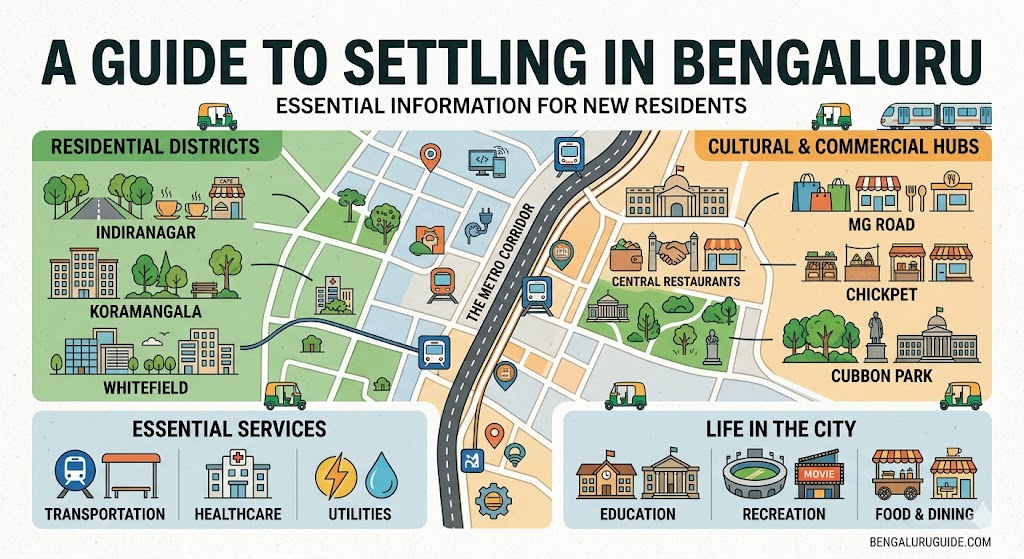
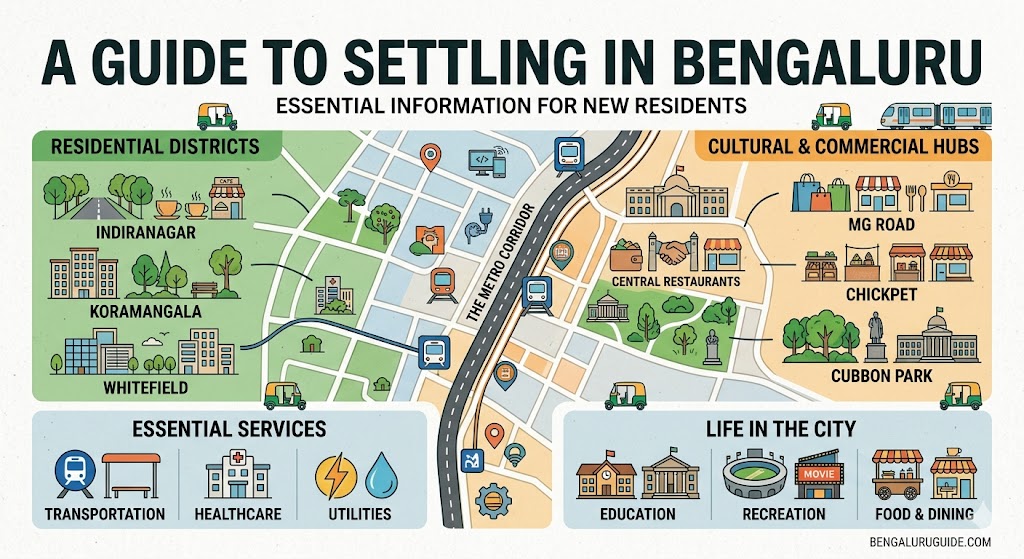
Introduction
Moving to Bangalore can feel exciting and confusing at the same time. The city offers strong career opportunities, modern workplaces, good educational options, pleasant weather, diverse food, active social life, and a multicultural environment. At the same time, new residents often need time to understand the city’s traffic, rental process, local areas, commute patterns, and daily lifestyle.
Bangalore is not just a technology city. It is also a city of old neighborhoods, green parks, traditional markets, modern cafes, startup offices, colleges, hospitals, shopping streets, and peaceful residential communities. People move here from different parts of India for jobs, studies, business, professional growth, and better lifestyle opportunities.
This Bangalore city guide for new residents is designed to help you settle smoothly. It covers where to live, how to travel, what to expect from the cost of living, how to manage daily needs, what local culture is like, and how to enjoy the city without feeling overwhelmed.
Why Bangalore Is Popular Among New Residents
Bangalore attracts new residents because it offers a strong mix of opportunity, comfort, and lifestyle. For working professionals, especially in IT, software, startups, finance, consulting, design, and product roles, the city provides wide career exposure. Many large companies, startup teams, co-working spaces, and business communities are based here.
For students, Bangalore has colleges, coaching centers, training institutes, skill development centers, and professional learning communities. Many young people move here because the city gives them both education and job opportunities in one place.
Families also prefer Bangalore because of its schools, hospitals, residential communities, parks, and shopping facilities. The city has a modern lifestyle but still maintains many traditional cultural roots.
Some major reasons people choose Bangalore include:
- Career growth in technology, startups, finance, design, marketing, and business services
- Pleasant weather compared to many other Indian metro cities
- Strong education ecosystem with schools, colleges, and training centers
- Multicultural environment where people from many states live and work
- Food diversity from South Indian meals to global cuisine
- Active social life with cafes, restaurants, events, music, and weekend activities
- Good healthcare access through hospitals, clinics, and diagnostic centers
- Green spaces such as parks, lakes, and gardens
- Weekend getaway options near the city
Understanding Bangalore City
Bangalore is spread across many zones, and each zone has a different personality. New residents should understand this before choosing accommodation.
Central Bangalore includes areas like MG Road, Brigade Road, Richmond Town, Cunningham Road, and nearby localities. It is close to offices, shopping streets, restaurants, and older city landmarks. It is convenient but can be expensive.
East Bangalore includes Whitefield, Marathahalli, Bellandur, KR Puram, Brookefield, and parts of Sarjapur Road. This region is popular among IT professionals because many tech parks and offices are nearby.
South Bangalore includes Jayanagar, JP Nagar, Banashankari, BTM Layout, and Electronic City. It offers a mix of family-friendly neighborhoods, student areas, and tech corridors.
North Bangalore includes Hebbal, Yelahanka, Manyata Tech Park area, and airport-side development zones. It is growing quickly and is popular among professionals who work near north-side business hubs.
West Bangalore includes Rajajinagar, Vijayanagar, Malleshwaram, and nearby residential areas. It has older neighborhoods, good connectivity, traditional markets, and a calmer residential feel.
Bangalore is a city where your daily comfort depends heavily on where you live. Choosing a home close to your workplace, college, school, or metro route can make your life much easier.
Best Areas to Live in Bangalore for New Residents
Indiranagar
Indiranagar is one of Bangalore’s most popular lifestyle neighborhoods. It is known for cafes, restaurants, boutiques, pubs, gyms, and premium residential streets. It is a good choice for young professionals, entrepreneurs, and people who want an active social life.
Best for: Working professionals, startup employees, business owners, and people who enjoy cafes and nightlife.
Lifestyle: Premium, active, modern, and social.
Things to consider: Rent can be higher, and traffic can be busy during evenings and weekends.
Koramangala
Koramangala is popular among students, startup founders, tech employees, and young professionals. It has restaurants, cafes, co-working spaces, PGs, apartments, coaching centers, and good access to many office areas.
Best for: Students, startup teams, young professionals, and people who want a lively neighborhood.
Lifestyle: Youthful, energetic, and convenient.
Things to consider: Some pockets are crowded, and rents vary widely based on location and building type.
Whitefield
Whitefield is a major IT and residential hub. Many technology parks, offices, gated societies, malls, schools, hospitals, and apartment communities are located here. It is suitable for people working in East Bangalore.
Best for: IT professionals, families, and people working near Whitefield or nearby tech parks.
Lifestyle: Modern, apartment-focused, and work-friendly.
Things to consider: Commute to central or south Bangalore can take time, so location planning is important.
Electronic City
Electronic City is one of Bangalore’s major technology zones. It is preferred by professionals working in nearby IT companies. It also has apartments, PGs, hostels, food outlets, and daily convenience stores.
Best for: IT employees, students, and budget-conscious professionals working nearby.
Lifestyle: Practical, work-focused, and relatively affordable compared to some premium areas.
Things to consider: It is far from central Bangalore, so cross-city travel can be tiring.
Marathahalli
Marathahalli is a busy and practical residential-commercial area. It is close to many tech corridors and is popular among working professionals. It has PGs, apartments, shopping options, restaurants, and good road connectivity.
Best for: IT professionals working near Whitefield, Bellandur, Brookefield, or Outer Ring Road.
Lifestyle: Busy, affordable in some pockets, and convenient for daily needs.
Things to consider: Traffic can be heavy, especially during office hours.
HSR Layout
HSR Layout is a planned residential area with wide roads, cafes, parks, gyms, offices, and good access to Koramangala, Sarjapur Road, and Electronic City. It is popular among families, startup employees, and remote workers.
Best for: Families, professionals, startup teams, and people who prefer a cleaner planned layout.
Lifestyle: Balanced, modern, and comfortable.
Things to consider: Rent can be moderate to high depending on the sector and property type.
JP Nagar
JP Nagar is a well-developed residential area in South Bangalore. It has schools, hospitals, parks, restaurants, metro access in nearby zones, and a calm neighborhood feel.
Best for: Families, working professionals, and people who prefer peaceful residential living.
Lifestyle: Residential, practical, and well-connected.
Things to consider: Commute time depends on workplace location.
Jayanagar
Jayanagar is one of Bangalore’s classic residential areas. It is known for markets, parks, educational institutions, traditional eateries, and family-friendly streets. It is ideal for people who want a settled neighborhood.
Best for: Families, students, senior citizens, and people who prefer older planned neighborhoods.
Lifestyle: Peaceful, traditional, and convenient.
Things to consider: Premium streets may have higher rental values.
Malleshwaram
Malleshwaram is one of the city’s older and culturally rich neighborhoods. It has temples, markets, traditional food spots, schools, and strong residential communities. It offers a mix of old Bangalore charm and urban convenience.
Best for: Families, long-term residents, and people who like traditional local culture.
Lifestyle: Calm, cultural, and community-oriented.
Things to consider: Some areas may have older buildings, so check property condition before renting.
Hebbal
Hebbal is a fast-growing area in North Bangalore. It is popular because of its access to airport road, Manyata Tech Park, residential towers, and developing business zones.
Best for: Professionals working in North Bangalore, frequent travelers, and families.
Lifestyle: Modern, developing, and apartment-focused.
Things to consider: Traffic near major junctions can be heavy.
Yelahanka
Yelahanka offers a calmer lifestyle compared to central Bangalore. It has residential layouts, apartments, schools, and good access to the airport side of the city.
Best for: Families, frequent flyers, and people who prefer less crowded surroundings.
Lifestyle: Peaceful, spacious, and residential.
Things to consider: It may feel far from central and southern business districts.
Banashankari
Banashankari is a large residential zone in South Bangalore. It offers a mix of independent houses, apartments, schools, temples, markets, and good daily convenience.
Best for: Families and people looking for a residential environment.
Lifestyle: Local, family-friendly, and practical.
Things to consider: Travel time depends on where your workplace is located.
Bellandur
Bellandur is popular among IT professionals because of its proximity to Outer Ring Road offices, Sarjapur Road, and nearby tech parks. It has many apartments, PGs, restaurants, and service options.
Best for: IT professionals working around Outer Ring Road.
Lifestyle: Work-focused, busy, and convenient.
Things to consider: Traffic and water-related concerns should be checked before finalizing accommodation.
Sarjapur Road
Sarjapur Road is a growing residential and office corridor. It has apartments, schools, cafes, supermarkets, and access to IT areas.
Best for: Families and professionals working near East or Southeast Bangalore.
Lifestyle: Developing, modern, and residential.
Things to consider: Some stretches may have traffic and infrastructure variation.
MG Road and Central Bangalore
MG Road, Brigade Road, and nearby central areas are ideal for people who want to stay close to business centers, shopping, restaurants, and entertainment. These areas offer convenience but can be expensive.
Best for: Professionals who work centrally, business travelers, and people who prefer city-center access.
Lifestyle: Premium, busy, and highly connected.
Things to consider: Rent is usually higher and parking can be limited.
Cost of Living in Bangalore
The cost of living in Bangalore depends on your location, lifestyle, housing choice, commute, and food habits. A person living in a PG near the workplace will spend differently from a family living in a gated apartment in a premium area.
Major cost categories include:
- Rent: The biggest monthly expense for most new residents
- Food and groceries: Depends on whether you cook, order food, or eat outside
- Transport: Varies based on metro, bus, cab, two-wheeler, or office shuttle use
- Utilities: Electricity, water, maintenance, gas, and internet
- Domestic help: Common in apartments and family homes
- Dining and entertainment: Cafes, restaurants, pubs, movies, and events
- Fitness and lifestyle: Gyms, yoga studios, clubs, and hobby classes
- Home setup: Furniture, kitchen items, appliances, and deposits
| Lifestyle Type | Housing Style | Food Pattern | Transport Style | Suitable For |
|---|---|---|---|---|
| Budget | PG, shared room, shared flat | Home food, mess, budget eateries | Bus, metro, shared rides | Students, freshers, interns |
| Mid-range | Independent flat, shared apartment, small family home | Mix of cooking and dining out | Metro, two-wheeler, cabs | Working professionals, couples |
| Premium | Gated society, central area apartment, villa | Restaurants, premium groceries, delivery | Car, cab, office shuttle | Senior professionals, families |
A good rule for new residents is to calculate rent, commute, food, and utilities together before choosing an area. A cheaper house far from work may become expensive if daily travel takes too much time and money.
Transport and Commuting in Bangalore
Bangalore has multiple transport options, but commute planning is very important. The city is large, and travel time can change based on traffic, rain, office hours, and route selection.
Namma Metro
Namma Metro is one of the most useful options for avoiding road traffic. It connects many important parts of the city and continues to expand. For new residents, living near a metro station can make daily travel easier and more predictable.
BMTC Buses
BMTC buses cover many parts of Bangalore and are useful for regular commuters. They are budget-friendly and connect residential areas with commercial and office zones.
Auto-rickshaws
Autos are common for short-distance travel. App-based auto booking can be convenient, especially in busy areas.
App-based Cabs
Cabs are useful for airport travel, late-night movement, family travel, and routes not covered by metro. However, fares can increase during peak hours and rain.
Two-wheelers
Many Bangalore residents prefer two-wheelers because they reduce commute time in traffic. New residents should follow traffic rules, wear helmets, and be careful during rain.
Personal Cars
Cars are comfortable for families but parking and traffic can be challenging in many areas. If you plan to use a car daily, check parking availability before renting a home.
Office Shuttles
Many companies provide office shuttles from selected pickup points. If your employer offers this, choose accommodation near a shuttle route.
Traffic in Bangalore: What New Residents Should Know
Traffic is one of Bangalore’s biggest daily challenges. It is especially heavy around office corridors, tech parks, schools, markets, and major junctions. New residents should not judge distance only by kilometers. In Bangalore, a short distance can still take a long time during peak hours.
Practical tips to manage Bangalore traffic:
- Choose accommodation close to workplace or college
- Prefer metro-connected areas when possible
- Check actual commute time before finalizing a house
- Avoid cross-city travel during peak office hours
- Use office shuttle routes if available
- Keep buffer time for meetings, airport travel, and interviews
- Avoid unnecessary weekend travel to crowded areas during peak evenings
- Use flexible work hours if your company allows it
Your quality of life in Bangalore improves greatly when your commute is manageable.
Food and Dining in Bangalore
Bangalore’s food culture is one of the best parts of living in the city. You can enjoy traditional South Indian breakfast, North Indian meals, Andhra food, Kerala meals, Tamil food, Bengali food, street food, cafes, bakeries, international cuisine, and premium dining.
Popular food experiences include:
- Dosa, idli, vada, khara bath, kesari bath, and filter coffee
- Darshini-style quick meals
- Andhra meals and biryani
- Kerala parotta and meals
- North Indian thali and chaats
- Cafe food, bakeries, and continental options
- Street food in busy market areas
- Premium restaurants and pubs in lifestyle zones
Areas like Indiranagar, Koramangala, Church Street, Jayanagar, Malleshwaram, HSR Layout, Whitefield, and JP Nagar have strong food scenes. New residents should explore both famous restaurants and small local eateries because Bangalore’s real food experience is found in both.
Shopping and Daily Essentials
Bangalore makes daily living easy because most neighborhoods have grocery stores, pharmacies, supermarkets, vegetable vendors, laundry services, salons, repair shops, and food delivery options.
For daily needs, you can use:
- Local grocery stores
- Supermarkets
- Online grocery apps
- Milk and vegetable delivery services
- Local markets
- Home appliance stores
- Furniture rental services
- Electronics repair shops
- Medical stores and diagnostic labs
Popular shopping areas include:
- Commercial Street for clothes, accessories, and street shopping
- Brigade Road for fashion, food, and casual shopping
- Chickpet for traditional shopping and wholesale markets
- Jayanagar shopping area for family shopping and daily needs
- Malleshwaram markets for traditional shopping and food
- Large malls in Whitefield, Yeshwanthpur, Bannerghatta Road, and other zones
For new residents setting up a home, it is useful to start with basic essentials first and upgrade slowly after understanding your long-term stay plan.
Healthcare and Emergency Services
Bangalore has strong healthcare access across most major areas. The city has multi-specialty hospitals, clinics, diagnostic centers, pharmacies, dental clinics, eye care centers, and specialist doctors.
New residents should check nearby healthcare options before choosing accommodation, especially if moving with children, elderly parents, or someone needing regular medical care.
Important healthcare tips:
- Save nearby hospital and clinic contacts
- Keep basic medicines at home
- Know the nearest pharmacy
- Keep digital copies of prescriptions and reports
- Choose accommodation with emergency access if you have family health needs
- Check ambulance access in your locality
- Use verified healthcare services for diagnostics and medicine delivery
This section is for general awareness only and should not be treated as medical advice.
Education and Schools in Bangalore
Bangalore is a preferred city for families and students because it has many schools, colleges, coaching centers, professional training institutes, and daycare options.
Families usually choose areas based on school access, safety, commute, and residential comfort. Areas like Jayanagar, JP Nagar, Whitefield, HSR Layout, Yelahanka, Malleshwaram, Sarjapur Road, and Banashankari are often considered by families because they offer residential communities along with school and service access.
Students prefer areas based on college location, PG availability, transport, food, and budget. Koramangala, BTM Layout, Jayanagar, Mathikere, Electronic City, Marathahalli, and areas near education hubs are common choices.
Before finalizing a home, families should check:
- Distance to school or college
- School bus route
- Safety of the neighborhood
- Nearby tuition or activity centers
- Healthcare access
- Play areas and parks
- Daily commute time
Work Culture and Career Opportunities
Bangalore is known for its professional ecosystem. It is home to IT companies, startups, global business centers, product companies, design teams, consulting firms, fintech companies, e-commerce firms, and co-working communities.
The city’s work culture is generally diverse and fast-moving. Professionals from across India and other countries work here, which makes the environment open and multicultural.
Common career advantages of living in Bangalore include:
- Better exposure to technology and startup jobs
- Networking opportunities
- Access to co-working spaces
- Professional meetups and communities
- Skill development and training options
- Freelance and remote work culture
- Career mobility across companies
For new residents, building a professional network can be very helpful. Attend community events, join relevant groups, connect with colleagues, and explore learning opportunities.
Local Culture and Language
Bangalore is modern, but it also has a strong local identity. Kannada is the local language, and learning basic Kannada phrases can make daily life easier and more respectful. English is widely used in offices and many urban areas. Hindi and other Indian languages are also commonly heard because the city is home to people from different states.
New residents should respect local customs, festivals, public spaces, and neighborhood culture. A little effort to learn local words can create a positive impression.
Useful Kannada phrases for newcomers:
| English Meaning | Kannada Phrase |
| Hello | Namaskara |
| Thank you | Dhanyavaadagalu |
| How much? | Eshtu? |
| Please come | Banni |
| Please go | Hogi |
| I do not know Kannada | Nanage Kannada gothilla |
| I understand a little | Swalpa artha agutte |
| Where is this place? | Ee place ellide? |
| Give water | Neeru kodi |
| Thank you very much | Tumba dhanyavaada |
You do not need to become fluent immediately, but learning small phrases helps in autos, shops, markets, and residential communities.
Weather in Bangalore
Bangalore’s weather is one of the reasons many people enjoy living here. Compared to many Indian metro cities, the climate is usually more comfortable. Mornings and evenings can feel pleasant, and many residents enjoy outdoor walks, cafe visits, and park time.
However, new residents should also prepare for sudden rain and traffic delays during wet weather. Some roads may experience waterlogging, and commute times may increase.
Weather tips for Bangalore:
- Keep an umbrella or raincoat handy
- Carry a light jacket during cooler evenings
- Plan extra travel time during rain
- Use waterproof bags for laptops and documents
- Check drainage and road condition near your home
- Be careful while riding two-wheelers during wet weather
Safety Tips for New Residents
Bangalore is generally comfortable for new residents, but basic safety and awareness are important in any large city.
Practical safety tips include:
- Verify the owner or broker before paying rent deposit
- Read rental agreements carefully
- Avoid paying large advances without proper documentation
- Check society rules before moving in
- Use trusted transport options at night
- Share live location with trusted contacts during late travel
- Save emergency numbers
- Keep digital copies of important documents
- Avoid isolated roads late at night
- Check reviews before choosing PGs or co-living spaces
- Verify domestic help, drivers, and service providers when possible
New residents should also join apartment or neighborhood groups for local updates and support.
Renting a Home in Bangalore
Renting a home is one of the most important steps when moving to Bangalore. The city offers many options, including PGs, co-living spaces, shared flats, independent apartments, gated societies, and independent houses.
Common rental options
PG accommodation: Suitable for students, freshers, and people who want food and basic services included.
Shared flats: Good for working professionals who want privacy but want to reduce rent.
Studio apartments: Suitable for individuals who want independent living.
Family apartments: Ideal for couples and families.
Gated communities: Good for families and professionals who want security, amenities, parking, and maintenance services.
Co-living spaces: Useful for newcomers who want ready-to-move accommodation and social interaction.
Things to check before renting
- Distance from workplace or college
- Actual commute time during peak hours
- Water supply
- Power backup
- Internet availability
- Parking
- Maintenance charges
- Security deposit terms
- Notice period
- Guest rules
- Pet policy
- Cooking rules in PGs
- Society restrictions
- Nearby grocery stores and hospitals
Rental mistakes to avoid
- Choosing a cheaper house very far from work
- Paying deposit without agreement
- Not checking water supply
- Ignoring traffic conditions
- Not reading maintenance rules
- Not inspecting the property properly
- Not confirming who pays repair costs
- Not checking mobile network and internet options
Weekend Life and Things to Do in Bangalore
Bangalore has many options for weekends and free time. Whether you enjoy nature, food, shopping, music, books, fitness, or travel, the city gives you plenty of choices.
Popular things to do include:
- Morning walk at Cubbon Park
- Visit Lalbagh Botanical Garden
- Explore Church Street cafes and bookstores
- Eat at traditional South Indian restaurants
- Visit malls and shopping streets
- Attend music, comedy, and cultural events
- Explore art spaces and museums
- Try cycling or running groups
- Visit lakes and parks
- Plan short trips outside the city
Popular places and experiences:
- Cubbon Park for greenery and peaceful walks
- Lalbagh for botanical beauty and open space
- MG Road and Brigade Road for shopping and city life
- Church Street for cafes, books, and restaurants
- Indiranagar for dining and nightlife
- Koramangala for cafes and youth culture
- Nandi Hills for a short nature trip
- Jayanagar and Malleshwaram for traditional food and markets
New residents should explore slowly. Bangalore is best enjoyed area by area rather than trying to cover everything quickly.
Challenges New Residents May Face
Bangalore is a great city, but new residents should be prepared for a few common challenges.
Traffic congestion
Traffic can be stressful, especially during office hours. The best solution is to live close to work or near a metro route.
High rent in prime areas
Popular areas can be expensive. Compare rent with commute cost before deciding.
Water supply concerns
Some localities may depend on tankers or have irregular water supply. Always ask about water before renting.
Language adjustment
Kannada is the local language. You can manage with English in many areas, but learning basic Kannada helps.
Long commute
Cross-city travel can be tiring. Choose your home based on actual travel time, not just distance.
Initial setup cost
Furniture, deposit, kitchen items, and internet setup can increase initial expenses. Start with essentials and upgrade later.
Weather-related delays
Rain can slow traffic and cause road issues. Keep buffer time and basic rain gear.
Quick Checklist Before Moving to Bangalore
Use this checklist before shifting:
- Confirm workplace, college, or business location
- Shortlist nearby residential areas
- Check metro, bus, and shuttle options
- Compare rent with commute cost
- Visit the property before paying deposit
- Read rental agreement carefully
- Confirm water, power backup, and internet
- Check nearby hospital, pharmacy, and grocery store
- Keep ID proofs and documents ready
- Save emergency contacts
- Learn basic Kannada phrases
- Join local apartment or neighborhood groups
- Plan your first month’s budget
- Keep extra time for home setup
First Month Survival Guide for New Residents
Week one: Settle your accommodation
Focus on moving in, checking utilities, arranging internet, understanding society rules, and finding nearby grocery stores, pharmacies, and food options.
Week two: Understand your commute
Test your office or college route during actual travel hours. Try metro, bus, cab, auto, and shuttle options to identify the best daily commute.
Week three: Build your daily routine
Find reliable food options, laundry services, domestic help, fitness centers, medical stores, and nearby markets. Start creating a comfortable routine.
Week four: Explore and connect
Visit nearby parks, cafes, restaurants, and local attractions. Build your social circle through colleagues, neighbors, hobby groups, or professional communities.
Best Tips for Settling Smoothly in Bangalore
- Live close to your workplace or metro route
- Do not finalize a home without checking commute time
- Learn basic Kannada phrases
- Keep rain protection handy
- Explore local food instead of only ordering online
- Save emergency contacts
- Use trusted rental platforms and verified brokers
- Check water supply before renting
- Join local resident groups
- Keep patience with traffic
- Explore one area at a time
- Build a local support network
- Balance work, commute, and personal life
Bangalore Lifestyle for Different Types of New Residents
For IT professionals
Choose areas close to your office corridor. Whitefield, Bellandur, Marathahalli, Electronic City, HSR Layout, and Sarjapur Road are common choices depending on your company location.
For students
Look for PGs or shared flats near your college or training center. Check food, safety, study environment, and public transport access before finalizing.
For families
Prioritize schools, hospitals, parks, safety, and commute. JP Nagar, Jayanagar, HSR Layout, Whitefield, Yelahanka, Malleshwaram, and Banashankari are often preferred by families.
For remote workers
Choose areas with good internet, cafes, co-working spaces, power backup, and peaceful living. HSR Layout, Indiranagar, JP Nagar, Koramangala, and Whitefield can be suitable depending on budget.
For business owners
Central Bangalore, Indiranagar, Koramangala, HSR Layout, and commercial hubs may offer better access to clients, teams, and networking opportunities.
Common Mistakes New Residents Should Avoid
- Renting only based on online photos
- Ignoring commute time
- Choosing a home too far from work
- Not checking water supply
- Paying deposit without agreement
- Not confirming maintenance charges
- Ignoring neighborhood safety
- Not checking mobile network
- Depending only on cabs for daily commute
- Spending too much on home setup in the first month
- Not learning basic local etiquette
- Underestimating traffic during rain
FAQs
1- Is Bangalore a good city for new residents?
Yes, Bangalore is a good city for new residents because it offers career opportunities, education, healthcare, food diversity, and a multicultural lifestyle. It is especially popular among IT professionals, students, entrepreneurs, and families. The main challenge is managing traffic and choosing the right area to live.
2- Which area is best to live in Bangalore for working professionals?
The best area depends on your workplace. Whitefield, Bellandur, Marathahalli, Electronic City, HSR Layout, Koramangala, and Indiranagar are popular among working professionals. Always choose based on commute time rather than only lifestyle or rent.
3- Is Bangalore expensive for newcomers?
Bangalore can be budget-friendly or expensive depending on where you live and how you manage daily expenses. PGs and shared flats are more affordable, while premium apartments in central or lifestyle areas cost more. Rent, commute, and food are the main expenses to plan carefully.
4- What is the best way to travel in Bangalore?
The best way to travel depends on your route. Metro is useful for connected areas, buses are budget-friendly, and two-wheelers help with shorter commutes. Cabs and autos are convenient but can become costly during peak hours or rain.
5- Is it necessary to know Kannada in Bangalore?
You can manage with English in many offices and urban areas, but learning basic Kannada is helpful and respectful. It makes daily interactions easier with shopkeepers, auto drivers, security staff, and local service providers. Even simple phrases can make a good impression.
6- Which areas are best for families in Bangalore?
Families often prefer Jayanagar, JP Nagar, HSR Layout, Whitefield, Yelahanka, Malleshwaram, Banashankari, and Sarjapur Road. These areas offer residential comfort, schools, hospitals, markets, and daily convenience. The best choice depends on school and workplace location.
7- How can I reduce commute time in Bangalore?
The best way to reduce commute time is to live close to your workplace, college, or metro route. Check travel time during peak hours before finalizing accommodation. Office shuttles, flexible work hours, and metro connectivity can also make commuting easier.
8- Are PGs and co-living spaces good options in Bangalore?
Yes, PGs and co-living spaces are good options for students, freshers, and people moving alone. They reduce setup effort and often include food, housekeeping, and basic furniture. Before choosing, check safety, food quality, rules, deposit terms, and transport access.
9- What should I check before renting a flat in Bangalore?
Check water supply, power backup, maintenance charges, parking, internet options, rental agreement, notice period, and commute time. Also inspect the property condition before paying deposit. If possible, speak to neighbors or existing tenants for honest feedback.
10- What are the biggest challenges of living in Bangalore?
The biggest challenges are traffic, high rent in popular areas, water supply issues in some localities, and long commute times. New residents can manage these challenges by choosing the right neighborhood, planning budget carefully, and staying close to work or metro routes.
Conclusion
Bangalore is a city of opportunity, diversity, learning, and lifestyle. For new residents, the city may feel busy at first, but it becomes easier once you understand its areas, commute patterns, rental process, and local culture. The best way to settle smoothly is to choose a location close to your workplace or college, plan your monthly budget, learn basic local phrases, and explore the city step by step. Bangalore rewards patience because every neighborhood has something different to offer, from parks and cafes to markets and professional communities. With the right planning, new residents can build a comfortable, productive, and enjoyable life in the city.
