Introduction
Hospital asset tracking tools are software solutions designed to help healthcare facilities monitor, manage, and optimize the use of medical equipment, devices, and other critical assets. In simple terms, these tools ensure that hospitals know where their equipment is, how it’s being used, and when maintenance or replacements are required.
In 2026, with healthcare costs rising and patient care expectations increasing, hospitals face pressure to maximize operational efficiency while minimizing equipment downtime and compliance risks. Asset tracking tools have become essential for ensuring that medical devices are available when needed, reducing waste, and supporting regulatory compliance.
Real-world use cases include:
- Tracking mobile medical equipment such as infusion pumps and ventilators across multiple departments.
- Ensuring compliance with preventive maintenance schedules and safety inspections.
- Monitoring the utilization of high-value devices to optimize procurement and reduce costs.
- Supporting emergency response readiness by locating critical equipment quickly.
- Integrating with EHR and IoT systems for automated reporting and predictive maintenance.
Evaluation criteria for buyers include:
- Ease of deployment and platform support
- Real-time location tracking and inventory accuracy
- Integration with hospital information systems (HIS) and EMR/EHR platforms
- Security, compliance, and audit logging capabilities
- Reporting, analytics, and predictive maintenance features
- Support for RFID, barcode, or IoT-enabled tracking
- Scalability across multiple facilities or campuses
- User interface and workflow adaptability
- Vendor reliability and customer support
- Cost and overall value for investment
Best for: Hospitals, clinics, and healthcare networks that manage large numbers of critical assets, including IT managers, operations teams, and biomedical engineers.
Not ideal for: Very small clinics or practices with minimal equipment inventory or those using manual asset tracking processes effectively.
Key Trends in Hospital Asset Tracking Tools
- AI-Powered Predictive Maintenance: Tools now analyze usage patterns to predict equipment failure and schedule proactive maintenance.
- IoT & RFID Integration: Real-time location tracking using IoT sensors, Bluetooth Low Energy (BLE), and RFID tags is becoming standard.
- Cloud-Based Platforms: SaaS deployments allow centralized asset management across multiple hospital campuses.
- Mobile Access: Smartphone and tablet apps for staff to locate and manage assets on the go.
- Enhanced Compliance Features: Built-in reporting to meet HIPAA, ISO 13485, and other regulatory standards.
- Data-Driven Insights: Advanced analytics provide utilization metrics, cost reduction insights, and inventory optimization.
- Interoperability: Integration with EMR, EHR, and maintenance management systems to streamline workflows.
- Automated Alerts: Push notifications for overdue maintenance, device recalls, or low inventory.
- Flexible Pricing Models: Subscription-based SaaS options, pay-per-device, and enterprise licensing.
How We Selected These Tools (Methodology)
- Evaluated market adoption and vendor mindshare across global healthcare networks.
- Assessed feature completeness, including real-time tracking, predictive maintenance, and reporting.
- Considered reliability and performance signals such as uptime, scalability, and speed.
- Reviewed security posture, including encryption, RBAC, MFA, and audit logs.
- Examined integration ecosystem, including APIs, EMR/HIS compatibility, and third-party device support.
- Determined customer fit across segments: solo clinics, SMB hospitals, mid-market networks, and large enterprises.
- Compared deployment options: cloud, hybrid, and on-premises.
- Evaluated usability, user interface, and workflow adaptability.
- Factored in support & community, including training, documentation, and vendor responsiveness.
- Considered overall value, including cost vs. functionality.
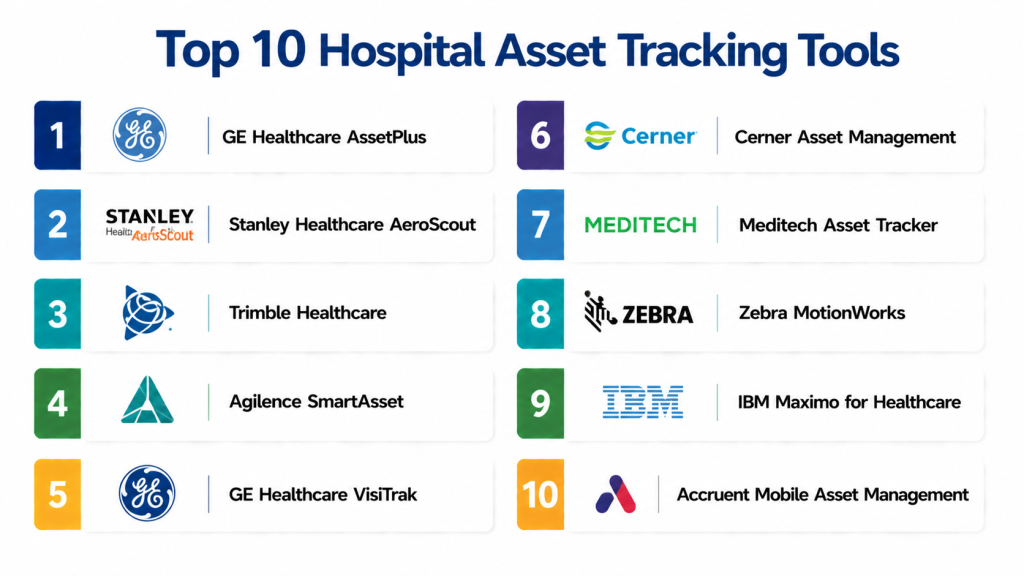
Top 10 Hospital Asset Tracking Tools
1- GE Healthcare AssetPlus
Short description: A comprehensive hospital asset tracking platform designed for large healthcare networks, enabling real-time location and maintenance management.
Key Features
- Real-time equipment tracking via RFID/BLE
- Preventive maintenance scheduling
- Utilization analytics and dashboards
- Mobile app for staff access
- Integration with EMR and hospital information systems
- Automated alerts and notifications
Pros
- High scalability for large hospital networks
- Strong predictive maintenance capabilities
Cons
- Requires significant initial setup and configuration
- Pricing may be high for smaller facilities
Platforms / Deployment
- Web / iOS / Android
- Cloud / Hybrid
Security & Compliance
- Not publicly stated
Integrations & Ecosystem
Supports EMR/EHR integration and APIs for IoT devices.
- HL7 compatibility
- Device API integration
- Reporting connectors
Support & Community
- Extensive vendor support and training
- Documentation available
- Community forums limited
2- Stanley Healthcare AeroScout
Short description: Focused on real-time location services (RTLS) for hospitals, tracking equipment, staff, and patients.
Key Features
- Real-time tracking of assets and personnel
- Environmental monitoring for sensitive equipment
- Mobile dashboards and alerts
- Analytics for utilization and workflow optimization
- RFID and BLE device compatibility
Pros
- Strong RTLS capabilities
- Useful for both assets and personnel tracking
Cons
- Complex deployment in multi-floor hospitals
- Higher learning curve for staff
Platforms / Deployment
- Web / iOS / Android
- Cloud / On-premises
Security & Compliance
- Not publicly stated
Integrations & Ecosystem
- EMR integration
- IoT device support
- API access for custom workflows
Support & Community
- Vendor offers dedicated onboarding
- Limited open community resources
3- Trimble Healthcare
Short description: Asset management tool emphasizing mobility and integration with hospital operations.
Key Features
- RFID-based equipment tracking
- Mobile scanning and tracking apps
- Maintenance alerts and service history
- Analytics dashboards
- Integration with hospital ERP/HIS
Pros
- Easy mobile adoption
- Comprehensive reporting
Cons
- Limited AI-driven predictive maintenance
- Requires additional hardware for full functionality
Platforms / Deployment
- Web / iOS / Android
- Cloud / Hybrid
Security & Compliance
- Not publicly stated
Integrations & Ecosystem
- ERP and EMR system integration
- APIs for asset lifecycle management
- BLE/RFID reader compatibility
Support & Community
- Varies / Not publicly stated
4- Agilence SmartAsset
Short description: Designed for mid-market hospitals, offering cost-efficient asset tracking and analytics.
Key Features
- Asset location mapping
- Preventive maintenance tracking
- Usage analytics
- Mobile accessibility
- API integration
Pros
- Cost-effective for medium-sized hospitals
- Easy reporting features
Cons
- Limited multi-campus scalability
- Fewer predictive features than enterprise tools
Platforms / Deployment
- Web / iOS / Android
- Cloud
Security & Compliance
- Not publicly stated
Integrations & Ecosystem
- APIs for EMR integration
- Supports IoT sensors
- Exportable analytics
Support & Community
- Vendor support included
- Online documentation
5- GE Healthcare VisiTrak
Short description: A visual and mobile-first asset tracking tool for hospitals focusing on operational efficiency.
Key Features
- Real-time asset dashboards
- Location tracking via RFID/BLE
- Analytics for utilization and ROI
- Alerts for missing or overdue maintenance
- Mobile-first design
Pros
- User-friendly interface
- Quick adoption for staff
Cons
- Smaller integration ecosystem
- Advanced analytics may require add-ons
Platforms / Deployment
- Web / iOS / Android
- Cloud
Security & Compliance
- Not publicly stated
Integrations & Ecosystem
- EMR integration possible
- APIs for asset data
- BLE/RFID compatibility
Support & Community
- Vendor training available
- Documentation standard
6- Cerner Asset Management
Short description: Part of Cerner’s hospital IT suite, providing centralized asset and equipment management.
Key Features
- Centralized asset inventory
- Maintenance tracking
- Reporting dashboards
- Integration with Cerner EMR
- Alerts and compliance checks
Pros
- Seamless EMR integration
- Strong enterprise features
Cons
- Primarily optimized for Cerner environments
- Higher cost
Platforms / Deployment
- Web / iOS / Android
- Cloud / Hybrid
Security & Compliance
- Not publicly stated
Integrations & Ecosystem
- EMR integration (Cerner)
- API support for devices
- Reporting connectors
Support & Community
- Vendor provides enterprise support
- Limited open community
7- Meditech Asset Tracker
Short description: Integrated with Meditech EHR systems, focusing on hospital workflow efficiency.
Key Features
- Asset location tracking
- Maintenance scheduling
- Reporting and analytics
- Mobile app access
- Integration with Meditech EMR
Pros
- Integrated workflow for Meditech users
- Comprehensive reporting
Cons
- Limited outside Meditech ecosystem
- Fewer predictive maintenance features
Platforms / Deployment
- Web / iOS / Android
- Cloud / Hybrid
Security & Compliance
- Not publicly stated
Integrations & Ecosystem
- Meditech EMR
- BLE/RFID device support
- Analytics exports
Support & Community
- Vendor support provided
- Documentation available
8- Zebra MotionWorks
Short description: Focused on real-time tracking of hospital assets and personnel with IoT-enabled sensors.
Key Features
- RTLS with Wi-Fi/BLE tags
- Asset and staff tracking
- Mobile alerts
- Analytics dashboards
- Device lifecycle tracking
Pros
- Strong real-time visibility
- Scalable across multiple facilities
Cons
- Hardware-intensive
- Setup complexity
Platforms / Deployment
- Web / iOS / Android
- Cloud / Hybrid
Security & Compliance
- Not publicly stated
Integrations & Ecosystem
- API integration
- EMR connectors
- IoT device support
Support & Community
- Vendor onboarding
- Limited community
9- IBM Maximo for Healthcare
Short description: Enterprise-grade asset and maintenance management platform, tailored for hospitals.
Key Features
- Asset lifecycle management
- Predictive maintenance
- Compliance tracking
- Analytics dashboards
- Integration with EMR/HIS
Pros
- Enterprise-grade scalability
- Advanced analytics and reporting
Cons
- Complex deployment
- Expensive for smaller facilities
Platforms / Deployment
- Web / iOS / Android
- Cloud / Hybrid / On-premises
Security & Compliance
- Not publicly stated
Integrations & Ecosystem
- APIs for EMR/HIS integration
- IoT sensor support
- Reporting and analytics
Support & Community
- Vendor enterprise support
- Community forums
10- Accruent Mobile Asset Management
Short description: Mobile-first asset management solution for hospitals emphasizing workflow efficiency and operational insight.
Key Features
- Mobile tracking and scanning
- Location mapping and alerts
- Maintenance scheduling
- Analytics and utilization reporting
- Integration with EMR systems
Pros
- Mobile-friendly
- Quick staff adoption
Cons
- Limited predictive analytics
- Integration may require customization
Platforms / Deployment
- Web / iOS / Android
- Cloud / Hybrid
Security & Compliance
- Not publicly stated
Integrations & Ecosystem
- EMR/HIS integration
- API access for device data
- Analytics connectors
Support & Community
- Vendor support included
- Documentation standard
Comparison Table (Top 10)
| Tool Name | Best For | Platform(s) Supported | Deployment | Standout Feature | Public Rating |
|---|---|---|---|---|---|
| GE Healthcare AssetPlus | Large hospital networks | Web / iOS / Android | Cloud / Hybrid | Predictive maintenance | N/A |
| Stanley Healthcare AeroScout | RTLS for assets & staff | Web / iOS / Android | Cloud / On-prem | Real-time location tracking | N/A |
| Trimble Healthcare | Mobile-friendly asset tracking | Web / iOS / Android | Cloud / Hybrid | Mobile tracking & analytics | N/A |
| Agilence SmartAsset | Mid-market hospitals | Web / iOS / Android | Cloud | Cost-effective tracking | N/A |
| GE Healthcare VisiTrak | Operational efficiency | Web / iOS / Android | Cloud | Visual dashboards | N/A |
| Cerner Asset Management | Enterprise hospitals | Web / iOS / Android | Cloud / Hybrid | EMR integration | N/A |
| Meditech Asset Tracker | Meditech EHR users | Web / iOS / Android | Cloud / Hybrid | Integrated workflow | N/A |
| Zebra MotionWorks | Large campuses | Web / iOS / Android | Cloud / Hybrid | RTLS & IoT-enabled | N/A |
| IBM Maximo for Healthcare | Enterprise-scale | Web / iOS / Android | Cloud / Hybrid / On-prem | Asset lifecycle mgmt | N/A |
| Accruent Mobile Asset Management | Mobile-centric hospitals | Web / iOS / Android | Cloud / Hybrid | Mobile-first workflow | N/A |
Evaluation & Scoring of Hospital Asset Tracking Tools
| Tool Name | Core (25%) | Ease (15%) | Integrations (15%) | Security (10%) | Performance (10%) | Support (10%) | Value (15%) | Weighted Total (0–10) |
|---|---|---|---|---|---|---|---|---|
| GE Healthcare AssetPlus | 9 | 7 | 8 | 7 | 8 | 8 | 7 | 8.0 |
| Stanley Healthcare AeroScout | 8 | 6 | 7 | 7 | 8 | 7 | 7 | 7.4 |
| Trimble Healthcare | 7 | 8 | 7 | 7 | 7 | 7 | 8 | 7.4 |
| Agilence SmartAsset | 6 | 8 | 6 | 6 | 6 | 7 | 8 | 6.8 |
| GE Healthcare VisiTrak | 7 | 8 | 6 | 6 | 7 | 7 | 7 | 7.0 |
| Cerner Asset Management | 8 | 7 | 8 | 7 | 8 | 8 | 6 | 7.6 |
| Meditech Asset Tracker | 7 | 7 | 6 | 6 | 7 | 7 | 7 | 7.0 |
| Zebra MotionWorks | 8 | 6 | 7 | 7 | 8 | 7 | 7 | 7.4 |
| IBM Maximo for Healthcare | 9 | 6 | 8 | 8 | 9 | 8 | 6 | 8.2 |
| Accruent Mobile Asset Management | 7 | 8 | 7 | 7 | 7 | 7 | 7 | 7.2 |
Interpretation: Scores are comparative. Higher weighted totals indicate stronger overall capability, but suitability depends on hospital size, integration needs, and workflow complexity.
Which Hospital Asset Tracking Tool Is Right for You?
Solo / Freelancer
- Small clinics may benefit from mobile-friendly tools like Trimble Healthcare or Accruent Mobile Asset Management for lightweight tracking.
SMB
- Mid-sized hospitals should consider Agilence SmartAsset or GE Healthcare VisiTrak for cost-effective deployment with analytics.
Mid-Market
- Hospitals with multiple departments or campuses benefit from Stanley Healthcare AeroScout or Cerner Asset Management.
Enterprise
- Large hospital networks should evaluate GE Healthcare AssetPlus, IBM Maximo for Healthcare, or Zebra MotionWorks for advanced predictive maintenance and RTLS capabilities.
Budget vs Premium
- Budget options: Agilence SmartAsset, Trimble Healthcare
- Premium options: IBM Maximo, GE Healthcare AssetPlus, Zebra MotionWorks
Feature Depth vs Ease of Use
- High feature depth: IBM Maximo, GE AssetPlus
- Easier adoption: Trimble Healthcare, VisiTrak
Integrations & Scalability
- Multi-campus hospitals or those with existing EMR systems: Cerner Asset Management, GE AssetPlus
- Single-facility hospitals: Agilence SmartAsset, Accruent
Security & Compliance Needs
- Hospitals with strict regulatory requirements: IBM Maximo, GE AssetPlus, Cerner Asset Management
- Smaller clinics with moderate compliance needs: Trimble Healthcare, Accruent
Frequently Asked Questions (FAQs)
1. What pricing models are common for hospital asset tracking tools?
Most vendors offer subscription-based SaaS, pay-per-device, or enterprise licensing. Costs vary by deployment scale, feature depth, and number of assets tracked.
2. How long does implementation usually take?
Implementation can range from 4–12 weeks for mid-sized hospitals and up to 6 months for enterprise deployments with complex integrations.
3. Can these tools integrate with our EMR or HIS systems?
Yes, most modern asset tracking tools support integration via APIs or HL7 interfaces with EMR/EHR/HIS platforms for streamlined workflows.
4. Are mobile apps included for staff access?
Most solutions provide iOS and Android apps, allowing staff to locate assets, scan devices, and receive maintenance alerts on the go.
5. How secure are these platforms?
Security features vary. Look for SSO, MFA, RBAC, encryption, and audit logs. Confirm regulatory compliance for HIPAA, ISO, or local standards.
6. Can small clinics benefit from these tools?
Yes, mobile-focused or SaaS tools like Trimble Healthcare and Accruent provide lightweight tracking suitable for smaller operations.
7. How do these tools support preventive maintenance?
They track service schedules, generate alerts for upcoming maintenance, and document historical service logs to ensure compliance.
8. What are common mistakes when deploying asset tracking?
Common errors include insufficient staff training, skipping hardware compatibility checks, and underestimating integration complexity.
9. Can these tools handle multiple hospital campuses?
Enterprise-grade tools like GE AssetPlus, Zebra MotionWorks, and IBM Maximo are designed for multi-campus scalability with centralized dashboards.
10. Are IoT devices required for tracking?
IoT devices like RFID, BLE, or Wi-Fi tags improve accuracy, but some tools can operate with manual barcode scanning for smaller facilities.
Conclusion
Hospital asset tracking tools have become essential for ensuring efficiency, regulatory compliance, and patient care quality. Selecting the right tool depends on your hospital size, asset complexity, integration requirements, and budget. Mobile-friendly tools serve smaller clinics well, while enterprise solutions offer predictive maintenance and multi-campus tracking. Buyers should shortlist run a pilot program, and validate integration and security capabilities before full deployment. A strategic approach ensures improved asset utilization, lower costs, and better overall operational outcomes.
