Introduction
Predictive Maintenance Platforms are specialized software solutions designed to anticipate equipment failures before they occur, using data analytics, IoT sensors, and machine learning. By analyzing real-time and historical equipment data, these platforms enable organizations to schedule maintenance only when needed, reducing downtime, optimizing asset life, and lowering costs.
The importance of predictive maintenance has grown significantly due to increasing industrial automation, digital transformation, and reliance on connected assets. Industries such as manufacturing, energy, transportation, and utilities are leveraging predictive analytics to improve operational efficiency and ensure compliance with regulatory standards.
Real-world use cases include:
- Manufacturing plants predicting machine breakdowns to avoid costly production stoppages
- Fleet operators monitoring vehicle health to reduce repair costs and downtime
- Energy utilities analyzing turbine or generator sensor data to schedule preventive maintenance
- Mining operations predicting equipment wear to avoid safety hazards and maintain productivity
- Food and beverage facilities ensuring HVAC and refrigeration systems function reliably to maintain product quality
Evaluation Criteria for Buyers:
- Accuracy and reliability of predictive models
- Ease of deployment and user interface
- Integration capabilities with existing ERP, IoT, and MES systems
- Security and compliance standards
- Support for multiple asset types and industries
- Scalability to accommodate enterprise or multi-site operations
- Vendor reputation and customer support quality
- Reporting and analytics capabilities
- Cost-effectiveness and ROI potential
Best for: Operations managers, maintenance engineers, industrial IoT teams, and organizations seeking to minimize downtime and improve asset utilization. Typically suitable for mid-market and enterprise companies with complex or critical equipment
Not ideal for: Small businesses with minimal assets or organizations where reactive maintenance is sufficient and predictive insights may not provide meaningful ROI
Key Trends in Predictive Maintenance Platforms
- Widespread adoption of AI-driven anomaly detection for early fault identification
- Integration of digital twin technology for virtual asset modeling and simulation
- Cloud-native deployments with edge computing support for real-time processing
- Enhanced interoperability with ERP, CMMS, MES, and IoT platforms
- Growing compliance and cybersecurity requirements across industrial sectors
- Predictive analytics increasingly leveraging unsupervised and reinforcement learning
- Modular pricing and subscription-based models to enable flexible adoption
- Remote monitoring capabilities for distributed or unmanned facilities
- Mobile dashboards and augmented reality interfaces for on-the-ground maintenance teams
- Increased focus on sustainability and energy efficiency optimization
How We Selected These Tools
- Assessed market adoption and brand mindshare
- Evaluated feature completeness and predictive analytics capabilities
- Analyzed reliability and performance signals from industry feedback
- Verified security posture including encryption, access control, and compliance
- Reviewed integration ecosystem with ERP, IoT, and operational platforms
- Considered customer fit across small, mid-market, and enterprise segments
- Prioritized platforms with AI/ML-enhanced capabilities for advanced predictions
- Evaluated scalability and flexibility for multi-site deployment
- Cross-checked vendor support quality and documentation
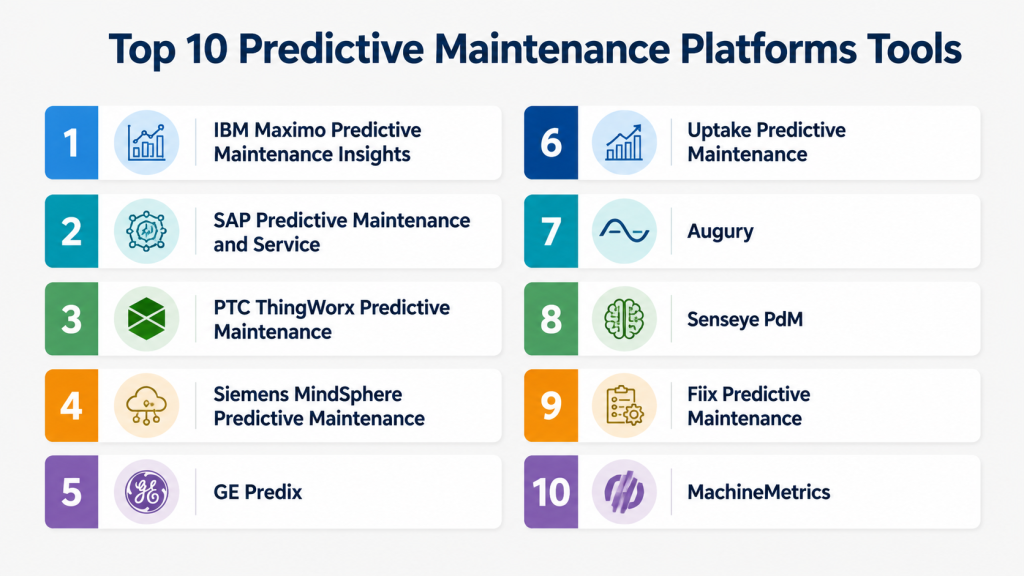
Top 10 Predictive Maintenance Platforms Tools
1- IBM Maximo Predictive Maintenance Insights
Short description: AI-powered platform for enterprises to predict equipment failures across industrial assets, helping operations teams optimize uptime and reduce maintenance costs
Key Features
- AI and ML-based anomaly detection
- Integration with IoT sensors and ERP systems
- Condition-based and predictive alerts
- Digital twin modeling for asset simulations
- Asset health scoring and analytics dashboards
- Remote monitoring and mobile access
Pros
- Enterprise-grade reliability and scalability
- Deep AI insights for critical equipment
- Strong integration ecosystem
Cons
- Complex initial setup
- Premium pricing may be high for SMBs
- Requires skilled maintenance and IT teams
Platforms / Deployment
- Web / Windows
- Cloud / Hybrid
Security & Compliance
- SOC 2, ISO 27001
- Encryption, RBAC, SSO/SAML
Integrations & Ecosystem
- Integrates with ERP, CMMS, IoT sensors
- Open APIs for custom workflows
- Extensible via IBM Cloud services
Support & Community
- Enterprise support tiers, detailed documentation
- Strong IBM user community
2- SAP Predictive Maintenance and Service
Short description: Leverages IoT and machine learning to predict equipment failures, integrated directly with SAP’s enterprise resource planning ecosystem
Key Features
- Real-time sensor data monitoring
- Predictive maintenance alerts
- Service scheduling automation
- Integration with SAP ERP and supply chain modules
- Reporting dashboards and analytics
Pros
- Seamless SAP ecosystem integration
- Strong predictive analytics engine
- Suitable for global operations
Cons
- Best fit within SAP-heavy environments
- May require additional modules for full functionality
Platforms / Deployment
- Web
- Cloud / Hybrid
Security & Compliance
- GDPR compliant, SSO/SAML
- SOC 2, ISO 27001
Integrations & Ecosystem
- SAP ERP, MES, IoT devices
- APIs for third-party connectivity
- Supports extensions via SAP Cloud Platform
Support & Community
- Comprehensive SAP support
- Large enterprise user base and forums
3- PTC ThingWorx Predictive Maintenance
Short description: IoT-driven predictive maintenance with digital twins and analytics, ideal for manufacturers and industrial operators
Key Features
- IoT sensor integration and analytics
- Digital twin simulations for assets
- Predictive failure alerts
- Mobile dashboards for field teams
- Integration with PLM and ERP systems
Pros
- Strong IoT and AR capabilities
- Flexible deployment and edge processing
- Rapid insight generation
Cons
- Steeper learning curve
- Requires ThingWorx platform knowledge
- Costly for smaller operations
Platforms / Deployment
- Web / iOS / Android
- Cloud / On-premise
Security & Compliance
- Not publicly stated
Integrations & Ecosystem
- PLM, ERP, MES
- REST APIs for custom integration
- Extensible via ThingWorx Marketplace
Support & Community
- Technical support tiers available
- Active community forums
4- Siemens MindSphere Predictive Maintenance
Short description: Combines industrial IoT with AI to deliver predictive insights and optimize asset performance across manufacturing and utilities
Key Features
- IoT device connectivity and monitoring
- AI-powered anomaly detection
- Predictive maintenance dashboards
- Energy efficiency analytics
- Integration with Siemens PLM and automation systems
Pros
- Strong industrial and utility adoption
- Deep IoT integration capabilities
- Global support network
Cons
- Platform complexity
- Licensing can be expensive
Platforms / Deployment
- Web / Windows
- Cloud / Hybrid
Security & Compliance
- ISO 27001
- Not publicly stated on SOC 2
Integrations & Ecosystem
- PLM, SCADA, ERP integrations
- APIs for custom data pipelines
- Supports industrial automation devices
Support & Community
- Enterprise support packages
- Active Siemens industry forums
5- GE Predix
Short description: Industrial IoT platform offering predictive maintenance for heavy equipment, turbines, and manufacturing machinery
Key Features
- Machine learning predictive models
- Real-time sensor analytics
- Failure probability scoring
- Asset lifecycle insights
- Integration with industrial control systems
Pros
- Proven in industrial environments
- Large-scale deployment capability
- Advanced analytics for equipment health
Cons
- Primarily suited for GE ecosystem
- Requires engineering expertise
Platforms / Deployment
- Web / Windows
- Cloud / Hybrid
Security & Compliance
- Not publicly stated
Integrations & Ecosystem
- Industrial sensors and PLCs
- ERP/SCADA system integration
- API extensibility
Support & Community
- Professional support services
- Industrial user forums
6- Uptake Predictive Maintenance
Short description: AI-driven predictive maintenance for industrial and energy assets, focusing on actionable insights and risk reduction
Key Features
- Machine learning-based failure prediction
- Real-time operational dashboards
- Risk scoring for assets
- IoT and sensor data integration
- Mobile and web monitoring
Pros
- Fast implementation
- Clear actionable insights
- Strong energy and industrial focus
Cons
- Limited open-source integration
- May require ongoing vendor support
Platforms / Deployment
- Web / iOS / Android
- Cloud
Security & Compliance
- SOC 2
- Encryption and access controls
Integrations & Ecosystem
- ERP and MES integrations
- API access for custom analytics
- Extensible with IoT platforms
Support & Community
- Support tiers offered
- Moderate community presence
7- Augury
Short description: Focuses on vibration and acoustic analysis to predict machine failures, targeting manufacturing and production environments
Key Features
- Vibration and sound monitoring
- Predictive alerts and health scoring
- Mobile dashboards for technicians
- Integration with ERP and CMMS
- Historical data analysis for trend insights
Pros
- Highly specialized for equipment diagnostics
- Quick fault detection
- User-friendly interface
Cons
- Niche focus may limit broader adoption
- Hardware sensors required
Platforms / Deployment
- Web / iOS / Android
- Cloud
Security & Compliance
- Not publicly stated
Integrations & Ecosystem
- CMMS and ERP connectors
- API for third-party data
- Sensor hardware integrations
Support & Community
- Onboarding support and training
- Small but active user base
8- Senseye PdM
Short description: Cloud-based predictive maintenance with AI for manufacturing, reducing unplanned downtime and extending equipment life
Key Features
- AI-driven maintenance recommendations
- Real-time monitoring of critical assets
- Failure probability and remaining useful life estimates
- Integration with MES/ERP systems
- Visual dashboards for operations teams
Pros
- Quick to deploy in manufacturing settings
- Cloud-native and scalable
- Intuitive interface for non-experts
Cons
- Primarily cloud-only deployment
- Limited support for very small operations
Platforms / Deployment
- Web
- Cloud
Security & Compliance
- SOC 2
- Data encryption and access controls
Integrations & Ecosystem
- MES, ERP, IoT devices
- API and webhooks for extensions
- Partner ecosystem for analytics add-ons
Support & Community
- Online helpdesk
- Moderate knowledge base and tutorials
9- Fiix Predictive Maintenance
Short description: Combines CMMS capabilities with predictive analytics to help maintenance teams optimize schedules and prevent equipment failures
Key Features
- Predictive analytics for equipment health
- Automated work orders and maintenance scheduling
- Asset tracking and lifecycle management
- Integration with ERP and IoT devices
- Reporting and analytics dashboards
Pros
- Strong CMMS integration
- Easy-to-use interface
- Good for mid-market companies
Cons
- Limited advanced AI features
- Scaling for large enterprises can be challenging
Platforms / Deployment
- Web / iOS / Android
- Cloud
Security & Compliance
- SOC 2
- Encryption and role-based access
Integrations & Ecosystem
- ERP, IoT sensors, CMMS
- API for custom integration
- Partner extensions for analytics
Support & Community
- 24/7 support available
- Active user community and forums
10- MachineMetrics
Short description: Real-time machine monitoring and predictive maintenance insights, focusing on manufacturing and industrial operations
Key Features
- IoT sensor connectivity and monitoring
- Predictive analytics for downtime reduction
- Real-time dashboards and alerts
- Historical performance analysis
- Integration with MES and ERP systems
Pros
- Rapid deployment and onboarding
- Clear insights into operational efficiency
- Mobile and web monitoring
Cons
- Smaller enterprise support compared to larger vendors
- May require sensor installation
Platforms / Deployment
- Web / iOS / Android
- Cloud / Hybrid
Security & Compliance
- Not publicly stated
Integrations & Ecosystem
- MES, ERP, IoT
- APIs for data export
- Extensible via third-party connectors
Support & Community
- Customer support available
- Moderate online knowledge base
Comparison Table (Top 10)
| Tool Name | Best For | Platform(s) Supported | Deployment | Standout Feature | Public Rating |
|---|---|---|---|---|---|
| IBM Maximo Predictive Maintenance Insights | Enterprise industrial | Web / Windows | Cloud / Hybrid | AI-based asset health scoring | N/A |
| SAP Predictive Maintenance and Service | SAP-heavy enterprises | Web | Cloud / Hybrid | ERP ecosystem integration | N/A |
| PTC ThingWorx Predictive Maintenance | Manufacturers | Web / iOS / Android | Cloud / On-prem | Digital twin simulations | N/A |
| Siemens MindSphere | Industrial / Utilities | Web / Windows | Cloud / Hybrid | IoT integration | N/A |
| GE Predix | Heavy industrial | Web / Windows | Cloud / Hybrid | Industrial equipment analytics | N/A |
| Uptake Predictive Maintenance | Industrial & energy | Web / iOS / Android | Cloud | Risk scoring & AI insights | N/A |
| Augury | Manufacturing diagnostics | Web / iOS / Android | Cloud | Vibration & acoustic analysis | N/A |
| Senseye PdM | Manufacturing | Web | Cloud | AI-driven maintenance recommendations | N/A |
| Fiix Predictive Maintenance | Mid-market manufacturing | Web / iOS / Android | Cloud | CMMS integration | N/A |
| MachineMetrics | Industrial operations | Web / iOS / Android | Cloud / Hybrid | Real-time machine monitoring | N/A |
Evaluation & Scoring of Predictive Maintenance Platforms
| Tool Name | Core (25%) | Ease (15%) | Integrations (15%) | Security (10%) | Performance (10%) | Support (10%) | Value (15%) | Weighted Total (0–10) |
|---|---|---|---|---|---|---|---|---|
| IBM Maximo | 9 | 7 | 9 | 9 | 9 | 8 | 7 | 8.7 |
| SAP PdM | 8 | 6 | 9 | 8 | 8 | 7 | 7 | 8.0 |
| PTC ThingWorx | 8 | 7 | 8 | 7 | 8 | 7 | 7 | 7.7 |
| Siemens MindSphere | 8 | 6 | 8 | 8 | 8 | 7 | 7 | 7.7 |
| GE Predix | 8 | 6 | 7 | 7 | 8 | 6 | 7 | 7.2 |
| Uptake | 7 | 8 | 7 | 8 | 7 | 7 | 8 | 7.5 |
| Augury | 7 | 8 | 6 | 7 | 7 | 6 | 7 | 7.0 |
| Senseye | 7 | 8 | 7 | 8 | 7 | 7 | 7 | 7.3 |
| Fiix | 6 | 8 | 7 | 7 | 6 | 7 | 8 | 7.0 |
| MachineMetrics | 7 | 8 | 7 | 7 | 7 | 6 | 7 | 7.2 |
Scores are comparative across tools, highlighting which platforms excel in core features, integrations, ease of use, and value. Weighted totals help prioritize vendors based on overall performance relative to criteria.
Which Predictive Maintenance Platforms Tool Is Right for You
Solo / Freelancer
Lightweight platforms like Fiix or Senseye provide rapid deployment and ease of use for small-scale operations
SMB
Uptake or MachineMetrics offer a balance of features, integrations, and pricing suitable for mid-sized manufacturers
Mid-Market
PTC ThingWorx and Siemens MindSphere provide industrial-grade analytics and integration for growing organizations
Enterprise
IBM Maximo, SAP PdM, and GE Predix deliver comprehensive AI-driven insights for large, global operations
Budget vs Premium
Budget-conscious users can leverage cloud-native platforms with flexible pricing (Fiix, Senseye). Premium solutions provide enterprise-grade analytics, integrations, and support (IBM Maximo, SAP PdM)
Feature Depth vs Ease of Use
Platforms like PTC ThingWorx and MindSphere excel in depth but require technical expertise. Senseye and MachineMetrics are simpler and quicker to onboard
Integrations & Scalability
Enterprises with complex ERP, MES, and IoT setups benefit from IBM, SAP, and Siemens. SMBs can start with cloud-first solutions and scale gradually
Security & Compliance Needs
Platforms with SOC 2, ISO 27001, and encryption (IBM, SAP, Uptake) are better suited for regulated industries
Frequently Asked Questions (FAQs)
1- What industries benefit most from predictive maintenance platforms?
Manufacturing, energy, transportation, utilities, and heavy equipment sectors benefit due to high downtime costs and asset complexity
2- How long does implementation typically take?
Deployment can range from a few weeks for cloud solutions to several months for enterprise integrations involving IoT and ERP systems
3- What kind of data is required?
Sensor data, historical maintenance logs, operational metrics, and ERP or MES data are essential for accurate predictions
4- Are these platforms cloud-based?
Most platforms offer cloud deployment; some provide hybrid or on-premise options for data-sensitive environments
5- Can small companies use predictive maintenance?
Yes, lightweight cloud-native platforms are suitable for SMBs, though ROI improves with higher asset density and complexity
6- How do these tools integrate with existing systems?
APIs, pre-built connectors, and IoT gateways allow integration with ERP, MES, CMMS, and IoT devices
7- What is the typical cost structure?
Pricing models include subscription tiers, per-device licenses, and enterprise contracts, often depending on asset count and features
8- Do these platforms require AI expertise?
Some require minimal AI knowledge, while enterprise-grade platforms may need data engineers or IT specialists for customization
9- Can predictive maintenance prevent all failures?
No, it reduces the likelihood of unexpected downtime but cannot guarantee 100% prevention
10- How to choose the right platform?
Assess your assets, data availability, integration needs, scalability, budget, and industry-specific compliance requirements
Conclusion
Predictive Maintenance Platforms provide actionable insights to reduce downtime, optimize asset utilization, and enhance operational efficiency. Selection depends on company size, asset complexity, integration needs, and budget. For small teams or SMBs, lightweight cloud solutions like Senseye or Fiix are effective. Mid-market and enterprise users benefit from platforms like IBM Maximo, SAP PdM, or Siemens MindSphere for advanced analytics and broader integration capabilities. The recommended next steps: shortlist 2–3 tools, run a pilot with key assets, validate predictive accuracy and integration, then scale deployment to maximize ROI
