Introduction
Materials Informatics Platforms are specialized software solutions that leverage data analytics, machine learning, and computational modeling to accelerate materials discovery, design, and optimization. These platforms enable researchers, engineers, and product development teams to analyze experimental and simulation data, predict material properties, and identify novel compounds or formulations faster than traditional methods.
Real-world use cases include:
- Accelerating polymer or alloy development in manufacturing
- Optimizing battery materials for energy storage applications
- Predicting corrosion and durability in metals and composites
- Guiding pharmaceutical excipient and material selection
- Integrating experimental and simulation datasets for AI-driven materials discovery
Evaluation criteria for buyers:
- Data integration and database support
- Predictive modeling and AI/ML capabilities
- Experimental and simulation data management
- Material property prediction accuracy
- Workflow automation and design tools
- Scalability for large datasets
- Cloud, hybrid, or on-premises deployment
- Security and access controls
- Collaboration and team workflow support
- Customer support and training resources
Best for: Materials scientists, R&D teams, chemical and battery manufacturers, and industrial product developers
Not ideal for: Organizations with minimal materials research or small-scale experiments where manual analysis or simple spreadsheets suffice
Key Trends in Materials Informatics Platforms
- AI-driven predictive modeling for novel materials
- Cloud-based data storage and high-performance computing integration
- Multi-source data integration from experiments, simulations, and literature
- Automated workflow and property prediction pipelines
- Visualization and 3D modeling for material structures
- Integration with lab equipment and simulation software
- Collaboration features for multi-site R&D teams
- Open-source data sharing and standardization initiatives
- Increased use of ML for property optimization and inverse design
- Regulatory and IP compliance support for materials data
How We Selected These Tools (Methodology)
- Evaluated global adoption and recognition in materials research and industry
- Assessed feature completeness including analytics, modeling, and data integration
- Reviewed performance and reliability with large experimental and simulation datasets
- Verified security, access controls, and data compliance
- Analyzed integration with lab instruments, simulation software, and databases
- Considered scalability for small labs to enterprise R&D teams
- Assessed AI/ML capabilities and workflow automation
- Evaluated user experience and ease of onboarding
- Reviewed vendor support, training, and community engagement
- Considered open data support and extensibility
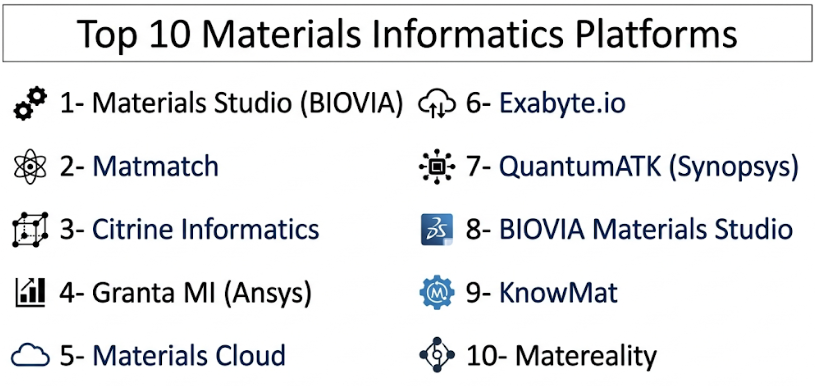
Top 10 Materials Informatics Platforms
1- Materials Studio (BIOVIA)
Short description: Comprehensive platform for materials modeling, simulation, and data analytics, suitable for polymers, metals, and composites
Key Features
- Molecular and crystal modeling
- Predictive property simulations
- Data integration from experiments and databases
- Workflow automation
- Visualization of molecular structures
- Machine learning-assisted design
- API and scripting support
Pros
- Extensive modeling capabilities
- Supports diverse material types
- Strong visualization and analysis tools
Cons
- High licensing cost
- Steep learning curve
- Advanced features require training
Platforms / Deployment
Windows / Cloud / On-prem
Security & Compliance
Not publicly stated
Integrations & Ecosystem
Integrates with simulation software, databases, and computational workflows
- Lab equipment data
- Simulation engines
- API modules
Support & Community
Varies / Not publicly stated
2- Matmatch
Short description: Materials discovery and selection platform for engineers and researchers
Key Features
- Extensive materials database
- Search and filter by properties
- Supplier information integration
- Data-driven material selection
- Collaboration tools
- Cloud-based access
- API for external integration
Pros
- User-friendly interface
- Quick material search
- Cloud access for distributed teams
Cons
- Limited simulation capabilities
- Less suitable for advanced predictive modeling
- Database coverage may vary
Platforms / Deployment
Web / Cloud
Security & Compliance
Not publicly stated
Integrations & Ecosystem
Integrates with CAD, simulation tools, and supplier databases
- CAD software
- Material databases
- API modules
Support & Community
Varies / Not publicly stated
3- Citrine Informatics
Short description: AI-driven platform for materials discovery, design, and property prediction
Key Features
- Machine learning models for material property prediction
- Data integration from experiments and literature
- Workflow automation
- Dashboard analytics
- Collaboration and project management tools
- Visualization of material structures
- API access
Pros
- Strong predictive modeling
- Scales across large datasets
- AI-driven material design
Cons
- Cost may be high for small teams
- Requires data preparation expertise
- Advanced ML features require training
Platforms / Deployment
Web / Cloud
Security & Compliance
Not publicly stated
Integrations & Ecosystem
Integrates with lab instruments, simulation engines, and databases
- Experimental instruments
- Simulation software
- API modules
Support & Community
Varies / Not publicly stated
4- Granta MI (Ansys)
Short description: Enterprise materials information management software for engineering and R&D teams
Key Features
- Centralized materials database
- Compliance and regulatory reporting
- Lifecycle and sustainability analysis
- Integration with CAD and CAE software
- Collaboration tools
- Material property prediction
- API and scripting support
Pros
- Strong enterprise features
- Integration with engineering workflows
- Centralized data management
Cons
- High cost for small teams
- Implementation complexity
- Requires training
Platforms / Deployment
Windows / Cloud / On-prem
Security & Compliance
Not publicly stated
Integrations & Ecosystem
Integrates with CAD, simulation, and enterprise systems
- CAD/CAE software
- ERP and PLM systems
- API modules
Support & Community
Varies / Not publicly stated
5- Materials Cloud
Short description: Open platform for computational materials science and data-driven research
Key Features
- Cloud-based materials data storage
- Computational workflow integration
- Visualization of structures
- Data sharing and collaboration
- Machine learning models
- API access
- Repository of public datasets
Pros
- Open-source and collaborative
- Scalable cloud infrastructure
- Supports computational materials science
Cons
- Limited enterprise support
- Advanced features require computational expertise
- Smaller commercial ecosystem
Platforms / Deployment
Web / Cloud
Security & Compliance
Not publicly stated
Integrations & Ecosystem
Integrates with simulation software and public databases
- Computational engines
- Public materials datasets
- API modules
Support & Community
Strong open-source community
6- Exabyte.io
Short description: Cloud platform for materials modeling and high-throughput simulations
Key Features
- Simulation workflow automation
- Machine learning for property prediction
- Data visualization
- Collaboration tools
- Material discovery pipelines
- Multi-user access
- API integration
Pros
- Cloud-first and scalable
- High-throughput simulation
- AI-assisted material discovery
Cons
- Cost may be high for small labs
- Requires simulation expertise
- Learning curve for workflow automation
Platforms / Deployment
Web / Cloud
Security & Compliance
Not publicly stated
Integrations & Ecosystem
Supports integration with simulation engines and computational tools
- DFT and MD engines
- Experimental datasets
- API modules
Support & Community
Varies / Not publicly stated
7- QuantumATK (Synopsys)
Short description: Materials modeling and simulation platform for nanoscale materials research
Key Features
- Atomic-scale modeling
- Electronic property simulations
- Integration with experimental datasets
- Visualization and analytics
- Workflow automation
- Multi-user collaboration
- API and scripting support
Pros
- Advanced nanoscale simulation
- Integration with experiments
- Predictive analytics
Cons
- High complexity
- Licensing cost
- Requires trained users
Platforms / Deployment
Windows / Cloud / Linux
Security & Compliance
Not publicly stated
Integrations & Ecosystem
Supports computational engines and experimental datasets
- DFT/MD software
- Materials databases
- API modules
Support & Community
Varies / Not publicly stated
8- BIOVIA Materials Studio
Short description: Platform for computational modeling, simulation, and materials data analytics
Key Features
- Molecular and crystal modeling
- Predictive property simulations
- Machine learning-assisted design
- Visualization of material structures
- Workflow automation
- Data integration
- API support
Pros
- Extensive modeling capabilities
- Supports polymers, metals, and composites
- Strong visualization
Cons
- High license cost
- Learning curve
- Advanced features require training
Platforms / Deployment
Windows / Cloud / On-prem
Security & Compliance
Not publicly stated
Integrations & Ecosystem
Supports simulation engines and computational workflows
- Simulation software
- Experimental data
- API modules
Support & Community
Varies / Not publicly stated
9- KnowMat
Short description: Cloud-based platform for materials data management and analytics
Key Features
- Centralized materials database
- Workflow automation
- AI-assisted property prediction
- Collaboration tools
- Visualization dashboards
- API access
- Integration with experiments and simulations
Pros
- Cloud-first
- Supports multi-user collaboration
- AI-assisted design
Cons
- Smaller ecosystem
- Some advanced features require training
- Limited offline functionality
Platforms / Deployment
Web / Cloud
Security & Compliance
Not publicly stated
Integrations & Ecosystem
Integrates with experiments, simulations, and databases
- Lab instruments
- Simulation engines
- API modules
Support & Community
Varies / Not publicly stated
10- Matereality
Short description: Enterprise-grade materials data management and analytics software
Key Features
- Centralized materials database
- Data analytics and reporting
- Workflow automation
- Collaboration tools
- Integration with CAD/CAE and lab instruments
- Material property prediction
- API support
Pros
- Enterprise-level management
- Scalable for multi-site R&D
- Data-driven decision-making
Cons
- License cost
- Training required
- Smaller user community
Platforms / Deployment
Web / Cloud / On-prem
Security & Compliance
Not publicly stated
Integrations & Ecosystem
Integrates with CAD/CAE, lab instruments, and simulation software
- CAD/CAE tools
- Experimental datasets
- API modules
Support & Community
Varies / Not publicly stated
Comparison Table
| Tool Name | Best For | Platform(s) Supported | Deployment | Standout Feature | Public Rating |
|---|---|---|---|---|---|
| Materials Studio | Polymers, metals | Windows | Cloud / On-prem | Predictive simulations | N/A |
| Matmatch | Material selection | Web | Cloud | Material database | N/A |
| Citrine Informatics | AI-driven discovery | Web | Cloud | Property prediction | N/A |
| Granta MI | Enterprise R&D | Windows | Cloud / On-prem | Centralized data | N/A |
| Materials Cloud | Computational research | Web | Cloud | Open datasets | N/A |
| Exabyte.io | High-throughput simulation | Web | Cloud | Simulation workflows | N/A |
| QuantumATK | Nanoscale research | Windows / Linux | Cloud | Atomic modeling | N/A |
| BIOVIA Materials Studio | Modeling and design | Windows | Cloud / On-prem | Molecular modeling | N/A |
| KnowMat | Data analytics | Web | Cloud | Collaboration | N/A |
| Matereality | Enterprise R&D | Web | Cloud / On-prem | Centralized database | N/A |
Evaluation & Scoring
| Tool Name | Core (25%) | Ease (15%) | Integrations (15%) | Security (10%) | Performance (10%) | Support (10%) | Value (15%) | Weighted Total |
|---|---|---|---|---|---|---|---|---|
| Materials Studio | 9 | 7 | 8 | 8 | 9 | 8 | 7 | 8.3 |
| Matmatch | 7 | 8 | 6 | 7 | 7 | 7 | 8 | 7.4 |
| Citrine Informatics | 9 | 6 | 8 | 7 | 8 | 7 | 7 | 7.8 |
| Granta MI | 8 | 7 | 7 | 7 | 8 | 7 | 7 | 7.5 |
| Materials Cloud | 7 | 8 | 6 | 7 | 7 | 7 | 8 | 7.4 |
| Exabyte.io | 8 | 7 | 7 | 7 | 8 | 7 | 7 | 7.5 |
| QuantumATK | 9 | 6 | 8 | 7 | 8 | 7 | 7 | 7.8 |
| BIOVIA Materials Studio | 9 | 7 | 8 | 8 | 9 | 8 | 7 | 8.3 |
| KnowMat | 8 | 7 | 7 | 7 | 8 | 7 | 7 | 7.5 |
| Matereality | 8 | 7 | 7 | 7 | 8 | 7 | 7 | 7.5 |
Which Tool Is Right for You
Solo / Freelancer: Matmatch or Materials Cloud for small-scale material exploration
SMB: Exabyte.io or KnowMat for R&D teams with multi-user collaboration
Mid-Market: Citrine Informatics or BIOVIA Materials Studio for portfolio-level discovery
Enterprise: Granta MI, Materials Studio, or Matereality for predictive analytics, modeling, and multi-site R&D
Budget vs Premium: Budget – Matmatch, Materials Cloud | Premium – Materials Studio, Granta MI
Feature Depth vs Ease of Use: High depth – Materials Studio, Granta MI | Ease of use – Matmatch, Materials Cloud
Integrations & Scalability: Enterprises should prioritize lab instruments, simulation engines, and CAD/CAE integration: Materials Studio, Citrine, Granta MI
Security & Compliance Needs: Focus on role-based access, encryption, and audit tracking
Frequently Asked Questions
1. What pricing models are common?
Most platforms offer subscription or licensing for enterprise R&D teams
2. How long does implementation take?
Small labs can deploy quickly; enterprise-scale integration may require months
3. Can these platforms handle experimental and simulation data?
Yes, most support integration of both experimental and computational datasets
4. Are AI-assisted predictive features available?
Many platforms offer ML models to predict material properties and guide discovery
5. Can these tools integrate with CAD, CAE, or lab instruments?
Yes, integration is usually via API or native connectors
6. Are mobile apps available?
Some platforms provide mobile dashboards for researchers and engineers
7. How scalable are these solutions?
Cloud-based platforms scale from small labs to enterprise-level R&D teams
8. What support options exist?
Support ranges from documentation and tutorials to dedicated account managers
9. Can I switch platforms later?
Yes, but migrating datasets and workflows requires careful planning
10. Are dashboards customizable?
Most platforms allow KPIs and visualizations to be customized for teams and projects
Conclusion
Materials Informatics Platforms accelerate discovery, reduce research cycles, and improve material selection and design. Smaller labs may prioritize ease of use and affordability, while enterprise R&D teams focus on predictive modeling, large-scale data integration, and collaboration. Next steps: shortlist 2–3 vendors, run pilot projects, and validate integration, scalability, and security before full deployment
