Introduction
Utility Billing Software is a specialized platform that automates billing for electricity, water, gas, and waste services. These tools help organizations streamline invoice generation, usage tracking, payment processing, and regulatory compliance. Municipalities, utility providers, property managers, and multi-site enterprises can benefit from accurate, automated billing and enhanced customer satisfaction.
Real-world use cases include:
- Municipal utilities generating consistent invoices and tracking consumption.
- Property management companies monitoring tenant utilities and automating payments.
- Energy providers billing variable rates for solar, wind, or hybrid energy.
- Corporations managing utilities across multiple locations efficiently.
- Utility companies integrating smart meters for automated billing cycles.
Evaluation criteria for buyers:
- Core billing features and automation
- Meter data integration and usage tracking
- Payment options and processing flexibility
- Regulatory compliance and reporting capabilities
- Customer self-service portals
- Analytics and reporting
- Scalability and deployment flexibility
- Security and access controls
- API and third-party integrations
- Ease of use and training requirements
Best for: Utility providers, municipal agencies, energy companies, property management firms, and enterprises managing complex usage-based billing.
Not ideal for: Small businesses or individual consumers with minimal billing needs, where simple invoicing tools are sufficient.
Key Trends in Utility Billing Software
- AI and predictive analytics for anomaly detection and usage forecasting.
- Real-time integration with smart meters and IoT devices for automated billing.
- Cloud-native platforms replacing legacy systems for easier scaling.
- Enhanced customer self-service portals for mobile and web access.
- Strong regulatory compliance support for environmental and utility reporting.
- Integration with digital payment networks for faster collections.
- API-first software supporting ERP and CRM integrations.
- Flexible pricing models including subscription and usage-based options.
- Increased focus on cybersecurity and data privacy.
- Cross-platform accessibility for staff and customers.
How We Selected These Tools (Methodology)
- Evaluated global adoption and market mindshare.
- Assessed completeness of core billing and invoicing features.
- Reviewed performance and reliability signals.
- Verified security and compliance measures where available.
- Analyzed integrations and ecosystem compatibility.
- Considered scalability and suitability for small to enterprise-scale utilities.
- Evaluated automation and workflow capabilities.
- Factored customer experience and ease of onboarding.
- Considered predictive analytics and AI-enabled functionality.
- Checked mobile and field service support.
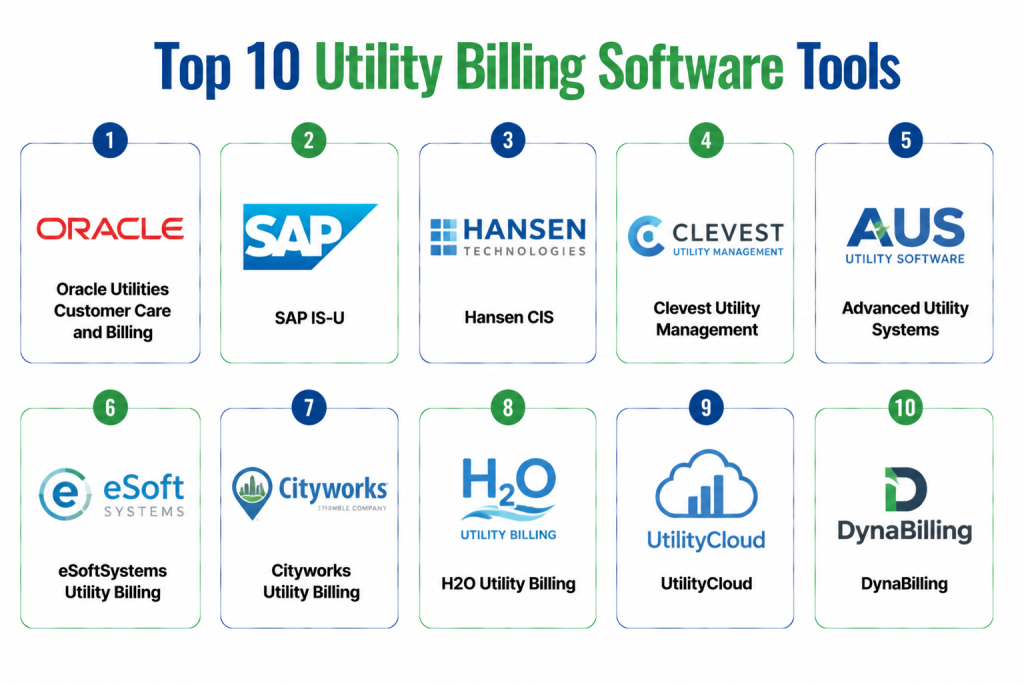
Top 10 Utility Billing Software Tools
1- Oracle Utilities Customer Care and Billing
Short description: Enterprise-grade billing platform for energy, water, and gas providers, designed for large-scale operations.
Key Features
- Integration with advanced meter data systems
- Multi-utility billing support
- Customer self-service portals
- Real-time billing and payment processing
- Regulatory compliance modules
- Predictive revenue assurance
- Automated workflows and dispute management
Pros
- Scales for large utility providers
- Strong compliance support
- Advanced analytics and reporting
Cons
- Complex implementation
- Higher cost for smaller utilities
- Requires skilled staff for management
Platforms / Deployment
- Web / Cloud / Hybrid
Security & Compliance
Not publicly stated
Integrations & Ecosystem
Integrates with ERP systems, payment gateways, and meter management platforms.
- ERP and CRM systems
- Payment processing networks
- Meter data platforms
- API for custom extensions
Support & Community
Varies / Not publicly stated
2- SAP IS-U
Short description: Integrated billing and customer management within SAP ERP, suitable for energy and water providers.
Key Features
- Billing and invoicing automation
- Customer engagement tools
- Multi-rate consumption-based billing
- Regulatory and environmental compliance
- Payment processing
- Analytics dashboards
- Smart meter integration
Pros
- Deep ERP integration
- Strong compliance capabilities
- Flexible for enterprise-scale operations
Cons
- Steep learning curve
- High implementation effort
- Less suited for smaller utilities
Platforms / Deployment
- Web / Cloud / On-premises
Security & Compliance
Not publicly stated
Integrations & Ecosystem
Integrates seamlessly with SAP CRM, ERP modules, and IoT solutions.
- ERP modules
- IoT meters
- Payment gateways
Support & Community
Varies / Not publicly stated
3- Hansen CIS
Short description: Utility billing software with flexible customer information management and workflow automation.
Key Features
- Comprehensive customer management
- Automated meter-to-cash processes
- Configurable billing cycles
- Regulatory reporting
- AI-assisted anomaly detection
- Payment plan management
- API for third-party integrations
Pros
- Highly flexible configuration
- Strong automation support
- Regulatory compliance features
Cons
- User interface less modern
- Enterprise pricing can be high
- Integration may require specialist knowledge
Platforms / Deployment
- Web / Cloud / Hybrid
Security & Compliance
Not publicly stated
Integrations & Ecosystem
ERP, payment, and meter data system integrations.
- ERP platforms
- Payment gateways
- Meter management solutions
Support & Community
Varies / Not publicly stated
4- Clevest Utility Management
Short description: Cloud-first platform for billing and field workforce management with mobile access.
Key Features
- Field service integration
- Mobile customer and staff portals
- Multi-rate and usage-based billing
- Automated alerts and notifications
- Predictive maintenance insights
- API support
- Flexible deployment options
Pros
- Mobile-first design
- Cloud-native and scalable
- Easy reporting
Cons
- Smaller analytics suite
- Limited global regulatory coverage
- Smaller ecosystem
Platforms / Deployment
- Web / iOS / Android / Cloud
Security & Compliance
Not publicly stated
Integrations & Ecosystem
Connects with AMI, ERP, and payment systems.
- IoT meter devices
- ERP connectors
- Payment gateways
Support & Community
Varies / Not publicly stated
5- Advanced Utility Systems
Short description: Software for municipal and private utilities to manage billing, collections, and reporting.
Key Features
- Multi-utility support
- Customer portals and notifications
- Usage tracking and analytics
- Payment processing integration
- Configurable workflows
- API-enabled extensions
- Compliance reporting tools
Pros
- Affordable for mid-size utilities
- Flexible configuration
- Customer self-service support
Cons
- Limited AI features
- Smaller support network
- UI is not modern
Platforms / Deployment
- Web / Cloud / Hybrid
Security & Compliance
Not publicly stated
Integrations & Ecosystem
Integrates with ERP and payment platforms.
- ERP systems
- Payment gateways
- Reporting APIs
Support & Community
Varies / Not publicly stated
6- eSoftSystems Utility Billing
Short description: Complete billing and meter management platform for energy and water utilities.
Key Features
- Meter-to-cash automation
- Customer information management
- Multi-rate billing
- Compliance reporting
- Payment portal integration
- Analytics dashboards
- Customer notifications
Pros
- Strong automation
- Supports multiple utilities
- Scalable for mid-size providers
Cons
- Enterprise-level pricing
- Customization may need consulting
- Limited AI features
Platforms / Deployment
- Web / Cloud
Security & Compliance
Not publicly stated
Integrations & Ecosystem
ERP, payment processors, and meter data platforms.
- ERP connectors
- AMI integration
- Payment gateways
Support & Community
Varies / Not publicly stated
7- Cityworks Utility Billing
Short description: GIS-integrated billing solution for municipal utilities with operational insights.
Key Features
- GIS and asset management
- Automated billing and payment processing
- Customer engagement tools
- Compliance reporting
- Usage analytics
- Mobile field access
- API integration
Pros
- Strong GIS support
- Designed for municipalities
- Scalable
Cons
- Limited AI
- Niche municipal focus
- Higher cost
Platforms / Deployment
- Web / Cloud / Hybrid
Security & Compliance
Not publicly stated
Integrations & Ecosystem
GIS and ERP integration.
- ESRI GIS
- ERP systems
- Payment gateways
Support & Community
Varies / Not publicly stated
8- H2O Utility Billing
Short description: Cloud solution for water utilities with real-time meter data and customer portals.
Key Features
- Real-time water usage monitoring
- Automated invoicing and alerts
- Multi-tier rate support
- Customer self-service portal
- Compliance reporting
- API integration
- Analytics dashboards
Pros
- Cloud-native
- Real-time insights
- Mobile-friendly
Cons
- Water-focused only
- Limited market adoption
- AI features limited
Platforms / Deployment
- Web / iOS / Android / Cloud
Security & Compliance
Not publicly stated
Integrations & Ecosystem
Connects with AMI and ERP.
- ERP systems
- Payment gateways
- Meter data platforms
Support & Community
Varies / Not publicly stated
9- UtilityCloud
Short description: Modern cloud utility billing and operations platform with modular extensions.
Key Features
- Billing automation
- Customer engagement
- Flexible rate structures
- Analytics dashboards
- Modular extensions and APIs
- Compliance reporting
- Cloud-first architecture
Pros
- Modern UI
- Flexible integration
- Cloud-native
Cons
- Smaller adoption
- Limited migration tools
- Fewer on-premises options
Platforms / Deployment
- Web / Cloud
Security & Compliance
Not publicly stated
Integrations & Ecosystem
ERP, CRM, and payment system integration.
- Payment gateways
- ERP connectors
- API modules
Support & Community
Varies / Not publicly stated
10- DynaBilling
Short description: Utility billing software for small-to-mid-sized energy and water providers.
Key Features
- Automated invoices
- Customer management
- Payment automation
- Usage tracking and alerts
- Reporting and analytics
- API integration
- Multi-utility support
Pros
- Affordable for smaller providers
- Easy setup
- Multi-utility support
Cons
- Limited AI
- Smaller ecosystem
- Fewer enterprise features
Platforms / Deployment
- Web / Cloud
Security & Compliance
Not publicly stated
Integrations & Ecosystem
ERP and payment system integration.
- Payment gateways
- ERP connectors
- API support
Support & Community
Varies / Not publicly stated
Comparison Table (Top 10)
| Tool Name | Best For | Platform(s) Supported | Deployment | Standout Feature | Public Rating |
|---|---|---|---|---|---|
| Oracle Utilities Customer Care and Billing | Large utilities | Web | Cloud / Hybrid | Enterprise-scale billing | N/A |
| SAP IS-U | Energy/water providers | Web | Cloud / On-prem | ERP integration | N/A |
| Hansen CIS | Mid-size to large utilities | Web | Cloud / Hybrid | Flexible workflows | N/A |
| Clevest Utility Management | Field-service utilities | Web / iOS / Android | Cloud | Mobile-first | N/A |
| Advanced Utility Systems | Municipal/private utilities | Web | Cloud / Hybrid | Configurable workflows | N/A |
| eSoftSystems Utility Billing | Energy & water utilities | Web | Cloud | Automated meter-to-cash | N/A |
| Cityworks Utility Billing | Municipal utilities | Web | Cloud / Hybrid | GIS integration | N/A |
| H2O Utility Billing | Water utilities | Web / iOS / Android | Cloud | Real-time usage monitoring | N/A |
| UtilityCloud | Cloud-first utilities | Web | Cloud | Modular extensions | N/A |
| DynaBilling | Small-to-mid utilities | Web | Cloud | Easy setup & invoicing | N/A |
Evaluation & Scoring of Utility Billing Software
| Tool Name | Core (25%) | Ease (15%) | Integrations (15%) | Security (10%) | Performance (10%) | Support (10%) | Value (15%) | Weighted Total (0–10) |
|---|---|---|---|---|---|---|---|---|
| Oracle Utilities Customer Care and Billing | 9 | 7 | 8 | 8 | 9 | 8 | 7 | 8.3 |
| SAP IS-U | 9 | 6 | 9 | 8 | 8 | 7 | 6 | 7.8 |
| Hansen CIS | 8 | 7 | 7 | 7 | 8 | 7 | 7 | 7.5 |
| Clevest Utility Management | 7 | 8 | 7 | 7 | 7 | 7 | 8 | 7.5 |
| Advanced Utility Systems | 7 | 8 | 6 | 7 | 7 | 7 | 8 | 7.4 |
| eSoftSystems Utility Billing | 8 | 7 | 7 | 7 | 8 | 7 | 7 | 7.5 |
| Cityworks Utility Billing | 7 | 7 | 6 | 7 | 7 | 7 | 7 | 7.1 |
| H2O Utility Billing | 6 | 8 | 6 | 7 | 7 | 7 | 8 | 7.1 |
| UtilityCloud | 7 | 8 | 7 | 7 | 7 | 7 | 8 | 7.4 |
| DynaBilling | 6 | 8 | 6 | 7 | 7 | 7 | 8 | 7.1 |
Interpretation: Weighted totals reflect comparative strengths across features, usability, integrations, and value. Organizations can prioritize metrics relevant to their size and utility type.
Which Utility Billing Software Tool Is Right for You?
Solo / Freelancer
DynaBilling or Advanced Utility Systems offer simple setup and low cost.
SMB
Mid-size utilities benefit from Hansen CIS or eSoftSystems for automation and multi-utility support.
Mid-Market
Clevest Utility Management or UtilityCloud provide cloud-native platforms with mobile access and integrations.
Enterprise
Oracle Utilities Customer Care and Billing, SAP IS-U, or Hansen CIS excel at large-scale deployments and compliance.
Budget vs Premium
Budget-friendly: DynaBilling, Advanced Utility Systems
Premium: Oracle Utilities, SAP IS-U
Feature Depth vs Ease of Use
High depth: Oracle Utilities, SAP IS-U
Ease of use: Clevest, DynaBilling, H2O Utility Billing
Integrations & Scalability
ERP/CRM integration and cloud-native platforms: Oracle Utilities, SAP IS-U, UtilityCloud
Security & Compliance Needs
Prioritize vendors with proven compliance frameworks for regulated utilities; many do not publicly disclose certifications.
Frequently Asked Questions (FAQs)
1. What pricing models are common?
Subscription-based cloud pricing is common, while enterprise deployments may involve licensing or hybrid models.
2. How long does implementation take?
Small providers can implement in weeks, while large enterprises may need several months for data migration and integrations.
3. Can these systems handle multiple utilities?
Yes, most support electricity, water, gas, and waste billing with configurable rates.
4. What are common deployment mistakes?
Skipping meter integration, inadequate staff training, and ignoring compliance requirements are common pitfalls.
5. Are AI features included?
Some platforms offer AI for anomaly detection, predictive billing, and automated workflows; feature availability varies.
6. Can they integrate with ERP and CRM systems?
Yes, most platforms offer APIs or native connectors for ERP, CRM, and payment processing.
7. How scalable are these solutions?
Cloud-native platforms scale from small operations to enterprise utilities; legacy systems may require additional resources.
8. What support options are offered?
Support ranges from documentation and email to dedicated account managers, depending on vendor.
9. Can providers switch platforms later?
Migration is possible but requires careful planning for historical data and compliance needs.
10. Are self-service portals included?
Most modern platforms provide portals for invoice viewing, payments, and customer communication.
Conclusion
Utility Billing Software streamlines operations, ensures regulatory compliance, and improves customer engagement. Selection depends on organizational size, complexity, and integration needs. Smaller providers may prioritize cost and ease of use, while enterprises focus on scalability, feature depth, and compliance. Next steps: shortlist a few vendors, run a pilot focusing on critical features, and validate integration and security before full deployment.
